Quick Field Data
- UNESCO Inscription: Reference 732, inscribed in 1995 as a Cultural World Heritage Site under criteria (ii) and (iv).
- Scale & Footprint: Covers 62 hectares linking the 61-hectare medieval town centre (containing over 300 protected cultural monuments) on the Vrchlice Stream with the Sedlec Abbey precinct 1.5 km to the northeast.
- Access & Ticketing: Historic streets, Rejsek's Fountain, the Jesuit College terrace promenade, and church exteriors remain open public spaces. Entry into St Barbara's Church, the Cathedral of Our Lady at Sedlec, the Sedlec Ossuary, the Italian Court, and Hrádek Silver Museum requires individual or combined local passes. Check official parish and municipal heritage sites for visiting rules.
- Arrival Logistics: Václav Havel Airport Prague (PRG) sits 75 km west, while Pardubice Airport (PED, 34 km east) is closer with limited passenger routes. Road and rail routes run directly east from our Prague destination guide (52 km by regional road/rail; 62 km between centres).
Silver Veins, Royal Mining Law, and the Prague Groschen Mint
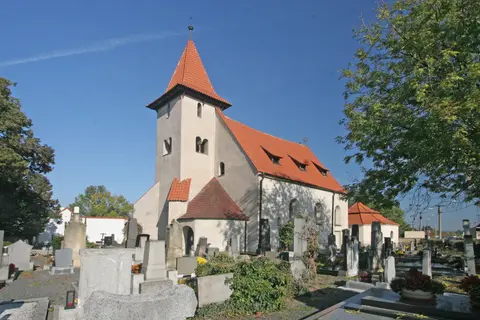
Kutná Hora sits between the Central Elbe Table and the Upper Sázava Hills, rising to 359 metres at Malý Kuklík. Before silver miners carved galleries into these ridges, Celtic artisans worked copper and silver-bearing ores around Kaňk hill during the Hallstatt and La Tène eras. Excavations uncovered ceramic finds from the fifth to first centuries BC alongside a second-to-first-century BC smelting furnace holding 10 kilograms of mineral slag. Early medieval silver trade passed through nearby Malín, where silver dinars dated between 985 and 995 were unearthed around an early gord. Malín's Church of Saint Stephen later shifted from Romanesque to Gothic and Baroque in 1710 beside a late fifteenth-century wooden belfry.
Permanent transformation started in 1142 when Cistercian monks from Waldsassen in Bavaria founded Sedlec Abbey, Bohemia's first Cistercian house. Discovering rich silver ore near Sedlec solved the monastery's finances and sparked a mining rush from 1260 onward. German-speaking prospectors settled scattered pit camps, and the Middle High German word kutte ("pit") likely gave Mons Cuthna (first named in 1289) and Kutná Hora its name rather than legends of monks' cowls. In 1300, King Wenceslaus II promulgated the Ius regale montanorum, a landmark royal mining code regulating underground administration and safety. He also concentrated Bohemia's central mint inside Kutná Hora's fortified Italian Court (Vlašský dvůr). Built between 1260 and 1300, it expanded into a royal residence in the 1380s with the Chapel of Saints Wenceslaus and Ladislaus around 1400, later restored under Ludvík Lábler from 1893 to 1898. Minting silver Prague groschen elevated Kutná Hora into the second wealthiest city in the Bohemian kingdom after Prague.
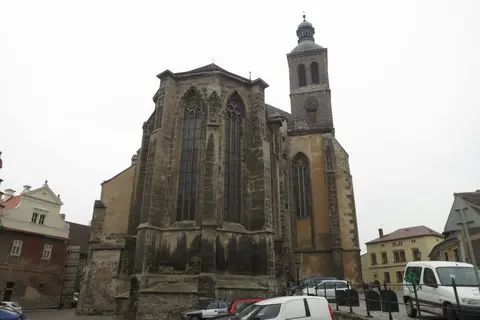
Royal politics repeatedly converged on this financial hub. In December 1402, after imprisoning Wenceslaus IV, King Sigismund besieged the town and forced Kutná Hora's defenders to march to Kolín and kneel in subjugation. During the siege of Suchdol on 27 December, Sigismund's captain Markvart of Úlice died from an arrow. On 18 January 1409, Wenceslaus IV signed the Decree of Kutná Hora here, granting the Czech university nation three votes against one for foreign nations at Prague University. Because mining shafts followed irregular ore seams and earlier trackways rather than rigid grids, the 62-hectare historic centre kept an organic medieval street pattern. Beside the Italian Court rises the 80.5-metre-towered Church of Saint James the Great, built from 1300 to 1370 and modified between 1941 and 1946. Nearby, the Hrádek stronghold began as a wooden fort in 1312, was stone-rebuilt from 1400 to 1420, served as a Jesuit seminary from 1686 to 1773, and has housed the Silver Museum since 1947. Other Gothic anchors include the Church of Our Lady "Na Náměti", surviving 1770 and 1823 fires, and the 1480s Stone House (Kamenný dům), housing a Museum of Silver since 1902.
Peter Parler's Miners' Cathedral and Santini's Baroque Gothic Revival
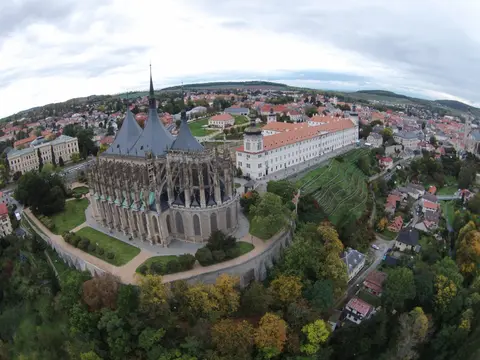
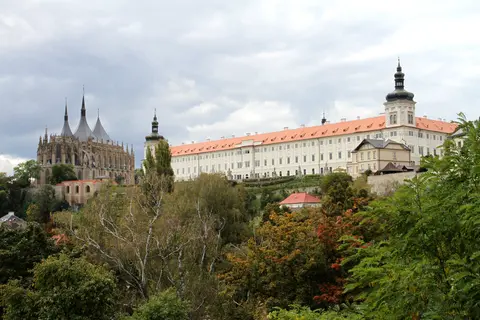
Nowhere did Kutná Hora's civic pride outshine Prague more vividly than on the ridge outside the early town walls where miners raised the Church of Saint Barbara. Begun between 1385 and 1395 over an earlier miners' chapel, the colossal hall church aimed to rival both Sedlec Abbey and Prague's St Vitus Cathedral. Designed initially by master architect Peter Parler, construction continued across the fifteenth century under Johann Parler, Master Hanuš, Matěj Rejsek, and Benedikt Rejt. Soaring flying buttresses frame the exterior, while interior secular frescoes depict medieval silver-mining and coin-minting life. Adjacent to the church stands the late fourteenth-century Gothic Corpus Christi chapel, originally a charnel house. Late nineteenth- and early twentieth-century purist restoration between the 1880s and 1905 by Josef Mocker and Ludvík Lábler preserved its stone fabric.
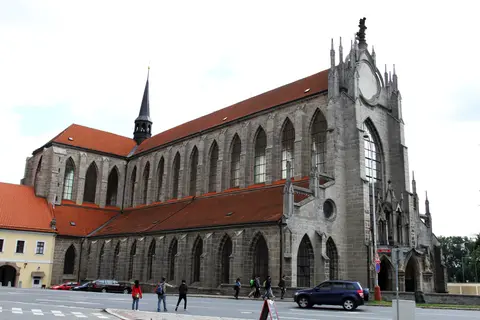
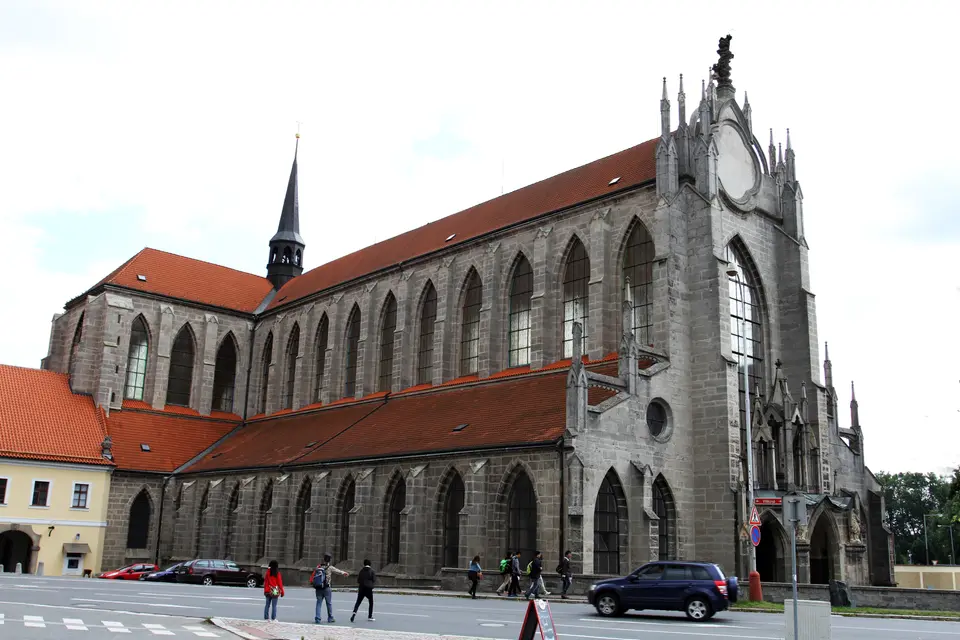
Around 1.5 km northeast in Sedlec stands Bohemia's other monumental landmark: the Cistercian Cathedral of the Assumption of Our Lady and Saint John the Baptist. Erected primarily in the second half of the thirteenth century, it formed the heart of a 20-hectare monastic complex among the richest in medieval Bohemia. Ruined after Hussite raids, the abbey church was rebuilt at the turn of the seventeenth and eighteenth centuries by Jan Blažej Santini Aichel. Santini invented his daring Baroque-Gothic synthesis here, blending luminous white Baroque light with interlocking Gothic-inspired rib vaults that echoed across Central European architecture.
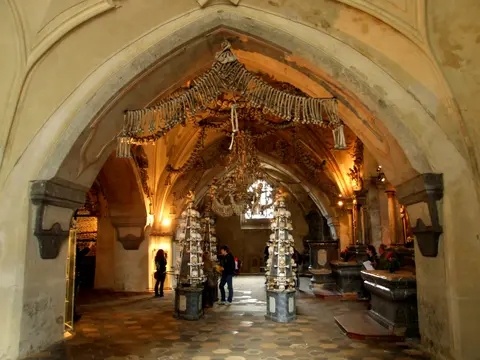
A short walk away stands the Cemetery Church of All Saints, famous as the Sedlec Ossuary. Built in the late fourteenth century, it sits over a burial ground active from the thirteenth to sixteenth centuries where archaeology has identified 30 mass graves. Santini modified the chapel in Baroque-Gothic style, and woodcarver František Rint fitted the interior bone arrangements. The ossuary holds skeletal remains estimated at over 40,000 victims of plague epidemics and Hussite warfare, highlighted by a central chandelier incorporating every major bone of the human body.
Hussite Fire, Jesuit Baroque, and the Sedlec Monastic Suburb
Religious conflict repeatedly disrupted mining wealth. During the Hussite Wars, Sigismund made Kutná Hora his campaign base in 1420 before Taborite forces captured the town and burned Sedlec Abbey in 1421, followed by expulsions and two devastating fires between 1422 and 1424. Mining resumed in 1469 and the 1485 Religious Peace of Kutná Hora brought brief stability, yet flooding in deep shafts forced mine reductions in the 1530s, closure of the main zone in 1543, and the end of Prague groschen minting in 1547.
Following the Battle of White Mountain, Jesuits entered Kutná Hora in 1626, shortly after mining ceased in 1625 and before Swedish raids in 1639 and 1643 devastated the town. As craft trades revived in the 1650s, Jesuits reshaped the ridge beside St Barbara's through Giovanni Domenico Orsi's monumental Jesuit College. Begun in 1666 and continued by Carlo Lurago from 1676, the college connects to the church via a sweeping stone promenade lined with statues by František Baugut. Following the 1713 epidemic, Baugut also created the 1714 to 1715 Marian plague column featuring miner figures. Even after new early eighteenth-century veins proved unprofitable and the royal mint closed permanently in 1727, late-Baroque building continued. After a 1730 fire, František Maxmilián Kaňka built St John of Nepomuk from 1734 to 1752, while Kilian Ignaz Dientzenhofer designed the Ursuline Convent (1738 to 1743), whose cellars now hold wine. Friedrich Ohmann later added the Sacred Heart church from 1897 to 1901. Meanwhile, Sedlec Abbey's monastic buildings converted into a tobacco factory in 1812 and began making cigarettes in 1882. Owned since 1992 by Philip Morris ČR with over 800 employees, it sits alongside major electronics manufacturing at Foxconn Technology CZ employing over 1,500 people. After Austro-Hungarian rule ended in 1918 and Czechoslovakia formed, tragedy struck between 1939 and 1945 when Nazi occupiers deported and destroyed Kutná Hora's Jewish community via Theresienstadt.
Protected since 1961 as the Czech Republic's fourth-largest urban monument reservation, the centre is governed under Act 20/1987 on State Heritage Preservation. St Barbara's and the Italian Court hold top national cultural monument protection, joined in 2026 by Sedlec Abbey and the Ossuary. Annual monitoring has operated since 2000 under the Programme for the Regeneration of Urban Heritage Reservations. In 2023, the ensemble drew roughly 290 thousand visitors to Sedlec and 250 thousand to St Barbara's, ranking just behind Svatá Hora among the country's busiest sacred sites. Throughout town, medieval houses still retain Gothic vaulted cellars behind Baroque façades.
Town Centre Monuments and Sedlec Suburb Access
Kutná Hora divides cleanly between its elevated medieval town core above the Vrchlice Stream and the flat Sedlec suburb 1.5 km northeast near the main railway line.
| Complex Zone | Key Highlights | Access & Ticket Rule |
|---|---|---|
| Church of St Barbara & Jesuit College | Parler-designed miners' cathedral, secular minting frescoes, Corpus Christi chapel, Baugut terrace | Jesuit terrace promenade is open public ground; church entry requires a ticket (combined town passes available). |
| Italian Court (Vlašský dvůr) & St James | 1300 royal mint complex, Chapel of Sts Wenceslaus and Ladislaus, 80.5-metre St James tower | Courtyard allows short daylight viewing; royal mint halls and chapel operate on guided or ticketed entry. |
| Hrádek, Stone House & Rejsek Fountain | Czech Museum of Silver medieval castle, 1480s Gothic burgher house, 1495 stone water reservoir | Rejsek Fountain stands on open square Rejskovo náměstí; silver-mine and museum tours at Hrádek require tickets. |
| Sedlec Cathedral & Sedlec Ossuary | Santini's Baroque-Gothic abbey church and František Rint's bone-decorated All Saints chapel | Separate parish ticketing (or joint Sedlec/St Barbara combo pass) regulates flow; check official Sedlec booking rules in advance. |
| Historic Town Lanes & Malín Outskirt | Baroque houses over Gothic cellars, 1715 Plague Column, and Romanesque-origin St Stephen in Malín | Residential streets and outer village squares carry free public access; respect church service schedules indoors. |
Vault Ribs, Mining Cisterns, and Bone Architecture on Site
Walking between the town ridge and Sedlec exposes three structural answers to mining upheaval and monastic ambition.
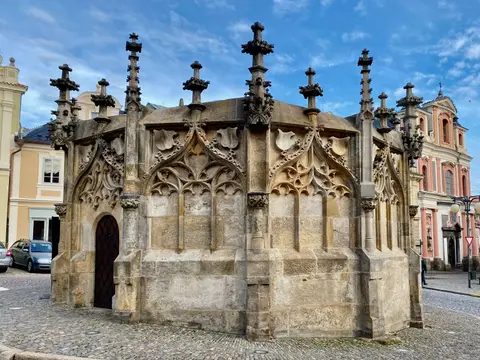
- The Twelve-Sided Rejsek Stone Fountain: At Rejskovo náměstí, examine Matěj Rejsek's 1495 dodecagonal late-Gothic reservoir fed by wooden pipes. Deep silver shafts had fractured and drained Kutná Hora's natural springs, forcing engineers to store drinking water here from 1495 until 1663 in unusually large freestone blocks.
- Secular Mining Frescoes Inside St Barbara: Beneath Benedict Rejt's undulating petal-ribbed nave vaults inside St Barbara's Church, inspect late medieval wall paintings illustrating miners with lamps, ore hoists, and coin minters rather than purely biblical saints, recording the town's economic foundation inside its grandest sanctuary.
- Santini's Star-Ribbed Abbey Vaults at Sedlec: Step inside the Cathedral of the Assumption in Sedlec to trace how Jan Santini Aichel inserted paper-thin Baroque-Gothic rib networks and light wells directly inside thirteenth-century Cistercian masonry walls without adding external buttresses.
Walking Between Town and Sedlec on a Prague Excursion
Kutná Hora, today around 22,000 residents across 12 municipal districts, lies 52 km east of Prague by road or rail (62 km between centres). Four local rail halts (Kutná Hora hlavní nádraží, město, předměstí, and Kutná Hora-Sedlec) and the Prague to Pardubice highway connect the town straight to the capital. Travellers can step off near Sedlec first to tour the Cathedral and Ossuary before walking or riding local transit 1.5 km into the medieval core. Early morning light suits viewing the Italian Court, St Barbara's promenade, and the Vrchlice ravine. That enduring medieval townscape was recently recreated as it stood in 1403 inside the Czech game Kingdom Come: Deliverance II. Pairing both Sedlec monuments with St Barbara's nave, the Italian Court mint rooms, and Hrádek's medieval underground mine gallery fills a comfortable full-day excursion without backtracking across town.
Combine this silver-mining excursion easily with royal landmarks in our Prague travel guide, or discover other historic Central European towns in our UNESCO World Heritage Atlas.