Quick Field Data
- UNESCO Inscription: 2001 (Ref. 1055), living Swahili coastal settlement on Lamu Island; Criteria (ii) and (iv)
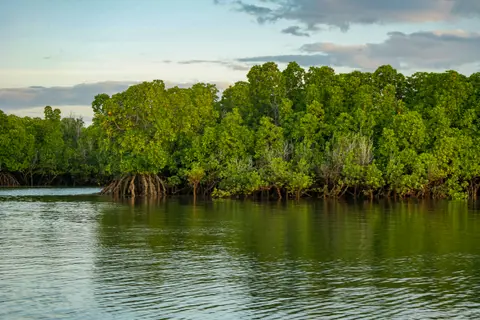
- Scale & Footprint: 15.6 hectares (roughly 16 hectares) across the historic coral-stone core, sheltered by a gazetted buffer zone encompassing the Manda and Ras Kitau mangrove skyline and Shela freshwater sand dunes
- Access & Ticketing: Open pedestrian and donkey-transport town lanes with zero motorised vehicles; individual entry fees apply to Lamu Fort, Lamu Museum and the German Post Office Museum under National Museums of Kenya regulations (check official museum listings for current entry fees and modest-dress expectations)
- Arrival Logistics: Daily regional flights connect Manda Airport (LAU) on neighbouring Manda Island, 8 kilometres from Lamu Old Town by short boat transfer (roughly 450 kilometres southeast of Nairobi; 461 kilometres via main routes). Coastal roads from Mombasa (341 kilometres) terminate at Mokowe Jetty for the channel crossing.
Seven Centuries of Swahili Maritime Trade on Lamu Island
Lying on the Indian Ocean shore of Kenya's Lamu Archipelago roughly 350 kilometres north of Mombasa, Lamu Old Town is Kenya's oldest continuously inhabited settlement and the most intact Swahili port remaining in East Africa. Believed to have been founded around 1370 under the indigenous name Amu (recorded as Al-Amu by Arab chroniclers and Lamon by Portuguese mariners), the town first entered written history in 1441 when Arab scholar Abu-al-Mahasini met a travelling judge from Lamu in Mecca. While rival Swahili stone ports along the East African coast eventually collapsed into forest ruins, Lamu sustained unbroken urban life for over 700 years.
European maritime rivalry reached the island early in the 16th century. In 1506, a Portuguese fleet under Tristão da Cunha blockaded the harbour and compelled Lamu's ruler to surrender an immediate payment of 600 Meticals followed by annual tribute as Portugal enforced shipping monopolies and export taxes along Indian Ocean channels. Resentment smouldered across the 1580s when Lamu led coastal rebellions prompted by Turkish naval raids, before Omani forces intervened in 1652 to help expel Portuguese garrisons from northern Kenyan waters.
Under Omani protection from the late 17th through the early 19th centuries, Lamu flourished during its Golden Age. Internally, a council of elders called the Yumbe governed it as a republic from a palace now reduced to an open ruin plot. The port grew into a regional centre for poetry, crafts and Indian Ocean exports, shipping ivory, mangrove timber, turtle shells, rhinoceros horn and enslaved people until formal abolition in 1907. Women held notable literary standing here, led by poet Mwana Kupona whose 1858 verse work Utendi Mwana Kupona became a cornerstone of early Swahili literature.
Rivalry with neighbouring Pate and Mazrui forces peaked in 1812 at the Battle of Shela, when defenders crushed an invading coalition on the southern beaches. Townsfolk then requested a Busaidi Omani garrison to finish Lamu Fort, started under Sultan Fumo Madi ibn Abi Bakr before his death in 1809 and completed in the early 1820s. Later in the 19th century, the Sultan of Zanzibar held strong influence until German claims to Wituland in June 1885. Between 22 November 1888 and 3 March 1891, East Africa's first post office operated here, preserved today as the German Post Office Museum. Under the 1890 Heligoland-Zanzibar Treaty, Lamu entered British colonial rule until Kenyan independence in 1963. Completion of the Uganda Railroad from Mombasa in 1901 and slavery abolition in 1907 shifted coastal trade south, leaving Lamu substantial local autonomy.
Coral Stone, Mangrove Poles, and Ward-Based Town Planning
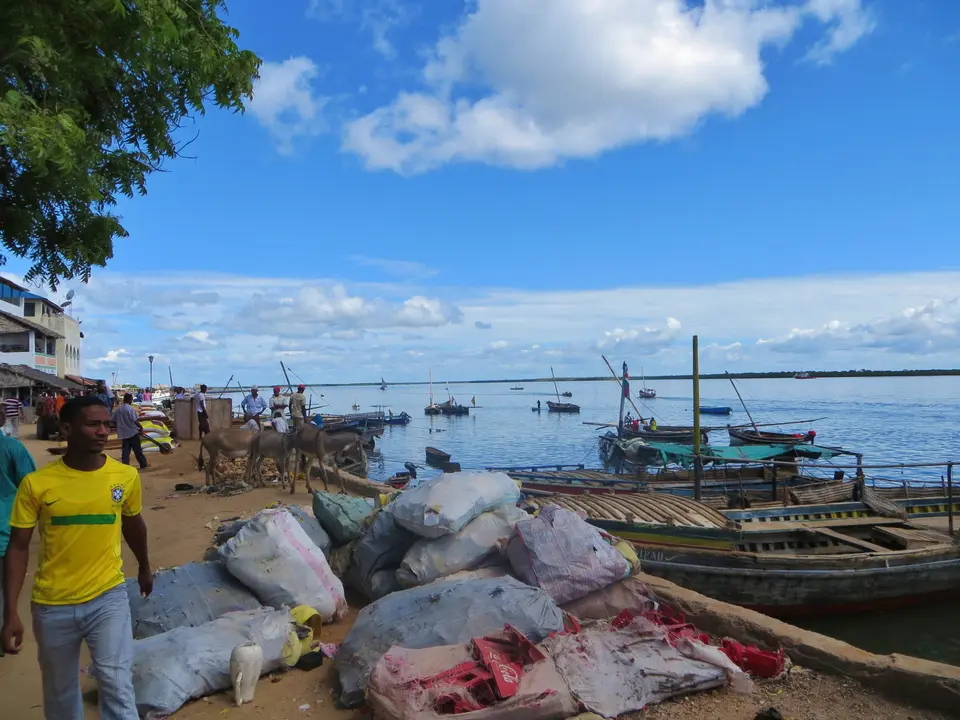
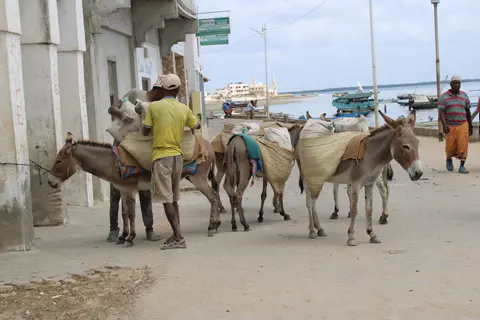
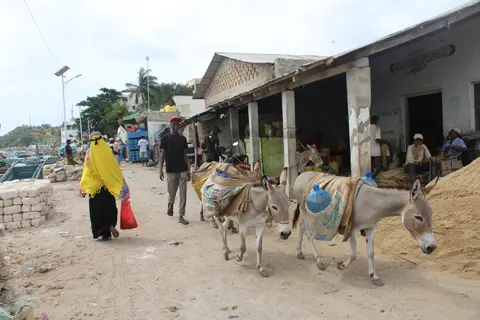
Across 15.6 hectares of dense seafront fabric, Lamu's buildings express a unified vernacular craft shaped entirely by local coastal geology and timber. Masons quarried blocks of porous fossilised coral stone, bound walls with slaked coral lime mortar and spanned upper storeys with dense mangrove timber poles (boriti) harvested from tidal creeks sheltering the archipelago. Because streets narrow into shaded canyons tailored solely for pedestrians and roughly 3,000 working donkeys rather than cars, thick coral walls shield interiors from the tropical dry savanna heat while drawing cooling Indian Ocean sea breezes through inner courtyards.
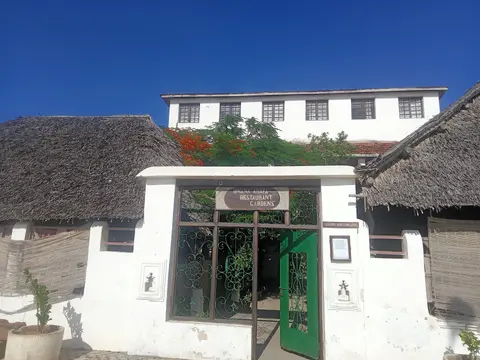
Urban layout follows Arab land-distribution customs organised around tight clusters of lineage wards known as mitaa. Extended families share narrow winding lanes, raised entrance porches (daka) and long stone benches (barazas) lining shaded corners and open squares. Facing Manda Channel on the eastern waterfront, merchant townhouses such as the Mwana Arafa Jambeni Building display stately symmetrical facades with shaded arcades and tall open verandas built to catch sea winds. Several adapted heritage residences operate as inns along this front, including Petley's Inn (town's oldest hotel), the 18th-century Stone House Hotel and the high-ceilinged 18-room Sunsail Hotel trader's house.
Inside private merchant houses, structural austerity gives way to detailed ornamentation drawn from Indian Ocean exchange. Artisans carved geometric and floral hardwood doors, painted ceiling beams in traditional pigments and inset imported Chinese porcelain plates into lime plaster. Inner reception rooms feature rows of small plaster niches (zidaka) beneath larger recessed arches (madaka). Conservation surveys confirm that 65 percent of Old Town structures remain in sound physical condition, with 20 percent needing minor refurbishment and 15 percent requiring comprehensive restoration. Coastal civic infrastructure such as Lamu District Hospital, opened in the 1980s south of the core, serves the island.
Shela Dunes, Religious Festivals, and Heritage Pressures
Since the late 19th century, Lamu has anchored Islamic scholarship across East and Central Africa, alongside a literary tradition stretching from Mwana Kupona to modern Swahili poet Ustadh Mau (born 1952). In the 1880s, Sharif Habib Salih arrived from the Comoros with scholarly roots in Yemen's Hadramaut and opened Islamic classes to learners of every background. Around 1892 he founded the Riyadha Mosque, completed by 1900 among 23 town mosques including Mnarani Mosque. After Habib Salih's death in 1935, his sons preserved the madrassa as a leading regional seminary while spreading Habshi Maulidi verse celebrations accompanied by tambourines.
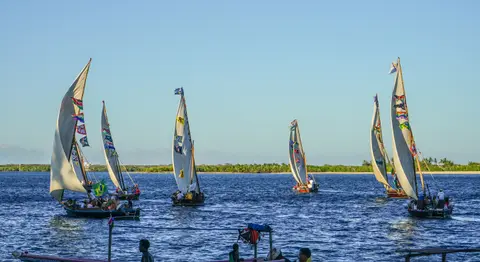
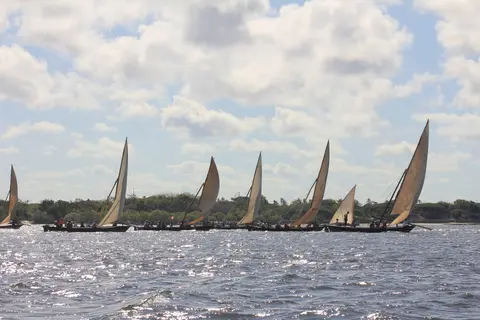
Annual calendars still revolve around communal devotions and maritime heritage. Every January or February, the Maulidi Festival marks the Prophet Muhammad's birth, drawing pilgrims from Sudan, Congo, Uganda, Zanzibar and Tanzania for choral verse, donkey races, dhow-sailing heats and swimming contests. Held in late August since 2000, the Lamu Cultural Festival features chakacha women's dances, men's hanzua sword dances in flowing kanzus, kofia embroidery and regattas of lateen-rigged dhows. Animal welfare forms an equally visible civic pillar. Following Dr Elisabeth Svendsen's 1985 visit, the Donkey Sanctuary opened in 1987 to give free veterinary care to working herds, culminating in March and April Donkey Awards.
Yet modern regional ambitions place heavy strain on this fragile coral port. Protection rests on Kenya's National Museums and Heritage Act 2006 (replacing 1983 statutes CAP 216 and CAP 215), the EMCA Act and the 2006 Planning Act. Operating through the Lamu World Heritage Site and Conservation Office (active since 1986) and a 1991 Planning Commission, authorities follow a conservation plan and draft management plan linking ministries and proposing a local fund. Inspectors watch informal settlement growth on nearby islands, oil exploration and deep-water port plans at Manda Bay under the LAPSSET project (proposed in 1975 and launched in 2009 for deeper, multi-berth capacity than Mombasa). Encroachment also threatens the Shela sand dunes, which guard the town's Manda and Ras Kitau mangrove skyline and the underground freshwater lens keeping island wells sweet. Global Heritage Fund warnings in 2010 listing Lamu among 12 endangered sites, alongside mainland security disruptions in 2011, July 2014 (killing 29 people) and March 2025, keep funding and safety central to management.
Access Zones Across Lamu Old Town and Shela
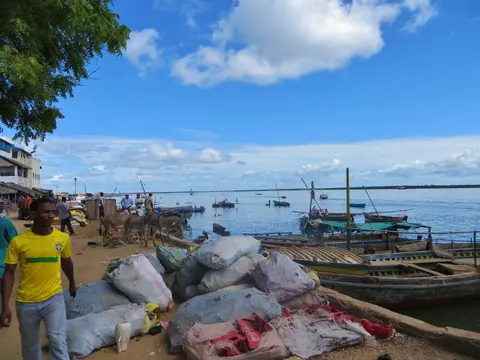
Because no motor vehicles operate on Lamu Island outside official emergency utility routes, exploring the stone wards, waterfront promenade and coastal dunes unfolds strictly on foot, by boat or aboard traditional wooden dhows. Historic seafront guesthouses, including restored merchant residences such as 20-room Bahari Hotel, 23-room Lamu Palace Hotel, Amu House, Jannat House and Doda Villas, cluster near the water, keeping visitors close to local boat piers and food markets along Harambee Avenue.
| Complex Zone | Key Highlights | Access & Ticket Rule |
|---|---|---|
| Seafront Promenade & Lamu Fort | 1820s coastal fort, merchant arcades, dhow harbour moorings, Lamu Museum (housing ceremonial siwa horn) and Harambee Avenue food markets | Open seafront walkway; individual museum gates and Lamu Fort courtyards sell admission tickets managed by National Museums of Kenya |
| Inner Mitaa Stone Wards & Riyadha Mosque | 23 mosques including 1892 Riyadha Mosque, carved timber doors, German Post Office Museum and shaded coral-stone lanes | Public lanes open on foot; wear modest clothing beyond shorts or swimwear and respect Muslim prayer times outside mosque doors |
| Donkey Sanctuary & Artisan Quarter | Free-care clinic serving roughly 3,000 island working donkeys, plus boat-building sheds and carved furniture workshops | Open public street views and sanctuary clinic visits during daytime hours without disturbing working animals |
| Shela Village & Freshwater Sand Dunes | Historic 1812 battleground beach, coastal guesthouses and fragile freshwater dune catchment protected inside the buffer zone | Reached by a coastal footpath or short channel dhow ride from Lamu town; stay clear of fragile dune vegetation |
Three Swahili Architectural and Streetscape Details in Lamu
- Zidaka Wall Niches and Inset Chinese Porcelain: Inside preserved 18th- and 19th-century merchant townhouses (such as Stone House Hotel or museum interiors), inspect the layered ranks of arched plaster niches called zidaka and madaka. Builders recessed small porcelain plates traded across the Indian Ocean directly into wet coral lime plaster to display household prestige and maritime reach.
- Mangrove Boriti Joists and Carved Hardwood Doors: Look beneath upper verandas along the waterfront and step close to older residential portals. Straight mangrove poles harvested from Manda creeks carry heavy coral upper walls, while deeply relief-carved Indian and Swahili timber doors frame shaded daka entry benches.
- Car-Free Donkey Corridors and Baraza Steps: Walking inland away from the busy seafront, notice how narrow masonry corners force pedestrians to share tight passages with laden cargo donkeys while built-in stone baraza benches along house fronts turn everyday alleys into open neighbourhood lounges.
Monsoon Winds, Cultural Calendars, and Flights to Nairobi
Lamu's tropical dry savanna climate stays warm year-round, keeping seafront walks comfortable whenever ocean winds blow across Manda Channel. Cultural travellers often time visits for August's Lamu Cultural Festival dhow regattas or the January-to-February Maulidi pilgrimage week. Base yourself in a restored coral townhouse on the Old Town waterfront or south along Shela beach for two to three nights while observing local dress norms in residential wards. Inspect carved wooden doors and active boatyards, see the Lamu Museum's ceremonial siwa horn and Swahili collections, and try coconut, mango, grapefruit, crab and lobster along Harambee Avenue. Daily regional flights link Manda Airport (LAU), 8 kilometres across the channel, back to Nairobi (461 kilometres away). From there, pair Swahili coastal heritage with highland parks or explore African monuments in the UNESCO World Heritage Atlas.