


























Quick Field Data
- UNESCO Inscription: 1982 · Criteria (iv), (v).
- Scale & Footprint: 4 km2 historic municipal core (La Habana Vieja, population 79,845 in 2022 across seven wards) containing roughly 3,000 historic buildings and the harbour fortifications of Havana Bay
- Access & Ticketing: The five historic plazas and pedestrian streets are open free of charge; individual tickets apply at Castillo de la Real Fuerza, Castillo del Morro as well as La Cabaña (including its nightly 9 p.m. cannon ceremony)
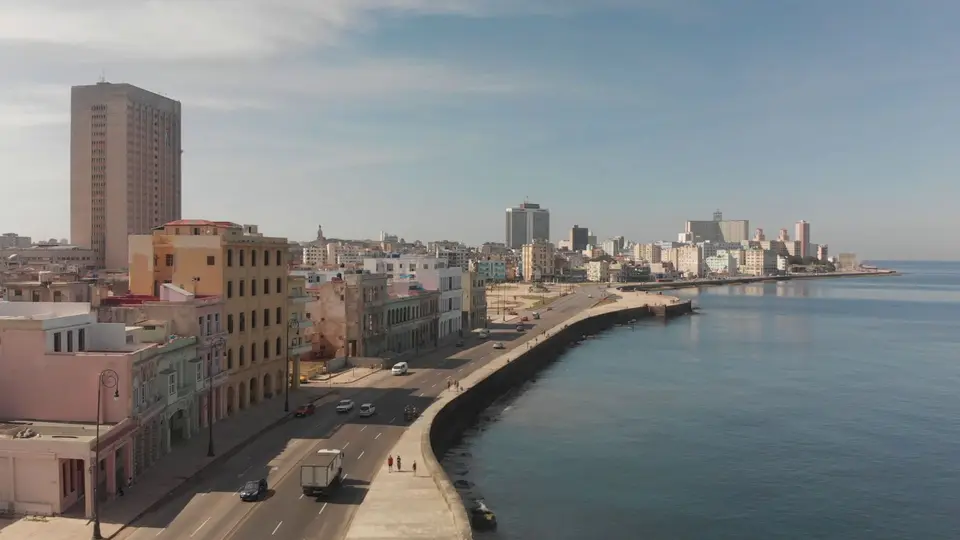
- Arrival Logistics: Located on the northwestern coast of Cuba at 50 metres elevation along Havana Bay, bounded on the north by the Malecón seawall and on the west by the Paseo del Prado
Five Colonial Plazas, Arcaded Courtyards and the Spanish Treasure Fleet
Set on Cuba's northwestern coast around the sheltered bottleneck entrance to the Bay of Havana at coordinates 23.1410 N and 82.3547 W, Old Havana and its Fortification System (known in Spanish as La Habana Vieja, the historic downtown and one of the 15 municipalities of modern Havana) preserves the most complete colonial urban centre in the Caribbean. Baroque facades ring the harbour channel here. Encompassing a 4-square-kilometre municipal territory (elevation 50 metres, area code +53-7) divided into the seven popular wards (Consejos Populares) of Belén, Catedral, Jesús María, Plaza Vieja, Prado, San Isidro as well as Tallapiedra and inhabited by 79,845 residents in 2022 inside a metropolitan city of 2 million, the district was inscribed on the UNESCO World Heritage List at the 6th session in 1982 under Criteria (iv) and (v).
Founded by the Spanish on 16 November 1519 beside the deep natural anchorage of Havana Bay, the settlement rapidly became the obligatory rendezvous point for treasure-laden Spanish galleons crossing the Atlantic between colonial America and Spain. With the rise of the Spanish West Indies convoy system during the second half of the 16th century, Havana became the largest port in the region, expanded during the 17th century into a major Caribbean shipbuilding centre alongside in the 18th century operated the largest and best-equipped naval shipyard in the Americas.
Defined by the line of the former city ramparts (the Walls of Havana or Murallas de La Habana) and bordered on the west by the tree-lined Paseo del Prado (separating it from Centro Habana) and on the north by the Malecón seawall stretching toward the Almendares River, Old Havana retains its early colonial street layout intact, anchored by five monumental public squares that each express a distinct civic, military, religious, or commercial role: Plaza de la Catedral and Plaza de Armas alongside Plaza Vieja, Plaza del Cristo as well as Plaza de San Francisco.
Framing these five plazas and the narrow shaded alleys between them is an extraordinary ensemble of roughly 3,000 buildings, one-third of which date directly to the colonial era. Grand Baroque and neoclassical palaces and churches stand side by side with a homogeneous fabric of private townhouses featuring shaded ground-floor arcades, wrought-iron gates, timber balconies, and cool interior courtyards, a cityscape that reminded Cuban novelist Alejo Carpentier of Cádiz and Tenerife and inspired him to call Havana the city of the columns (de las columnas). Thanks to 19th- and 20th-century building ordinances and the comprehensive restoration campaign launched a year after UNESCO inscription by the Historian's Office of the City directed by Eusebio Leal (despite structural damage caused by Hurricane Ike in 2008), the district's urban morphology has remained virtually unchanged.
From Castillo de la Real Fuerza to El Morro and La Cabaña
Because the wealth of the Spanish treasure fleets made Havana a prime target for rival European powers and Caribbean corsairs, the Crown ringed the bay entrance with several of the earliest and largest stone fortresses now standing anywhere in the Americas between the 16th and 19th centuries. The impetus for permanent stone defences came in 1555, when the French corsair Jacques de Sores easily overpowered the town's defenders, plundered Havana as well as burned much of the settlement to the ground. Three years later, in 1558, the Spanish Crown dispatched military engineer Bartolomé Sanchez and 14 master stonemasons to erect the Castillo de la Real Fuerza (Castle of the Royal Army) on the western shore of the harbour channel beside the Plaza de Armas, creating the city's first major stone fortress.
After the English privateer Sir Francis Drake threatened Havana prior to 1587, the King of Spain sent field master Juan de Texeda and Italian military engineer Battista Antonelli to Cuba in 1587 to fortify the harbour mouth. On the rocky promontory of El Morro on the eastern side of the channel, Antonelli designed the polygonal bastion fortress of Castillo de los Tres Reyes del Morro (Castillo del Morro), while directly opposite on the western shore at the start of the Malecón curve he began San Salvador de la Punta Fortress in 1590; from 1629 onward, the Chapter of Havana stretched a heavy timber-and-iron chain between La Punta and El Morro every night to seal the bay against enemy warships. In the 18th century, following the brief British capture of the city, Spanish engineers crowned the long ridge east of El Morro with the vast ramparts of La Cabaña Fortress, the largest military installation built by Spain in the New World.
Inside the walled town, the Plaza de Armas (used since the late 16th century for military parades) is bordered by the Castillo de la Real Fuerza alongside the Baroque Palacio de los Capitanes Generales and the Palacio del Segundo Cabo. Nearby on the harbourfront Plaza de San Francisco stands the Antiguo Convento and Basilica of San Francisco de Asís, built in 1608 and reconstructed in 1737. A short walk north, the intimate Plaza de la Catedral is dominated by the Catedral de San Cristóbal (Iglesia Catedral de La Habana), raised after 1748 under the direction of Bishop Jose Felipe de Trespalacios of Salamanca as a masterwork of sober American Baroque limestone architecture. Beyond the old wall line along the Paseo del Prado rise landmark early-20th-century civic buildings: the Gran Teatro de La Habana (Great Theatre of Havana, home to the National Ballet of Cuba founded by Alicia Alonso and the Garcia Lorca concert hall, built between 1907 and 1914 as the neobaroque Galician Center over the 1838 Theater Tacon), the former Presidential Palace (now the Museum of the Revolution displaying the yacht Granma) alongside the domed National Capitol styled after the Panthéon in Paris and the U.S. Capitol.
Walking the Five Plazas and Attending the Cañonazo at La Cabaña
Twinned internationally with Viveiro in Spain, Cartagena in Colombia, Guanajuato in Mexico, and Sintra in Portugal, Old Havana is best explored on foot across its pedestrianised grid during the day, followed by an evening crossing of the harbour channel to the eastern fortresses of El Morro and La Cabaña.
- Plaza de Armas, Castillo de la Real Fuerza, and Plaza de la Catedral: Start your morning walk in the shaded gardens of Plaza de Armas to visit the 18th-century courtyard of the Palacio de los Capitanes Generales and cross the drawbridge into the 1558 Castillo de la Real Fuerza. Stroll two blocks northwest into Plaza de la Catedral to examine the undulating Baroque limestone facade and bell towers of the post-1748 Catedral de San Cristóbal surrounded by colonnaded aristocratic mansions.
- Plaza de San Francisco, Plaza Vieja, and Paseo del Prado landmarks: Follow the cobblestones south to the harbourside Plaza de San Francisco to visit the 1608 and 1737 Basilica and Convent of San Francisco de Asís, then walk through the arcaded galleries and stained-glass balconies of restored Plaza Vieja and Plaza del Cristo toward the Paseo del Prado to view the Gran Teatro de La Habana, the National Capitol, and the Museum of the Revolution.
- San Salvador de la Punta, Castillo del Morro, and the nightly cannon ceremony: Walk along the Malecón to the 1590 Fortress of San Salvador de la Punta to look directly across the narrow harbour entrance where the 1629 chain once stretched, then cross the bay tunnel to tour Battista Antonelli's 1587 Castillo del Morro and the 18th-century bastions of La Cabaña, where uniformed soldiers fire the historical nightly cannon shot (el cañonazo) that once signalled the locking of the city wall gates. Connect your Caribbean heritage route with our UNESCO World Heritage Atlas and our Key West island guide to the north.
