


























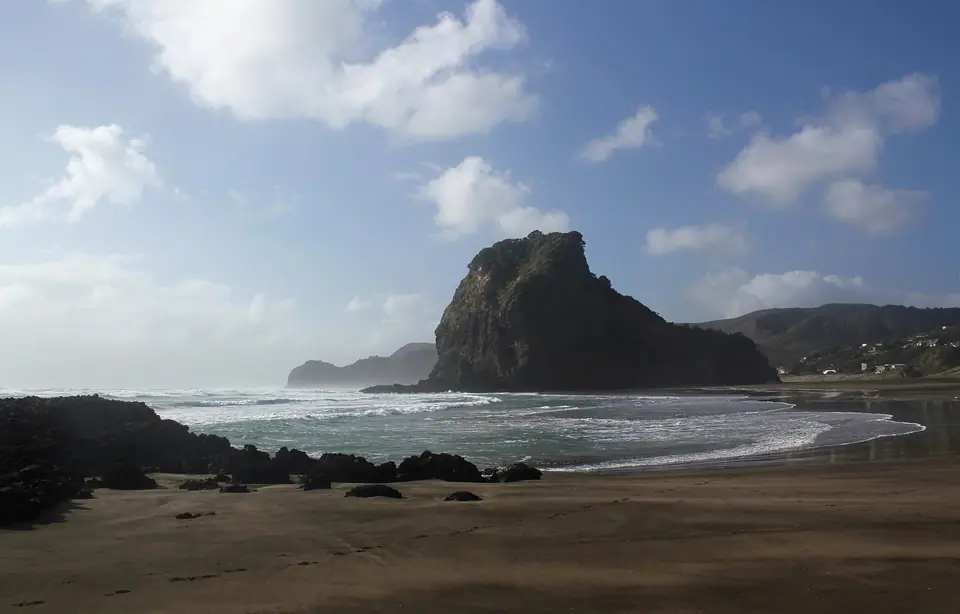
West Coast Wild Beaches: Piha, Lion Rock, Waitakere Ranges & Muriwai Gannet Colony
Explore Auckland's wild Tasman Sea coastline 45 minutes west of the CBD: stop at Arataki Visitor Centre in the Waitakere Ranges, hike to Kitekite Falls, walk the black iron-sand surf beach of Piha beneath 101m Lion Rock, and see 1,200 gannet pairs at Muriwai.
While Auckland's eastern Hauraki Gulf beaches are calm, sheltered, and golden, driving just forty to forty-five minutes west of the CBD across the rainforest-cloaked spine of the Waitākere Ranges brings you to a completely different world: a raw, wind-sculpted Tasman Sea coastline of shimmering black volcanic iron-sand beaches, thundering surf, waterfalls, and clifftop seabird colonies.
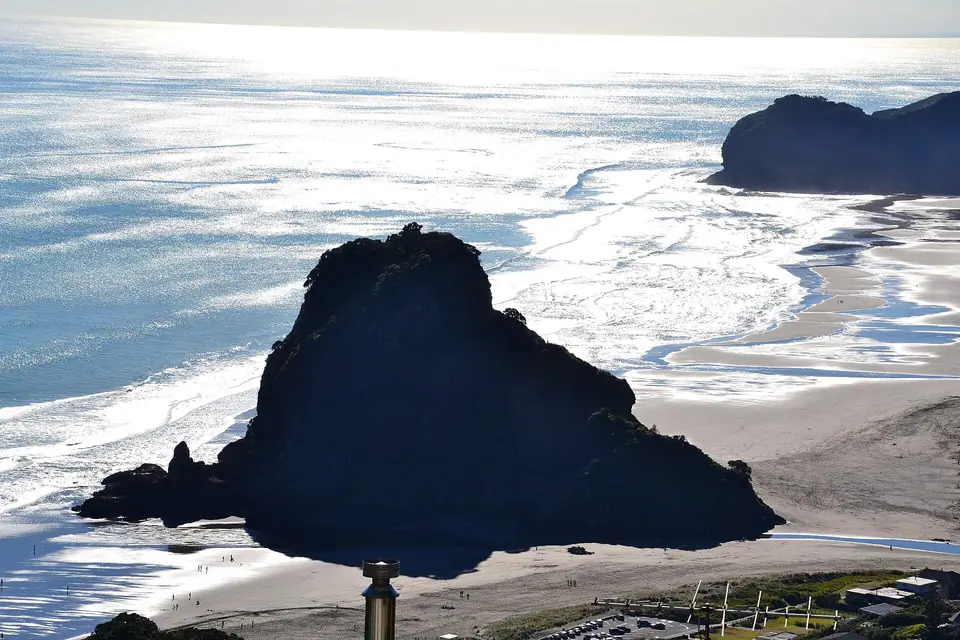
1. Arataki Visitor Centre, Waitākere Rainforest Waterfalls & Piha Beach (Lion Rock)
- Arataki Visitor Centre & Kitekite Falls: Follow Scenic Drive (Route 26) west from Titirangi into the 16,000-hectare Waitākere Ranges Regional Park (Te Wao Nui a Tiriwa). Pause first at the Arataki Visitor Centre to walk beneath its 11-metre carved Māori guardian post (pou) out onto elevated timber viewing decks overlooking the Nihotupu reservoir and the Manukau Harbour entrance. Before descending to the beach, scrub and spray your shoes at the kauri dieback hygiene station on Glenesk Road to walk the open 45-minute forest trail to Kitekite Falls, where a stream cascades down six volcanic rock tiers into a deep swimming pool.
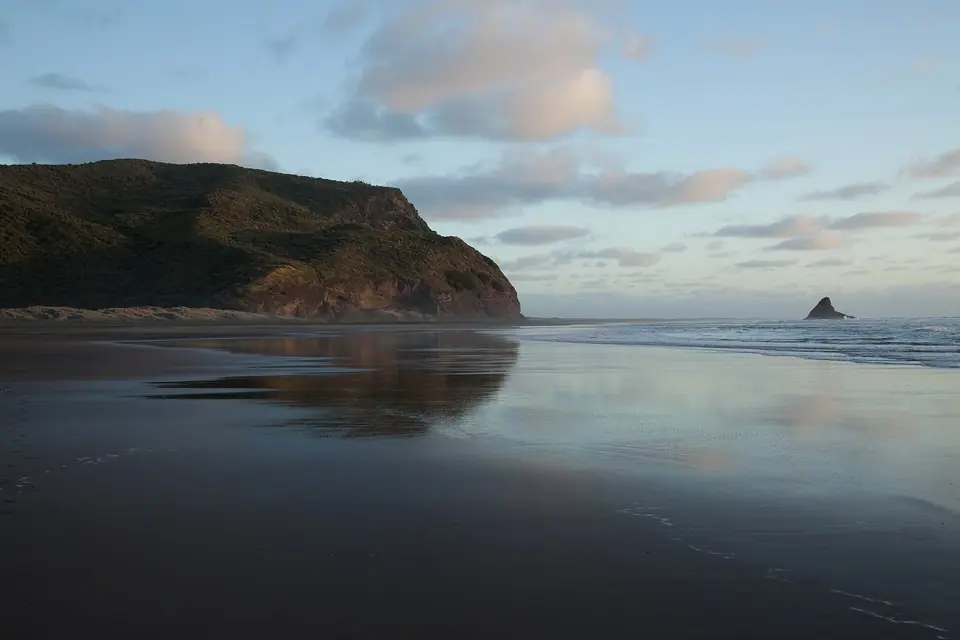
- Piha Beach, 101-Metre Lion Rock (Te Piha) & Karekare: Dropping down the winding hillside road reveals Piha, New Zealand's birthplace of board-riding and surf lifesaving. Here dark grey-and-black titanomagnetite iron sand (eroded from ancient Taranaki and Waikato volcanic eruptions and swept north by coastal currents) gleams like polished graphite around the 101-metre volcanic plug of Lion Rock (Te Piha). One valley south lies brooding Karekare Beach and Karekare Falls, immortalised in Jane Campion's Oscar-winning film The Piano. Critical surf safety rule (safeswim.org.nz): West Coast surf beaches generate powerful, shifting rip currents; if swimming between October and April, stay strictly between the red-and-yellow patrol flags monitored by lifeguards.
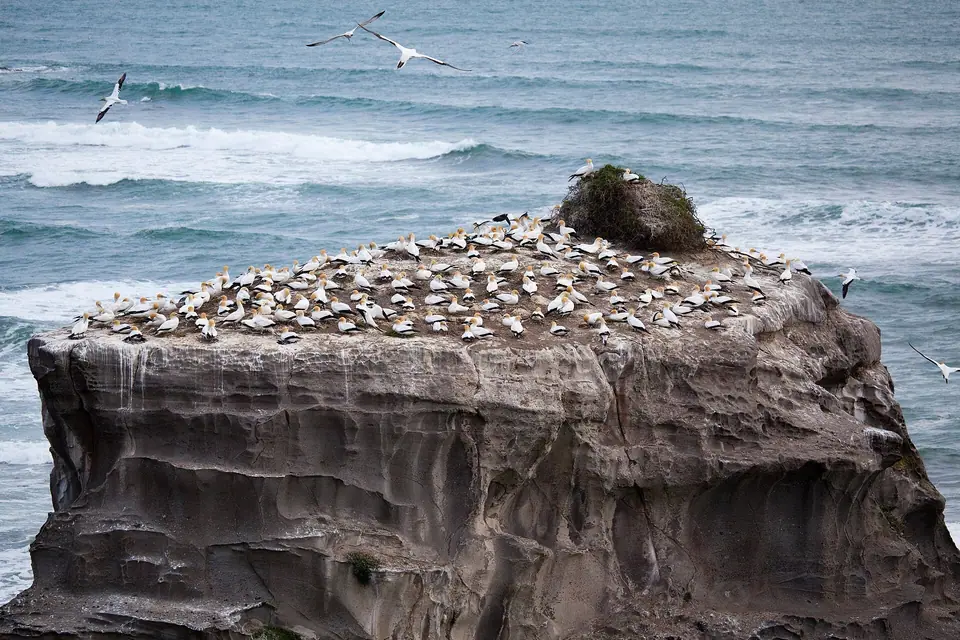
2. Muriwai Beach & the Takapū (Australasian Gannet) Colony at Ōtakamiro Point
- 1,200 Pairs of Nesting Gannets (August to Late March): Thirty minutes north of Piha via State Highway 16 and Waimauku lies the 60-kilometre black-sand sweep of Muriwai Beach. At its southern end, a short five-minute clifftop boardwalk climbs Ōtakamiro Point to two cantilevered viewing platforms positioned just metres above New Zealand's most accessible mainland colony of Australasian gannets (Morus serrator / takapū). Every August, roughly 1,200 pairs return from winter feeding across the Tasman Sea in Australia to reunite with their lifelong mates, perform bill-fencing courtship rituals, and raise white downy chicks before the young birds leap off the cliffs to fly 2,000 kilometres west across the ocean in March.
Traveller tips
Real advice from people who have been to West Coast Wild Beaches: Piha, Lion Rock, Waitakere Ranges & Muriwai Gannet Colony. Every tip is read by our team before it goes live.
No tips yet. Been here? Yours could be the first.
Thank you! Your tip will appear here after a quick review.
More in Auckland
Continue exploring Auckland with related neighbourhood, food, and planning guides

Arriving in Auckland: AKL Airport Transfers, Puhinui Train Link, AT Contactless & Ferries
Auckland, New Zealand
Best Time to Visit Auckland: Subtropical Summers, NIWA Climate Normals & Gannet Season
Auckland, New Zealand
What to Wear in Auckland: Extreme UV Sun Protection, Rain Shells & MPI Biosecurity Rules
Auckland, New Zealand
Where to Stay in Auckland: Britomart & Commercial Bay, Viaduct & Wynyard, Ponsonby & Devonport
Auckland, New Zealand
