Photo: Claude TRUONG-NGOC · CC BY-SA 3.0
Darkness, Glowing Lanterns and Basel's Three Days
Seventy-two hours of piccolos, painted canvas lanterns, satirical verse, and strict spectator etiquette across UNESCO-listed Basler Fasnacht.
Call it a street carnival in Basel and locals immediately correct you: Basler Fasnacht (BAHS-ler FAHS-nakht) runs by strict civic rules of its own. Known warmly in dialect as die drey scheenschte Daag ("the three finest days"), Switzerland's largest carnival begins in pre-dawn darkness. It strictly forbids commercial banners, amplified pop speakers, and spectator fancy dress. Learning its timing, sharp local satire, and unwritten crowd manners transforms packed winter streets into an extraordinary cultural window. Quiet respect earns warm smiles from masked musicians across every square.
Why Basel Starts Five Days After Ash Wednesday
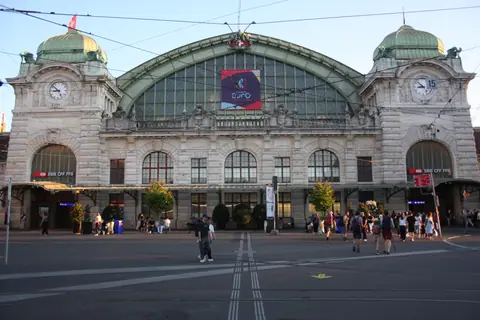
While Catholic cities like Cologne and Lucerne wrap up carnival before Ash Wednesday, Basel waits deliberately until the Monday after Ash Wednesday. The event runs continuously for exactly 72 hours until early Thursday morning. Local tradition frequently connects this five-day offset to Basel's 1529 Protestant Reformation break or an older rural Bauernfasnacht custom, yet municipal archives hold no conclusive proof. Because dates shift annually with Easter, confirm exact Monday-to-Thursday dates on fasnachts-comite.ch before booking 4001 hotels. Booking rail seats ahead prevents packed arrivals before festival week.
Morgestraich: Pitch Darkness Before First Light
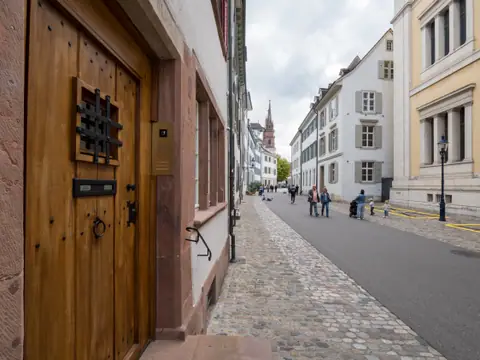
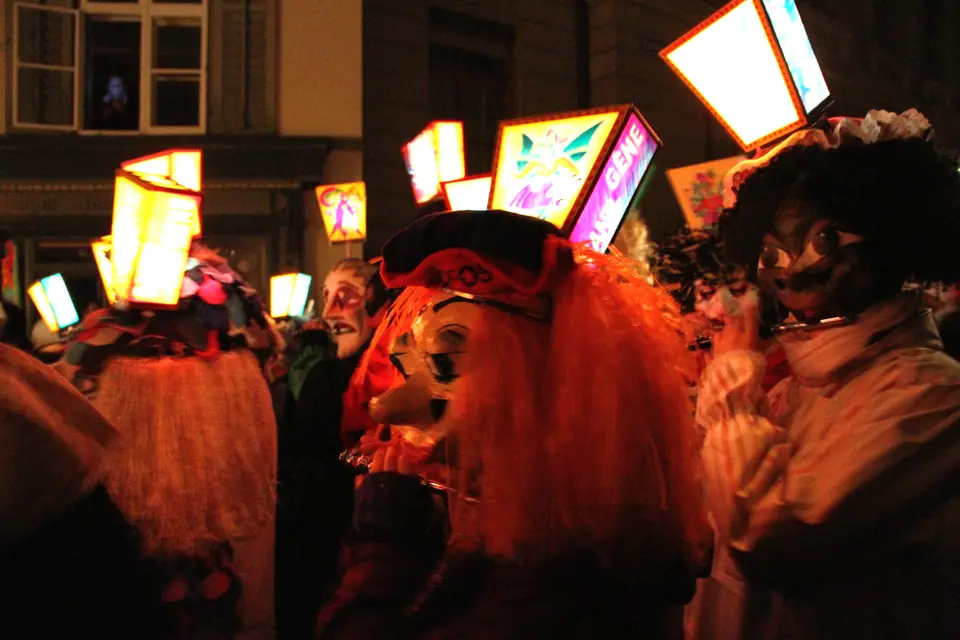
Everything launches cleanly at Morgestraich (MOR-geh-shtrykh) four hours past midnight on Monday morning. Municipal switches extinguish every streetlamp, shop window, and traffic signal across central Grossbasel and Kleinbasel simultaneously. Within seconds, medieval alleys plunge into complete winter blackness. Drum majors bark crisp marching orders and thousands of costumed musicians step forward beneath tall glowing canvas lanterns (Ladärne) and miniature head lanterns. Head lanterns light up painted faces sharply against black stone lanes.
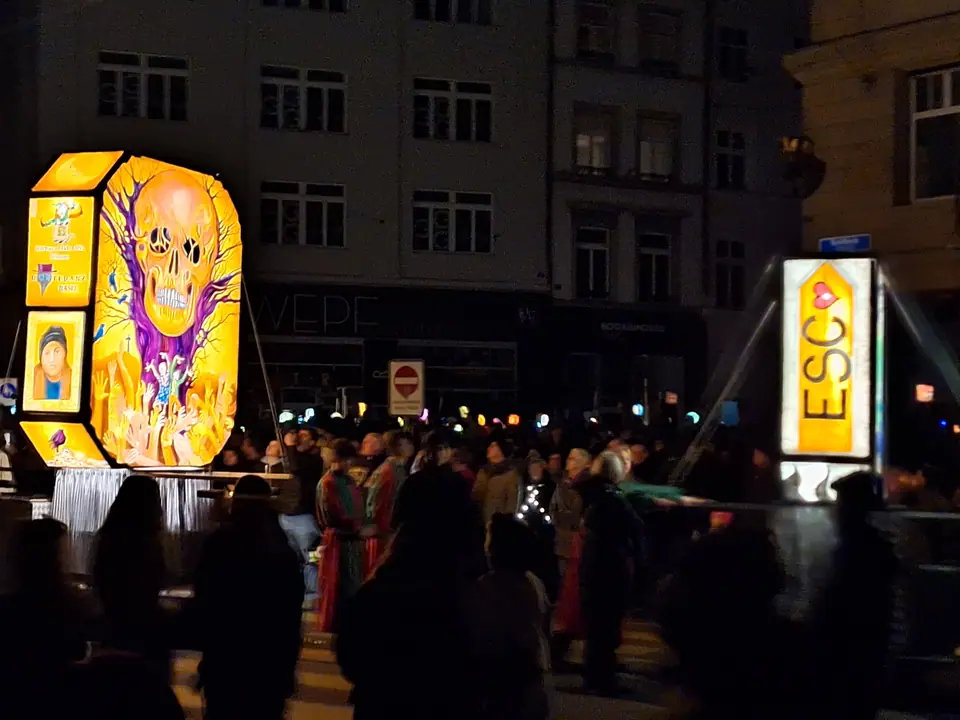
High wooden piccolos and thundering snare-free Basel drums strike the haunting traditional Morgestraich march across Barfüsserplatz, Freie Strasse, and Marktplatz. Central trams halt service and cold February or March dawn air cuts right through thin jackets. Stand positioned near Claraplatz or Marktplatz wearing thermal layers before streetlights go out. Hungry marchers and onlookers soon pack old-town cellars for hot bowls of roasted-flour Mehlsuppe and crisp onion tarts.
Two Hundred Glowing Lanterns on Münsterplatz
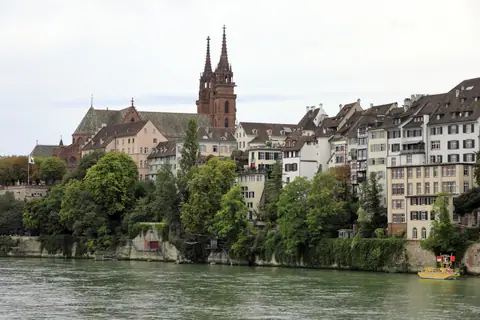
Monday evening converts Münsterplatz beside Basel Minster into a calm open-air gallery lit exclusively from inside wooden canvas frames. More than 200 tall back-lit Laternen line cathedral gravel from Monday night until early Wednesday morning for the popular Laternenausstellung. Local artists spend winter months painting political caricatures, sharp dialect puns, and environmental jokes across translucent linen panels illustrating each troupe's annual satirical subject (Sujet).
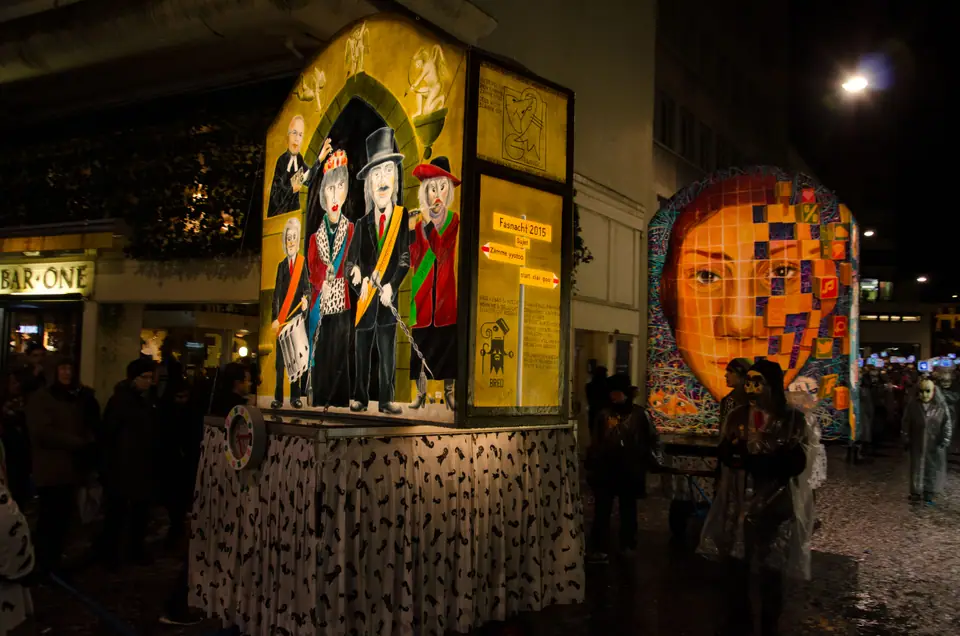
Strolling calmly past those luminous rows Monday night or Tuesday afternoon gives spectators space to read verses without dense parade bottlenecks. Quiet Tuesday daytime hours focus on families during Kinderfasnacht (when masked Binggis children parade through town) and pair smoothly with a calm tram trip to Fondation Beyeler in Riehen. Quiet Tuesday mornings reveal detailed brushwork across tall fabric canopies clearly.
Cliquen, Waggis Floats, Guggenmusik and Dialect Verse
Roughly 18,000 active participants drive Fasnacht through voluntary neighbourhood clubs rather than hired parade dancers. Survey records count over 12,000 organised members and roughly 6,000 unorganised strollers. Around 11,000 marchers join formal afternoon Cortège processions on Monday and Wednesday. Five distinct participant styles share the streets:
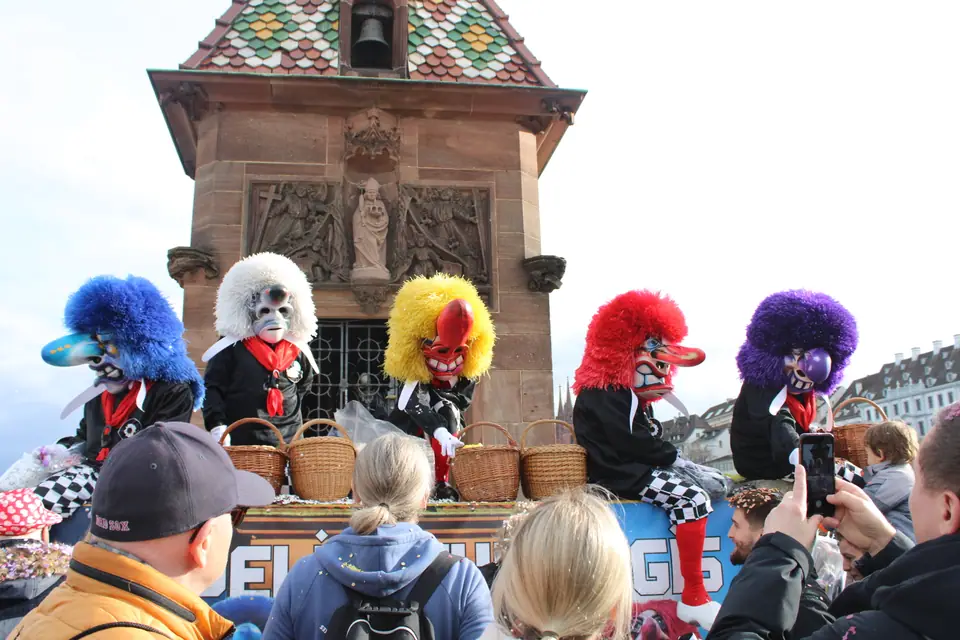
Cliquen march solemnly inside full papier-mâché masks (Larven), playing tight piccolo melodies over disciplined Basel drums. Towering floats carry rowdy Waggis figures dressed as caricatured Alsatian farmers tossing confetti (Räppli), oranges, sweets (Dääfeli), and yellow mimosa twigs to friendly onlookers. Tuesday night belongs to thunderous brass Guggenmusik bands booming intentionally off-key anthems across Barfüsserplatz. Meanwhile, Chaise horse carriages roll past while satirical Schnitzelbängg singers deliver biting rhyming verses beside flip-boards (Helge) inside warm taverns and Cliquenkeller cellars. Late on Tuesday and Wednesday nights, smaller cliques weave quietly through tight medieval lanes during Gässle. Early Thursday morning then brings 72 intense hours to an abrupt halt with the final Ändstraich farewell.
UNESCO Heritage Status and the 2020 Pause
On 7 December 2017, UNESCO placed Basler Fasnacht onto its Representative List of the Intangible Cultural Heritage of Humanity. That listing honoured how handmade masks, lantern painting, acoustic music, and protected local dialect sustain civic satire. Major public health emergencies interrupted the rhythm when authorities cancelled Fasnacht in 2020 and 2021 and held a scaled-back mask edition in 2022 before full parades returned. Courteous spectators protect that living local craft, while local taverns stay welcoming to polite visitors following simple crowd guidelines. Simple courtesy keeps crowded winter alleys cheerful and welcoming for everyone.
Six Rules Every Fasnacht Spectator Should Follow
- Pin an official Blaggedde badge visibly: Buy the annual carnival pin (bronze, silver, gold, or bijou) from street sellers and wear it openly on your coat. Fasnacht rejects corporate ads, so badge-free viewers invite playful confetti showers from passing Waggis.
- Keep camera flashes and phone torches off: Never fire camera strobes, video lamps, or phone flashlights during dark Morgestraich marches, because bright glare blinds masked musicians peering through narrow eye slits.
- Skip generic carnival costumes: Leave clown wigs, glitter paint, and fancy dress in luggage; masks and costumes belong strictly to registered Fasnacht participants while visitors watch in ordinary winter coats.
- Never hurl Räppli at musicians or pick it up off cobbles: Purchase clean paper confetti bags for playful spectator tosses. Never throw anything toward masked drummers or piccolos, and never scoop dirty confetti off street gutters.
- Stay clear of columns, drums, and lanterns: Leave marching lanes open, never cut between drums and piccolos, and keep hands off fragile hand-painted canvas lanterns.
- Layer properly for freezing pre-dawn waits: Stand comfortably on thick soles wearing wool socks, gloves, hats, and windproof shells before warming indoors with Mehlsuppe and Fastenwähe.
Where it is
- 1Darkness, Glowing Lanterns and Basel's Three Days
- EuroAirport Basel–Mulhouse–Freiburg (BSL) · about 7 km from here in a straight line
- Directions in Google Maps
Stations and taxi ranks: OpenStreetMap. Airports: OurAirports. Distances are in a straight line.
Traveller tips
Real advice from people who have been to Basel. Every tip is read by our team before it goes live.
No tips yet. Been here? Yours could be the first.
Thank you! Your tip will appear here after a quick review.
More in Basel
Continue exploring Basel with related neighbourhood, food, and planning guides