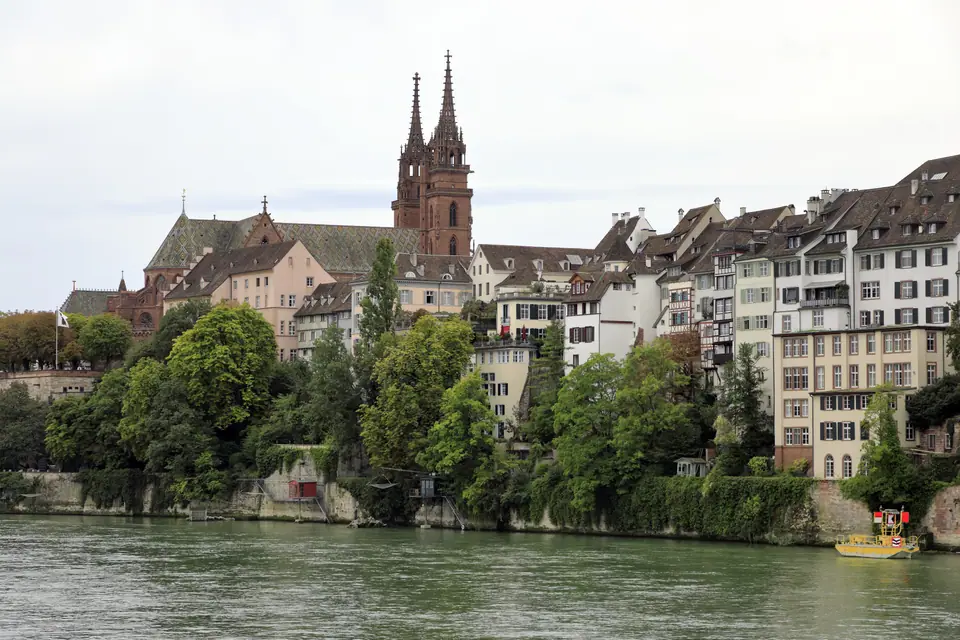
Photo: Falk2 · CC BY-SA 4.0
Three Countries on One Rhine Bend: Reading Basel
Where Switzerland meets France and Germany along the Rhine bend, uniting medieval guild lanes, forty museums, and contemporary life-sciences towers.
Few European cities compress three countries into one morning tram ride quite like Basel (BAH-zel). Built where the High Rhine pivots north toward the Upper Rhine plain, Switzerland's third-largest city touches French Alsace and German Baden directly across its suburban boundary lines. Saint-Louis and Huningue border its western edge, while Weil am Rhein sits directly north.
Roughly 177,595 to 180,000 municipal residents live inside a tight 23.85 square kilometres. Across the wider canton of Basel-Stadt, over 207,515 people share 36.95 square kilometres with neighbouring Riehen and Bettingen. That three-border squeeze created an unusually outward-looking civic culture. Rather than spreading outward, Basel stacked guildhalls, roughly forty museums, printing houses, and tall research towers inside compact river bends.
Grossbasel Hills Meet Flat Kleinbasel
The fast Rhine divides Basel cleanly into two halves with contrasting street relief. On the left bank rises Grossbasel (GROHS-bah-zel), perched on dry gravel terraces climbing 121 metres from 244.75 metres at Kleinhüningen port up to 366 metres on Bruderholz hill. Bishops, textile merchants, and humanists anchored stone churches, guild halls, and university buildings atop those elevated slopes.
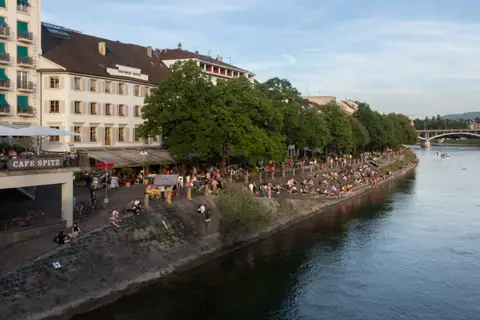
Across the channel spreads flatter, low-lying Kleinbasel (KLYN-bah-zel) along the north-eastern bank. Once an autonomous settlement of mills, taverns, and fair grounds, Kleinbasel united legally with Grossbasel in 1392. Today, broad gravel embankments along Oberer and Unterer Rheinweg turn Kleinbasel into Basel's sunlit outdoor living room from spring into autumn. Green trams glide across steel and stone bridges, binding both banks into one walkable hub.
The 1356 Quake and Switzerland's Eleventh Canton
Roman settlement shaped this river bend centuries before medieval charters appeared. Neighbouring Augusta Raurica rose upstream in 44 BC, while the late-Roman fort Basilia entered records in AD 237 and 374. Disaster struck hard on 18 October 1356, when the severe Basel earthquake toppled cathedral towers, castle keeps, and guild roofs across the bluff.
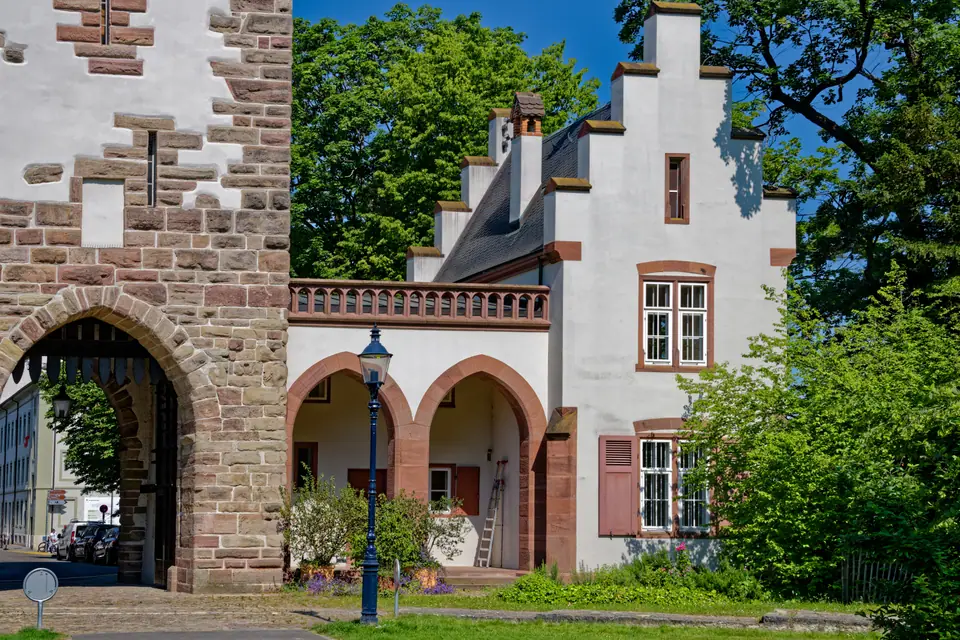
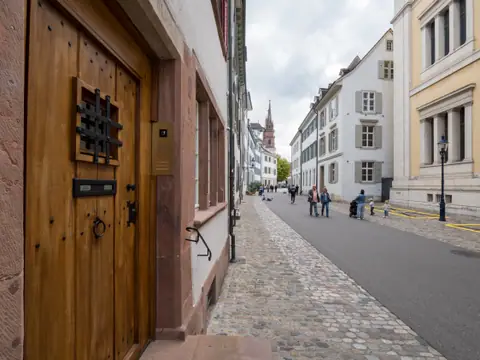
Masons soon raised sturdy perimeter ramparts around 1400 to guard rebuilt lanes. When city planners demolished those medieval walls in 1859 for green avenues, three stone gatehouses survived: Spalentor, St. Alban-Tor, and St. Johanns-Tor. Civic recovery soon sparked Basel's brightest century of diplomacy and scholarship. Delegates met for the Council of Basel from 1431 to 1449 before Pope Pius II chartered Switzerland's oldest university in 1459, opening lectures in 1460.
Emperor Frederick III granted the Herbstmesse fair charter in 1471, and Basel joined the Swiss Confederation on 9 June 1501 as its eleventh canton. Protestant Reformation decrees in 1529 drew scholars such as Erasmus to town presses. Later rural tensions split surrounding countryside villages into separate canton Basel-Landschaft in 1833.
Modern Pharmaceutical Skylines Along the River
Modern Basel grew prosperous through silk ribbon weaving and synthetic dye workshops before pivoting toward global pharmaceutical research. Industrial foundations quietly underwrite parks, orchestras, and public galleries without turning downtown into a sterile office zone. Near Basel SBB, Zoo Basel opened on 3 July 1874 as Switzerland's oldest zoological garden. Basel later hosted the First Zionist Congress in 1897 and launched Art Basel in 1970.
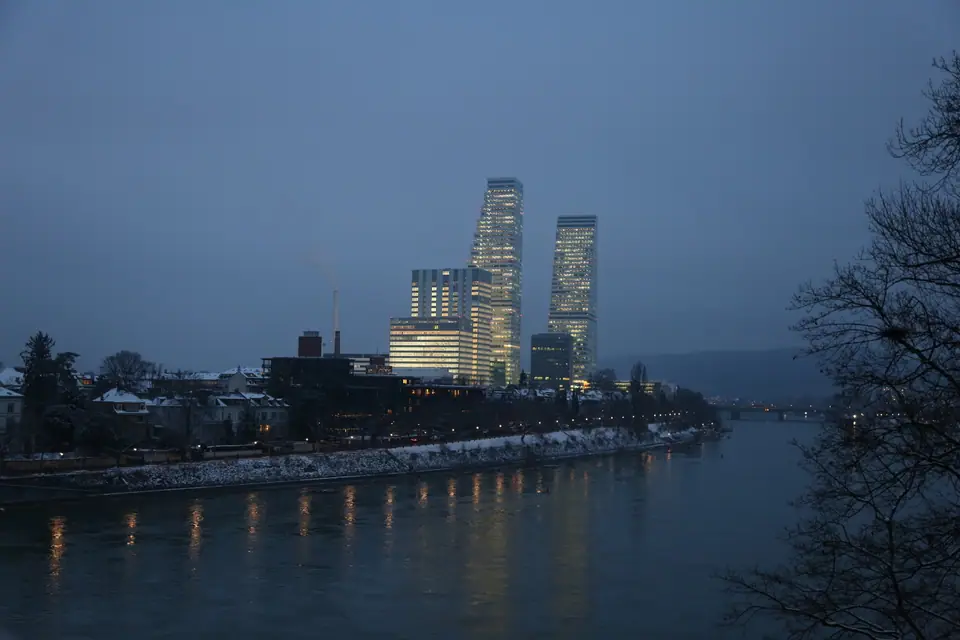
In Wettstein rise two pale glass spires designed by local studio Herzog & de Meuron. Roche Building 1 stands 178 metres tall with 41 floors since 2015, joined in 2022 by 205-metre, 50-floor Roche Building 2, Switzerland's tallest habitable tower. Free pre-booked public tours via visit-roche.com enter upper floors, backed by a daily drop-in visitor centre on Grenzacherstrasse 124. Downstream in St. Johann, the Novartis Campus opens weekdays to walkers, displaying buildings by Frank Gehry, SANAA, and David Chipperfield beside the solar-lit Novartis Pavillon. Both campuses demonstrate how private research investment shapes open urban walkways across Basel.
Swiss Francs, Fountains and Sunday Closing Rules
Practical daily logistics run smoothly once several local rules become second nature. Switzerland keeps the Swiss franc (CHF) rather than the euro, though contactless bank cards and mobile wallets work nearly everywhere. Wall sockets follow Swiss Type J standards at 230 volts and 50 hertz, accepting slim two-pin Type C Europlugs directly while needing adapters for British or American cords.
Skip buying bottled still water in convenience stores across town. Between 200 and 300 public stone fountains supply cold, clean municipal drinking water straight from street spouts. Under Swiss retail rules, standard supermarkets close all day Sunday, leaving around forty grocery shops, bakeries, and pharmacies inside Basel SBB open 365 days a year. Non-EU visitors follow Schengen entry limits of 90 days in any 180-day period on passports issued under 10 years prior and valid 3 months beyond departure.
Reading Three Borders in Everyday Transit
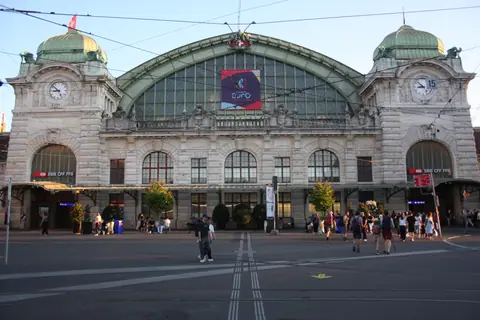
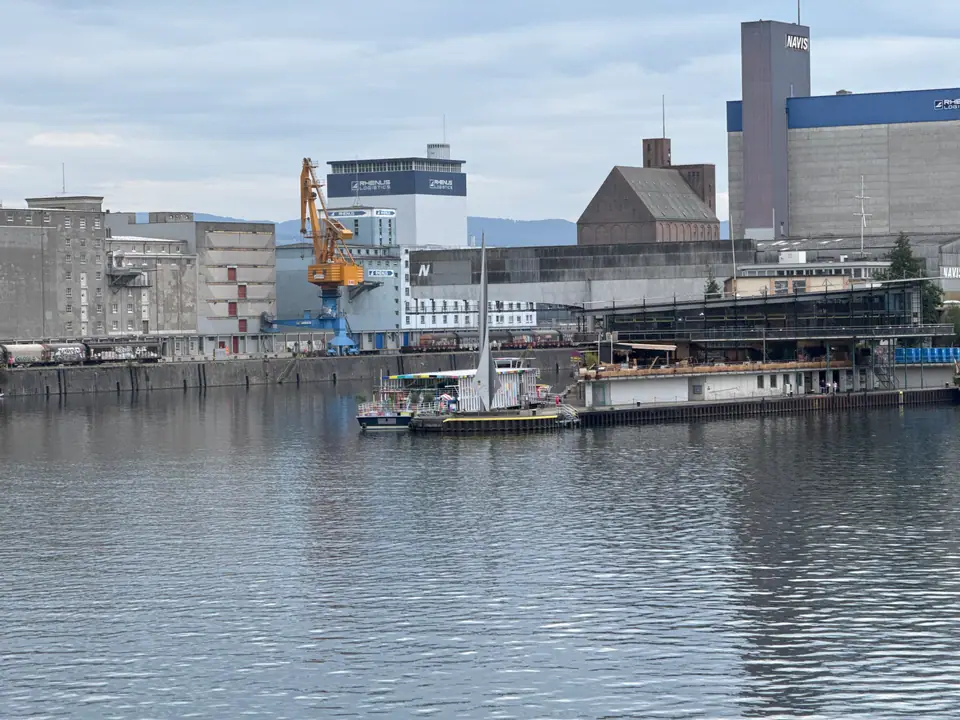
Basel's border puzzle shows up clearest down at northern Kleinhüningen harbour. Here the metallic Dreiländereck (DRY-len-der-eck) monument marks the exact river point touching Switzerland, France, and Germany. A short tram ride to Kleinhüningen harbour shows shipping cranes working beside calm river paths. Cyclists, joggers, and freight barges share these open river corners throughout daylight hours. Within one afternoon, travellers can land at a French-soil airport, clear internal rail customs inside Basel SBB toward Paris, and stroll St. Alban-Tal water canals on foot.
Compact distances reward overnight stays over rushed rail stopovers. Base yourself in Grossbasel or Kleinbasel quarters to watch evening river life after day crowds board trains toward Zurich or Bern. Keep a passport handy for cross-border tram routes, pack comfortable walking shoes, and plan museum hours before setting out. Linking medieval hill terraces with modern research campuses makes three days feel generous without filling every hour. Walking between Münsterplatz and Kleinbasel reveals how cleanly historic guild trade coexists with contemporary pharmaceutical research towers across compact trams and river bridges.
Where it is
- 1Basel
- EuroAirport Basel–Mulhouse–Freiburg (BSL) · about 7 km from Basel in a straight line
- Directions in Google Maps
Stations and taxi ranks: OpenStreetMap. Airports: OurAirports. Distances are in a straight line.
Traveller tips
Real advice from people who have been to Basel. Every tip is read by our team before it goes live.
No tips yet. Been here? Yours could be the first.
Thank you! Your tip will appear here after a quick review.
More in Basel
Continue exploring Basel with related neighbourhood, food, and planning guides