Lucerne
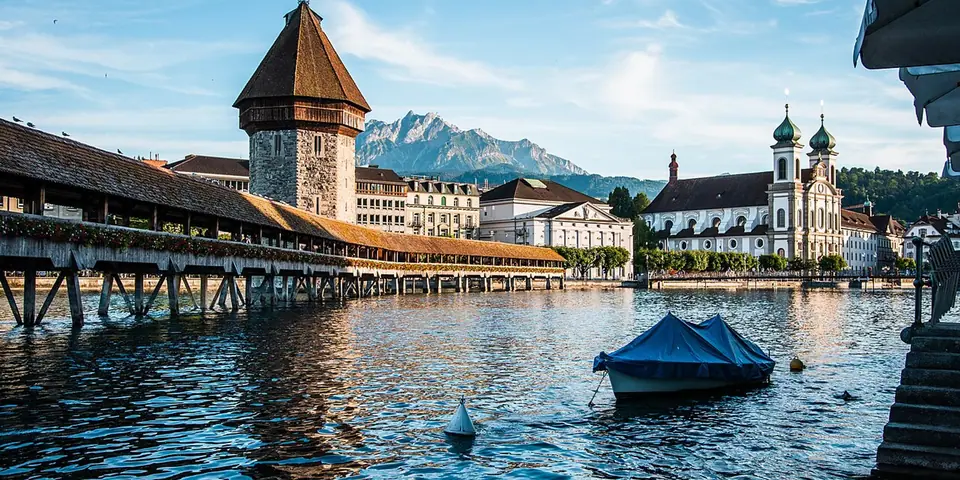
Set at the north-western outlet of Lake Lucerne where the Reuss River leaves the alpine basin, Central Switzerland's cultural capital pairs fourteenth-century covered wooden bridges and the 870-metre Museggmauer ramparts with Jean Nouvel's KKL concert hall, five historic paddle steamers, and rack railways climbing Pilatus and Rigi.
Quick decisions
Overview
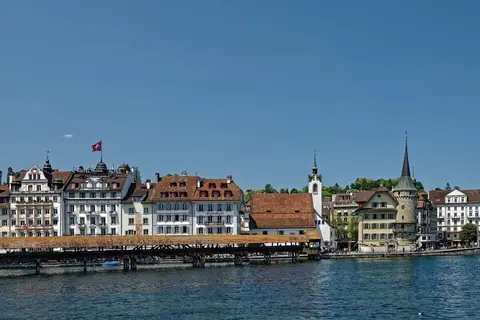
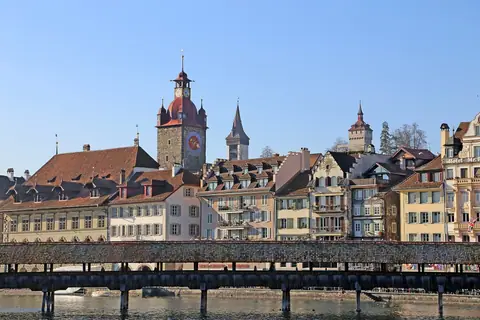
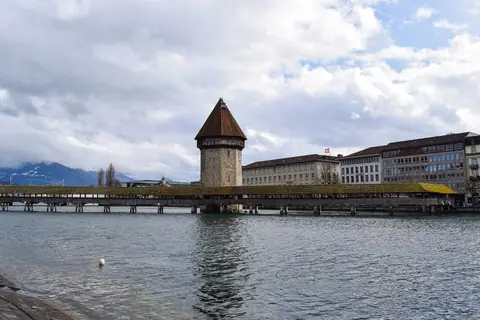
Set at the north-western outlet of Lake Lucerne (Vierwaldstättersee) where the Reuss River leaves the alpine basin at 436 metres above sea level, Lucerne serves as the capital of its canton and the cultural hub of Central Switzerland. With 86,234 municipal residents and roughly 265,000 across the wider agglomeration, the city preserves a compact medieval core framed by the limestone crags of Mount Pilatus (2,128.5 metres) and the grassy ridges of Mount Rigi (1,797.5 metres). Five riverside bridges link the Altstadt on the right bank with the Neustadt on the left, led by the fourteenth-century Kapellbrücke with its 34-metre octagonal Wasserturm and the downstream Spreuerbrücke with its seventeenth-century Dance of Death panels.
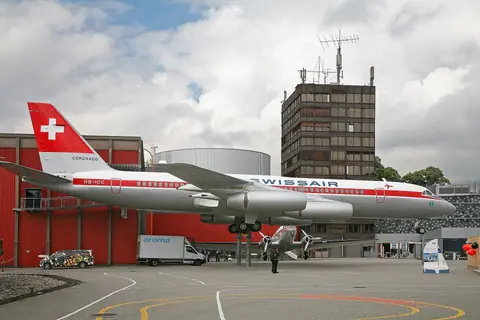
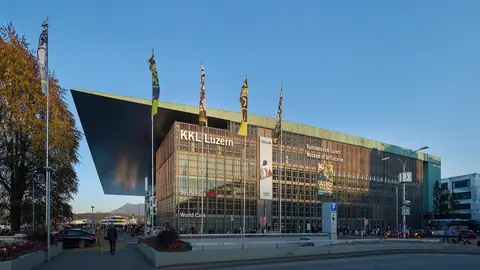
Beyond its timber crossings and frescoed guild squares at Weinmarkt, Kornmarkt, and Hirschenplatz, Lucerne brings together major Swiss cultural and engineering landmarks. Jean Nouvel's lakeside Culture and Congress Centre (KKL) hosts the celebrated Lucerne Festival, while the Swiss Museum of Transport (Verkehrshaus der Schweiz) along the Lido shore displays more than 3,000 mobility exhibits. Because the main rail terminal, steamer piers, and pedestrian footbridges converge around the bay, travellers can move effortlessly between historical monuments, sunlit waterside promenades, and steep alpine rack railways, making the city an accessible base for exploring both banks of the Reuss and the surrounding Pre-Alps. Start with our Lucerne travel guide and our overview of things to do in Lucerne.
Getting there
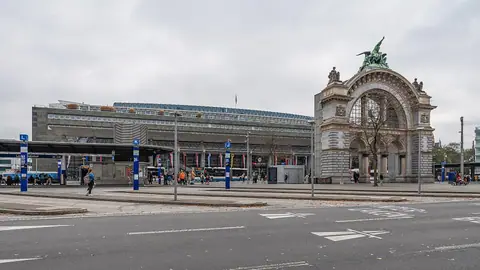
Getting to and around Lucerne centres on Bahnhof Luzern, Switzerland's third-busiest railway terminal serving 103,500 passengers daily beneath Santiago Calatrava's 1991 glass concourse and the surviving 1896 portal arch. Direct SBB trains connect Lucerne with Zurich and Zurich Airport in roughly 45 to 65 minutes, while metre-gauge Zentralbahn trains run south over the Brünig Pass and up to Engelberg. Express services also link the terminal directly with Basel, Bern, Geneva, and southern Ticino via the Gotthard route.
Outside on Bahnhofplatz, VBL electric trolleybuses and the lakeside piers of the Schifffahrtsgesellschaft des Vierwaldstättersees (SGV) provide immediate local and regional connections. Because the municipal core is compact and largely traffic-free, most visitors explore the riverbanks, squares, and museums entirely on foot, using trolleybus lines or lake steamers for trips out to the Lido campus, Kriens valley stations, and shoreline villages around the bay.
Where to stay
Deciding where to stay in Lucerne depends on whether you prefer pedestrian Old Town lanes, rapid rail access, or grand lakefront promenades. The right-bank Altstadt places you among frescoed guild squares between Rathausquai and the Museggmauer ramparts, where boutique hotels occupy historic townhouses with timbered ceilings and direct views over the covered bridges. Stepping out in the early morning lets you cross the river walkways and quiet cobbled courts before day-trippers arrive from the station.
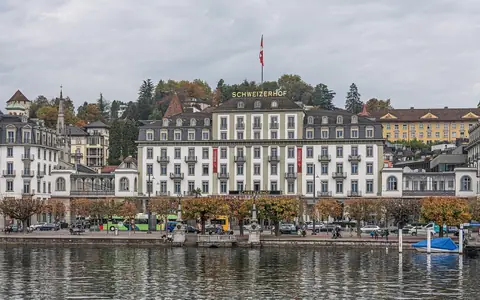
Across the Reuss, the left-bank Kleinstadt and Hirschmatt-Neustadt sit steps from Bahnhof Luzern and the KKL, offering practical convenience for rail passengers planning early departures toward the mountain passes or neighbouring Swiss cities. Along the northern shore of the bay, Schweizerhofquai and Nationalquai line the chestnut-shaded waterfront with nineteenth-century palace hotels facing Mount Pilatus and the Bürgenstock ridge, while quieter hillside properties on the Gütsch and in the Bürgenstock exclave provide elevated terraces above the water with sweeping views across the lake basin.
Things to do
Lucerne's landmarks cluster around both banks of the Reuss and the arms of the lake. Over the river stretch the Kapellbrücke, Water Tower, and Spreuerbrücke, leading directly into the Altstadt squares and Baroque Jesuit Church and up to the Museggmauer and its nine towers. Along the right-bank cobbles, ornate guild facades, arcaded market walkways, and stone fountains illustrate how transalpine trade across the Gotthard route shaped the medieval town. Above the rooftops, the battlements of the Museggmauer offer wide views over red-tiled gables toward the snow-streaked peaks of the Central Swiss Alps.
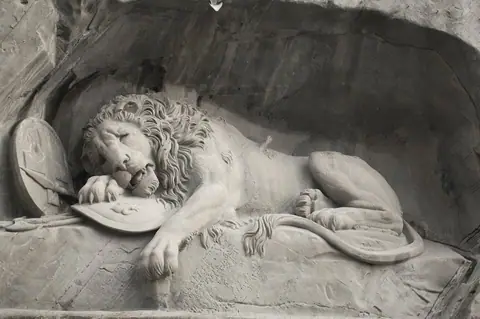
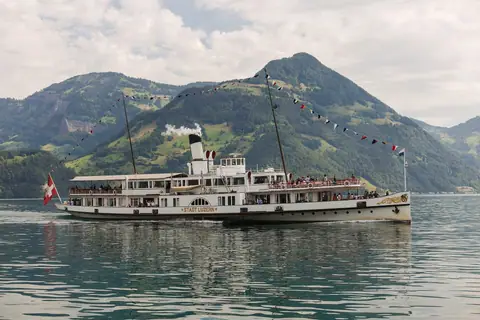
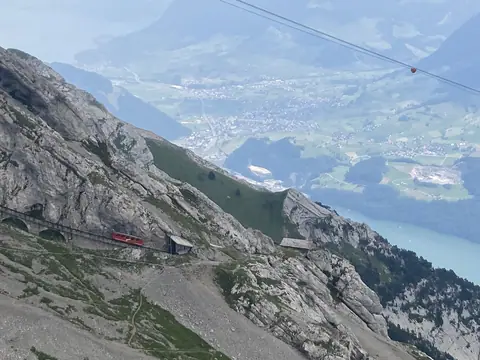
North-east of the Old Town, Löwenplatz groups the Lion Monument, Glacier Garden, and Bourbaki Panorama, combining neoclassical stone carving, deep Ice Age potholes, and a nineteenth-century circular canvas within a single pedestrian precinct. Down along the water, the lakeshore links the KKL and Hofkirche St. Leodegar with the Swiss Museum of Transport. From Bahnhofquai, Lake Lucerne paddle steamers connect directly with day trips to Mount Pilatus, Mount Rigi, and the Stanserhorn.
Food and drink
Traditional food in Lucerne highlights Central Swiss guild recipes, alpine dairy dishes, and freshwater fish from the Vierwaldstättersee. The city's signature dish is Luzerner Chügelipastete (also called Fritschipastete), a round puff-pastry vol-au-vent filled with veal and pork sausage meatballs, mushrooms, and marinated raisins in creamy white sauce, alongside Älplermagronen with apple compote, pan-fried lake whitefish (Felchen), and spiced Birnenweggen dried-pear pastries.
Dining across the city blends centuries-old hospitality with contemporary waterside terraces. In the pedestrian lanes of the Altstadt, historic guild halls and panelled taverns serve bubbling cheese dishes, crisp potato rösti, and rich veal stews accompanied by local lagers from the Eichhof brewery or crisp orchard ciders from surrounding cantonal farms. On Tuesday and Saturday mornings, the weekly farmers' market unfurls beneath the arcades of Rathausquai and along the left-bank Bahnhofstrasse, where regional growers, mountain cheesemakers, and artisanal bakers set out seasonal produce, aged Sbrinz wheels, pear honey gingerbread, and sourdough loaves right beside the flowing Reuss.
Culture
Choosing the best time to visit Lucerne lets you match seasonal mountain railways with major cultural events. May to October brings warm days (peaking at 24.9 °C in July) when all five historic paddle steamers and the 48%-gradient Pilatus cogwheel railway operate, and the KKL stages the late-summer Lucerne Festival. Throughout these warmer months, open-air concerts, lakeside bathing houses along Nationalquai, and clear alpine ridge trails draw visitors to both the bay and the high summits.
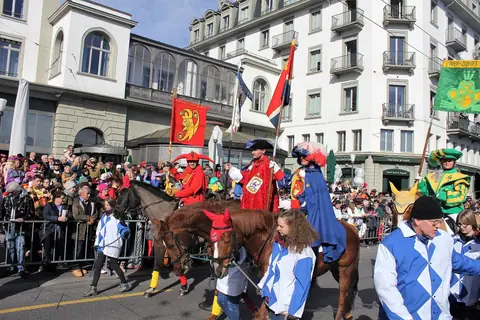
In February or early March, Luzerner Fasnacht fills both banks of the Reuss with up to 350,000 carnival-goers starting at dawn on Dirty Thursday. Masked brass bands known as Guggenmusigen march through the medieval alleys, guild floats parade across the Seebrücke, and carved wooden masks animate the squares day and night until Ash Wednesday. Autumn brings golden foliage along the chestnut quays and clear views from the Musegg towers, while December illuminates the Old Town squares with seasonal markets and organ recitals inside the Hofkirche and Jesuit Church. Follow our 3-day Lucerne itinerary to link every highlight.
Weather by month
Lucerne is warmest in July, with average highs around 25°C, and coldest in January, when nights drop to about -2°C. June is the wettest month, with rain on about 2 days. For mild weather with fewer rainy days, aim for May, July, August and September.
| Month | Low | Range | High | Rain | Rainy days |
|---|---|---|---|---|---|
| Jan | -2°C | 4°C | 10 mm | 2 d | |
| Feb | -2°C | 6°C | 9 mm | 2 d | |
| Mar | 2°C | 11°C | 11 mm | 2 d | |
| Apr | 5°C | 15°C | 11 mm | 2 d | |
| May | 9°C | 19°C | 13 mm | 2 d | |
| Jun | 13°C | 23°C | 14 mm | 2 d | |
| Jul | 15°C | 25°C | 13 mm | 2 d | |
| Aug | 14°C | 24°C | 13 mm | 2 d | |
| Sep | 11°C | 20°C | 10 mm | 2 d | |
| Oct | 7°C | 14°C | 10 mm | 2 d | |
| Nov | 2°C | 8°C | 10 mm | 2 d | |
| Dec | -1°C | 5°C | 11 mm | 2 d |
Averages of daily values from 2015 to 2024. Rainy days are days with at least 1 mm of rain. Source: Open-Meteo · Compare destinations by month.
Lucerne on the map
Every place we cover in Lucerne. Tap a category or pin to explore.
In-depth Lucerne guides
Browse the guides grouped by topic: sights, neighbourhoods, food, transport, day trips and trip planning.
Sights, Landmarks & Parks
Key monuments, viewpoints, museums and nature trails.
- Things to Do in Lucerne: Medieval Bridges, Lake Steamers and MuseumsFrom crossing the Kapellbrücke and Spreuerbrücke to climbing the Museggmauer towers and visiting the Verkehrshaus, here are the essential experiences in Lucerne.
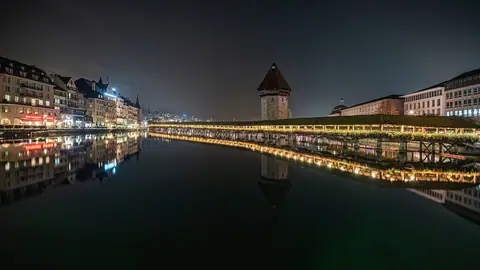
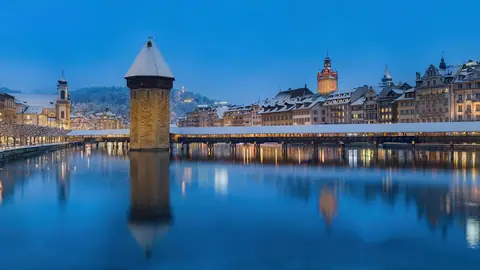
- Kapellbrücke, Water Tower and Spreuerbrücke: Lucerne's Covered BridgesDiscover the history, architecture, and triangular roof paintings of Lucerne's two surviving medieval covered wooden bridges and the 34-metre Wasserturm.
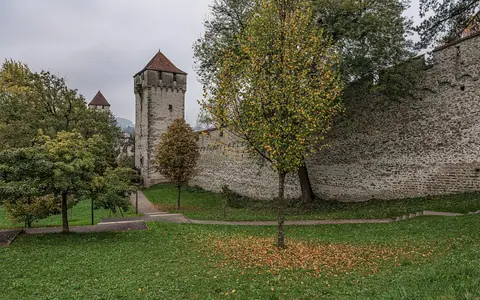
- Museggmauer, the Nine Towers and the 1535 Zytturm ClockWalk the 870-metre fourteenth-century Museggmauer ramparts above Lucerne's Old Town, climb the walkable watchtowers, and inspect the 1535 Zytturm clockwork.
- Lion Monument, Glacier Garden and Bourbaki Panorama at LöwenplatzVisit Lucerne's Löwenplatz cultural quarter to see Bertel Thorvaldsen's dying lion relief, 20,000-year-old glacial potholes, and the 1881 Bourbaki circular painting.
- Swiss Museum of Transport (Verkehrshaus), Planetarium and Hans Erni MuseumExplore Switzerland's most visited museum on the Lido shore of Lake Lucerne, housing 3,000 rail, road, water, and aerospace exhibits across a 22,500-square-metre campus.
- KKL Lucerne (Culture and Congress Centre) and the Twin-Towered HofkircheCompare Lucerne's two great musical and architectural landmarks: Jean Nouvel's lakeside KKL concert hall and the seventeenth-century Hofkirche St. Leodegar.
- Lake Lucerne (Vierwaldstättersee): Paddle Steamers and PromenadesCruise the 114-square-kilometre fjord-like arms of Lake Lucerne aboard one of five historic SGV paddle steamers and walk the Schweizerhofquai and Nationalquai promenades.
Neighbourhoods & Where to Stay
Districts, historic quarters and the best bases for your stay.
- Lucerne: Reuss Bridges, Lake Bay and Alpine GatewaysPlan a visit to Lucerne with our overview of its two riverbanks, medieval covered bridges, Musegg ramparts, lakeside promenades, and mountain railways.
- Lucerne Altstadt, Weinmarkt, Kornmarkt and the Jesuit ChurchStroll Lucerne's car-free Old Town squares, admire Anton Isenmann's Renaissance Rathaus on Kornmarkt, and step inside Switzerland's first major Baroque church.
- Where to Stay in Lucerne: Altstadt, Left Bank, Lakefront and HillsidesCompare Lucerne's four best neighbourhoods for overnight stays: the pedestrian right-bank Altstadt, the convenient Left Bank and Hirschmatt, the grand Lakefront, and the hills.
- Best Time to Visit Lucerne: MeteoSwiss Climate, Fasnacht and FestivalsUse 1991-2020 MeteoSwiss climate data for Lucerne (454 m) to time your visit for summer lake steamers, the August-September Lucerne Festival, or winter Fasnacht.
- 3 Days in Lucerne: Covered Bridges, Löwenplatz, Lake Steamers and Alpine PeaksFollow our structured 3-day Lucerne itinerary pairing the medieval Old Town and Museggmauer with the Verkehrshaus, a paddle steamer cruise, and Rigi or Pilatus.
Food & Drink
Local dishes, markets, cafés and dining districts.

Getting Around & Arrival
Airport transfers, public transit, passes and driving rules.
Day Trips & Excursions
Easy half-day and full-day trips from the city.
Need your embassy or consulate in Switzerland? See embassies and consulates in Switzerland.
Reviews
Log in to write a review.
No reviews yet.