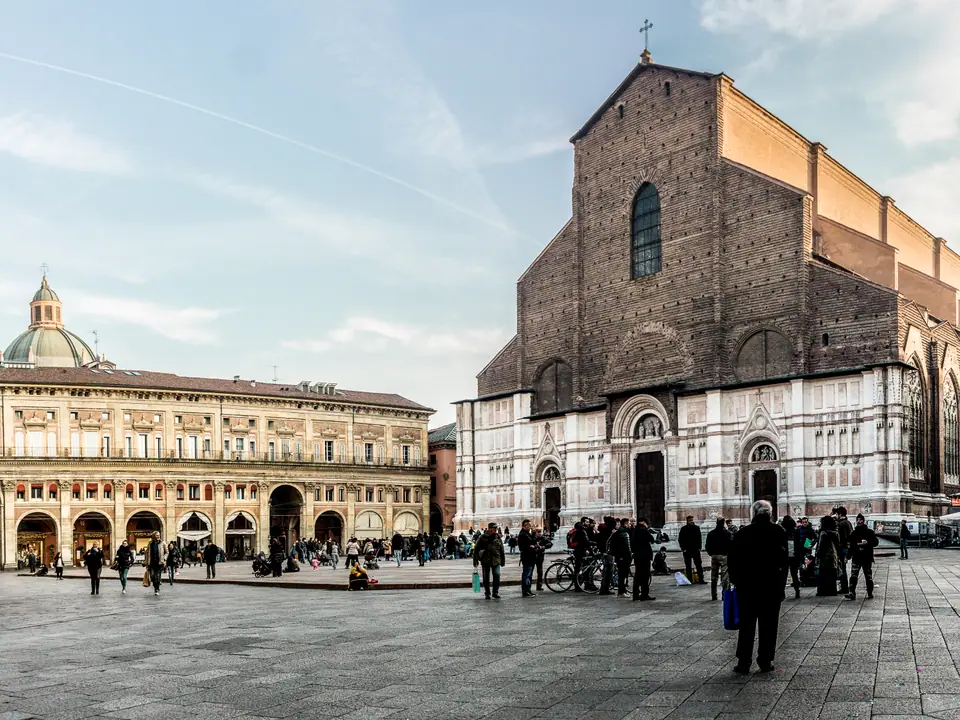
Photo: Vanni Lazzari · CC BY-SA 4.0
Things to Do in Bologna
Square, towers, porticoes, museums, opera and a two-day order for the city.
Bologna's pleasures are unhurried: walking under more than 38 kilometres of arcades, eating well, climbing the Clock Tower above Piazza Maggiore and looking at paintings in rooms that were once private. This page lists the main experiences to prioritise and arranges them into a two-day plan. The deeper guides cover the major monuments, so here the focus is on how to build a day.
For the square and towers, read the Piazza Maggiore guide. For the long arcades, see the porticoes guide.
Core sights under Bologna's arcades
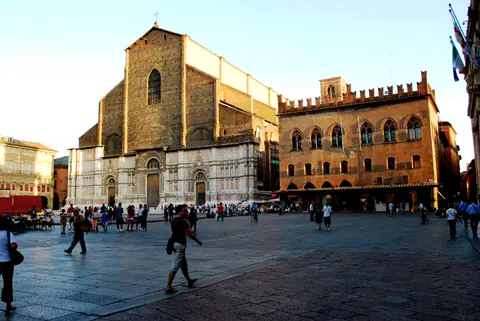
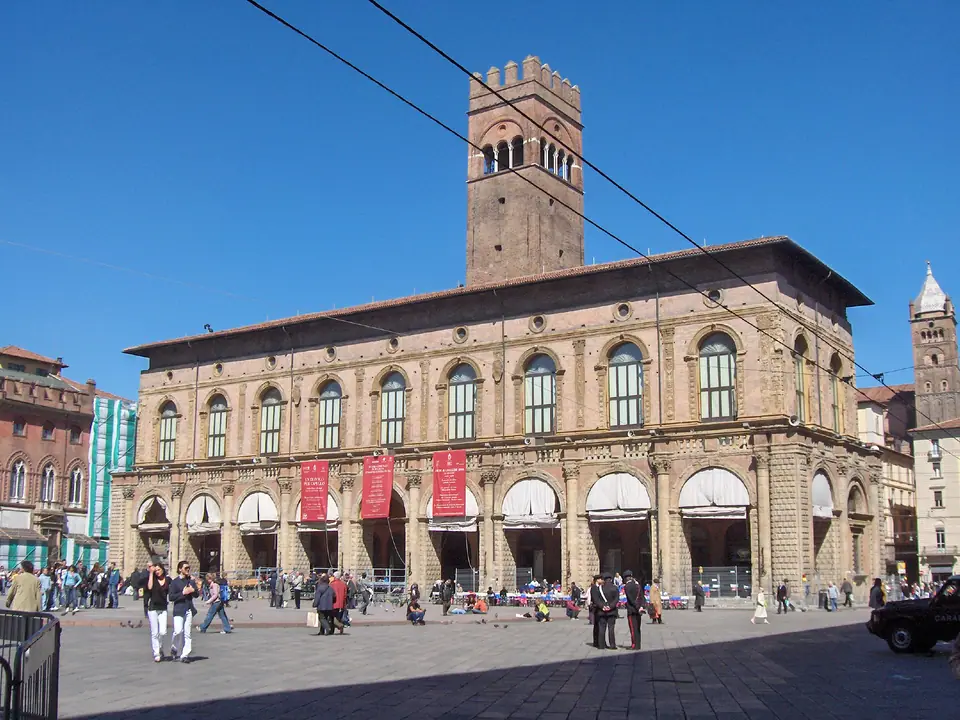
- Piazza Maggiore and the Basilica of San Petronio: The living room of the city, overlooked by the Palazzo d'Accursio Clock Tower.
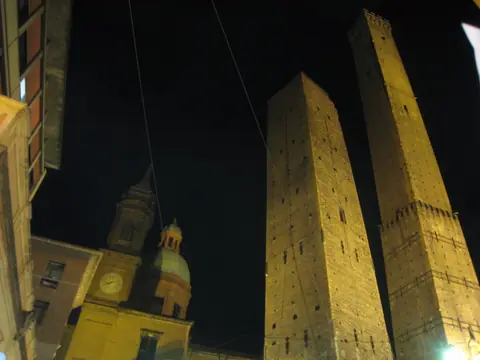
- The Two Towers: The leaning Asinelli and Garisenda towers, viewed from Via Rizzoli while interiors remain closed for stabilisation works.
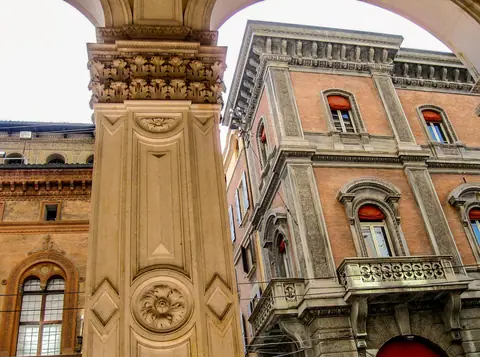
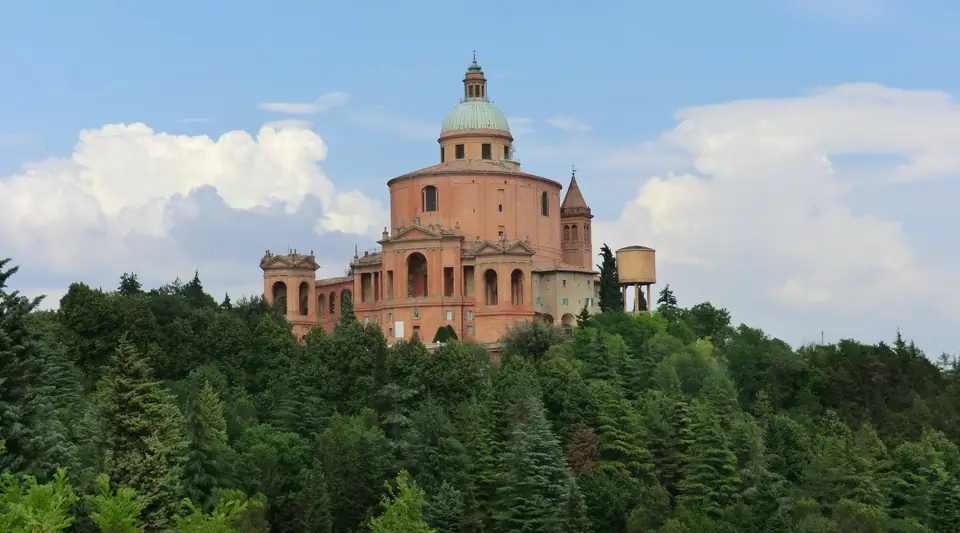
- The porticoes and San Luca: A covered walk to a hilltop sanctuary.
- The university quarter: The Archiginnasio and its Anatomical Theatre.
- Santo Stefano: A complex of linked churches known as the Seven Churches.
Pinacoteca Nazionale and Palazzo d'Accursio museums
The Museo Morandi, founded in 1993 as a branch of the Museum of Modern Art of Bologna, holds the largest public collection of work by Giorgio Morandi and includes a reconstruction of his studio. The university guide tells his story. The Civic Art Collection in Palazzo d'Accursio shows paintings from the Middle Ages to the 19th century. Check each museum's own page for current opening hours.
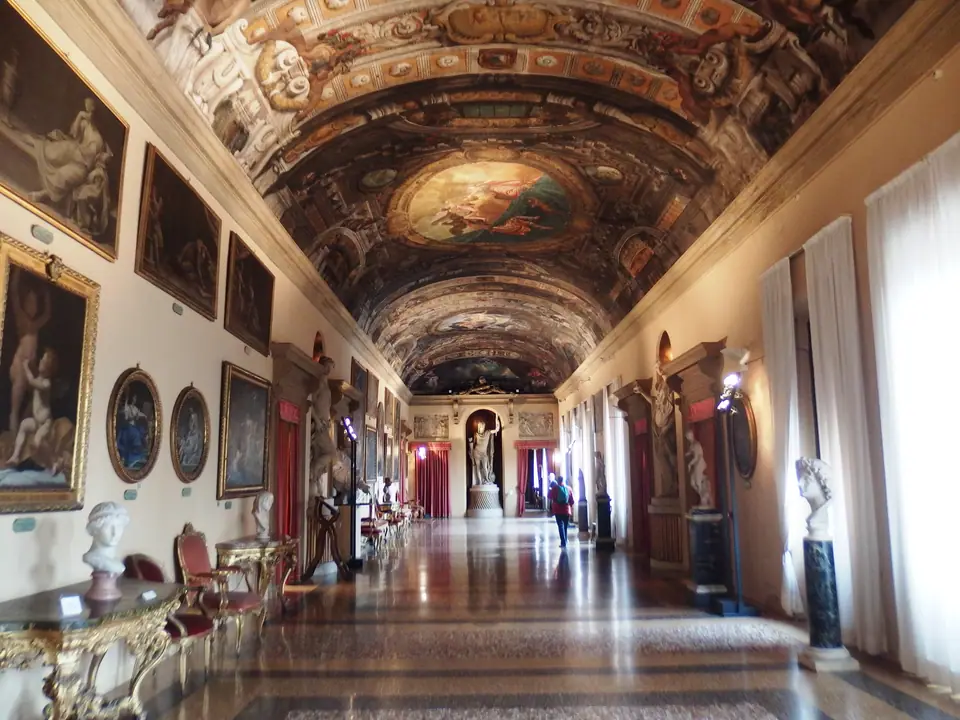
The Pinacoteca Nazionale at Via delle Belle Arti 56 occupies a former Jesuit novitiate that Alfonso Torreggiani built in 1726 and that also houses the Academy of Fine Arts. The first core of works was acquired in 1762, the collection was organised at its current site in 1802, it opened regularly to the public in 1875 and it became autonomous in 1882. Its best-known paintings include Giotto's Bologna Polyptych of about 1330, Annibale Carracci's Madonna and Child with Saints of 1590, Guido Reni's Massacre of the Innocents of 1611 and Raphael's Ecstasy of St Cecilia of about 1518.
French Gothic vaults in the Basilica of San Francesco
The friars received the site in 1236, Pope Innocent IV consecrated the church in 1251 and the main structure was finished in 1263. Despite its Romanesque facade, the interior shows French Gothic features such as pointed arches, six-part vaults and buttresses, and the church is considered one of the best examples of French Gothic architecture in Italy. It holds the monuments of the jurists Accursius and his son Francesco, Odofredus and Rolandino dei Romanzi.
Bentivoglio frescoes at San Giacomo Maggiore
The Augustinian church of San Giacomo Maggiore was begun in 1267, finished in 1315 and consecrated in 1344. The Bentivoglio Chapel, built from 1463 to 1468 to designs by Pagno di Lapo Portigiani, holds the Bentivoglio Altarpiece and a majolica pavement by the Della Robbia workshop, and the Bentivoglio portico along Via San Donato was added in 1477 to 1481. The Oratory of Santa Cecilia in the monastery cloister has frescoed panels by Francesco Francia, Lorenzo Costa and Amico Aspertini, and part of the monastery became the Conservatorio Giovanni Battista Martini. Gioachino Rossini was admitted to the Liceo Musicale in Bologna around 1806, and after 1835 he settled in the city and taught singing there.
Opera and Wagner premieres at Teatro Comunale
The Teatro Comunale opened on 14 May 1763 as the Nuovo Teatro Pubblico, designed by Antonio Galli Bibiena, with Gluck's Il trionfo di Clelia composed for the occasion. Bologna gave the Italian premiere of Wagner's Lohengrin there in 1871, and the city hosted other Italian Wagner premieres, including Rienzi and Parsifal on 1 January 1914. The horseshoe-shaped auditorium has had 1,034 seats since it reopened in 1935.
Giardini Margherita lawns, football and basketball
The Giardini Margherita, opened on 6 July 1879, lie just south of the centre and make a restful break from stone. For football, Bologna FC was founded on 3 October 1909 and has played at the Stadio Renato Dall'Ara since 1927. The club has won seven Serie A titles, the last in 1963 and 1964, and three Coppa Italia trophies. Virtus Bologna, the basketball team, was founded in 1927, has won 17 Italian championships, the latest in 2025, and has won the EuroLeague twice, in 1997-98 and 2000-01, and the EuroCup in 2021-22. The historic PalaDozza arena in central Bologna was its home from 1957 to 1996 and again from 2017, and Unipol Hall in the Fiera district has been the home arena since 2026.
A two-day sequence through the red centre
| Day | Morning | Afternoon | Evening |
|---|---|---|---|
| Day 1 | Piazza Maggiore, San Petronio, Clock Tower and Two Towers view | University quarter and Archiginnasio | Dinner in an osteria |
| Day 2 | San Luca along its portico | Santo Stefano and the Museo Morandi | Giardini Margherita or a concert |
Regional rail detours from Bologna Centrale
Modena, Ravenna and Ferrara are all reachable from the city, and the excursions guide explains how to choose among them. The food guide also suggests which products to buy to take home.
Fitting Bologna into one or two days
With one day, take the main square, the Clock Tower climb and lunch. With two, add San Luca and the university quarter. If it rains, move the hill walk, since the porticoes shelter you for most of the way. The seasons guide shows what to expect month by month.
Where it is
- 1Bologna
- Bologna Guglielmo Marconi Airport (BLQ) · about 6 km from Bologna in a straight line
- Directions in Google Maps
Stations and taxi ranks: OpenStreetMap. Airports: OurAirports. Distances are in a straight line.
Traveller tips
Real advice from people who have been to Bologna. Every tip is read by our team before it goes live.
No tips yet. Been here? Yours could be the first.
Thank you! Your tip will appear here after a quick review.
More in Bologna
Continue exploring Bologna with related neighbourhood, food, and planning guides