Photo: Petar Milošević · CC BY-SA 4.0
Modena, Ravenna and Ferrara Excursions
Modena, Ravenna, Ferrara, Parma, Dozza and the Motor Valley compared as trips from Bologna.
Bologna is a hub, and three of Italy's most rewarding smaller cities lie within easy reach by rail or coach. Modena offers a cathedral, balsamic vinegar and a famous car brand. Ravenna holds the best early Christian mosaics in Europe. Ferrara keeps a Renaissance castle and a ring of brick walls. This guide compares them and adds the motor and mountain landscape around the region.
Plan the transport with the getting there guide.
Modena's Romanesque cathedral, vinegar and Ferrari
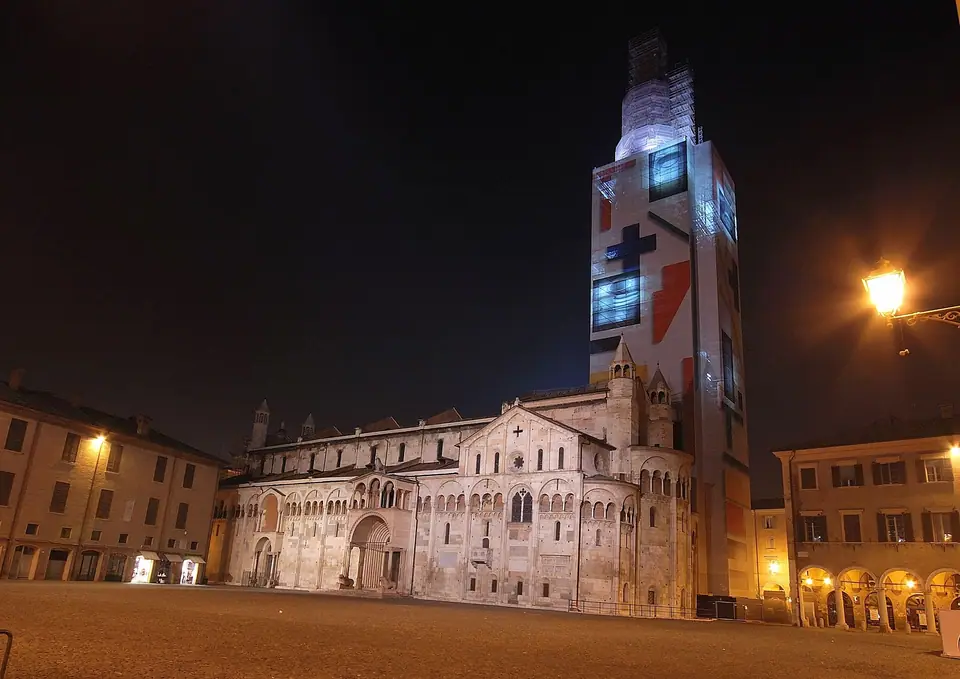
West along the rail line, Modena combines culinary heritage with automotive history. Its cathedral, the Torre della Ghirlandina and Piazza Grande have been a UNESCO World Heritage Site since 1997. Traditional Balsamic Vinegar of Modena holds protected geographical indication status under EU law since 2000. Enzo Ferrari founded his marque nearby: the Museo Casa Enzo Ferrari opened on 10 March 2012 beside his birthplace, while the modern company headquarters sit in Maranello. In fine dining, Osteria Francescana has held three Michelin stars since 2013.
The cathedral, begun in 1099 and consecrated in 1184, was completed in 1319. Lanfranco provided the initial design, the sculptor Wiligelmus made the facade reliefs of biblical stories, and a pupil of Wiligelmus carved the scenes from the life of Saint Geminianus on the Porta dei Principi. Anselmo da Campione and his heirs, the Campionese masters, embellished the building afterwards. Modena also kept Bologna's Bucket, the trophy of the War of the Bucket.
Early Christian mosaics across Ravenna
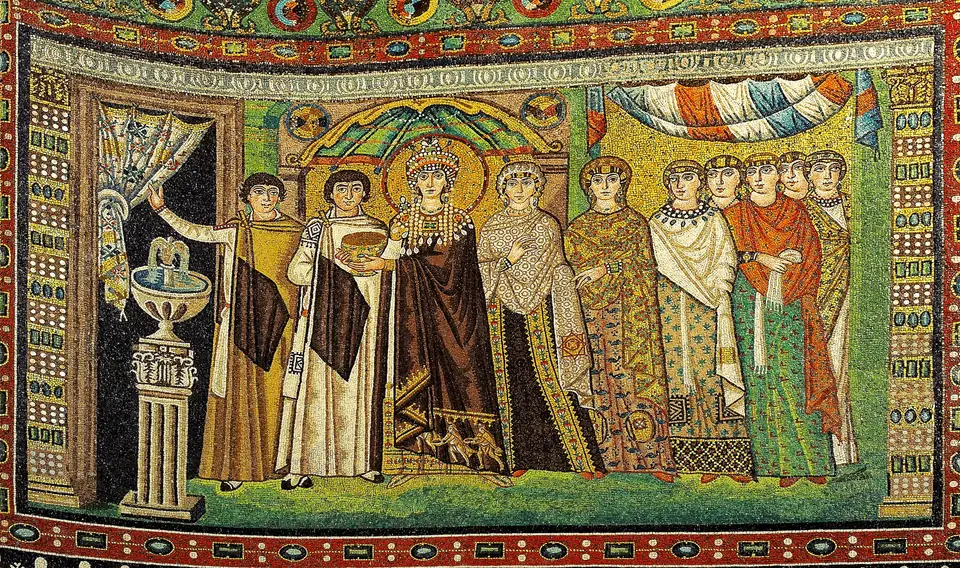
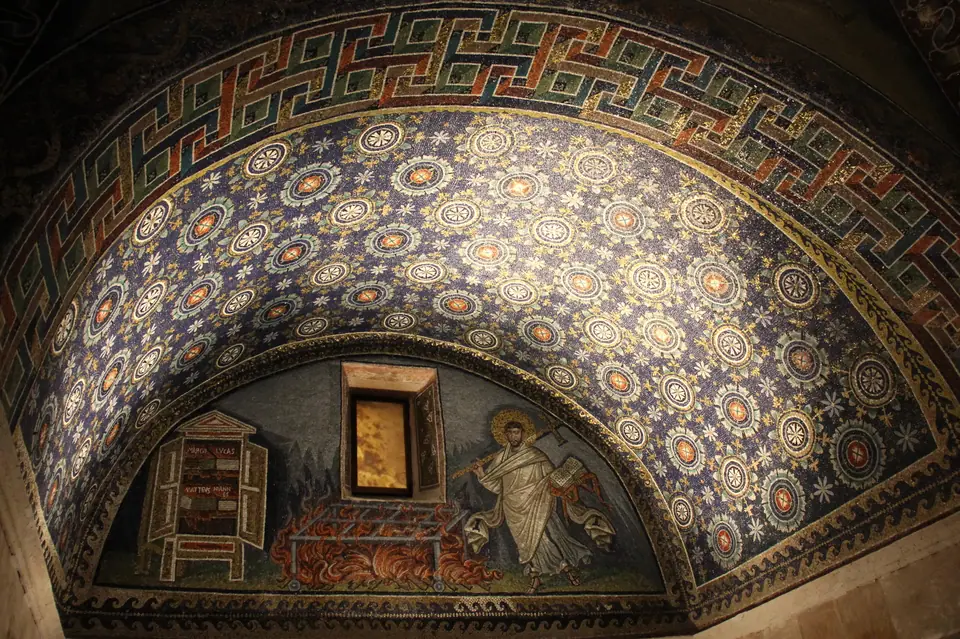
Eight early Christian buildings in Ravenna belong to the UNESCO World Heritage List. The Mausoleum of Galla Placidia dates from about 430, Sant'Apollinare Nuovo from about 500 and the Basilica of San Vitale from 548. Emperor Honorius moved his imperial court to Ravenna in 401 or 402 as the seat of the Western Roman Empire, and direct Trenitalia trains link Ravenna easily with Bologna.
Sant'Apollinare Nuovo was built by the Ostrogothic king Theodoric the Great as his palace chapel and dedicated in 504 to Christ the Redeemer, originally as an Arian church. Justinian I reconsecrated it in 561 as Saint Martin in Golden Heaven, before its name changed again in 856 when relics of Saint Apollinaris arrived. A round bell tower of the 9th or 10th century stands beside it. On the lower band of the mosaics 22 virgins led by the Three Magi move toward the Madonna and Child, and opposite them 26 martyrs led by Saint Martin walk toward an enthroned Christ. UNESCO inscribed the monument in 1996 as part of the Early Christian Monuments of Ravenna.
Dante died in Ravenna in 1321. Architect Camillo Morigia completed his tomb in 1781 for Cardinal Luigi Valenti Gonzaga, before friars hid his bones in 1810 during the French occupation. A worker found the box on 27 May 1865 during restoration for the 600th anniversary of his birth. Florence erected a cenotaph in Santa Croce in 1829. The surrounding area, where visitors must stay silent and respectful, is known as the zona dantesca.
| City | Key fact | Best for |
|---|---|---|
| Modena | UNESCO since 1997, balsamic PGI in 2000 | Food and cars |
| Ravenna | Eight early Christian monuments | Mosaics and history |
| Ferrara | Este Castle of 1385, about 9 km of walls | Cycling and Renaissance streets |
Ferrara's moated Este Castle and Renaissance walls
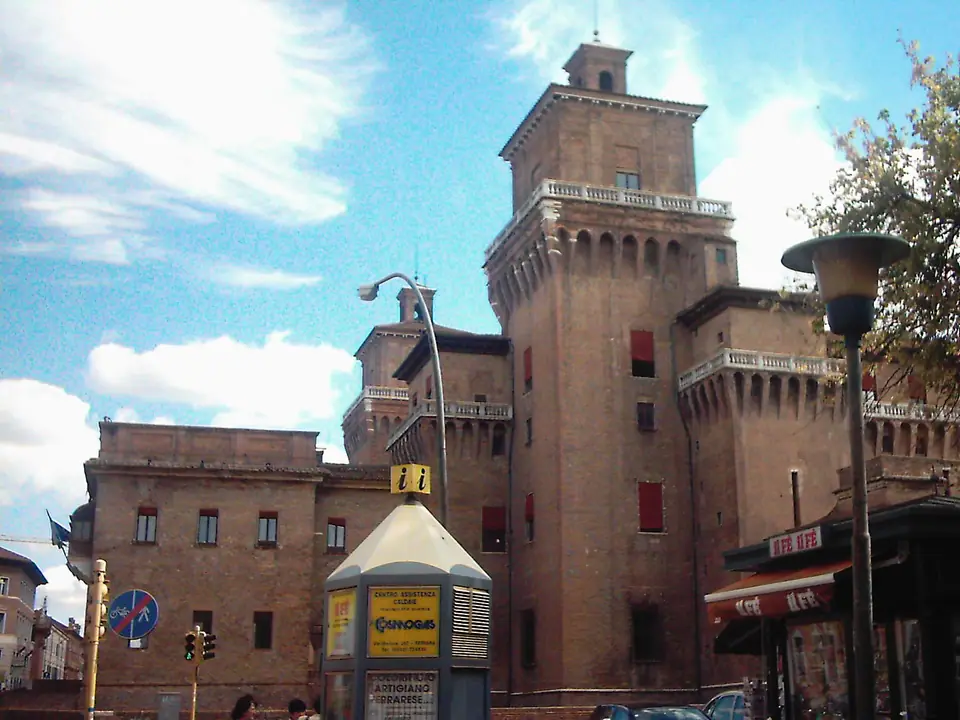
Ferrara lies about 44 kilometres north-east of Bologna across flat Po valley farmland. The Este Castle was built in 1385 by the architect Bartolino da Novara as a fortified residence with four massive corner bastions and a wide moat. About 9 kilometres of brick walls, mostly constructed between 1492 and 1520, now circle town as an elevated park ideal for jogging or cycling. Local specialities include cappellacci di zucca and salama da sugo, covered in our food guide.
Parma marble baptistery and Dozza painted walls
West past Modena, Parma preserves an extraordinary Romanesque ensemble. Its cathedral was begun in 1090 with Correggio's dome frescoes added from 1526 to 1530, beside Benedetto Antelami's pink Verona marble Baptistery begun in 1196 and Nicola Bettoli's Teatro Regio (1821 to 1829). Prosciutto di Parma and Parmigiano Reggiano both hold protected designation of origin status. Bologna's airport lies 94 kilometres east of Parma.
Dozza, a hill town at 190 metres in Bologna province, keeps the Enoteca Regionale Emilia Romagna inside its castle cellars. Every two years in September, its painted wall festival invites artists to create permanent murals across house facades.
Motor Valley museums from Ducati to Imola
Emilia-Romagna is home to Ferrari, Lamborghini, Maserati and Pagani for cars and to Ducati and Bimota for motorcycles. Ducati was founded in Bologna on 4 July 1926 and is headquartered there, and Automobili Lamborghini is based in Sant'Agata Bolognese. Opened in 2001 at Via Modena 12 in Sant'Agata Bolognese, the Museo Lamborghini shows supercars including the 350 GT and Sesto Elemento. One-off and concept models such as the Veneno and Miura concept stand beside them. The Autodromo Enzo e Dino Ferrari at Imola, about 40 kilometres east of Bologna, opened on 25 April 1953 and has a Grand Prix lap of 4.909 kilometres. It hosted the San Marino Grand Prix every year from 1981 to 2006, and Ayrton Senna died there in 1994 after crashing at the Tamburello corner, which was converted into a chicane afterwards. Misano is the region's other major international track. Check each museum and factory for visiting rules, since many require advance booking.
Apennine peaks and the Adriatic coast
Beyond the plain, the Apennines run more than 300 kilometres through the region, and Monte Cimone rises to 2,165 metres, with ski resorts such as Sestola and Monte Cimone in winter. On the other side, the Romagna coast has seaside resorts including Rimini, Cervia and Cesenatico. The region recorded over 60 million tourist presences and almost 14 million arrivals, so the coast is busy in summer.
Matching an Emilia-Romagna rail trip to your interests
- Food and cars: Modena.
- Mosaics: Ravenna.
- Cycling and castles: Ferrara.
- Motorbikes: The Ducati factory area in Bologna itself.
Combine one city per day, and use the seasons guide to avoid the hottest weeks.
Where it is
- 1Modena, Ravenna and Ferrara Excursions
- Bologna Guglielmo Marconi Airport (BLQ) · about 31 km from here in a straight line
- Directions in Google Maps
Stations and taxi ranks: OpenStreetMap. Airports: OurAirports. Distances are in a straight line.
Traveller tips
Real advice from people who have been to Bologna. Every tip is read by our team before it goes live.
No tips yet. Been here? Yours could be the first.
Thank you! Your tip will appear here after a quick review.
More in Bologna
Continue exploring Bologna with related neighbourhood, food, and planning guides