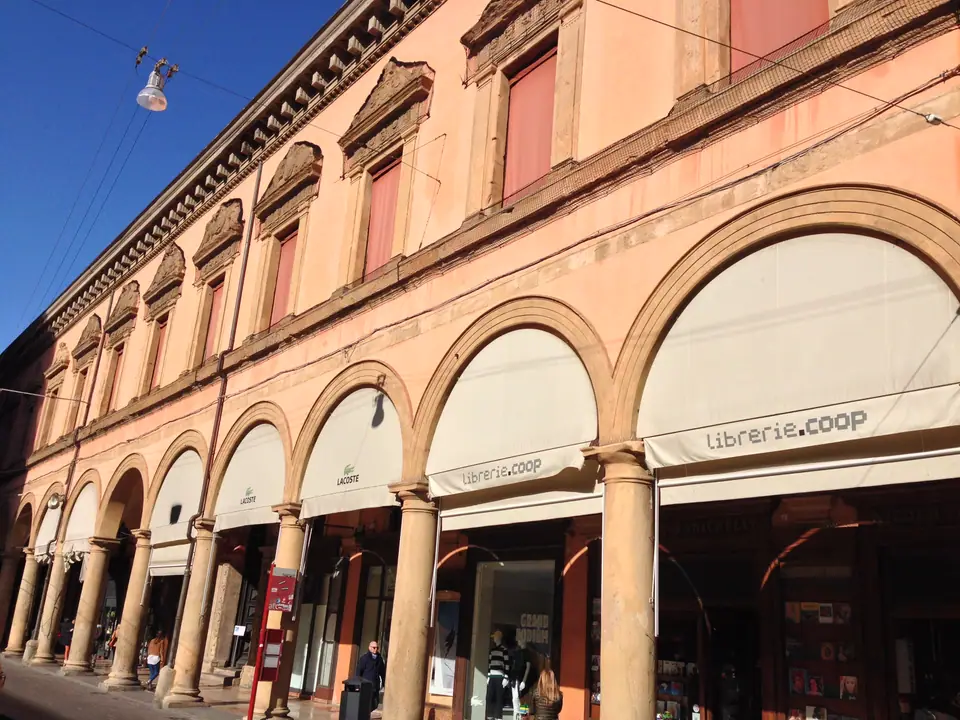
Photo: Dimitris Kamaras from Athens, Greece · CC BY 2.0
University and Old Bologna
The oldest university, the Archiginnasio, Santo Stefano, Morandi and the Collegio di Spagna.
Bologna's nickname La Dotta, the Learned, is earned. The University of Bologna, founded around 1088, is the oldest university in continuous operation in the world, and its presence shapes the old centre. This guide explores the university quarter, the Archiginnasio and its Anatomical Theatre, the Seven Churches of Santo Stefano and the Museo Morandi.
Combine it with the main square guide for a full day in the old centre.
Nine centuries at the University of Bologna
The University of Bologna traces its roots to about 1088, gaining its formal charter from Emperor Frederick I Barbarossa in 1158. Today 90,291 students study across Bologna and regional campuses in Cesena, Forlì, Ravenna and Rimini, continuing a legacy shared with alumni such as Dante Alighieri and Nicolaus Copernicus. Early legal scholar Bettisia Gozzadini became the university's first woman graduate and lecturer. Centuries later, physicist Laura Bassi defended forty-nine theses on 17 April 1732 to earn a science doctorate, became a salaried university lecturer that same year, popularised Newtonian mechanics in Italy and took the Chair of Experimental Physics in 1776.
Two landmark academic declarations also carry Bologna's name. On 18 September 1988, 388 university rectors gathered in Piazza Maggiore to sign the Magna Charta Universitatum for the 900th anniversary, later endorsed by 975 institutions across 94 countries. On 19 June 1999, education ministers from 29 European nations signed the Bologna declaration here, shaping higher-education cooperation across 49 participating countries.
Medieval Spanish cloisters at the Collegio di Spagna
Cardinal Gil Álvarez Carrillo de Albornoz founded the college in 1364 for Spanish students, and construction ran from 1365 to 1367. Still operating under Spanish royal patronage granted since 1488, its quiet two-storey arcaded courtyard bears carved Spanish coats of arms and lists Ignatius of Loyola and Miguel de Cervantes among noted residents.
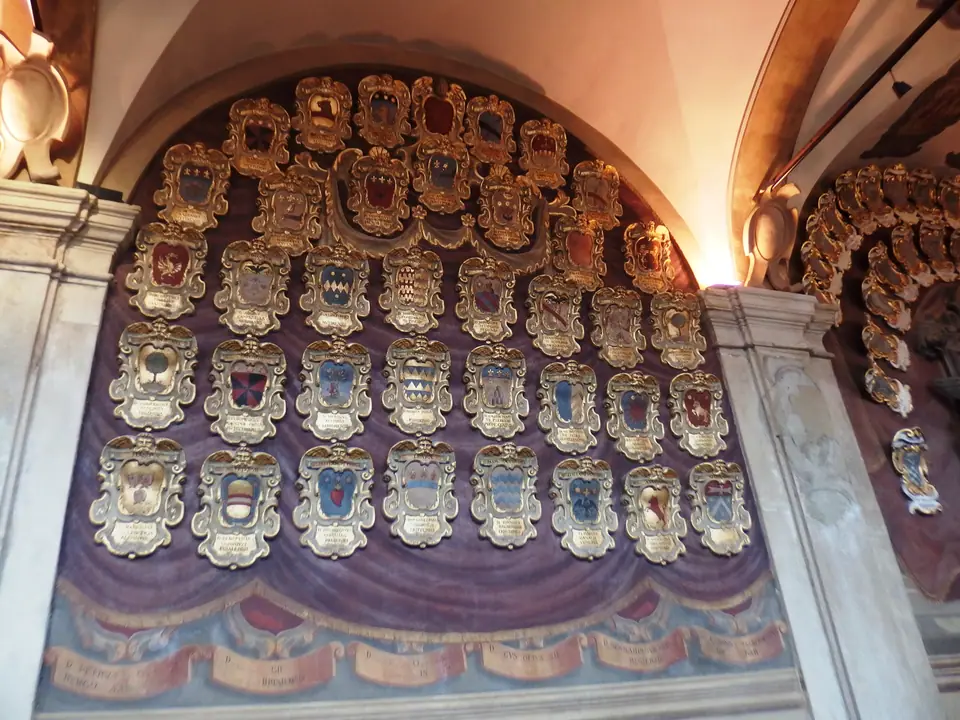
Painted student heraldry inside the Archiginnasio
Construction of the Archiginnasio began in February 1562, and the building was inaugurated on 21 October 1563. Pope Pius IV commissioned it through papal legate Charles Borromeo, and the architect was Antonio Morandi, called il Terribilia. It housed the university until 1803, when the university moved to Palazzo Poggi, and today it houses the municipal library. About 6,000 painted coats of arms cover its walls, which students elected as heads of the student nations earned the right to display.
| Place | Key fact | What to see |
|---|---|---|
| Archiginnasio | Inaugurated 21 October 1563 | Courtyard and about 6,000 coats of arms |
| Anatomical Theatre | Dated to 1636, fir wood | Coffered ceiling and tiered seating |
| Santo Stefano | Complex of linked churches | Courtyard and Holy Sepulchre |
| Museo Morandi | Founded 1993 | Studio reconstruction and still lifes |
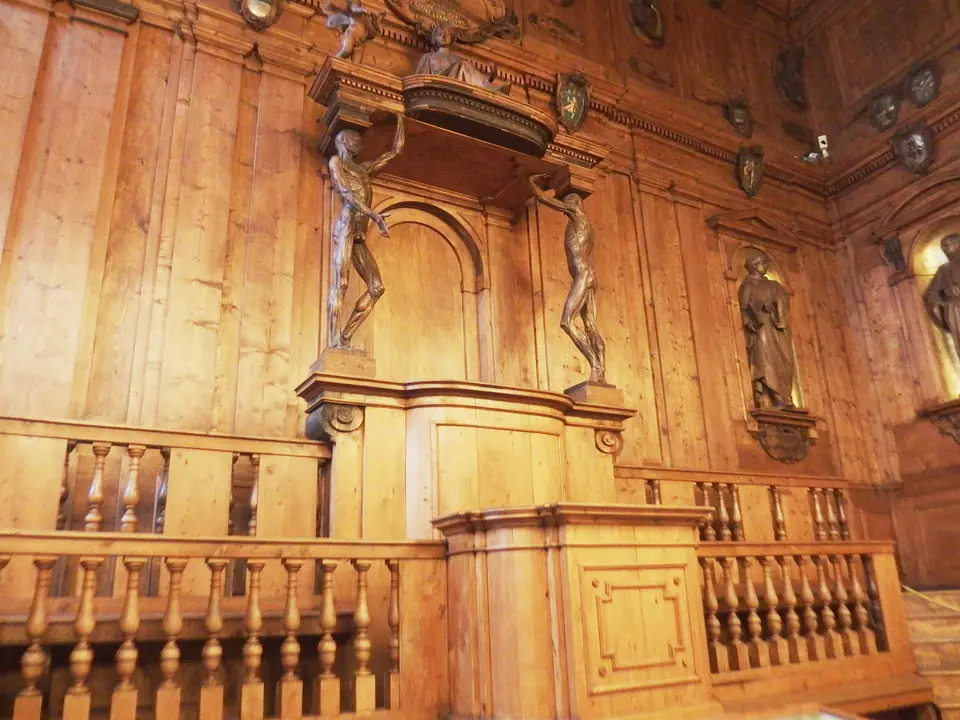
The carved firwood Anatomical Theatre
The theatre inside the Archiginnasio dates to 1636 and is credited to Antonio Levanti. Built from warm pale fir wood with a sculpted coffered ceiling, tiered rows rise steeply around the marble dissection table beneath wooden figures of famous physicians. Book a short visit in advance to hear how human anatomy lessons unfolded by candlelight.
Seven linked sanctuaries at Santo Stefano
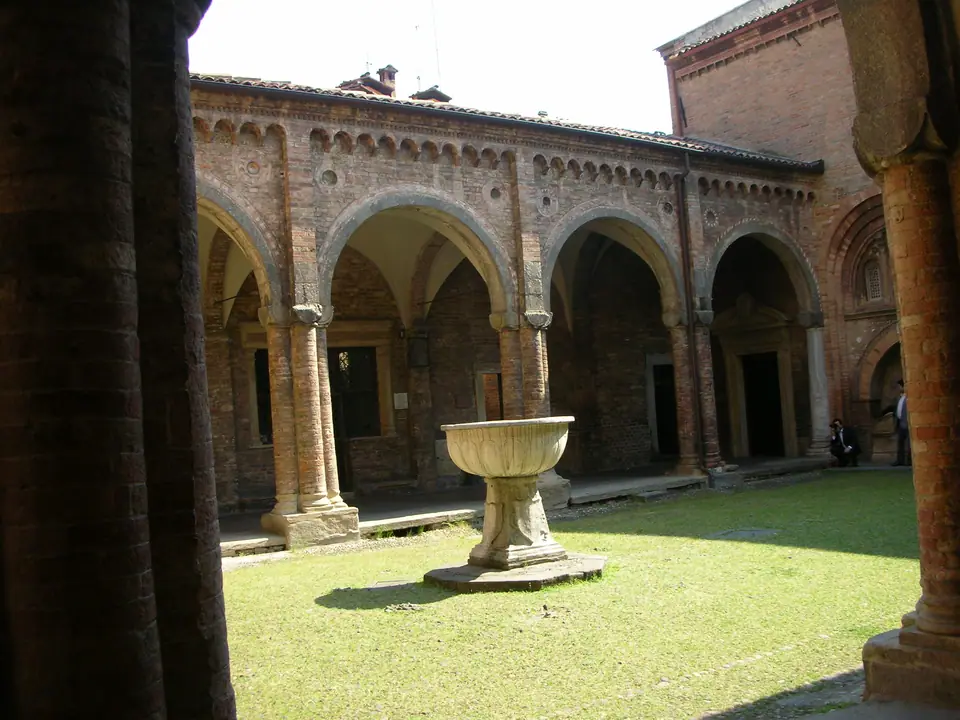
The Basilica of Santo Stefano is a complex of religious buildings that locals call Sette Chiese, the Seven Churches, and Santa Gerusalemme. Tradition says that Saint Petronius, a fifth-century bishop of Bologna, built it over a temple of Isis, a story partly based on a spring and reused Greek and Roman columns. The Church of the Holy Sepulchre has a central plan with a dodecagonal dome, and the Benedictines rebuilt it in the early 11th century after Hungarian invasions. In Pilate's courtyard stands the Catino di Pilato, a Lombard basin of 737 to 744. The Church of the Trinity holds a wooden Adoration of the Magi group said to be the oldest known crib with statues in the round.
Giorgio Morandi's quiet still-life world
Morandi was born in Bologna in 1890 and died here in 1964. His family moved to Via Fondazza after his father died in 1909, and he studied at the Accademia di Belle Arti from 1907 to 1913. He became known for muted still lifes of bottles, bowls and ceramic vessels, painting the same tabletop objects in changing daylight again and again. The Museo Morandi holds the largest public collection of his work and recreates his studio, which pairs naturally with a quiet walk past his family home on Via Fondazza. Together, those rooms show how closely his ochre palette grew out of Bologna's brick streets.
From the Archiginnasio to Santo Stefano on foot
- Start at the Archiginnasio and visit the Anatomical Theatre.
- Walk to Santo Stefano and explore the courtyards.
- Finish at the Museo Morandi or a nearby bookshop.
The route works at any season, since most of it is covered by porticoes. For a meal afterwards, see what to eat in Bologna.
Where it is
- 1University and Old Bologna
- Bologna Guglielmo Marconi Airport (BLQ) · about 7 km from here in a straight line
- Directions in Google Maps
Stations and taxi ranks: OpenStreetMap. Airports: OurAirports. Distances are in a straight line.
Traveller tips
Real advice from people who have been to Bologna. Every tip is read by our team before it goes live.
No tips yet. Been here? Yours could be the first.
Thank you! Your tip will appear here after a quick review.
More in Bologna
Continue exploring Bologna with related neighbourhood, food, and planning guides