Photo: Girolamus · CC BY-SA 4.0
Bologna Orientation: Four Nicknames, Porticoes & Trip Length
The Learned, the Fat, the Red and the Towered: a city of porticoes, an ancient university and serious food.
Bologna is the capital of Emilia-Romagna and the seventh-largest city in Italy, home to 391,473 residents in 2026 and 1,024,290 across its metropolitan area. Standing 54 metres above sea level between the Po plain and the Apennine foothills, it anchors north-south and east-west Italian travel routes. Three features define daily life here: the world's oldest continuously operating university, over 38 kilometres of covered historic porticoes and a food culture serious enough to earn its own nickname. This guide shows how those layers interlock and how many days to stay.
Detailed neighbourhood chapters cover Piazza Maggiore and the towers, the covered porticoes, the university quarter and local dining.
Four nicknames, four ways to read the city
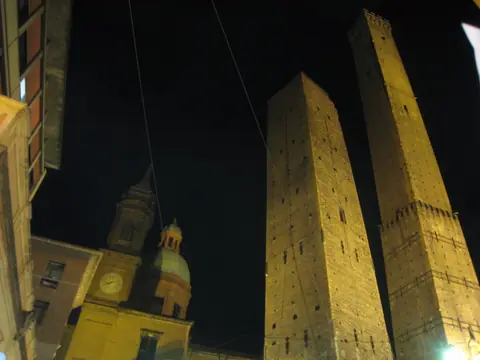
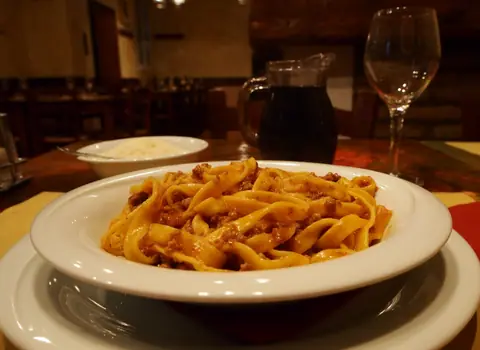
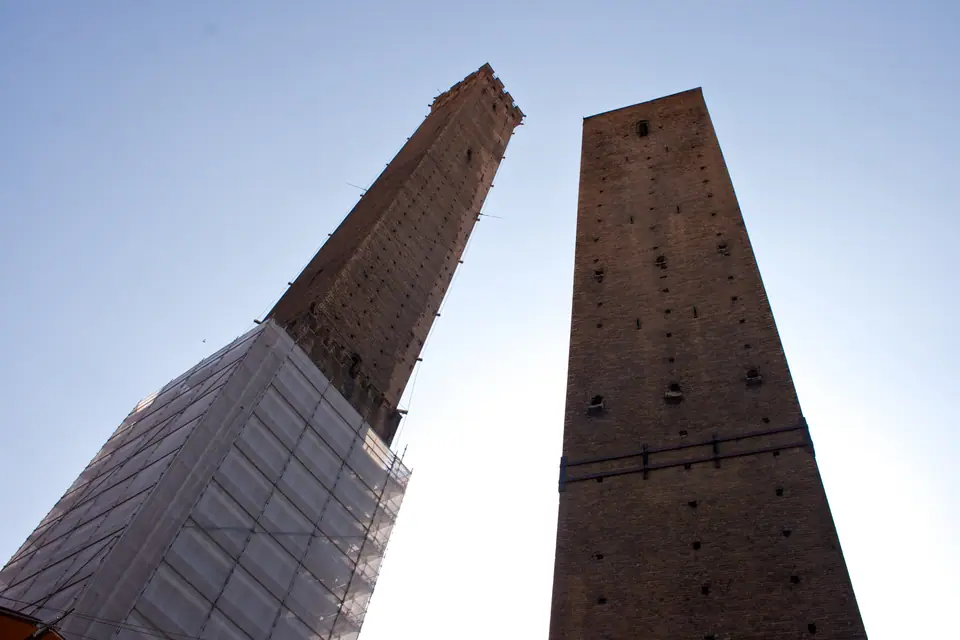
Bologna has collected nicknames that each explain one side of its character. La Dotta, the Learned, celebrates the ancient university. La Grassa, the Fat, points to fresh egg pasta, cured pork and slow sauces. La Rossa, the Red, recalls warm brick architecture beside Bologna's civic politics, while La Turrita, the Towered, remembers medieval stone silhouettes rising above tiled rooftops. Together they turn every short walk into a layered lesson in urban history.
From Felsina to the Kingdom of Italy
Settlement began with Etruscan Felsina at the end of the 6th century BCE before Celtic Boii tribes arrived and Rome founded the colony of Bonōnia in 196 BCE. Lombard forces took the town in 727 and 728, and the Peace of Constance of 1183 later secured wide municipal autonomy. Population climbed from roughly 10,000 in 1200 to between 40,000 and 50,000 by 1348. Rival families raised up to 180 brick towers during the 12th and 13th centuries, though fewer than twenty survive today.
Papal control tightened in 1506 under Pope Julius II and endured, aside from Napoleon's arrival in 1796 and the uprisings of 1831, until Bologna voted to join the Kingdom of Italy in March 1860. Resistance fighters entered the city on 21 April 1945. Wartime bombing on 24 July and 25 September 1943 scarred large sections of the centre and killed thousands. On 2 August 1980 a station bomb killed 85 people and injured more than 200; a quiet memorial still stands at Bologna Centrale.
| Era | Event | What it left |
|---|---|---|
| 6th century BCE | Etruscan Felsina | Finds in the archaeological museum |
| 196 BCE | Roman colony of Bonōnia | The street grid beneath the centre |
| 1088 | University founded | The student city |
| 1860 | End of papal rule | Entry into the Kingdom of Italy |
Culture that reaches beyond the old centre
UNESCO named Bologna a City of Music on 26 May 2006, the first Italian city in that network, following its turn as European Capital of Culture in 2000. Live jazz, cinema restorations and independent bookshops spill out across side alleys detailed in the seasons guide. Born in Bologna in 1874, Nobel wireless pioneer Guglielmo Marconi conducted key outdoor radio trials in summer 1895 at Villa Griffone near Pontecchio, remembered in a museum opened there in 1999.
Deciding how many days Bologna needs
- One day: Walk Piazza Maggiore, climb the Clock Tower, stroll a quiet porticoed lane and linger over lunch.
- Two days: Add the Archiginnasio anatomical theatre, Santo Stefano courtyards and the uphill walk to San Luca.
- Three to four days: Keep Bologna as your base for direct regional trains to Modena, Ravenna or Ferrara.
Arrange your city hours using the things to do guide, and weigh regional rail stops in the excursions guide.
ZTL cameras and covered walking essentials
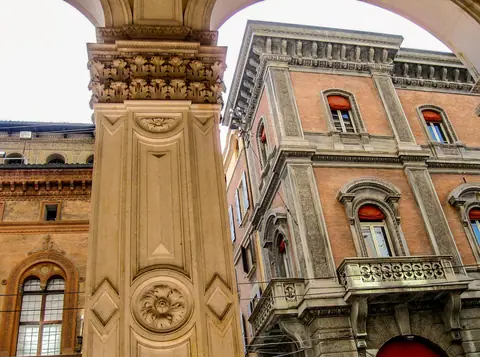
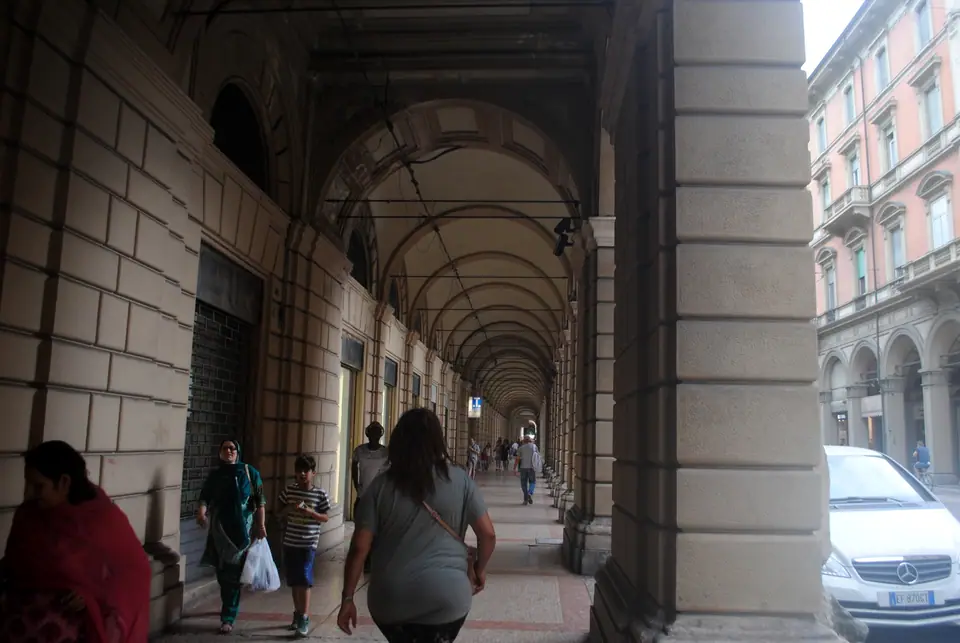
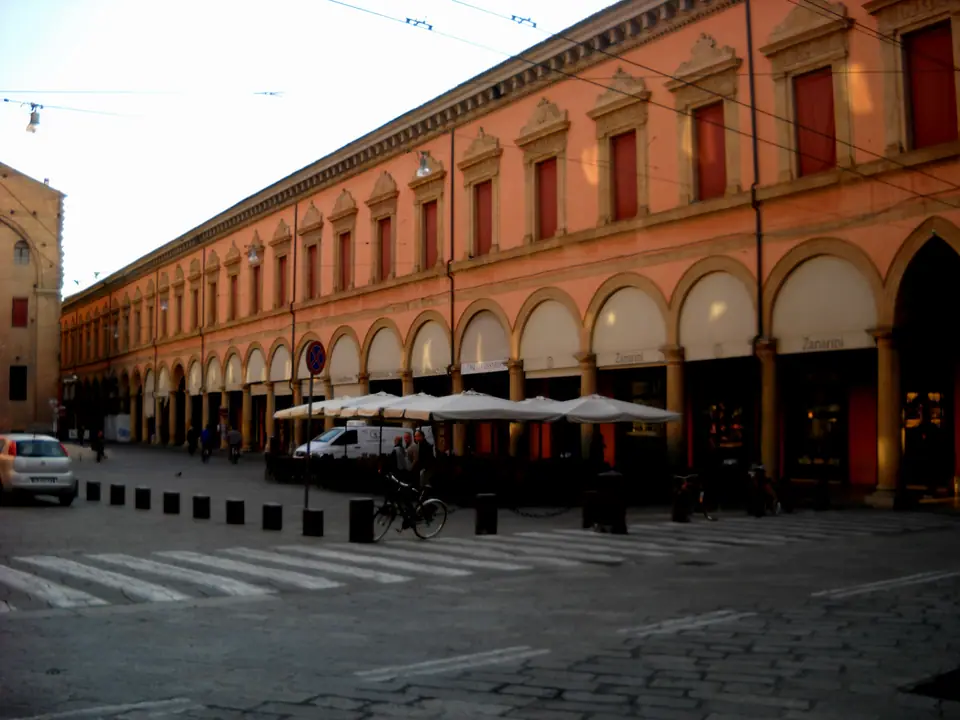
Sheltered brick arcades cover almost every sidewalk inside the medieval ring, turning wet winter mornings and bright July heat into comfortable walks past parked bicycles and neighbourhood wine shops. Look up as you walk: heights, column capitals and painted ceilings shift street by street, revealing medieval timber beams beside crisp Renaissance stone. Because electronic camera gates guard almost every central alley inside the old walls, leave rental cars at peripheral garages covered in the getting there guide. Compare quiet residential streets with livelier student nights in the where to stay guide.
High-speed links across northern Italy
Bologna sits right on the high-speed rail crossroads linking Milan, Florence, Venice and Verona. Stepping off a train places brick porticoes, lively Quadrilatero delis and Piazza Maggiore within an easy walk along Via Indipendenza. Most travellers treat those historic lanes as a warm evening ritual. Watch students gather on portico steps and pick up picnic treats from neighbourhood bakeries in the Quadrilatero. Letting two or three relaxed nights replace a rushed midday transfer stop gives morning markets, hillside walks and museum courtyards proper room to breathe.
Where it is
- 1Bologna
- Bologna Guglielmo Marconi Airport (BLQ) · about 6 km from Bologna in a straight line
- Directions in Google Maps
Stations and taxi ranks: OpenStreetMap. Airports: OurAirports. Distances are in a straight line.
Traveller tips
Real advice from people who have been to Bologna. Every tip is read by our team before it goes live.
No tips yet. Been here? Yours could be the first.
Thank you! Your tip will appear here after a quick review.
More in Bologna
Continue exploring Bologna with related neighbourhood, food, and planning guides