Photo: Petar Milošević · CC BY-SA 4.0
What to Eat in Bologna
Tortellini in broth, tagliatelle al ragù, mortadella, crescentine and Parmigiano Reggiano.
Bologna earned the nickname La Grassa, the Fat, and defends that reputation at every corner counter. Emilia-Romagna cooking rests on hand-rolled egg pasta, cured pork, aged mountain cheese and slow-simmered sauces, with Bologna sitting directly at the centre. This guide explains the classic plates to order, how protected local products gain their flavour, and which historic markets and taverns anchor daily eating.
Plan meals beside sightseeing stops in our things to do guide.
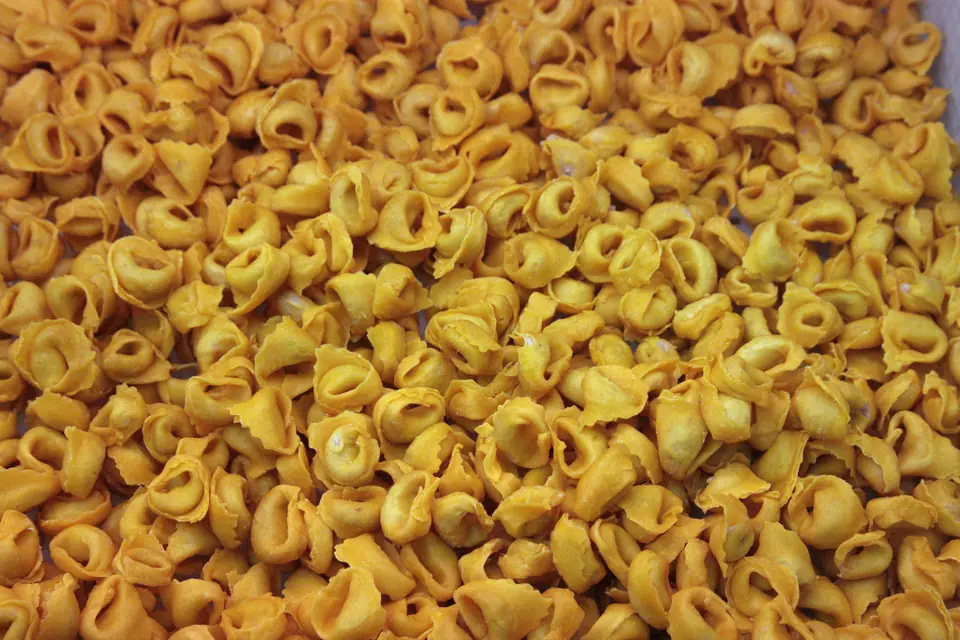
Hand-folded tortellini in steaming capon broth
Tortellini are delicate rings of golden egg dough folded by hand around pork loin, prosciutto, mortadella, Parmesan, egg and nutmeg, floating in clear, rich capon broth. Each piece weighs roughly 2 grams, unlike the larger cheese-stuffed tortelloni at around 5 grams. Bologna and Modena both claim origin rights, and Bologna registered its official recipe at the Chamber of Commerce in 1974. Local legend in Castelfranco Emilia insists an innkeeper copied Venus's navel seen through a keyhole, still celebrated with a town festival.
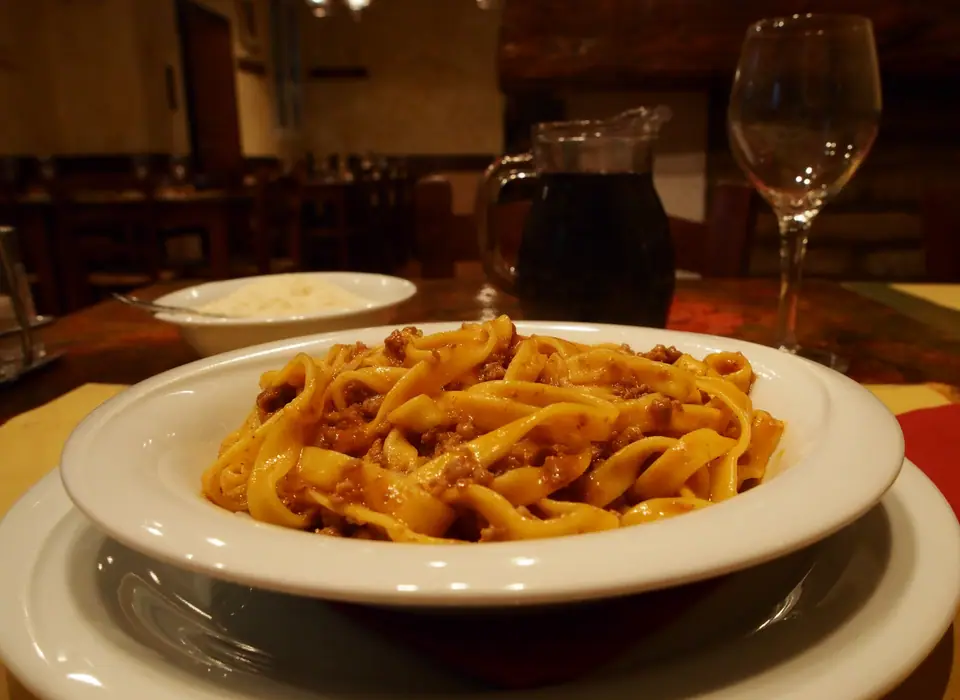
Slow-simmered ragù and golden tagliatelle ribbons
Authentic ragù alla bolognese cooks minced beef and pork slowly with vegetable soffritto, wine, milk and restrained tomato, clinging thickly without pooling red sauce. Locals serve it over wide egg tagliatelle rather than spaghetti; treat spaghetti bolognese signs near major squares as a red flag for tourist kitchens. Cook Alberto Alvisi recorded an early predecessor called ragù per i maccheroni.
True Bolognese tagliatelle mix one egg with 100 grams of flour and measure about 6 millimetres wide. Inside Bologna's Chamber of Commerce, a solid gold model preserves the legal cooked width of 8 millimetres. Lasagne alla bolognese offer an equally rich alternative, baking green spinach pasta sheets between ragù, creamy béchamel and Parmesan, descending distantly from the early 14th-century Liber de Coquina.
Warm crescentine breads and tigelle fillings
Crescentine, often known as tigelle from the terracotta discs once used to bake them, are slender round breads roughly 10 centimetres wide coming from Apennine valleys near Modena. Modern griddles puff them quickly so diners split each warm disc open around cunza lard spread scented with rosemary and garlic, soft squacquerone cheese or cold cuts. They hold traditional regional status across Emilia-Romagna.
| Dish or product | What it is | How to order it |
|---|---|---|
| Tortellini in brodo | Meat-filled pasta in capon broth | A warm first course, especially in cool weather |
| Tagliatelle al ragù | Egg ribbons with slow meat sauce | Standard everyday lunch plate |
| Lasagne | Baked green sheets with ragù and béchamel | Hot square portion |
| Mortadella Bologna | Silky spiced cooked pork sausage | Sliced paper-thin with crusty bread and cheese |
| Crescentine | Warm round mountain breads | Stuffed with cold cuts and herbs |
| Parmigiano Reggiano | Aged hard cow's cheese | Chipped in chunks beside balsamic drops |
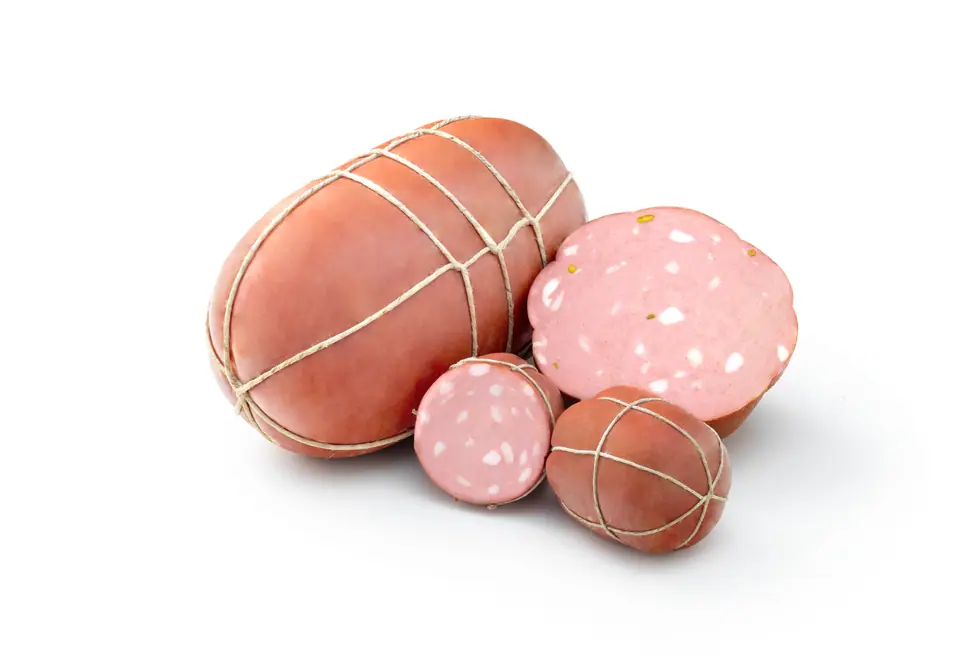
Paper-thin pink mortadella from Bologna
Mortadella Bologna carries EU protected geographical indication status. Makers blend finely ground pork shoulder with at least 15 per cent crisp white neck-fat cubes and whole black peppercorns, sometimes adding pistachios or myrtle berries, before slow oven cooking. At Quadrilatero delis ask for paper-thin pink slices arranged on a board beside fresh bread and creamy cheese so the velvety pork fat melts gently on your tongue.
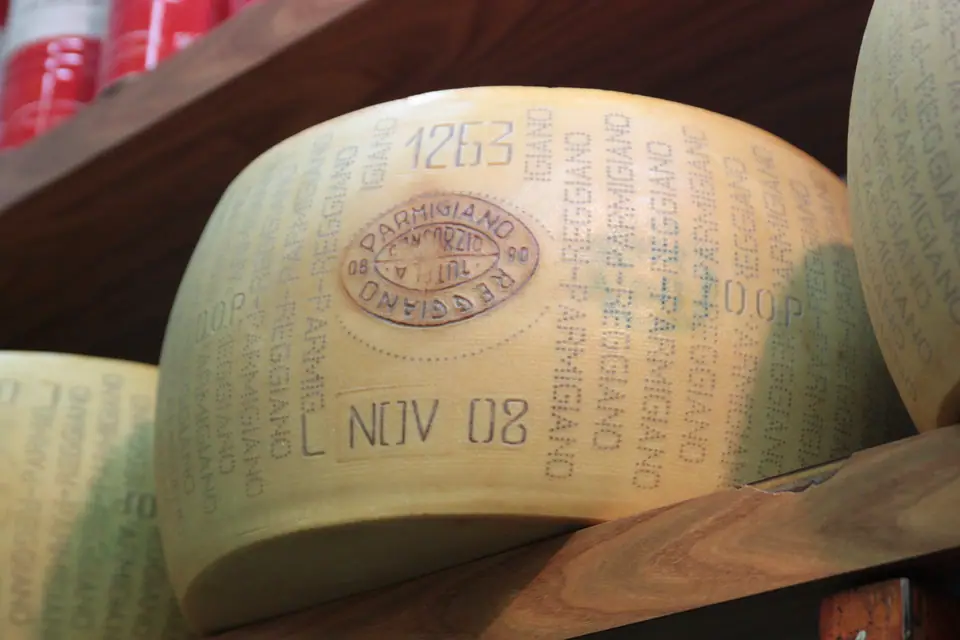
Parmigiano Reggiano on cellar shelves and aged vinegar
Parmigiano Reggiano comes from unpasteurised cow's milk produced across Parma, Reggio Emilia, Modena and western Bologna province. A typical wheel weighs 38 kilograms, uses salt as its only additive and rests row upon row along wooden cellar shelves while maturing. Standard cheese ages a minimum of 12 months before Vecchio (18 to 24 months) and crystalline Stravecchio (24 to 36 months) develop deeper nuttiness. Written records reach back to 1254, the Consorzio formed in 1928 and certified protection followed in 1955; read about Modena's balsamic cellars in the excursions guide.
Historic markets: Quadrilatero, Mercato di Mezzo and Mercato delle Erbe
Just east of Piazza Maggiore, the compact medieval alleyways of the Quadrilatero del Gusto, framed by Via Rizzoli, Via dell'Archiginnasio, Via Farini and Via Castiglione, pack historic food counters side by side. Browse Via Pescherie Vecchie, Via Clavature and Via Drapperie for handmade pasta trays, mortadella, pinza bolognese fruit tarts and spiced certosino cake. Stop into the multi-level Mercato di Mezzo indoor hall on Via Clavature for freshly plated pasta or wood-fired meats, or cross Via Ugo Bassi to Mercato delle Erbe, opened in 1910 as a broad covered produce hall now lined with lively lunch counters. Nearby on Vicolo Ranocchi sits Osteria del Sole, pouring wine since 1465 on a strict drinks-only rule where guests unwrap bread, mortadella and cheese carried in from surrounding market stalls. See the where to stay guide for alley locations.
Ferrara pasta and festive Christmas specialities
A quick rail trip north-east to Ferrara adds sweet-savoury squash-filled cappellacci di zucca dressed in sage butter, plus intensely spiced Christmas salama da sugo. Check train options in our excursions guide.
Ordering habits in traditional Bolognese osterie
- Respect seasonal menus: Broth tortellini shine brightest between October and March, while raw meats and squacquerone suit warm months.
- Seek laminated menus without dish photos: Short chalkboard or printed daily lists point towards pasta rolled that morning.
- Combine market shopping with wine: Pick up cured cuts on Via Pescherie Vecchie and settle at Osteria del Sole.
- Reserve dinner tables ahead: Small family-run osterie outside Piazza Maggiore fill rapidly from Thursday through Sunday.
Where it is
- 1Bologna
- Bologna Guglielmo Marconi Airport (BLQ) · about 6 km from Bologna in a straight line
- Directions in Google Maps
Stations and taxi ranks: OpenStreetMap. Airports: OurAirports. Distances are in a straight line.
Traveller tips
Real advice from people who have been to Bologna. Every tip is read by our team before it goes live.
No tips yet. Been here? Yours could be the first.
Thank you! Your tip will appear here after a quick review.
More in Bologna
Continue exploring Bologna with related neighbourhood, food, and planning guides