


























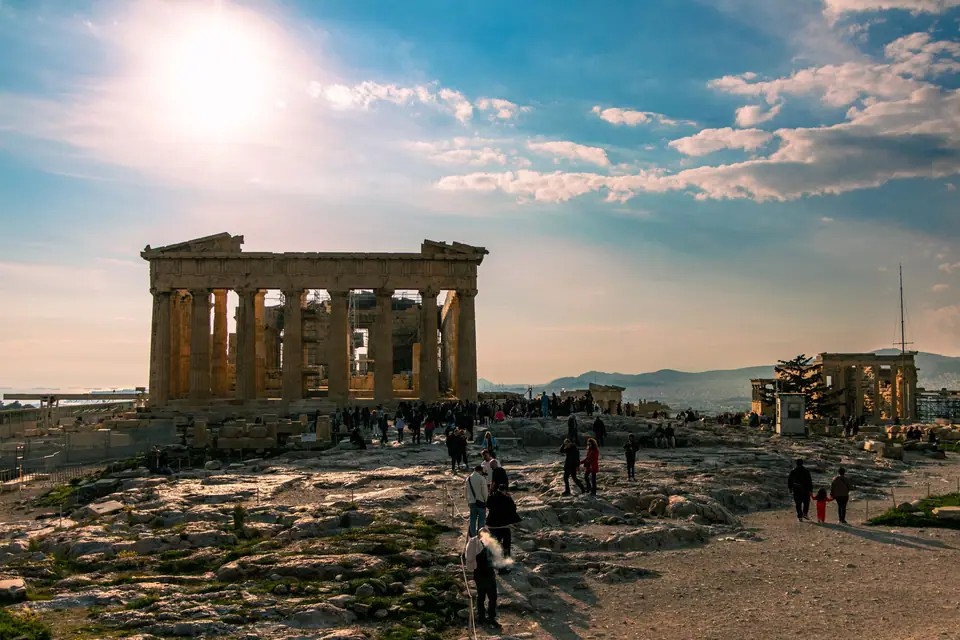
Assos (Behramkale): The Clifftop Temple of Athena and Antique Harbour
Standing among 530 BC Doric columns on a volcanic crag above the Aegean and dining in the stone harbour of Assos.
Eighty-five kilometres south of Çanakkale on the northern shore of the Gulf of Edremit (1 hour 15 minutes by car or via an hourly minibus to Ayvacık plus a 20-minute connecting village dolmuş), the terraced stone village of Behramkale climbs the steep northern slope of a 236-metre extinct volcanic trachyte cone, while at the very summit above a sheer sea cliff stands the ancient Greek city of Assos. Founded by Aeolian colonists from Lesbos in the 7th century BC, Assos entered world intellectual history between 347 and 344 BC when the philosopher Aristotle moved here at the invitation of King Hermias, married the king's niece Pythias, and founded his first philosophical and biological academy (before travelling to Macedonia to tutor young Alexander the Great). Four centuries later, St Paul walked into Assos on his Third Missionary Journey before sailing across to Mitylene.
1. The Acropolis and the Temple of Athena (530 BC, The Only Archaic Doric Temple in Anatolia)
Enter through the medieval stone village lanes of Behramkale (passing the 14th-century Ottoman Hüdavendigar Mosque, built under Sultan Murad I using Byzantine marble door lintels and a 6th-century church plan, and looking down on the intact 14th-century stone arches of the Behramkale Bridge over the Tuzla river) to reach the upper gate of the Acropolis (Museum Pass Turkey valid):
- The Temple of Athena: constructed around 530 BC out of dark, rust-grey local volcanic andesite stone, this is the only known Archaic-period Doric-order temple ever built in Asia Minor. Six of its fluted Doric columns and their architrave stand re-erected on the cliff edge, looking straight across twelve kilometres of sapphire Aegean water to the Greek island of Lesbos (Midilli). Come an hour before sunset when the dark volcanic stone turns bronze against the sea.
- The Western Necropolis, Agora, Bouleuterion and Theatre: walk down the southern stepped stone path through the monumental 4th-century BC Hellenistic West Gate (flanked by 14-metre defense towers and huge stone sarcophagi, whose flesh-consuming volcanic stone gave every European language the word sarcophagus, from lapis Assius) to the 5,000-seat sea-facing Theatre.
2. The Assos Antique Harbour (Assos Antik Liman) & Kadırga Bay
Descend the steep 2-kilometre cobblestone hairpin road (or walk down from the theatre) to the Antique Harbour at the foot of the cliff. Protected by an ancient stone breakwater, a single narrow strip of 19th-century dark volcanic stone valonia-oak (palamut) warehouses has been converted into romantic waterside boutique hotels and fish restaurants where octopuses dry in the breeze and wooden fishing boats bob two feet from your dinner table. For a wide, Blue-Flag pebble swimming beach, head 2 km east to Kadırga Koyu.
Traveller tips
Real advice from people who have been to Assos (Behramkale): The Clifftop Temple of Athena and Antique Harbour. Every tip is read by our team before it goes live.
No tips yet. Been here? Yours could be the first.
Thank you! Your tip will appear here after a quick review.
More in Canakkale
Continue exploring Canakkale with related neighbourhood, food, and planning guides
Walking Central Çanakkale: The Kordon, Clock Tower, Trojan Horse and Aynalı Çarşı
Canakkale, Turkey
Çimenlik Castle, the Nusret Minelayer and Kilitbahir Fortress: Guarding the Narrows
Canakkale, Turkey
Bozcaada Island (Tenedos): Castle, Greek Quarter, Vineyards and Ayazma Beach
Canakkale, Turkey

Gökçeada (Imbros): Turkey's Largest Island, Stone Greek Villages and Salt Lake
Canakkale, Turkey
