Dakar
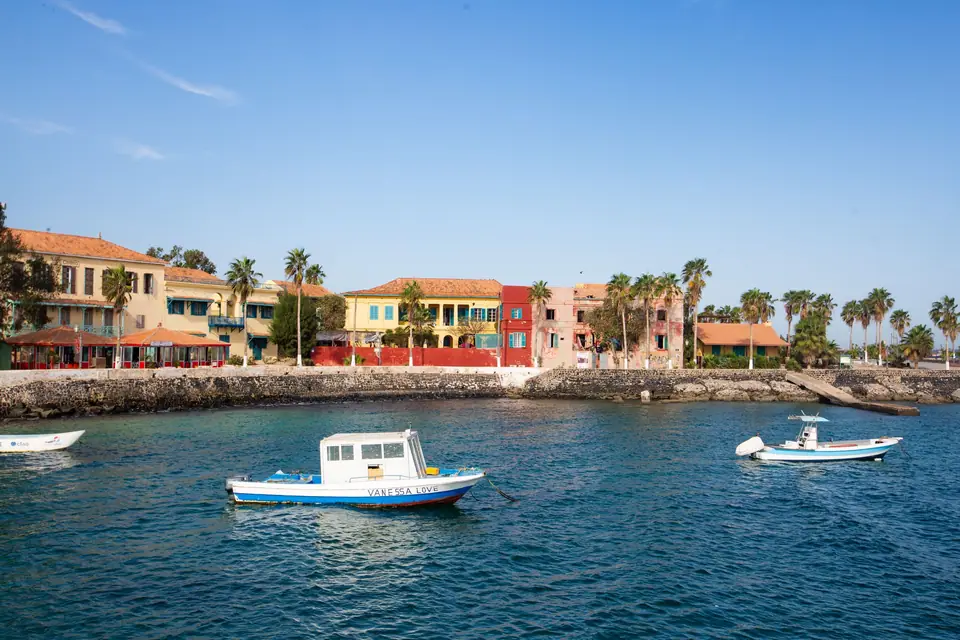
West Africa's westernmost peninsula capital, where ferries cross to UNESCO-listed Île de Gorée, Atlantic surf rolls past the Mamelles Lighthouse and smoky thiéboudienne scents the breeze.
Quick decisions
How many days?
3 days: Plateau and the ferry to Île de Gorée, the Corniche Ouest to the African Renaissance Monument and Mamelles Lighthouse, plus Ngor Island, Almadies surf and a half-day trip to Lac Rose. Follow our three-day route.
Where should I stay?
Plateau: walkable colonial boulevards, museums and the Gorée ferry terminal. Les Almadies, Ngor and Virage: oceanfront restaurants, surf breaks and breeze. Mermoz, Fann and Point E: leafy mid-peninsula bistros and galleries. Compare areas in our neighbourhood overview.
Do I need a car?
No. Riding the fast electric TER regional express train from the airport into Plateau, then using ride-hailing apps or yellow-and-black taxis along the Corniche is far easier than navigating peninsula traffic yourself.
Best for
History and memory: UNESCO-listed Île de Gorée and the monumental Museum of Black Civilisations. Music and art: live mbalax percussion, contemporary galleries and Dakar Biennale venues. Ocean life: Atlantic surf and island pirogues.
Before you go
Ferry ID and language: bring your physical passport to the port to board the chaloupe to Île de Gorée, and brush up on basic French and Wolof greetings (Salaam aleekum, Nanga def). Read our practical briefing.
Getting around
From Blaise Diagne Airport (DSS): the Train Express Régional (TER) links the airport rail station with Diamniadio and central Dakar railway station in around 45 minutes. Details in arrival and transport.
Continue your trip
Head 35 km northeast to the pink salt waters of Lac Rose (Lake Retba), travel south to the lagoon mangroves of the Sine-Saloum Delta and Somone, or drive north to the historic island town of Saint-Louis and Djoudj bird sanctuary.
Overview
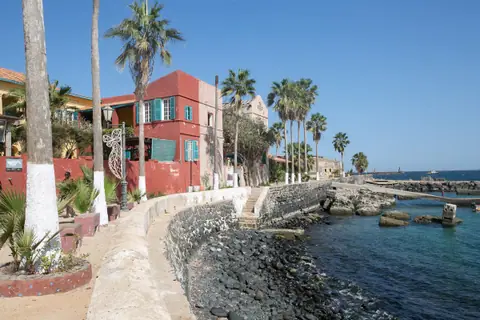
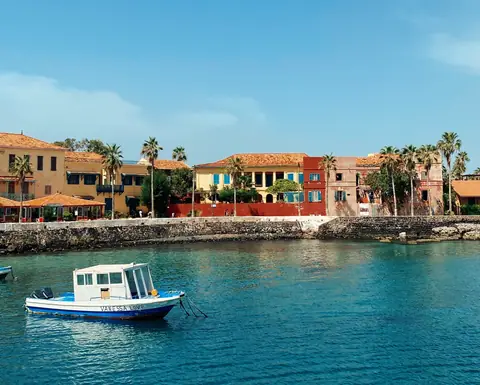
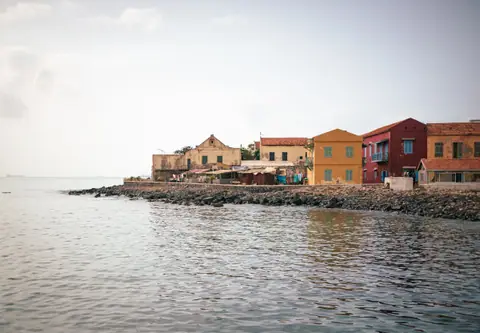
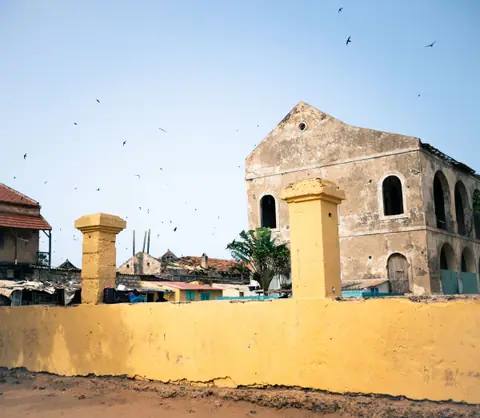
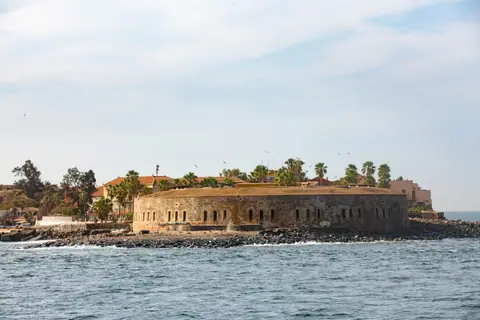
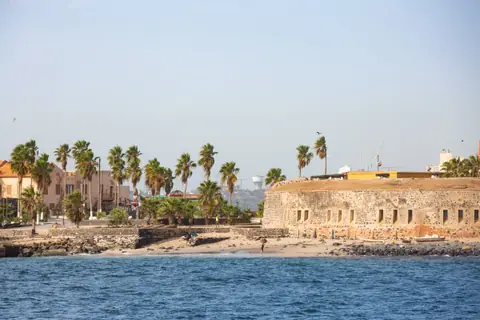
Jutting into the Atlantic Ocean at the westernmost tip of the African continent, the Cap-Vert peninsula gives Dakar a three-sided ocean horizon and a constant Atlantic trade wind. At the southern tip sits the administrative heart of Plateau and the harbour ferry across to UNESCO-listed Île de Gorée, where pastel lime-washed courtyard houses and basalt cliffs preserve the memory of the Atlantic slave trade alongside major pan-African institutions like the Museum of Black Civilisations.
Stretching northwest from Plateau, the volcanic basalt cliffs of the Corniche Ouest lead past Soumbédioune's painted fishing pirogues to the hilltop African Renaissance Monument, Mamelles Lighthouse, Ngor Island and the surf breaks of Les Almadies. Pair your coastal walks with Senegal's revered national dish in our thiéboudienne and Lac Rose excursion overview, and start with our first-timer briefing.
Getting there
Blaise Diagne International Airport (DSS) lies 50 km east of the peninsula at Diass. By far the smoothest daytime transfer into the capital is the electric Train Express Régional (TER), which runs from the airport terminal station straight into Dakar's historic main railway station on Place de Tirailleurs in Plateau, bypassing motorway congestion completely. Yellow-and-black city taxis and ride-hailing apps connect Plateau with Ngor and Almadies. See how to get to Dakar.
Where to stay
Choosing between Dakar's two main poles comes down to whether you want heritage streets and quick museum and ferry access in Plateau, or breaking Atlantic rollers, open-air seafood grills and surf schools out at the western tip in Ngor, Virage and Les Almadies. Between the two, Fann Résidence, Mermoz and Point E offer quiet diplomatic avenues along the Corniche Ouest. We compare the best districts in where to stay in Dakar.
Things to do
Take the harbour chaloupe across to Île de Gorée and tour the Museum of Black Civilisations in Plateau, watch painted wooden pirogues land the afternoon catch at Soumbédioune, climb the steps to the African Renaissance Monument and cross by boat to car-free Ngor Island, and visit the salt harvesters at Lac Rose. See all highlights in things to do in Dakar.
Food and drink
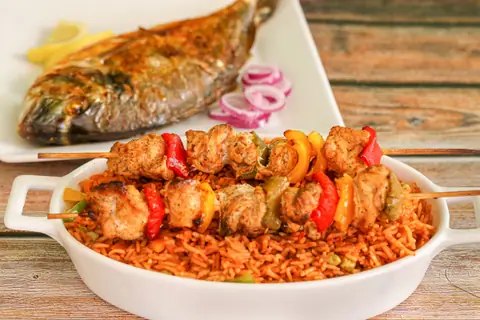
Senegalese cuisine is widely celebrated as the benchmark of West African cooking, led by UNESCO-recognised thiéboudienne (fish stuffed with herbs and simmered with broken jasmine rice, cassava, hibiscus and tamarind), tangy onion-and-mustard poulet yassa, rich peanut mafé, and chilled glasses of ruby bissap (hibiscus) or creamy baobab bouye juice. Read where and how to eat in our Dakar food and Lac Rose overview.
Culture
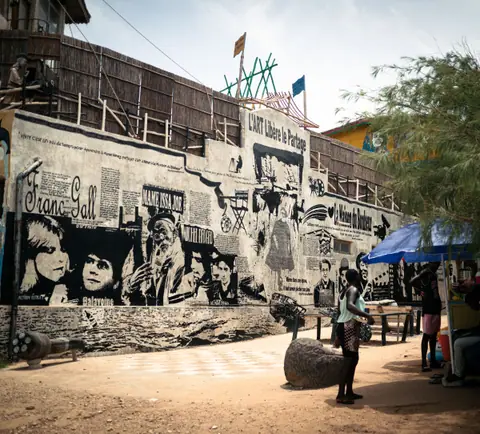
Guided by the Wolof philosophy of Teranga (generous hospitality and mutual respect), Dakar has been a cultural powerhouse since poet-president Léopold Sédar Senghor hosted the First World Festival of Negro Arts here in 1966. From mbalax rhythms pioneered by Youssou N'Dour to the contemporary installations of the Dak'Art Biennale and tailors sewing crisp boubous in Medina, creativity shapes every block of the peninsula.
Weather by month
Dakar is warmest in October, with average highs around 31°C, and coldest in February, when nights drop to about 18°C. August is the wettest month, with rain on about 9 days. For mild weather with fewer rainy days, aim for January, February, March, April, May and December.
| Month | Low | Range | High | Rain | Rainy days |
|---|---|---|---|---|---|
| Jan | 18°C | 25°C | 1 mm | 0 d | |
| Feb | 18°C | 25°C | 1 mm | 0 d | |
| Mar | 18°C | 25°C | 0 mm | 0 d | |
| Apr | 19°C | 25°C | 0 mm | 0 d | |
| May | 20°C | 26°C | 0 mm | 0 d | |
| Jun | 23°C | 29°C | 8 mm | 1 d | |
| Jul | 25°C | 30°C | 45 mm | 4 d | |
| Aug | 25°C | 30°C | 145 mm | 9 d | |
| Sep | 25°C | 31°C | 120 mm | 8 d | |
| Oct | 25°C | 31°C | 25 mm | 2 d | |
| Nov | 22°C | 29°C | 2 mm | 0 d | |
| Dec | 20°C | 27°C | 1 mm | 0 d |
Averages of daily values from 2015 to 2024. Rainy days are days with at least 1 mm of rain. Source: Open-Meteo · Compare destinations by month.
Dakar on the map
Every place we cover in Dakar. Tap a category or pin to explore.
In-depth Dakar guides
Browse the guides grouped by topic: sights, neighbourhoods, food, transport, day trips and trip planning.
Sights, Landmarks & Parks
Key monuments, viewpoints, museums and nature trails.
Neighbourhoods & Where to Stay
Districts, historic quarters and the best bases for your stay.
- Corniche Ouest, Mamelles Lighthouse, Ngor Island and Les AlmadiesVolcanic peaks, painted pirogues, a car-free artists' island and the westernmost tip of Africa.
- Where to Stay in Dakar: Plateau, Les Almadies, Ngor and Corniche OuestFour distinct Dakar areas compared for walkable heritage, Atlantic surf and Corniche views.
Getting Around & Arrival
Airport transfers, public transit, passes and driving rules.
Day Trips & Excursions
Easy half-day and full-day trips from the city.
Trip Planning & Itineraries
When to visit, what to pack and day-by-day routes.
- Dakar: What to Know Before You GoFerry passport rules, taxi apps, Wolof greetings and practical peninsula know-how.
- Best Time to Visit DakarSeven months of rain-free Atlantic breezes from November to May versus the warm green summer.
- What to Wear in DakarDressing well in West Africa's fashion capital while staying comfortable in the Atlantic breeze.
- 3 Days in Dakar: Île de Gorée, Corniche Cliffs, Ngor Island and Lac RoseThree days linking Plateau and Île de Gorée with the Corniche cliffs, Ngor Island and Lac Rose.
Need your embassy or consulate in Senegal? See embassies and consulates in Senegal.
Reviews
Log in to write a review.
No reviews yet.