Foz do Iguaçu
Positioned at the Triple Frontier where Brazil, Argentina, and Paraguay meet, Foz do Iguaçu is the gateway to the 275 basalt cascades of UNESCO-listed Iguaçu Falls, the Atlantic Forest aviaries of Parque das Aves, and the colossal Itaipu Hydroelectric Dam.
Quick decisions
- How many days? Three full days allow you to experience the Brazilian side of Iguaçu Falls and Parque das Aves on Day 1, cross into Argentina for the Upper, Lower, and Devil's Throat circuits on Day 2, and tour Itaipu Dam and the Triple Frontier on Day 3.
- Where should I stay? Stay inside the park at the historic 1958 Hotel das Cataratas for after-hours waterfall access, along lush Avenida das Cataratas (BR-469) for resort pools, or in Centro for walkable dining and buses.
- Do I need a car? No. Municipal Bus 120, ride-hailing apps, and accredited cross-border taxis connect the airport, hotels, both national parks, and Itaipu Dam with ease.
- Best for: World-scale waterfalls, Atlantic Forest wildlife (toucans, macaws, jaguars, coatis), hydroelectric engineering, three-country border culture, and southern Brazilian churrasco.
- Before you go: Carry your physical passport every time you cross the Tancredo Neves Bridge into Argentina or the Friendship Bridge into Paraguay.
- Getting around: Foz do Iguaçu / Cataratas International Airport (IGU) sits just 12 kilometres from downtown and 3 kilometres from the National Park entrance.
- Continue your trip: Combine Foz do Iguaçu with direct flights to Rio de Janeiro, São Paulo, Buenos Aires, or Asunción.
Overview
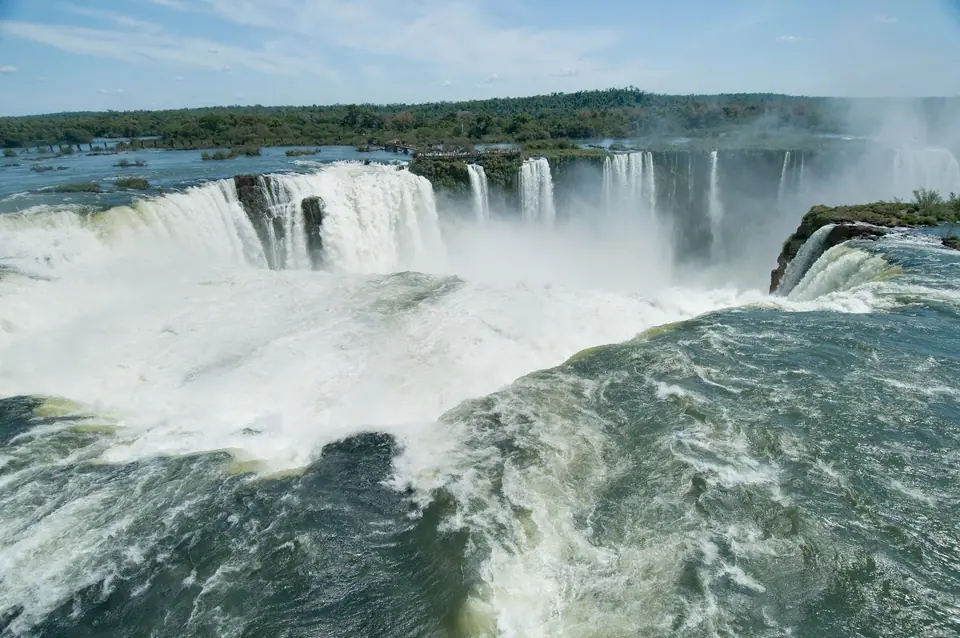
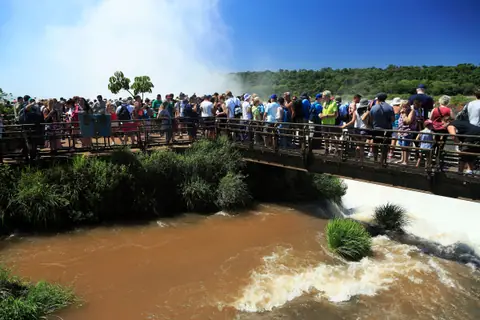
Set in the far western corner of Paraná state where the dark waters of the Iguaçu River plunge over a 2.7-kilometre-wide basalt escarpment before joining the mighty Paraná River, Foz do Iguaçu anchors South America's famous Triple Frontier (Tríplice Fronteira) with Argentina and Paraguay. First documented by Spanish explorer Álvar Núñez Cabeza de Vaca on 31 January 1542 and established as a Brazilian frontier colony in 1889, the city is the gateway to the 185,262-hectare Parque Nacional do Iguaçu (created in 1939 after the campaigning of aviation pioneer Alberto Santos-Dumont and inscribed by UNESCO in 1986), protecting both the world's largest curtain of waterfalls and a vital remnant of interior Atlantic Forest.
Getting there
Fly directly into Brazil's Foz do Iguaçu / Cataratas International Airport (IATA: IGU), located on Rodovia das Cataratas (BR-469) between the city centre and the National Park, or arrive via Argentina's Cataratas del Iguazú Airport (IGR) 20 kilometres across the Tancredo Neves Bridge in Misiones province.
Where to stay
Stay inside Iguaçu National Park at the 1958 pink colonial Hotel das Cataratas for exclusive dawn and dusk access to the canyon walkways, choose a garden resort along tree-shaded Avenida das Cataratas (BR-469), or base yourself in central Foz do Iguaçu near Avenida Jorge Schimmelpfennig.
Things to do
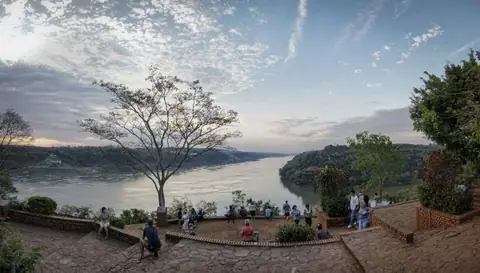
Walk the 1.5-kilometre Brazilian cliff trail and step out onto the over-water walkway at the base of the 82-metre Garganta do Diabo (Devil's Throat), ride a twin-engine Macuco Safari boat into the canyon spray, cross into Argentina for the full-day Upper, Lower, and upper Devil's Throat circuits, enter the walk-through toucan and macaw aviaries of Parque das Aves, tour the 7,919-metre Itaipu Hydroelectric Dam, and watch sunset over three countries at Marco das Três Fronteiras.
Food and drink
Savour Paraná and Iguaçu river fish such as whole grilled dourado, smoked surubim, and Pira de Foz in ginger-manioc cream, feast on southern Brazilian rodízio churrasco featuring sea-salted picanha and slow-roasted ribs, taste Paraguayan chipa and sopa paraguaia, cross to Puerto Iguazú for Argentine bife de chorizo and Malbec, and sample authentic Lebanese esfiha, kibbeh, and baklava in Foz's Arab quarter.
Culture
Home to more than 80 nationalities, Foz do Iguaçu blends Guarani Indigenous heritage and southern Brazilian gaúcho traditions with Paraguayan, Argentine, Lebanese, and Chinese-Taiwanese communities, visible in the 1983 Omar Ibn Al-Khattab Mosque, the 1996 Chenrezig Buddhist Temple overlooking the Paraná River, and the nightly three-nation cultural performances at Marco das Três Fronteiras.
Weather by month
Foz do Iguaçu is warmest in January, with average highs around 32°C, and coldest in July, when nights drop to about 12°C. January is the wettest month, with rain on about 11 days. For mild weather with fewer rainy days, aim for May, June, July and August.
| Month | Low | Range | High | Rain | Rainy days |
|---|---|---|---|---|---|
| Jan | 21°C | 32°C | 77 mm | 11 d | |
| Feb | 21°C | 31°C | 70 mm | 10 d | |
| Mar | 20°C | 30°C | 63 mm | 9 d | |
| Apr | 17°C | 28°C | 56 mm | 8 d | |
| May | 14°C | 24°C | 56 mm | 8 d | |
| Jun | 13°C | 22°C | 56 mm | 8 d | |
| Jul | 12°C | 23°C | 49 mm | 7 d | |
| Aug | 14°C | 25°C | 42 mm | 6 d | |
| Sep | 15°C | 27°C | 56 mm | 8 d | |
| Oct | 18°C | 29°C | 70 mm | 10 d | |
| Nov | 19°C | 30°C | 63 mm | 9 d | |
| Dec | 20°C | 31°C | 70 mm | 10 d |
Averages of daily values from 2015 to 2024. Rainy days are days with at least 1 mm of rain. Source: Open-Meteo · Compare destinations by month.
Foz do Iguaçu on the map
Every place we cover in Foz do Iguaçu. Tap a category or pin to explore.
In-depth Foz do Iguaçu guides
Browse the guides grouped by topic: sights, neighbourhoods, food, transport, day trips and trip planning.
Sights, Landmarks & Parks
Key monuments, viewpoints, museums and nature trails.
- Things to Do in Foz do Iguaçu: Cataratas, Garganta do Diabo and Parque das AvesDiscover the best things to do in Foz do Iguaçu, from walking the Garganta do Diabo catwalk and riding the Macuco Safari boat to Parque das Aves, Itaipu Dam, and the Argentine side.
- Best Time to Visit Foz do Iguaçu: Waterfall Flow, Seasons and Full Moon WalksFind the best time to visit Foz do Iguaçu using official WMO Station 83827 climate normals, comparing summer high-water volume, mild autumn and spring skies, and full moon walks.
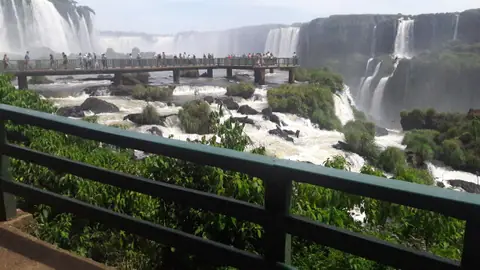
- Iguaçu National Park (Brazilian Side), Garganta do Diabo and Macuco Safari GuideComplete guide to visiting the Brazilian side of Iguaçu Falls in Parque Nacional do Iguaçu, covering the 1.5 km cliff trail, the Garganta do Diabo walkway, and Macuco Safari.
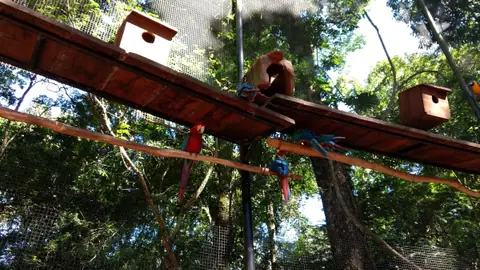
- Parque das Aves Guide: Toucans, Macaws and Harpy Eagles in the Atlantic ForestExplore Parque das Aves beside Iguaçu National Park, the world's only conservation park dedicated to Atlantic Forest birds, featuring five walk-through aviaries with toucans and macaws.
- Itaipu Binacional Dam, Panoramic Circuit and Bela Vista Biological Refuge GuideTour the 7,919-metre Itaipu Binacional Hydroelectric Dam on the Paraná River between Brazil and Paraguay, one of the Seven Modern Wonders of the World, and the Bela Vista Refuge.
- Marco das Três Fronteiras: Where Brazil, Argentina and Paraguay MeetVisit Marco das Três Fronteiras in Foz do Iguaçu, where the Iguaçu River meets the Paraná River and 1903 obelisks in Brazil, Argentina, and Paraguay face one another at sunset.
- Buddhist Temple, Omar Ibn Al-Khattab Mosque and Multicultural Foz do Iguaçu GuideExplore the multicultural landmarks of Foz do Iguaçu: the 1996 Chenrezig Buddhist Temple with 120 statues overlooking the Paraná River, the 1983 Omar Ibn Al-Khattab Mosque, and Guadalupe Cathedral.




Neighbourhoods & Where to Stay
Districts, historic quarters and the best bases for your stay.
- Foz do Iguaçu: Triple Frontier, Waterfalls and Planning TipsEssential planning advice for visiting Foz do Iguaçu, Brazil, comparing the Brazilian and Argentine sides of the falls, border crossings, currency, and local transport.
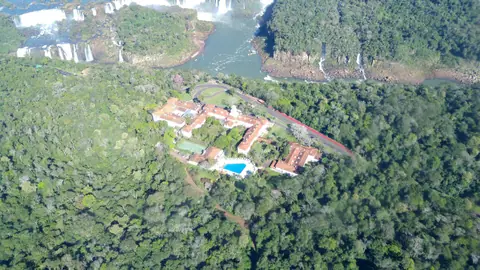
- Where to Stay in Foz do Iguaçu: National Park, Avenida das Cataratas and CentroCompare the best areas to stay in Foz do Iguaçu, from the historic 1958 Hotel das Cataratas inside the National Park to tropical resorts on Avenida das Cataratas and walkable Centro.
- 3 Days in Foz do Iguaçu Itinerary: Brazilian Falls, Argentine Side and Itaipu DamPlan 3 days in Foz do Iguaçu with a day-by-day itinerary covering the Brazilian Falls and Parque das Aves on Day 1, the Argentine circuits on Day 2, and Itaipu Dam on Day 3.

Food & Drink
Local dishes, markets, cafés and dining districts.

Getting Around & Arrival
Airport transfers, public transit, passes and driving rules.
Day Trips & Excursions
Easy half-day and full-day trips from the city.
- Argentine Side of Iguazú Falls Day Trip: Upper, Lower and Devil's Throat CircuitsPlan a seamless full-day excursion from Foz do Iguaçu across the Tancredo Neves Bridge to Argentina's Parque Nacional Iguazú to walk the Upper, Lower, and Devil's Throat circuits.
- Ciudad del Este, Ponte da Amizade and Saltos del Monday (Paraguay) Day Trip GuideCross the 1965 Ponte Internacional da Amizade from Foz do Iguaçu into Paraguay to explore Ciudad del Este and the 40-metre basalt waterfalls of Saltos del Monday in Presidente Franco.
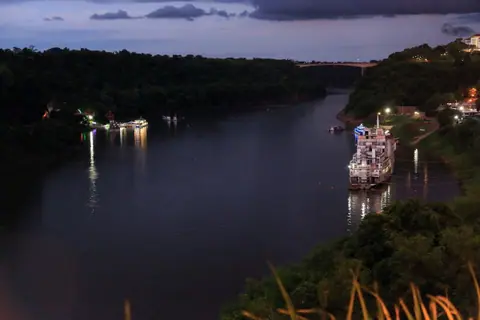
- Puerto Iguazú, Hito Tres Fronteras and Argentine Dining Evening Trip GuideCross the Tancredo Neves Bridge from Foz do Iguaçu into Puerto Iguazú, Argentina to visit Hito Tres Fronteras, the giant Guarani timber structure of La Aripuca, the Feirinha, and Argentine steakhouses.

Need your embassy or consulate in Brazil? See embassies and consulates in Brazil.
Reviews
Log in to write a review.
No reviews yet.