


























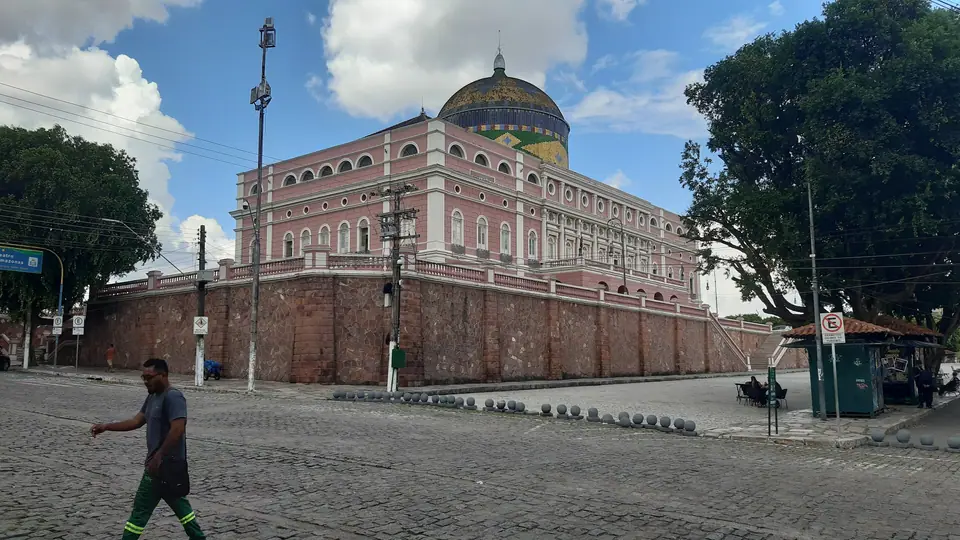
Teatro Amazonas & Largo de São Sebastião Guide: Manaus's Belle Époque Heart
Visit Teatro Amazonas and Largo de São Sebastião in Manaus: explore the 1896 opera house dome, gilded auditorium, wave-patterned square, and Palácio Rio Negro.
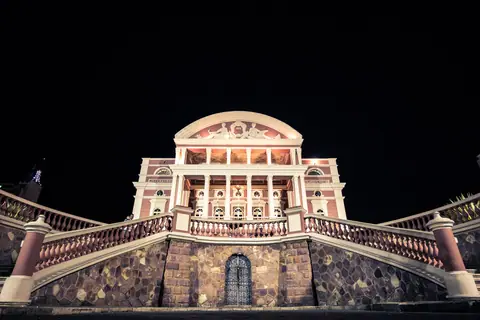
Crowning a gentle hill in the historic centre of Manaus, the rose-pink neoclassical facade and shimmering green-gold-and-blue dome of Teatro Amazonas stand as the most famous monument of the Amazon Rubber Boom. Conceived in 1881 by provincial legislator Antônio José Fernandes Júnior to showcase the wealth generated by wild rubber exports and designed by the Portuguese Engineering Office in Lisbon with interiors by Italian artist Crispim do Amaral and Domenico De Angelis, the opera house was inaugurated on 31 December 1896 and opened its stage a week later with Amilcare Ponchielli's La Gioconda.
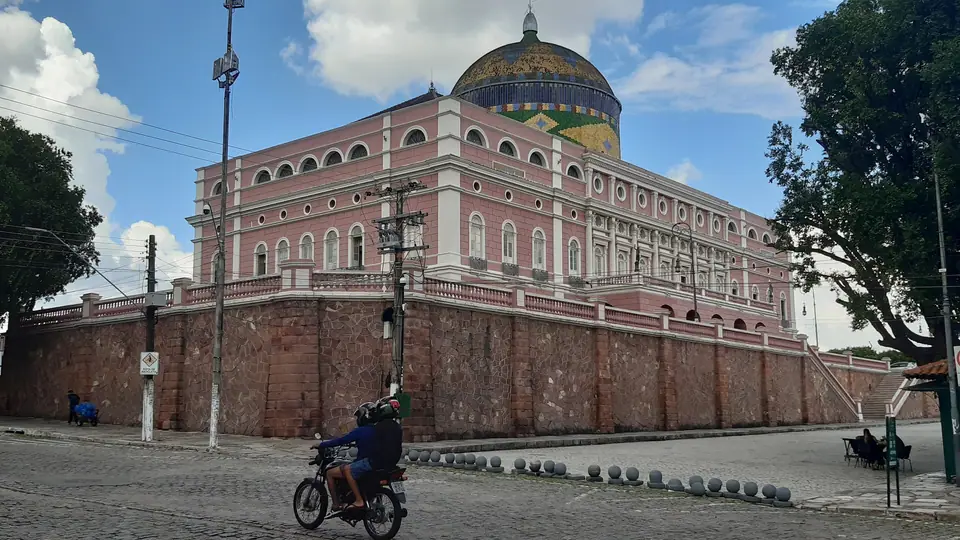
Inside the 1896 Auditorium and Noble Salon
Guided visits lead through the grand foyer and up Carrara marble staircases to two unforgettable interior spaces:
- The 701-Seat Horseshoe Auditorium: Framed by three tiers of gilded cast-iron balconies imported from Glasgow, the main hall looks up toward a vaulted ceiling painted in Paris by Crispim do Amaral. Its trompe-l'oeil panels depict the muses of music, tragedy, dance, and opera, arranged so that from the centre of the parterre you appear to be gazing directly up at the base of the Eiffel Tower.
- The Salão Nobre (Noble Hall): Illuminated by Venetian Murano crystal chandeliers, the upstairs reception ballroom features parquet floors of inlaid Amazonian hardwoods (acapu and pau-amarelo) and Domenico De Angelis's 1899 ceiling fresco A Glorificação das Belas Artes na Amazônia, portraying indigenous mythological figures rising above the rainforest.
- The Alsace Ceramic Dome: Visible across downtown, the exterior iron cupola is clad in 36,000 glazed earthenware tiles imported from Alsace and arranged in a diamond mosaic of green, yellow, and blue to honour the flag of the young Brazilian Republic.
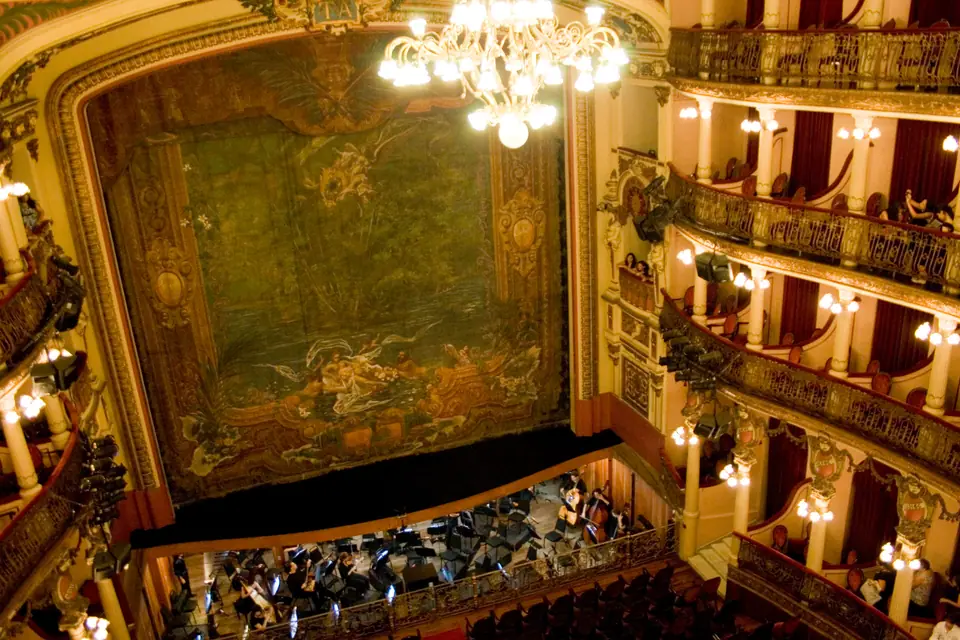
Largo de São Sebastião and Surrounding Palaces
Stepping out of the theatre brings you onto Largo de São Sebastião, whose undulating black-and-white Portuguese calçada stone mosaic was laid in 1901 to represent the meeting of the dark Rio Negro and pale Rio Solimões, predating Rio de Janeiro's famous Copacabana promenade by several years. At the centre rises the 1900 marble Monumento à Abertura dos Portos, while the eastern edge is anchored by the 1888 Igreja de São Sebastião. Directly behind the opera house stands the ochre neoclassical Palácio da Justiça (1900), and a ten-minute walk along Sete de Setembro leads to the 1903 Palácio Rio Negro cultural centre before continuing down to Mercado Municipal Adolpho Lisboa.
Traveller tips
Real advice from people who have been to Teatro Amazonas & Largo de São Sebastião Guide: Manaus's Belle Époque Heart. Every tip is read by our team before it goes live.
No tips yet. Been here? Yours could be the first.
Thank you! Your tip will appear here after a quick review.
More in Manaus
Continue exploring Manaus with related neighbourhood, food, and planning guides
Manaus: Essential Planning for the Heart of the Amazon
Manaus, Brazil
Best Things to Do in Manaus: Opera House, River Confluence & Canopy Towers
Manaus, Brazil
How to Get to Manaus: Flights, Amazon River Boats & Highway BR-174
Manaus, Brazil
Best Time to Visit Manaus: High Water vs River Beach Season Explained
Manaus, Brazil
