


























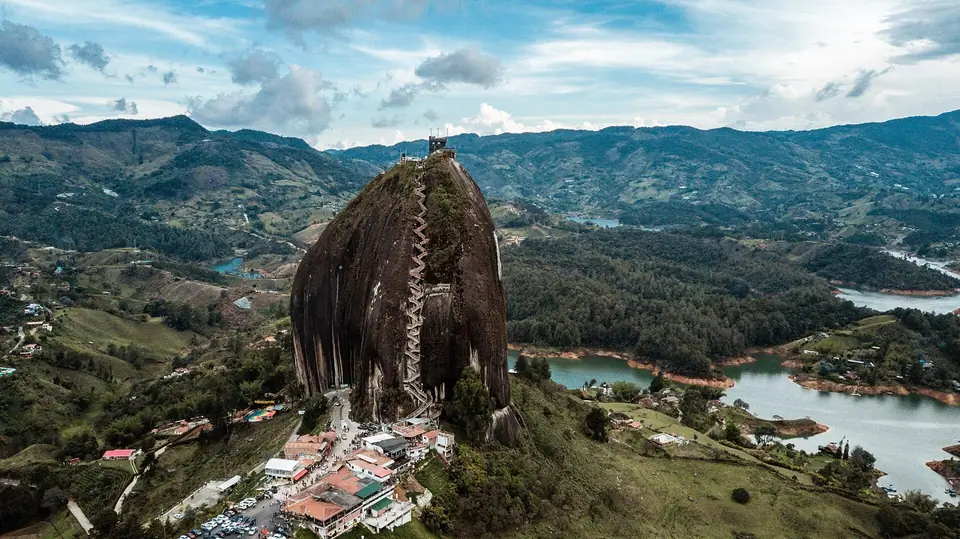
Guatapé and Piedra del Peñol Day Trip Guide: 740 Steps and Painted Zócalos
Plan a day trip 82 km east of Medellín to climb the 740 steps of the 200-metre Piedra del Peñol granite monolith, cruise the Peñol-Guatapé Reservoir, and photograph the colourful zócalos of Guatapé.
Eighty-two kilometres east of Medellín on the high green plateau of eastern Antioquia lies one of the most striking landscapes in South America: a labyrinth of emerald-green islands, peninsulas, and turquoise channels watched over by a colossal 200-metre vertical granite dome and the rainbow-painted streets of Guatapé. Easily reached by public bus or private car in under two hours, this is the essential day trip from the Aburrá Valley.
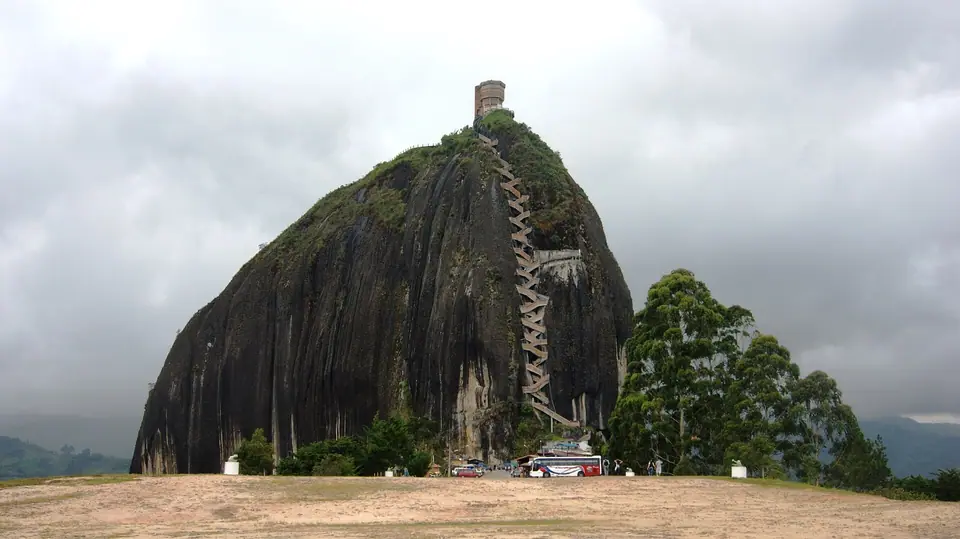
1. Climbing the 740 Steps of La Piedra del Peñol (Peñón de Guatapé)
Rising abruptly 200 metres (656 feet) above the surrounding hills to a summit elevation of 2,135 metres above sea level, La Piedra del Peñol (El Peñón de Guatapé) is a 65-million-year-old monolithic inselberg of quartz, feldspar, and mica belonging to the Antioquian Batholith. Worshipped in pre-Hispanic times by the Tahamí people, its sheer faces remained unclimbed until July 1954, when landowner Luis Eduardo Villegas López and friends Pedro Nel Ramírez and Ramón Díaz spent five days wedging wooden pitons into a vertical crack on the northern face to reach the top.
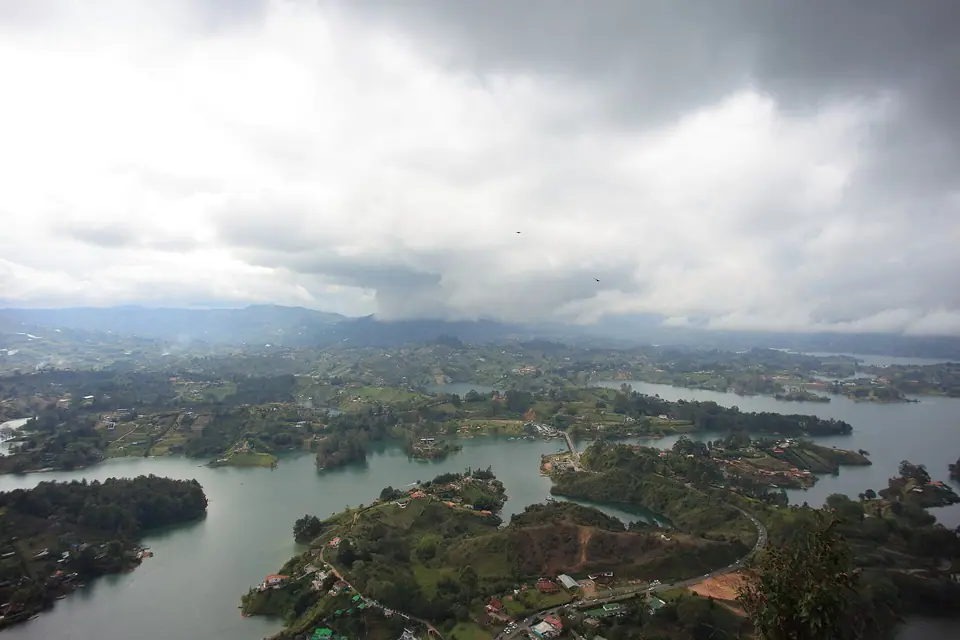
- The Ascent: Today, a zig-zagging concrete-and-brick staircase of 659 steps to the base of the upper tower and 740 steps to the highest observation deck is built directly inside that vertical fissure. Separate stairwells lead up and down. Take 20 to 30 minutes ascending to the summit terrace, where a 360-degree panorama stretches across the 2,262-hectare Peñol-Guatapé Hydroelectric Reservoir, created in the 1970s when EPM flooded old El Peñol (generating roughly 30 percent of Antioquia's hydroelectricity).
2. Exploring Guatapé: Colombia's Pueblo de Zócalos
Five minutes further along the lakeside highway (connectable by open-sided motocarro tuk-tuks) sits Guatapé, founded in 1811 by Don Francisco Giraldo y Jiménez. Beginning in the early twentieth century (spearheaded by local artist José María Parra in the 1920s), every house, bakery, and church along the cobbled streets is adorned along the bottom metre of its facade with brightly painted, three-dimensional cement bas-relief friezes called zócalos.
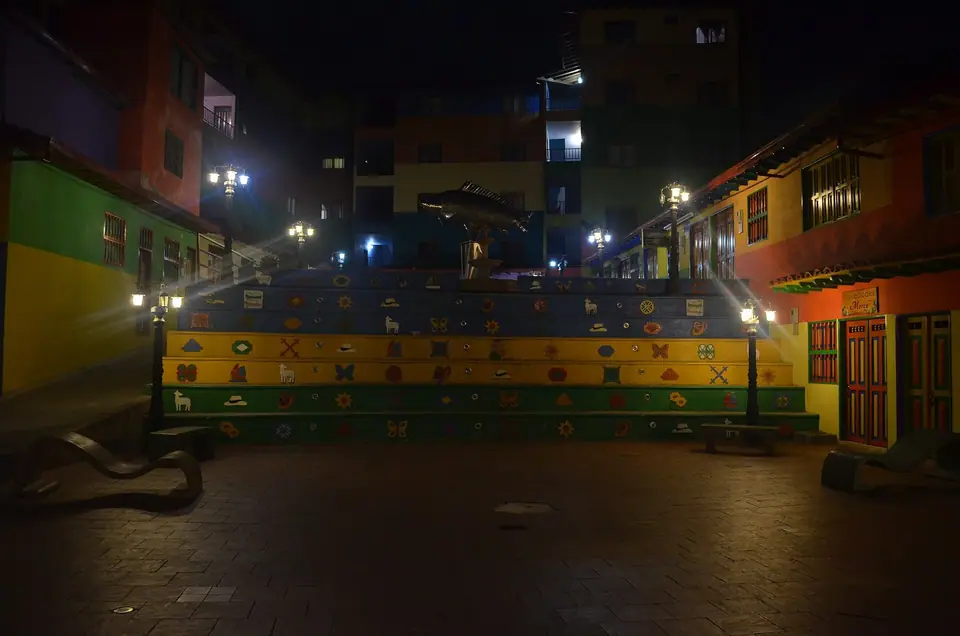
3. Plazoleta de los Zócalos and Calle del Recuerdo
Each zócalo tells the story of the family or business inside: pack mules carrying coffee sacks, musical instruments, geometric patterns, sunflowers, sheep, and fishing boats. Don't miss Calle del Recuerdo, the red-and-yellow staircase of Plazoleta de los Zócalos, and the white-and-red woodwork of the Iglesia de Nuestra Señora del Carmen on the main plaza.
4. How to Get to Guatapé from Medellín
Take Metro Line A north to Caribe Station, cross the skybridge into Terminal del Norte, and go to ticket counters 9 or 14 (Sotrasanvicente or Sotrapeñol). Buses depart every 20 to 30 minutes from 06:00; ask the driver to drop you first at La Piedra (1 hour 45 minutes), then take a 10-minute motocarro into Guatapé town and board your return bus from the lakeside terminal.
Traveller tips
Real advice from people who have been to Guatapé and Piedra del Peñol Day Trip Guide: 740 Steps and Painted Zócalos. Every tip is read by our team before it goes live.
No tips yet. Been here? Yours could be the first.
Thank you! Your tip will appear here after a quick review.
More in Medellín
Continue exploring Medellín with related neighbourhood, food, and planning guides
Metrocable, Parque Arví and Santa Elena Cloud Forest Guide
Medellín, Colombia
El Poblado, Provenza, Manila and Museo El Castillo Guide
Medellín, Colombia
Jardín Botánico, Orquideorama and Parque Explora (Zona Norte) Guide
Medellín, Colombia
Laureles, Cerro Nutibara (Pueblito Paisa) and Casa de la Memoria Guide
Medellín, Colombia
