


























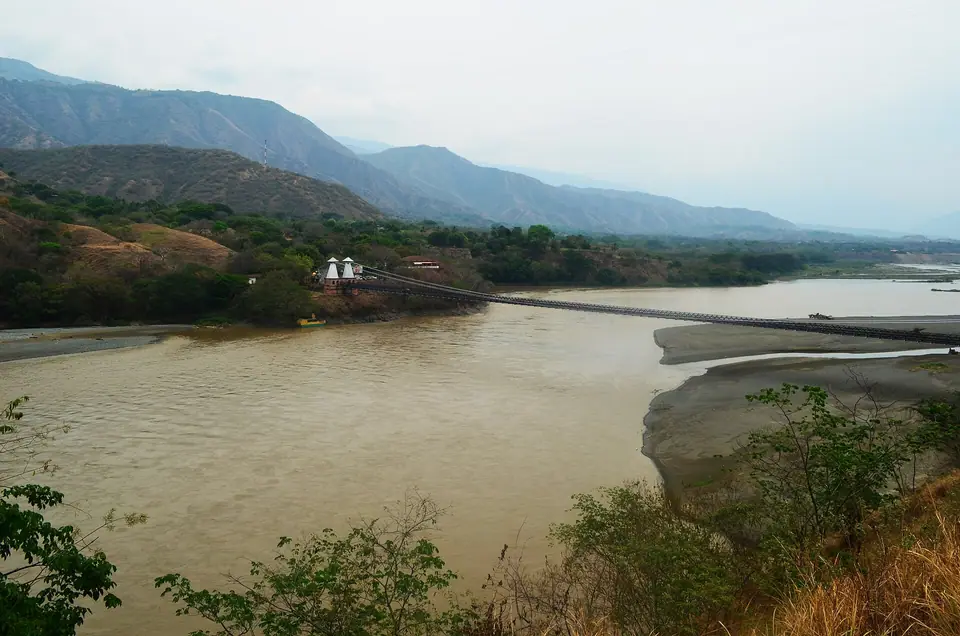
Santa Fe de Antioquia and Puente de Occidente Day Trip Guide
Travel 56 km northwest of Medellín through the Túnel de Occidente to 1541 colonial Santa Fe de Antioquia, Antioquia's former capital, and cross the 291-metre 1895 wooden suspension bridge of Puente de Occidente.
While Guatapé takes you up into the cool eastern highlands, heading 56 kilometres northwest of Medellín through the 4.6-kilometre Túnel de Occidente drops you nearly a vertical kilometre down into the warm, sun-drenched tropical valley of the Cauca River (at 550 metres elevation) and straight into the sixteenth century at Santa Fe de Antioquia, the colonial cradle and former capital of Antioquia.
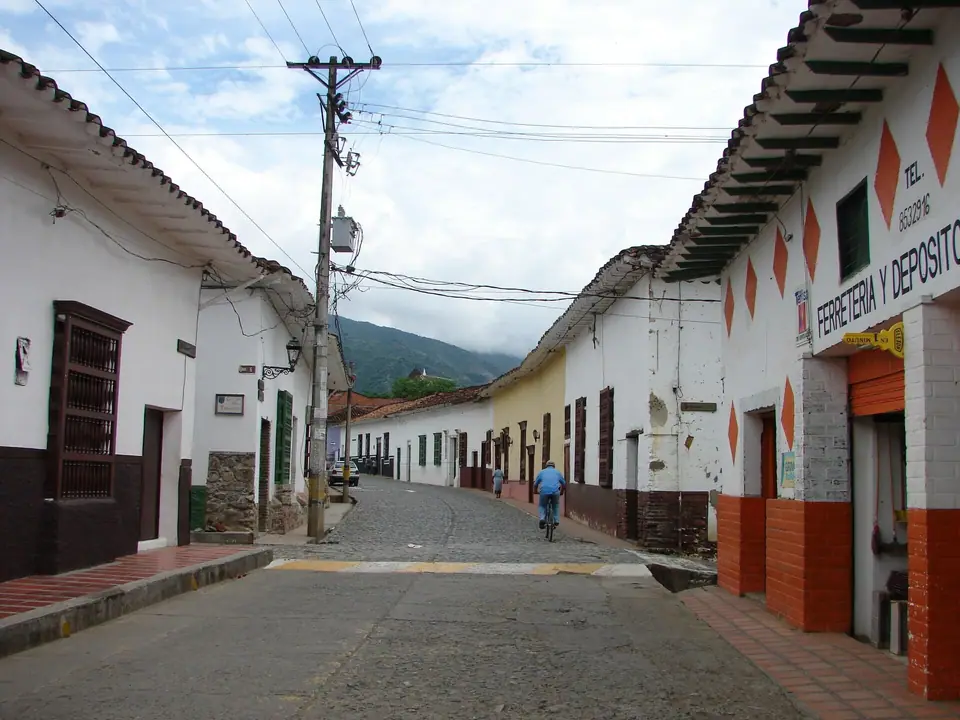
1. Santa Fe de Antioquia (Founded 1541): The Colonial Capital
Founded on 4 December 1541 by Spanish conquistador Marshal Jorge Robledo near the confluence of the Tonusco and Cauca rivers, Santa Fe de Antioquia served as the political, ecclesiastical, and gold-mining capital of the Province of Antioquia for nearly three centuries until the capital was transferred to Medellín on 17 April 1826. Because trade routes shifted away in the nineteenth century, its historic core was spared modern redevelopment and is protected today as a National Monument of Colombia (Bien de Interés Cultural).
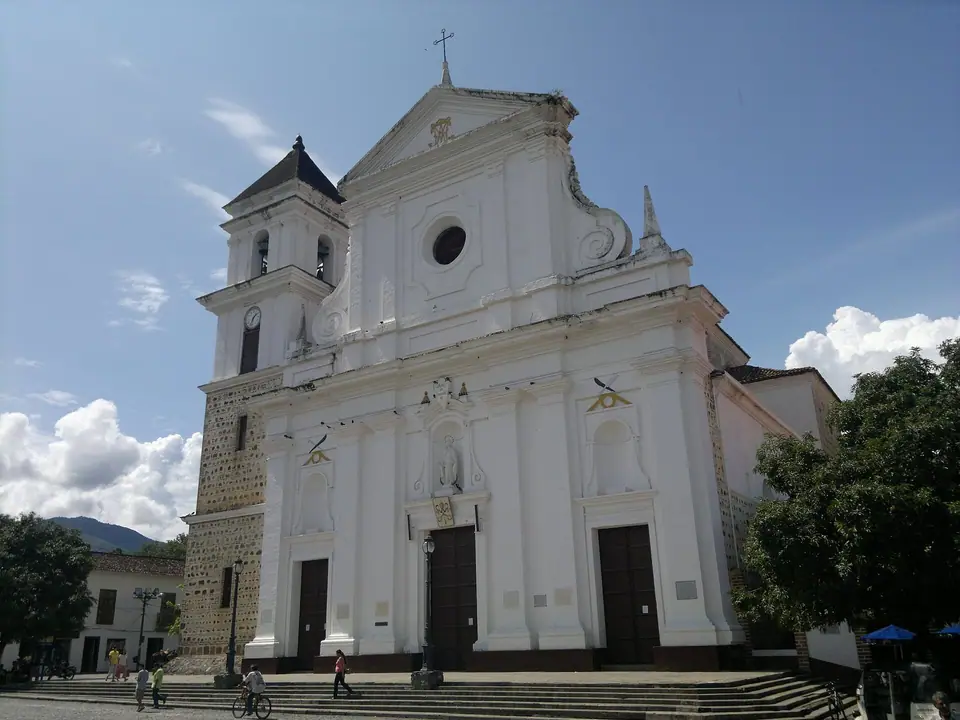
- Plaza Mayor Simón Bolívar and the Cathedral (1797 to 1837): Shaded by giant mango, tamarind, and ceiba trees around a bronze statue of Simón Bolívar, the main square is anchored by the Neoclassical brick-and-whitewash Catedral Basílica Metropolitana de la Inmaculada Concepción, designed by Capuchin friar and architect Fray Domingo de Petrés (who also designed the Primate Cathedral of Bogotá) and built between 1797 and 1837.
- Iglesia de Santa Bárbara (1726) and Museo Juan del Corral: Walk the river-stone cobbled streets past tall wooden lattice windows and heavy studded colonial portals to the baroque stone facade of Iglesia de Santa Bárbara (built by the Jesuits starting in 1726), then step inside the free Museo Juan del Corral, where the 1813 Act of Absolute Independence of Antioquia was signed. Cool off with a cup of sweet-and-sour tamarindo fruit candy or fresh mango juice in Plazuela de Nuestra Señora de Chiquinquirá.
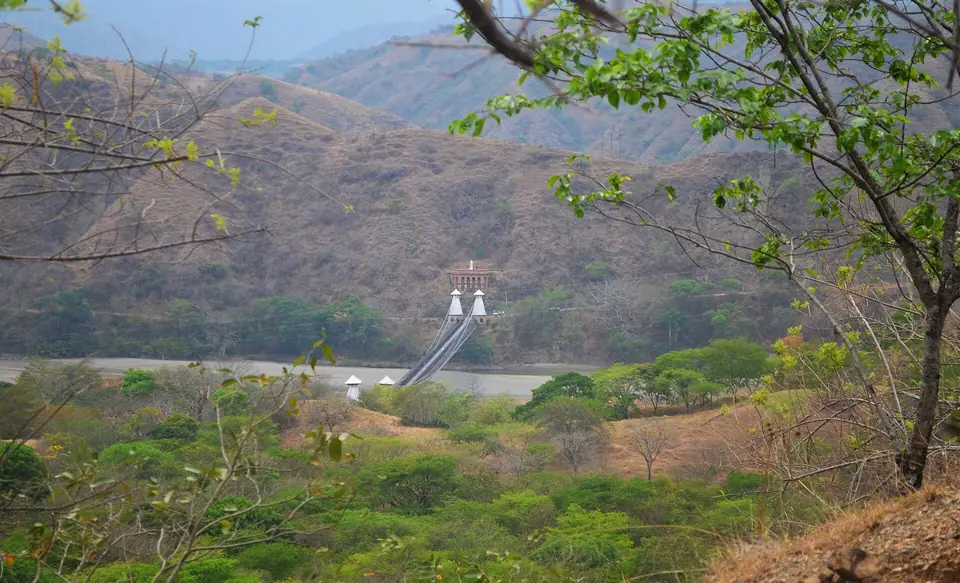
2. Crossing the 1895 Puente de Occidente and Getting There
Five kilometres northeast of the colonial town across the wide, fast-flowing Cauca River stands a masterpiece of nineteenth-century Latin American civil engineering: the Puente de Occidente (Western Bridge). Designed by Sopetrán-born Antioquian engineer José María Villa (who had studied in New Jersey and worked as an engineer on the construction of the Brooklyn Bridge in New York) and built between 1887 and 1895, the suspension bridge spans 291 metres (955 feet) between twin four-pyramid brick towers.
When inaugurated in December 1895, it was the longest suspension bridge in South America and the seventh-longest on earth. Declared a National Monument of Colombia in 1978, it is open today exclusively to pedestrians, cyclists, and colourful lightweight motocarro tuk-tuks, allowing you to walk right across its timber planks high above the rushing waters of the Cauca River.
From Terminal del Norte (Caribe Metro Station), buses and vans operated by Sotraurabá and Gómez Hernández depart every 20 minutes through the Occidente Tunnel, reaching Santa Fe de Antioquia in 1 hour 15 minutes.
Traveller tips
Real advice from people who have been to Santa Fe de Antioquia and Puente de Occidente Day Trip. Every tip is read by our team before it goes live.
No tips yet. Been here? Yours could be the first.
Thank you! Your tip will appear here after a quick review.
More in Medellín
Continue exploring Medellín with related neighbourhood, food, and planning guides
Plaza Botero, Museo de Antioquia and Palacio de la Cultura Guide
Medellín, Colombia
Comuna 13 (San Javier) Guide: Outdoor Escalators, Murals and Hip-Hop
Medellín, Colombia
Metrocable, Parque Arví and Santa Elena Cloud Forest Guide
Medellín, Colombia
El Poblado, Provenza, Manila and Museo El Castillo Guide
Medellín, Colombia
