


























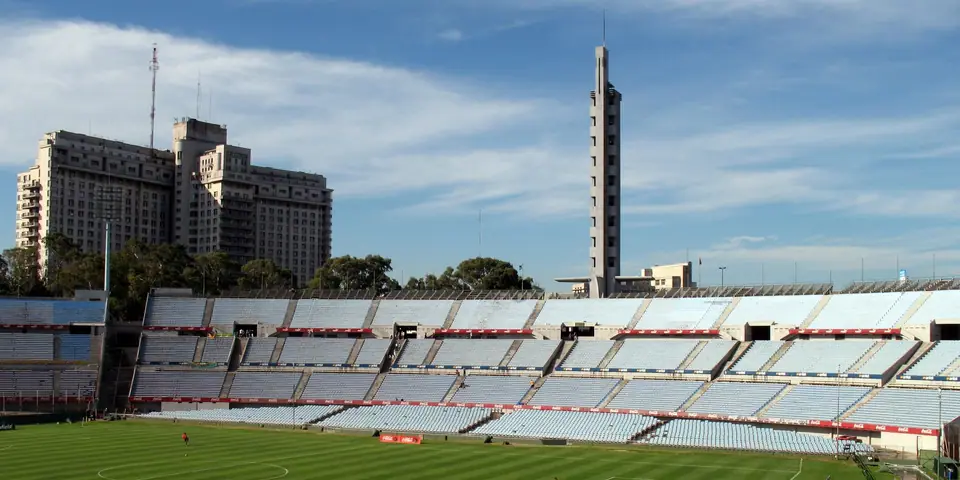
Estadio Centenario (1930 World Cup), Parque Batlle and the Prado Rose Garden
Visit FIFA's Historical Monument of World Football at Estadio Centenario in Parque Batlle, where Uruguay won the inaugural 1930 World Cup, then explore the 1912 Rosedal in the Prado.
Two of Montevideo's grandest green lungs lie inland from the coastal Rambla: Parque Batlle in the geographical centre of the city, home to world football's most historic stadium, and the nineteenth-century aristocratic park district of El Prado along the Miguelete stream in the north. Both can be easily visited by taxi or bus on Day 2 or Day 3 of our 3-day Montevideo itinerary.
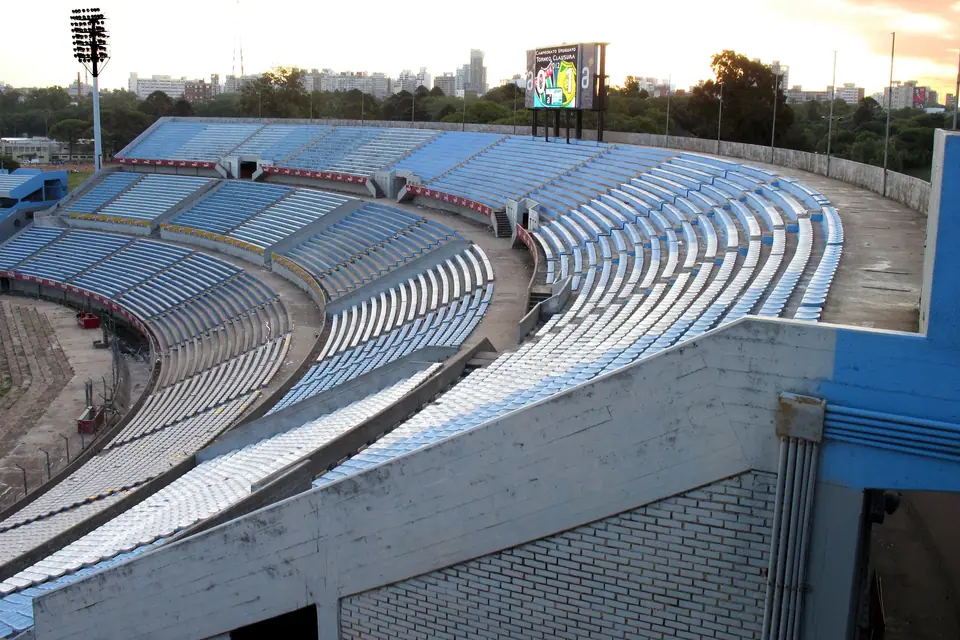
Estadio Centenario and the Museo del Futbol in Parque Batlle
After Uruguay's national football team stunned Europe by winning back-to-back Olympic gold medals at Paris 1924 and Amsterdam 1928, FIFA selected Montevideo to host the inaugural FIFA World Cup in July 1930, coinciding with the centenary of Uruguay's 1830 Constitution. Designed by modernist Uruguayan architect Juan Antonio Scasso and constructed in just nine months by immigrant labourers working in round-the-clock shifts inside Parque Batlle, the 60,000-seat Estadio Centenario opened on 18 July 1930. Twelve days later, on 30 July 1930, Uruguay defeated neighbours Argentina 4 to 2 before 68,346 spectators to lift the first World Cup trophy (and repeated the feat twenty years later at the Maracana in 1950).
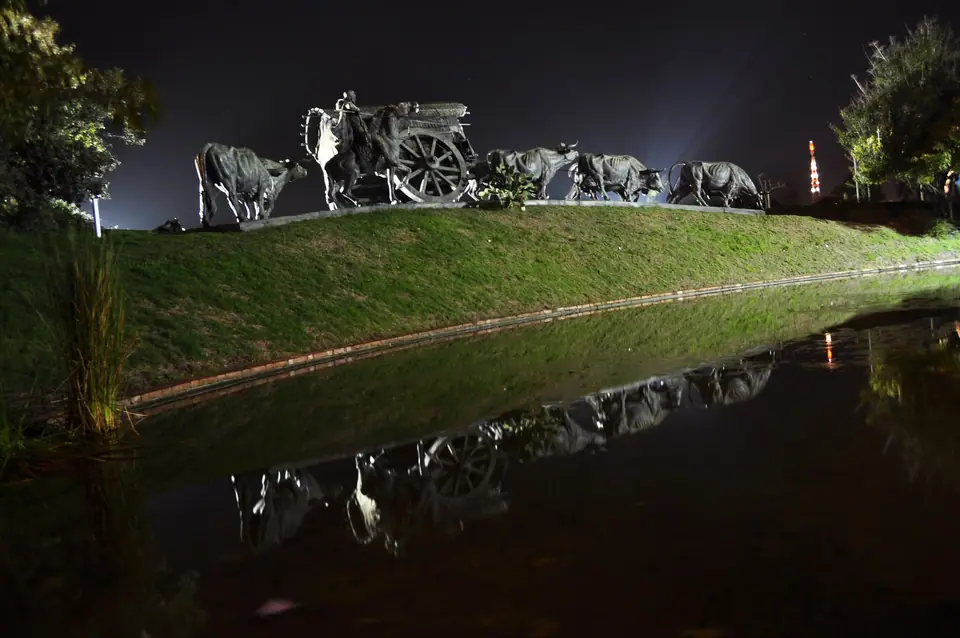
In 1983, FIFA designated Estadio Centenario the world's only official Historical Monument of World Football. Beneath the 100-metre constructivist concrete Torre de los Homenajes (whose nine ribbed fins evoke a ship's prow and winged victory) sits the Museo del Futbol, displaying original shirts, boots, match balls, and trophies from 1924, 1928, 1930, and 1950 before visitors step out into the stands of the Tribuna Olimpica. Five minutes' walk across the lawns of Parque Batlle stands sculptor Jose Belloni's 1934 life-size bronze monument La Carreta, depicting three yoked pairs of oxen pulling a pioneer wagon.
El Prado: The 1912 Rosedal, Botanical Garden and Blanes Museum
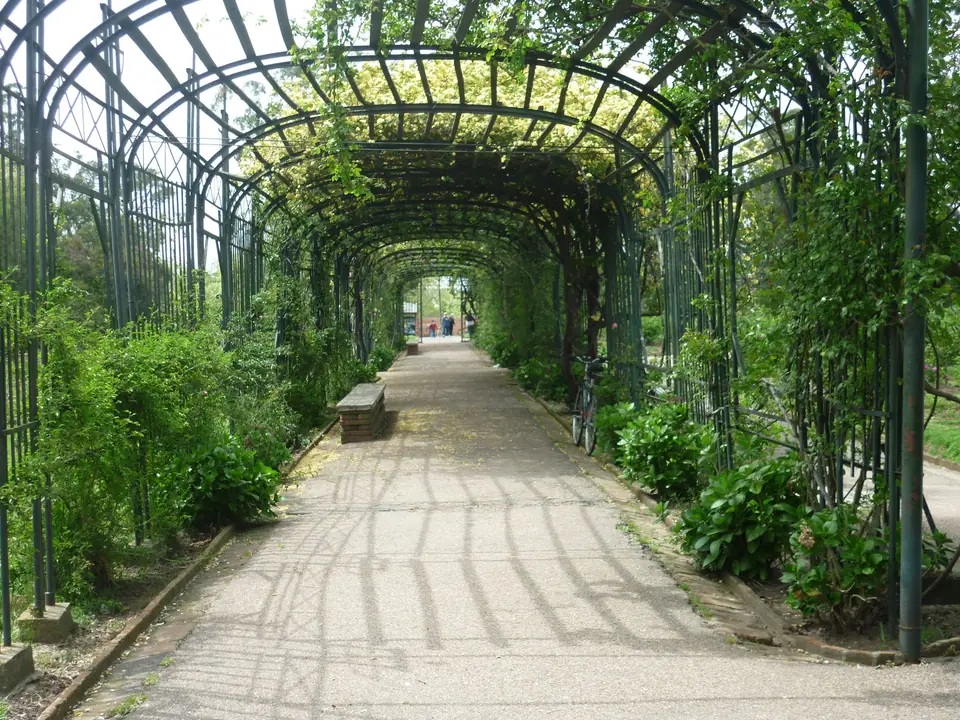
- El Rosedal del Prado (1912): Four kilometres northwest of downtown along the tree-shaded banks of the Arroyo Miguelete, the Prado neighbourhood was the summer retreat of nineteenth-century patrician families. Its centrepiece is the circular Art Nouveau pergola of the Rosedal, designed in 1912 by French landscape architect Charles Racine and planted with more than 300 varieties of roses imported from France (blooming most abundantly in October and November).
- Jardin Botanico and Museo Blanes: Immediately adjacent lie the 13-hectare Professor Atilio Lombardo Botanical Garden (founded 1902) and the 1870 Palladian Villa Palladio housing the Museo Municipal de Bellas Artes Juan Manuel Blanes, surrounded by a serene tranquil Japanese Garden.
Traveller tips
Real advice from people who have been to Estadio Centenario (1930 World Cup), Parque Batlle and the Prado Rose Garden. Every tip is read by our team before it goes live.
No tips yet. Been here? Yours could be the first.
Thank you! Your tip will appear here after a quick review.
More in Montevideo
Continue exploring Montevideo with related neighbourhood, food, and planning guides
Colonia del Sacramento and Punta del Este Day Trips from Montevideo
Montevideo, Uruguay
Montevideo: Essential Planning for Uruguay's Coastal Capital
Montevideo, Uruguay
Things to Do in Montevideo: Ciudad Vieja, Mercado del Puerto and the Rambla
Montevideo, Uruguay
How to Get to Montevideo: Carrasco Airport (MVD), Buenos Aires Ferries and Tres Cruces
Montevideo, Uruguay
