


























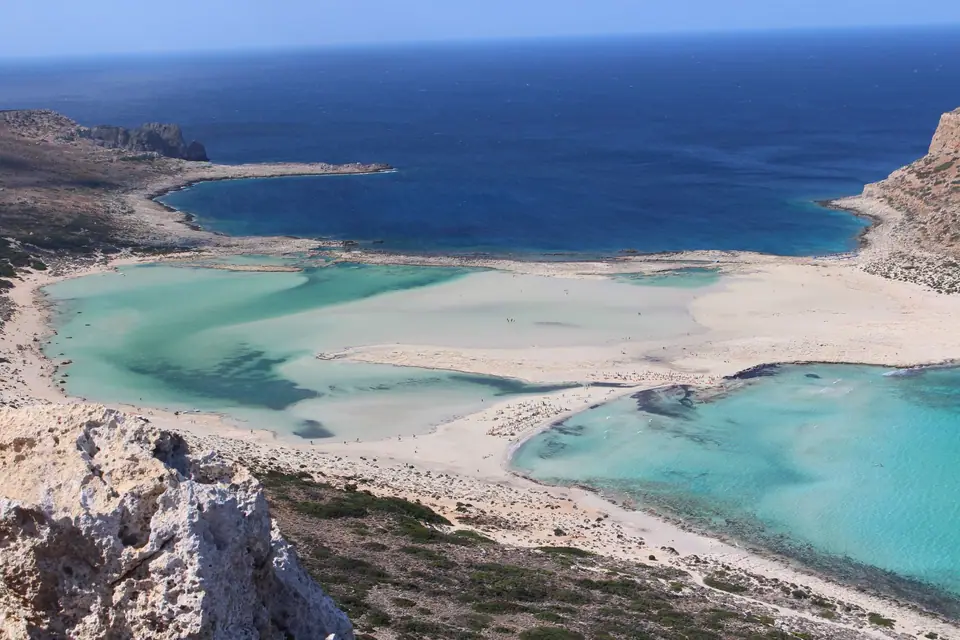
The Wild South-Western Coast: 4-Kilometre Plaka Beach, Mikri Vigla and Alyko Cedar Forest
Four kilometres of golden sand dunes at Plaka, twin-sided Mikri Vigla and the street-art ruins of Alyko cedar forest.
Immediately south of Agia Anna and Maragas, the paved road gives way to a packed-sand coastal track (served every 30 minutes by KTEL Bus #1 to Plaka, and 4 to 6 times daily by Bus #3 to Mikri Vigla, Kastraki and Alyko), where the beaches become wider, wilder and framed by rolling white sand dunes.
1. Plaka Beach (4 Kilometres of Golden Sand & Dunes, 8 km South of Chora)
Originally the beloved hippy beach of Naxos in the 1970s, Plaka is a magnificent four-kilometre-long crescent of pale, powdery-soft golden sand looking straight across the channel at Paros. The northern third of Plaka has relaxed, bohemian beach tavernas and spaced sunbeds connected to the sand by elevated wooden boardwalks over the dunes; the further south you walk toward the rocky headland of Orkos, the quieter and more unorganized the dunes become, giving you hundreds of metres of open sand to yourself even in August.
2. Mikri Vigla (The Double-Sided Headland: Windsurfing North vs Calm South)
Just south of Plaka and the small coves of Orkos, a dramatic rocky granite cape juts into the sea at Mikri Vigla ("Little Watchtower"), splitting the coastline into two beaches with opposite weather:
- North Beach (Parthenos): catches the thermal northern Meltemi wind accelerated through the Naxos, Paros funnel, making it one of Europe's premier kitesurfing and windsurfing lagoons.
- South Beach (Limanaki / Sahara): walk two minutes across the neck of the headland to the southern side of the rock and the wind vanishes completely, leaving a long, mirror-calm, turquoise powdery-sand bay that merges into 3-kilometre-long Kastraki Beach.
3. Alyko Cedar Forest (Hawaii Beach & The Street-Art Hotel Ruins, 18 km South)
At the southern end of Kastraki and Glyfada beaches juts the protected 80-hectare Natura 2000 headland of Alyko, covered in a fragrant, centuries-old natural forest of twisted wild sea-cedar (juniper) trees growing right out of white sand dunes. Beneath the red clay cliffs on the northern side lies Hawaii Beach, while on the wind-sheltered southern side curves Mikro Alyko. Standing on the cape above the cedars is the concrete skeleton of an unfinished 1960s hotel that was abandoned before completion, and transformed over the past decade by international artists (led by WD / Wild Drawing) into an extraordinary open-air street-art mural gallery overlooking the turquoise coves.
Traveller tips
Real advice from people who have been to The Wild South-Western Coast: 4-Kilometre Plaka Beach, Mikri Vigla and Alyko Cedar Forest. Every tip is read by our team before it goes live.
No tips yet. Been here? Yours could be the first.
Thank you! Your tip will appear here after a quick review.
More in Naxos
Continue exploring Naxos with related neighbourhood, food, and planning guides
Getting Around Naxos: KTEL Bus Lines (#1 Beaches & #2 Villages) and Car Rental Tips
Naxos, Greece
Where to Stay in Naxos: Chora & Agios Georgios vs Agios Prokopios, Agia Anna and Plaka
Naxos, Greece
Best Time to Visit Naxos: Calm September Seas, Green May Valleys and Summer Winds
Naxos, Greece
What to Wear in Naxos: Grippy Shoes for Marble Alleys, Mount Zas Trainers and Wind Layers
Naxos, Greece
