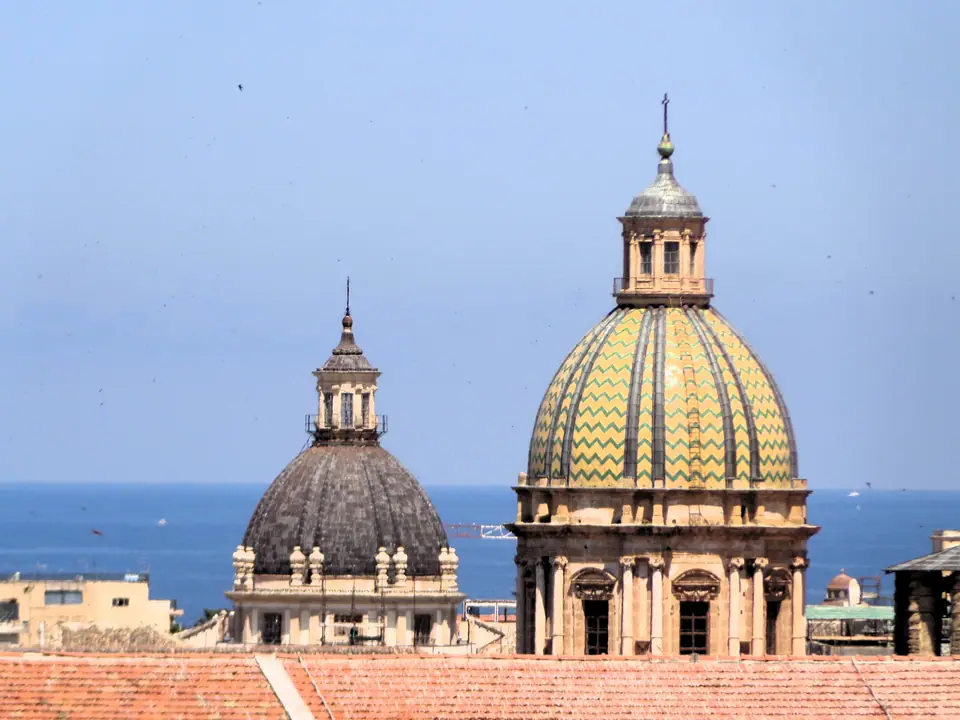
Photo: Effems · CC0
Best Time to Visit Palermo: Monthly Weather & Seasons
Spring and autumn deliver sunny sightseeing temperatures without summer heat exhaustion, while mild Mediterranean winters stay green and uncrowded.
Palermo enjoys a coastal Mediterranean climate protected from inland chills by limestone peaks and tempered by the Tyrrhenian Sea. Official thirty-year climate normals recorded at Palermo-Boccadifalco weather station (1991 to 2020) show mild winters near fifteen degrees Celsius by day and dry summer highs topping thirty-one degrees. Across the calendar year, the city logs roughly 2,530 hours of bright sunshine. Note that Boccadifalco sits inland at 117 metres above sea level, so sea breezes along the lower harbour often feel slightly fresher by noon while dense city limestone traps heat overnight.
Timing your trip carefully shapes every hour outdoors. Narrow limestone lanes hold solar heat tightly across summer afternoons, changing how easily visitors tackle cathedral rooftops and walking paths through central Palermo. Occasional hot southerly scirocco winds sweeping north from Africa can briefly push spring or autumn afternoons sharply warmer for a day or two.
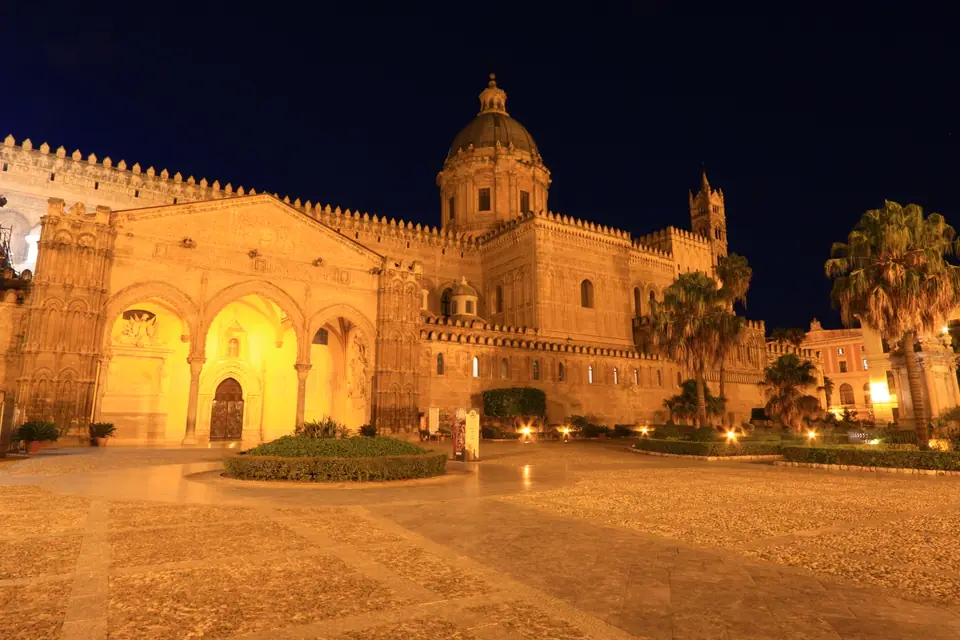
Spring wildflower warmth and the May opera window
April, May and early June bring Palermo's clearest balance of sun and walking comfort. Average daytime highs rise gently from twenty degrees Celsius in April to twenty-four degrees in May and twenty-eight degrees in June. Breezy mornings and sunny late afternoons keep multi-hour routes from Palazzo dei Normanni to La Cala crisp without heat fatigue.
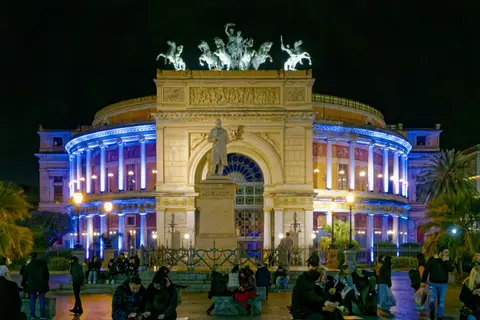
Citrus trees blossom inside Orto Botanico and Villa Giulia while sweet peas, broad beans and tender spring artichokes fill Ballarò stalls. May evenings place prime opera, ballet and orchestral bills inside Teatro Massimo before summer breaks start. Even before sea water warms completely for early-June swimmers, bright sunshine invites relaxed lunches out along Mondello pier.
Does August heat make street sightseeing impractical?
July and August settle into fierce coastal drought and blistering daytime highs averaging thirty-one degrees Celsius, paired with sticky nighttime minimums near twenty-three degrees. Inside tight medieval lanes where tall ochre facades reflect glare, afternoon climbs and unshaded plazas quickly sap energy.
Mid-August overlaps too with Italy's nationwide Ferragosto holiday week, when independent family trattorias and old-town bakeries bolt shutters for coastal cabins. Visitors tied to July or August dates manage smoothly by scheduling chapels right after opening, taking long afternoon breaks under air conditioning, and eating dinner late after refreshing dips at Mondello Bay.
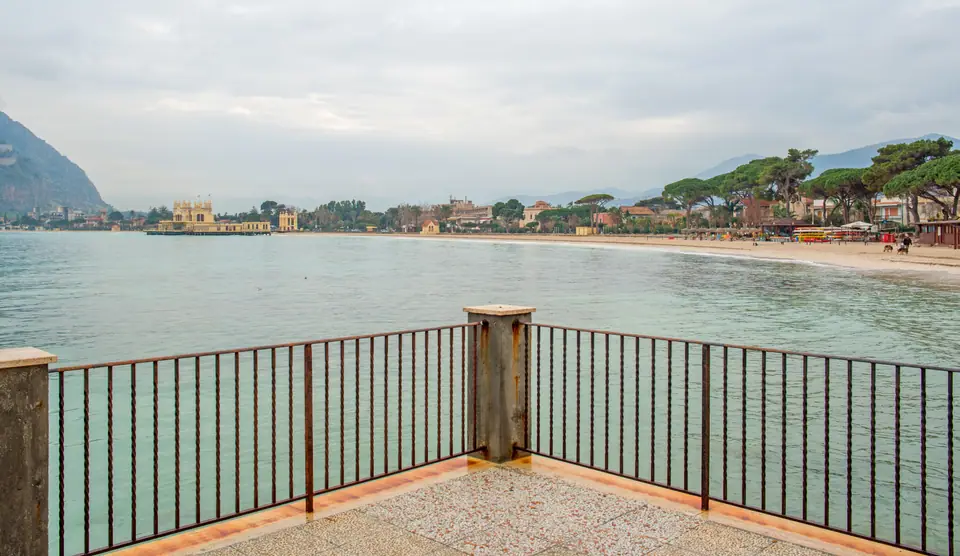
Monthly rainfall shifts from July drought to November downpours
Autumn falls into two sharply contrasting halves across the thirty-year weather record. September stays warmly sunlit around twenty-eight degrees by day with bath-warm Tyrrhenian water lingering happily into mid-October. Crowds thin notably after school terms restart, making September and early October prime shoulder weeks.
| Season window | Typical daytime highs | Rain character | Crowd and street rhythm |
|---|---|---|---|
| March to May | 17 to 24°C | Tapering showers; sunny May afternoons | Lively terraces; comfortable walking temperatures |
| June to August | 28 to 31°C | Virtually dry; minimal July rain | Peak beaches; August mid-day street shutdowns |
| September to October | 24 to 28°C | Warm September; brisk October rain spikes | Warm sea swimming; mellow cultural evenings |
| November to February | 15 to 20°C | Wettest late autumn; damp sea winds | Uncrowded chapels; quiet residential evenings |
Where July sees barely five millimetres of rain over a single wet day, autumn frontal troughs turn rapidly wetter. October climbs to seventy-seven millimetres across eight rainy days, before November peaks as Palermo's dampest month at ninety-four millimetres across nine wet days. December brings eighty-one millimetres across ten wet days, though sunny clear mornings still interrupt coastal fronts regularly. Even during damp spells, rain tends to fall in brief, sharp bursts rather than day-long grey mist. Clear afternoon light often sparkles immediately afterward across wet basalt paving stones and hillside terracotta domes.
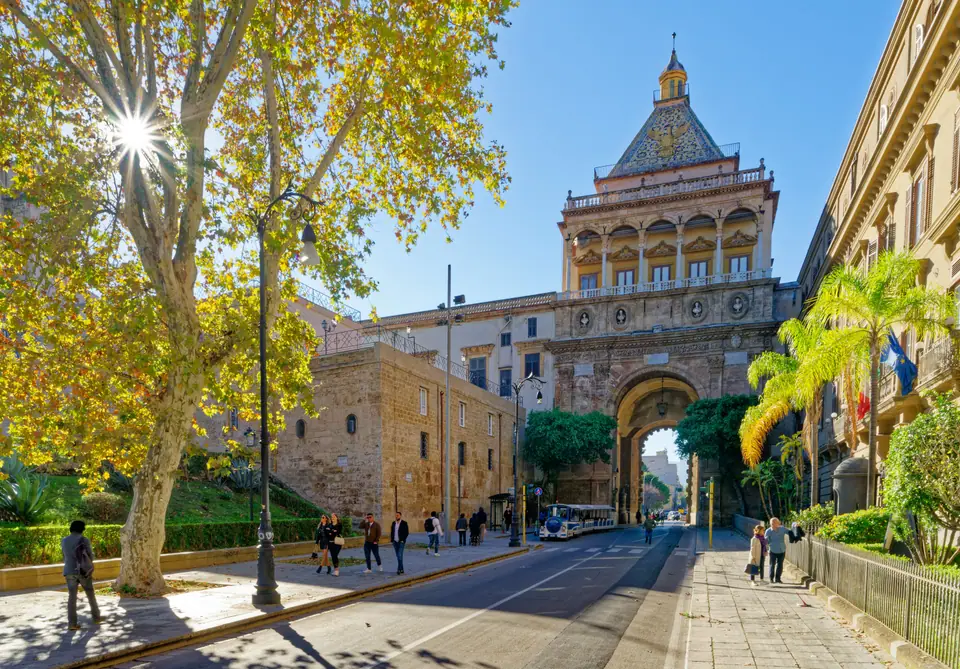
Winter mildness, Santa Rosalia feasts and packing essentials
From December through February, daytime temperatures sit comfortably around fifteen or sixteen degrees Celsius. Crisp evening winds blow off the marina after dark, yet early-morning sun makes quiet walks past Cappella Palatina and Monreale cloisters calm and uncrowded. Winter visitors find pleasant off-peak rates and quiet museum halls across January and February. By mid-February, wild almond blossom dusts inland ridges well ahead of northern regions. Early November celebrates Festa dei Morti (All Souls' Day traditions on the opening two days of November), filling neighbourhood pastry windows with brightly painted almond-paste frutta martorana paired with spiced seasonal biscuits.
Festivals peak in mid-July during the annual Festino di Santa Rosalia (Feast of Saint Rosalia). On the fourteenth and fifteenth of July, giant illuminated floats parade from the Cathedral down Corso Vittorio Emanuele toward Porta Felice waterfront celebrating Palermo's rescue from the 1624 plague. On the fourth of September, nocturnal pilgrims hike the rocky climb up Monte Pellegrino. Practical packing keeps every month smooth:
- Light shoulder wrap: shields sunburn across exposed summer roofs and covers bare shoulders when stepping into working parish churches.
- Grippy flat footwear: smooth dark basalt paving on Via Maqueda turns surprisingly slippery after quick rain bursts or morning street hoses.
- Pocket folding umbrella: valuable from October through March when sharp coastal showers sweep fast across Monte Pellegrino.
- Midday scheduling buffer: anchor museums around early mornings before afternoon breaks close down traditional market stalls.
Where it is
- 1Palermo
- Falcone–Borsellino Airport (PMO) · about 25 km from Palermo in a straight line
- Directions in Google Maps
Stations and taxi ranks: OpenStreetMap. Airports: OurAirports. Distances are in a straight line.
Traveller tips
Real advice from people who have been to Palermo. Every tip is read by our team before it goes live.
No tips yet. Been here? Yours could be the first.
Thank you! Your tip will appear here after a quick review.
More in Palermo
Continue exploring Palermo with related neighbourhood, food, and planning guides