Photo: Bengt Nyman · CC BY 2.0
Palermo: Arab-Norman Palaces, Markets and Seafront
Palermo is read most clearly along its cross-shaped street grid, running downhill from the Norman royal palace through Baroque squares to the historic seafront.
Palermo spreads across the fertile Conca d'Oro plain where two ancient rivers once carried mountain water toward a sheltered gulf. Phoenician sailors founded the harbour settlement of Ziz in the eighth century BC for its flower-filled basin. Subsequent Carthaginian, Roman, Arab, Norman and Spanish rulers layered new buildings directly over earlier street grids.
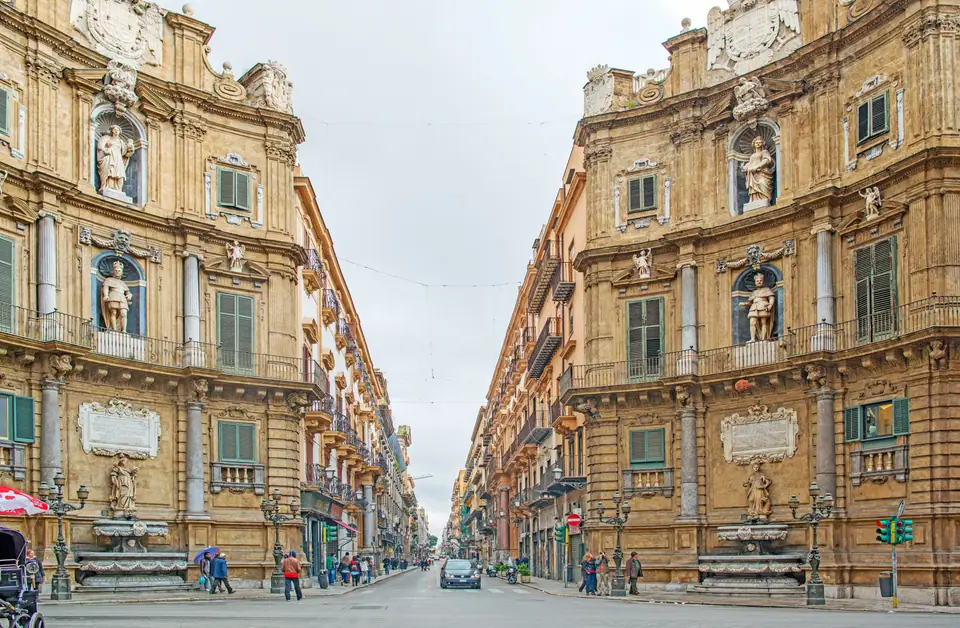
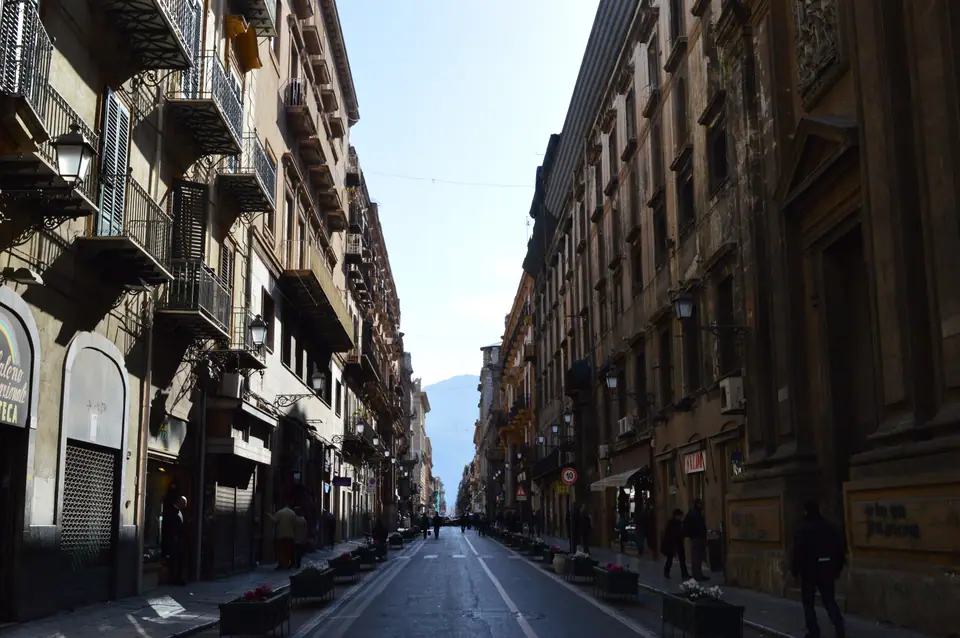
Because the historic centre fits inside a compact bowl below Monte Pellegrino, orientation depends on two perpendicular limestone avenues. Pedestrianised Via Maqueda cuts cleanly north to south past theatres and markets. Quattro Canti stands at its crossing with Corso Vittorio Emanuele, sloping gently downhill from the western Norman ridge straight to La Cala harbour.
How the four medieval quarters meet at Quattro Canti
Spanish viceroys sliced Via Maqueda across crowded medieval lanes in 1600 to open straight ceremonial sightlines. That geometric cross divided old Palermo into four historic mandamenti (districts). Standing beneath Quattro Canti's curved Baroque walls reveals seasonal fountains, Spanish kings and female patron saints marking each quarter.
- Albergheria: spreads south-west behind the palace road and holds Mercato di Ballarò plus San Giovanni degli Eremiti.
- Il Capo: covers the north-west quarter with shaded produce lanes, baroque churches and clear paths toward Teatro Massimo.
- Castellammare: fills the north-east quadrant behind Vucciria toward the port, pairing white-stucco oratories with loud late-night bar strips.
- La Kalsa: occupies the south-east waterfront sector, trading cramped alleys for leafy squares, noble courtyards and broad seafront lawns.
Returning to either main avenue solves nearly every detour inside residential alleyways. Side streets generally run parallel or straight into those two grand thoroughfares. Within minutes, clear sightlines appear toward the green mountain ridge or bright Tyrrhenian water.
Walking the Arab-Norman axis from Palazzo Reale to La Cala
Nearly every headline monument in central Palermo sits within a smooth downhill walk along the ancient Cassaro, known today as Corso Vittorio Emanuele. Starting beside the high western city gate and walking east toward the water keeps gradients gentle under warm sun. It also groups mosques-turned-churches, sculpted squares and fishing harbours in crisp sequence.
- Begin at Porta Nuova beside Palazzo dei Normanni and the Cappella Palatina, arriving right when doors open before coach groups crowd the chapel nave.
- Walk east past Villa Bonanno palm groves to Palermo Cathedral, comparing its geometric exterior apses with the royal porphyry sarcophagi inside.
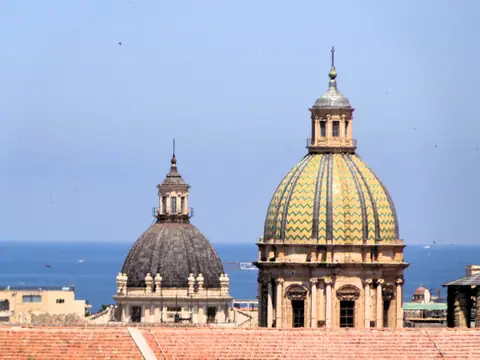
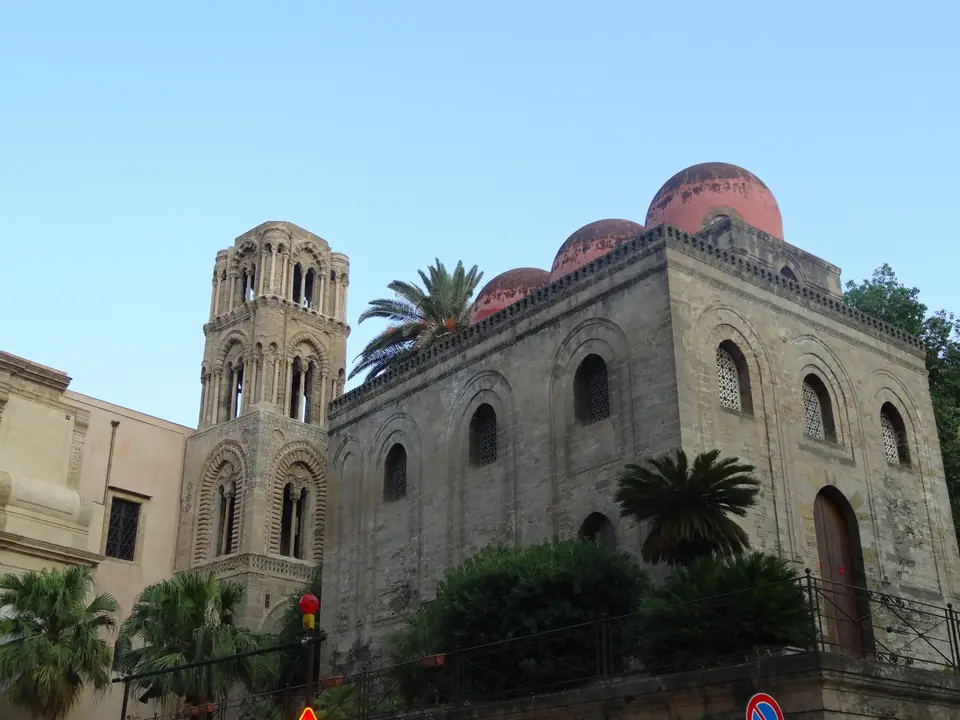
- Cross Quattro Canti and step south onto Piazza Pretoria and Piazza Bellini to stand below the terracotta cupolas of San Cataldo and La Martorana.
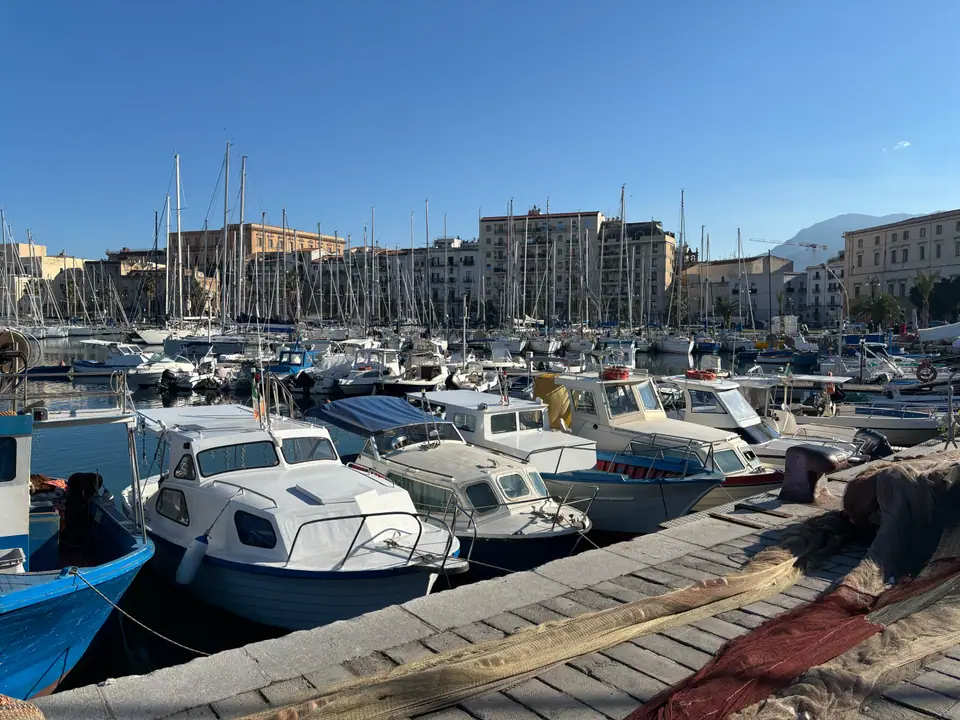
- Continue east through La Kalsa past Piazza Marina's enormous banyan trees until the avenue opens beside yachts moored in historic La Cala.
Covering this spine across one morning clarifies why UNESCO inscribed Palermo's Arab-Norman sites together in 2015. Islamic stalactite ceilings, Byzantine gold glass tesserae and Latin carved masonry appear blocks apart rather than scattered across distant suburbs.
How long do you actually need in Palermo?
Two busy days permit quick visits to the Cappella Palatina, the Cathedral and one morning market. Yet three or four full days suit Palermo's afternoon rest hours and dense churches much better. Midday closures across independent workshops and long snack stops make rushed schedules brittle.
Follow a calm daily split to stay ahead of crowds and heat. Spend mornings inside marble-walled chapels or lively produce markets, pause during warm early afternoons under shaded porticoes, then join the evening passeggiata (stroll) along Via Maqueda after sunset. A sensible three-day sequence divides Palermo neatly by neighbourhood:
- Day one: start at Palazzo dei Normanni and San Giovanni degli Eremiti before descending Corso Vittorio Emanuele past Palermo Cathedral to Quattro Canti and Piazza Bellini.
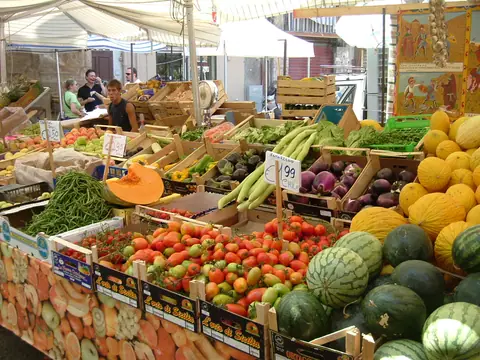
- Day two: dive into morning Il Capo or Ballarò food stalls, climb Santa Caterina Monastery rooftops, then walk east to Oratorio di San Lorenzo and La Kalsa gardens.
- Day three: pair morning guided tours inside Teatro Massimo with the Capuchin Catacombs, or take city hillside buses uphill to Monreale Cathedral and coastal Mondello bay.
Adding a fourth day unlocks Monreale Cathedral and Mondello bay smoothly without cutting evening time on the seafront. Travellers with five days gain space for a seaside rail trip to Cefalù while keeping Arab-era Kalsa gardens (Al-Khalisa) and museum visits relaxed.
Combining the city with Monreale, Cefalù and mainland Italy
Palermo functions smoothly both as north-western Sicily's cultural anchor and as an uncomplicated gateway toward mainland Italy. Frequent Trenitalia regional trains roll east from Palermo Centrale to Cefalù's twin-towered Norman cathedral and sandy cove in under an hour. Visitors touring wider Sicily by road should pick up a hire car exclusively on departure morning from Palermo Centrale or the airport rather than dealing with weekday ZTL driving cameras inside town.
For multi-city Italian trips, direct flights, overnight ferries and Intercity railway routes link Palermo cleanly with Naples, Rome and Florence. Travellers pairing Sicily with central Mediterranean islands can continue directly south by air to Valletta in Malta. Returning by ferry past Monte Pellegrino offers memorable dawn views from open ship decks.
Where it is
- 1Palermo
- Falcone–Borsellino Airport (PMO) · about 25 km from Palermo in a straight line
- Directions in Google Maps
Stations and taxi ranks: OpenStreetMap. Airports: OurAirports. Distances are in a straight line.
Traveller tips
Real advice from people who have been to Palermo. Every tip is read by our team before it goes live.
No tips yet. Been here? Yours could be the first.
Thank you! Your tip will appear here after a quick review.
More in Palermo
Continue exploring Palermo with related neighbourhood, food, and planning guides