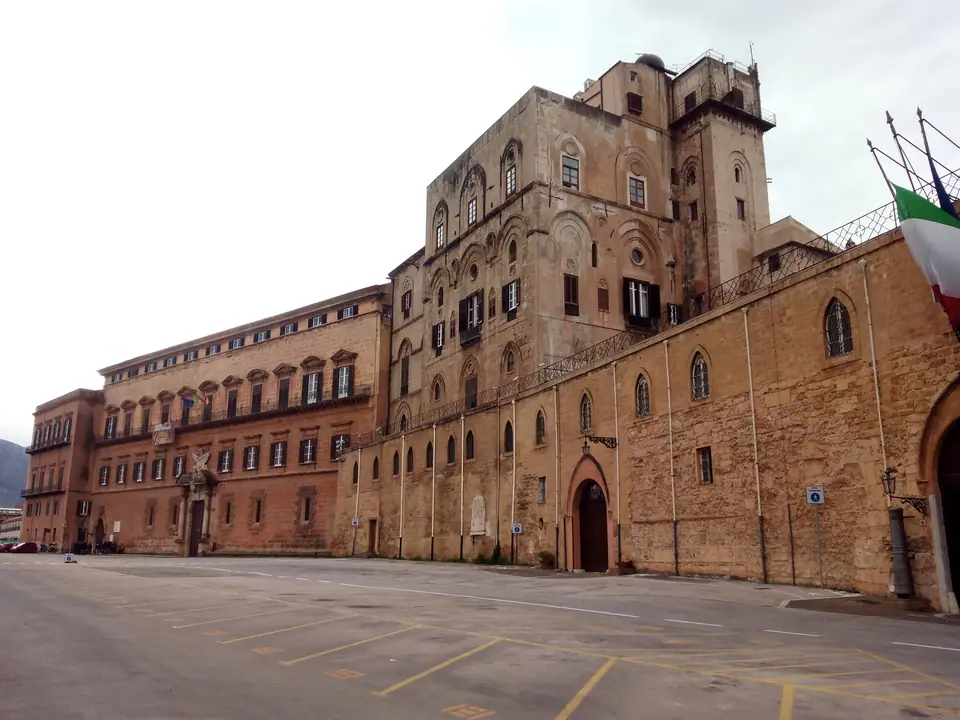
Photo: Lasterketak · CC BY-SA 4.0
Palazzo dei Normanni and the Cappella Palatina
Palermo flagship UNESCO royal compound unites an Arab-built hillside fortress with shimmering twelfth-century Byzantine mosaics and muqarnas woodwork.
Crowning the elevated western ridge of Palermo's original Phoenician town, Palazzo dei Normanni (often called Palazzo Reale) stands as Europe's oldest royal residence still in continuous public use. Over three millennia, Punic walls, an Arab fortress and a Norman court evolved here into the modern Sicilian Regional Assembly.
Visitors enter off Piazza del Parlamento beside shaded Piazza Indipendenza after passing brief security checks. Quiet Renaissance courtyards inside guard one of the medieval Mediterranean's varied cross-cultural royal complexes.
From Arab emirs to Norman kings on the western rise
Ninth-century Arab rulers built a stone citadel (Qasr) atop this dry ridge between two former riverbeds to overlook the bay. When Norman lords captured Palermo in 1072, Roger of Hauteville's son King Roger transformed the stronghold into a multi-ethnic royal court staffed by Greek scholars, Arab geographers and Latin clerics.
Rather than sweeping away prior traditions, Norman monarchs recruited master artisans from across the eastern and western Mediterranean. Royal stone carvers, tiraz silk weavers and mosaicists blended Islamic geometry, Byzantine iconography and Western basilica plans under one royal roof. Spanish viceroys later framed the sturdy medieval towers with sixteenth-century arcades, including the broad Cortile Maqueda completed in 1600.
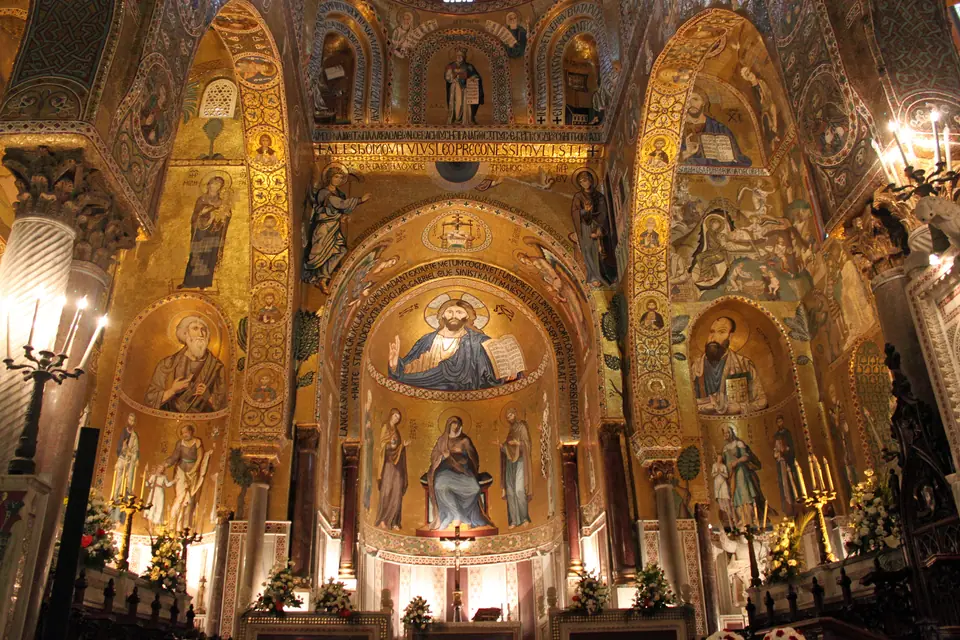
Inside Cappella Palatina and its muqarnas timber ceiling
Mounting the upper Cortile Maqueda loggia leads straight into the Cappella Palatina. King Roger commissioned the chapel around 1130 above an older crypt from circa 1080, consecrating the royal sanctuary in 1143. Though compact on paper, its interior commands intense stillness through golden glass and disciplined geometry.
- Walk across the marble and porphyry opus sectile floor. Its crisp bands echo Islamic courtyard stonework.
- Look east toward the sanctuary apse. A radiant Byzantine Christ Pantocrator mosaic presides beneath golden domes and Greek inscriptions.
- Study the central nave's painted muqarnas wooden ceiling. Fatimid craftsmen carved its five honeycomb tiers, twenty eight-pointed stars, court musicians and roughly seventy-five trilingual inscriptions in Arabic, Greek and Latin.
- Pass the carved marble Easter candelabrum and lion-supported pulpit. Step back out onto the sunlit courtyard loggia and adjacent Cortile della Fontana built in 1584.
Reserving early morning timed slots preserves quiet space inside narrow aisles before tour coaches gather. Dress rules cover bare shoulders and knees inside the consecrated chapel. Camera flashes stay switched off to protect fragile medieval tesserae. Notice how Norman rulers blended three court languages cleanly across state charters, hiring Latin, Greek and Arabic scribes side by side. Just outside the palace facade, Roman floor mosaics survive in Villa Bonanno gardens.
When do Sicilian Regional Assembly sittings close the Royal Apartments?
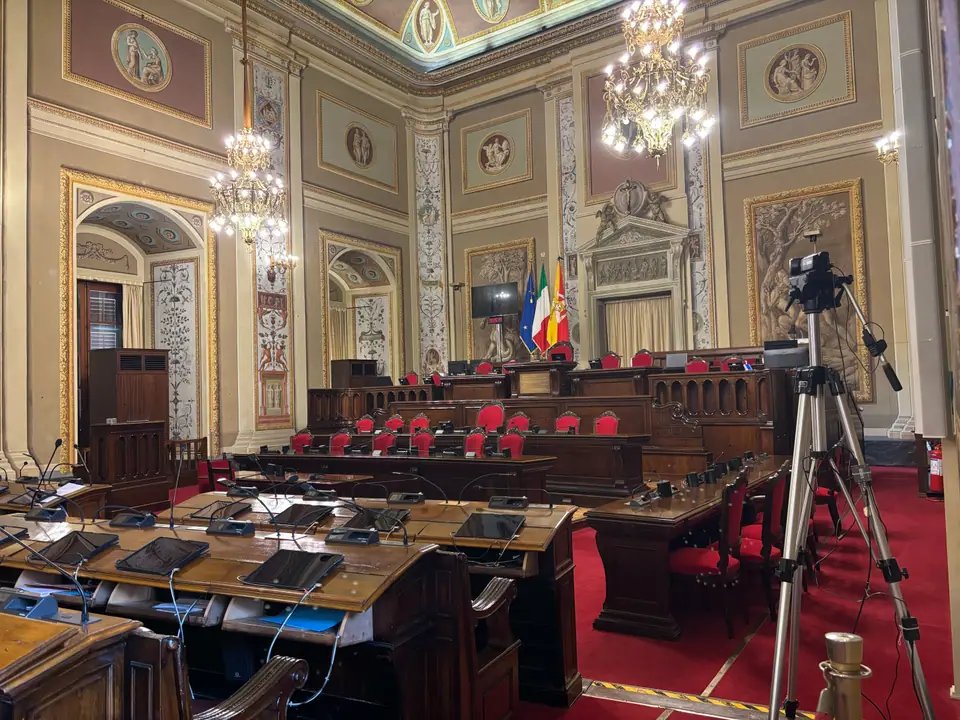
Since 1946, Palazzo dei Normanni has served as the working legislative seat of the Sicilian Regional Assembly (Assemblea Regionale Siciliana, or ARS). Because lawmakers hold committee votes and plenary debates inside the upper state suites, visitor access depends on the weekly parliamentary schedule.
On ARS plenary sitting days, routinely scheduled between Tuesday and Thursday plus official state occasions, the Royal Apartments including Sala d'Ercole and the Room of King Roger close to public ticket-holders. On those days, the Cappella Palatina and ground-floor gallery rooms normally stay open under Fondazione Federico II ticketing. Checking the official Fondazione Federico II calendar beforehand helps travellers choose non-sitting Friday or weekend mornings when full tickets unlock the royal apartments.
King Roger's mosaic hunting hall and the lower treasury
Whenever the upper Royal Apartments stand open, the jewel of the state suite is the twelfth-century Sala di Ruggero (Room of King Roger). Instead of sacred saints downstairs, these secular upper walls glitter with strutting leopards, peacocks, centaurs, palms and royal archers set in spun gold. Adjacent corners touch the square medieval Torre Pisana (Pisan Tower) overlooking Palermo's rooftops.
Neighbouring rooms link eighteenth-century Chinese-style salons to the vast Sala d'Ercole, ringed by Giuseppe Velasco's nineteenth-century murals illustrating the labours of Hercules above parliamentary desks. Downstairs below the main courtyard, dressed Punic stone walls laid before Roman rule survive inside atmospheric foundations before visitors step out onto Corso Vittorio Emanuele walks. Leave spare time to pause under tall palms inside the adjacent palace gardens facing Piazza della Vittoria, framing sunny views back over medieval stone walls.
San Giovanni degli Eremiti and La Zisa hunting pavilion
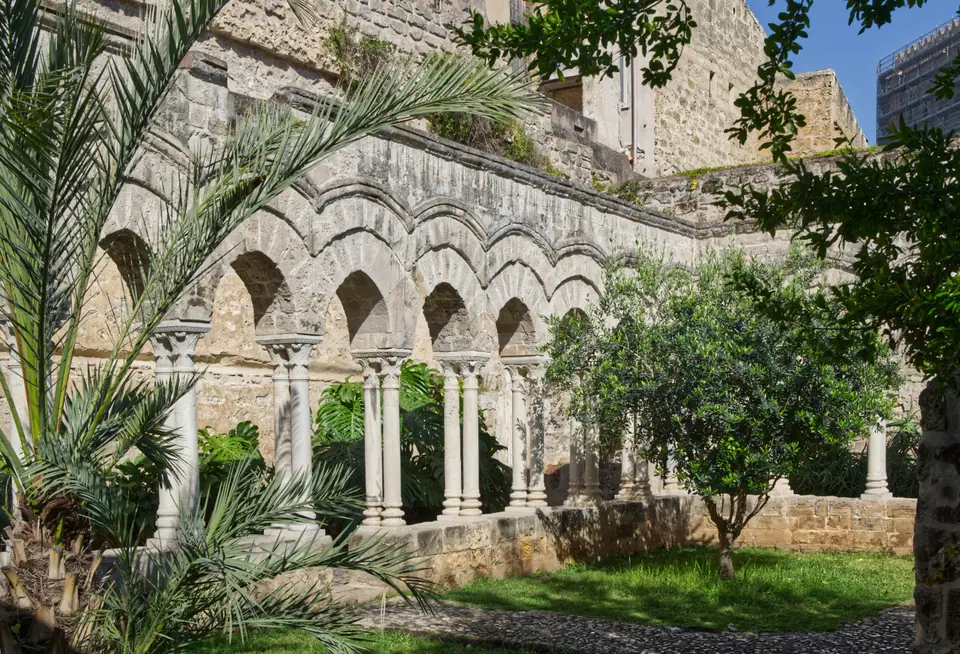
Rounding out the Norman royal district calls for short detours outside the palace gates. Minutes south along Via dei Benedettini rests San Giovanni degli Eremiti, erected under King Roger between 1130 and 1148 with five bright red domes over a shaded botanical cloister.
- San Giovanni degli Eremiti: tranquil orange and palm courtyard framing bold Arab-Norman cupolas right behind the palace grounds.
- Porta Nuova: monumental sixteenth-century stone gateway touching the palace flank and opening straight down toward Palermo Cathedral.
- Palazzo della Zisa: roughly one and a half kilometres west of the old walls, where Norman builders used sunken fountain basins and passive wind shafts to cool summer heat.
- Ponte dell'Ammiraglio: surviving twelfth-century multi-arched stone bridge south-east of the historic centre spanning a diverted channel of the Oreto river.
Where it is
- 1Palazzo dei Normanni and the Cappella Palatina
- Falcone–Borsellino Airport (PMO) · about 24 km from here in a straight line
- Directions in Google Maps
Stations and taxi ranks: OpenStreetMap. Airports: OurAirports. Distances are in a straight line.
Traveller tips
Real advice from people who have been to Palermo. Every tip is read by our team before it goes live.
No tips yet. Been here? Yours could be the first.
Thank you! Your tip will appear here after a quick review.
More in Palermo
Continue exploring Palermo with related neighbourhood, food, and planning guides