Photo: Wolfgang Moroder · CC BY-SA 3.0
Top Attractions and Cultural Sights in Palermo
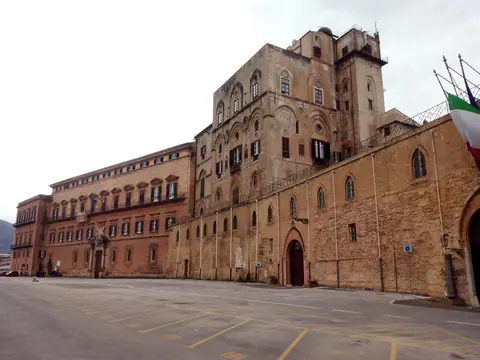
Beyond the cathedral and Norman palace, Palermo shines in its red-domed medieval churches, white-stucco Baroque oratories and restored waterfront palazzi.
Beyond the royal citadel and cathedral lawn, much of Palermo's finest art hides behind plain stone facades down quiet side streets. Arab-era garden pavilions, Norman mosaic chapels and Baroque stucco prayer halls stand packed closely between historic squares. Stepping inside those smaller landmarks rewards curious walkers with cool silence away from tour-coach routes.
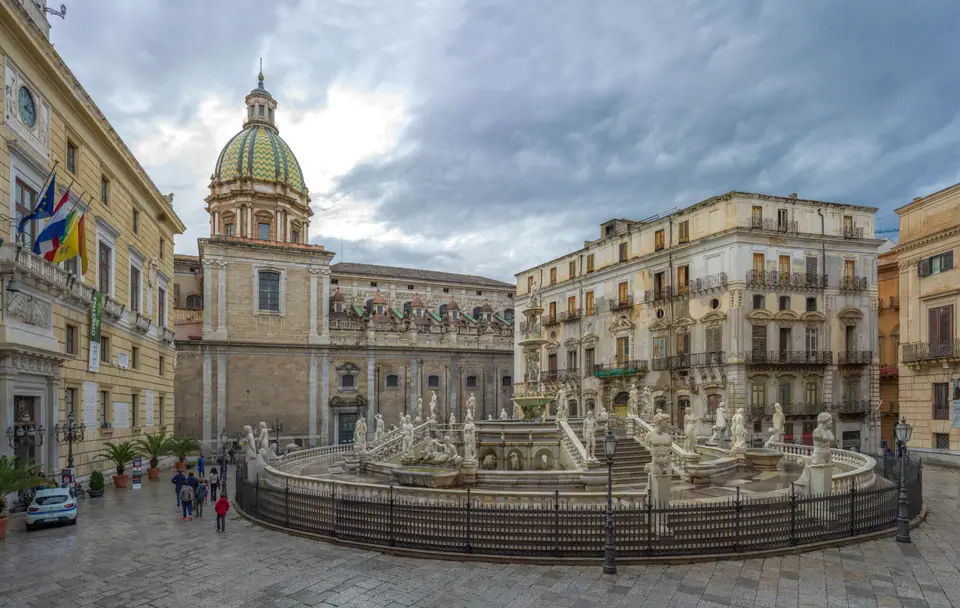
Balancing sun-baked plazas around Fontana Pretoria with cool interior oratories works cleanly once midday glare intensifies. Keeping a light scarf handy ensures comfortable admission across active parish doorways.
Arab-Norman monuments beyond the royal palace
Nine Arab-Norman structures across Palermo, Monreale and Cefalù share a collective UNESCO World Heritage listing dating from the twelfth-century Norman Kingdom. Several rest in calm corners away from main buses and repay unhurried looking.
- La Martorana (Santa Maria dell'Ammiraglio): rises beside Piazza Bellini with luminous twelfth-century mosaics including King Roger crowned by Christ, rich Greek-Catholic liturgical traditions, and bright Baroque vault frescoes.
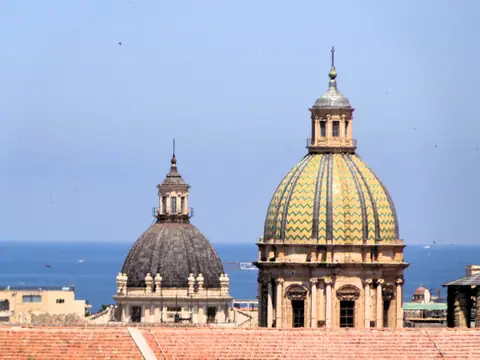
- San Cataldo: stands metres from La Martorana, crowned by three bold red hemispherical domes above bare limestone walls stripped back to clean medieval masonry.
- San Giovanni degli Eremiti: sits behind Palazzo dei Normanni, carrying five terracotta-red domes above orange trees and twin-columned cloister walks built between 1130 and 1148.
- Palazzo della Zisa: waits roughly one and a half kilometres west of the old walls, designed as a summer residence using fountain channels and wind towers for natural cooling.
- Palazzo Abatellis: occupies a fifteenth-century Catalan-Gothic palace in La Kalsa holding Antonello da Messina's serene Virgin Annunciate and Francesco Laurana's marble bust of Eleonora d'Aragona.
Travellers keen on classical antiquity should include the Museo Archeologico Regionale Antonino Salinas near Piazza Olivella. Its reopened three-floor galleries showcase Phoenician carvings and monumental carved temple metopes rescued from ancient Greek Selinunte.
Fontana Pretoria, Piazza Bellini and the Jesuit Baroque
Just south-east of Quattro Canti lies Piazza Pretoria, centred on a wide circular fountain sculpted by Francesco Camilliani in 1554 for a Tuscan garden. Palermo's Senate bought the work in 1574 and shipped 644 numbered marble pieces south for reassembly outside city hall. Because its unclothed river deities and nymphs stood opposite enclosed Dominican nuns at Santa Caterina Monastery, locals famously called it the Fountain of Shame.
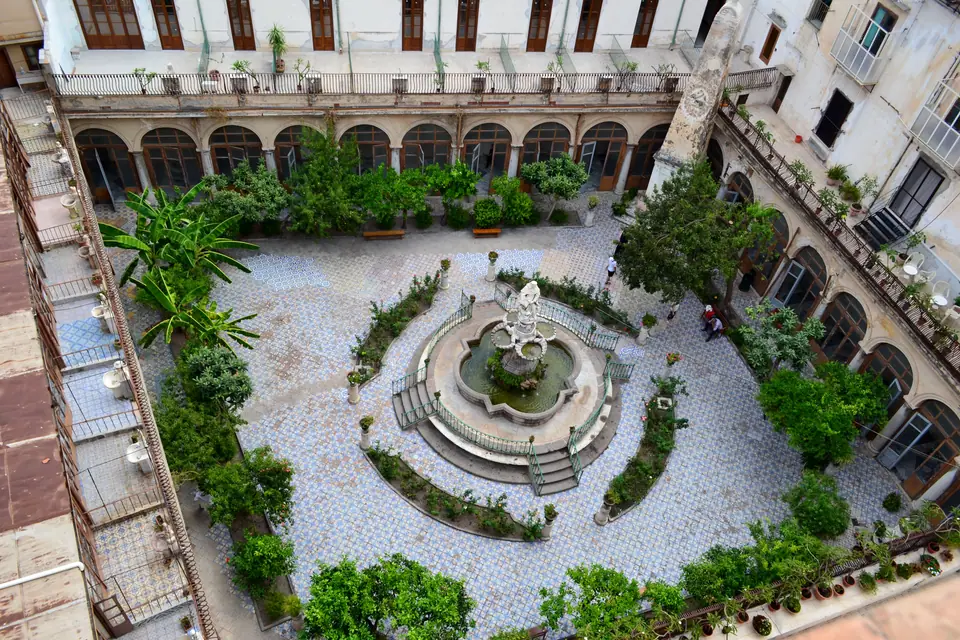
Santa Caterina now opens its ornate inlaid-marble church, inner cloister garden and high roof walkways overlooking Piazza Bellini's terracotta cupolas. Morning light inside the rooftop corridor captures clear angles across San Cataldo's domes against coastal ridges. Short blocks south-west through Albergheria stands Casa Professa (Chiesa del Gesù), whose walls layer vivid coloured marble reliefs and sculpted cherubs across nearly every pillar.
Why is Oratorio di San Lorenzo famous for Caravaggio and Stucco?
Hidden down a quiet Kalsa alley beside San Francesco d'Assisi basilica, Oratorio di San Lorenzo preserves Giacomo Serpotta's theatrical white-stucco sculptures sculpted between 1699 and 1706. Mixing powdered marble into lime plaster, Serpotta modelled flowing robes, cherubs and small narrative relief scenes depicting Saint Lawrence and Saint Francis that catch soft side-window light.
Above the main altar stands a crisp Factum Arte replica of Caravaggio's 1609 Nativity with Saints Francis and Lawrence, installed in December 2015. Thieves sliced the original canvas straight from its frame in October 1969, creating one of modern art history's most famous unsolved thefts. Pairing this space with Serpotta's Oratorio del Rosario di Santa Cita north of Via Roma reveals lively stucco battle reliefs and sculptural panels across Palermo's plaster tradition. Nearby Piazza San Domenico and Monte di Pietà lanes reward slow walks between churches.
Kalsa ruins, puppet theatres and waterfront gardens
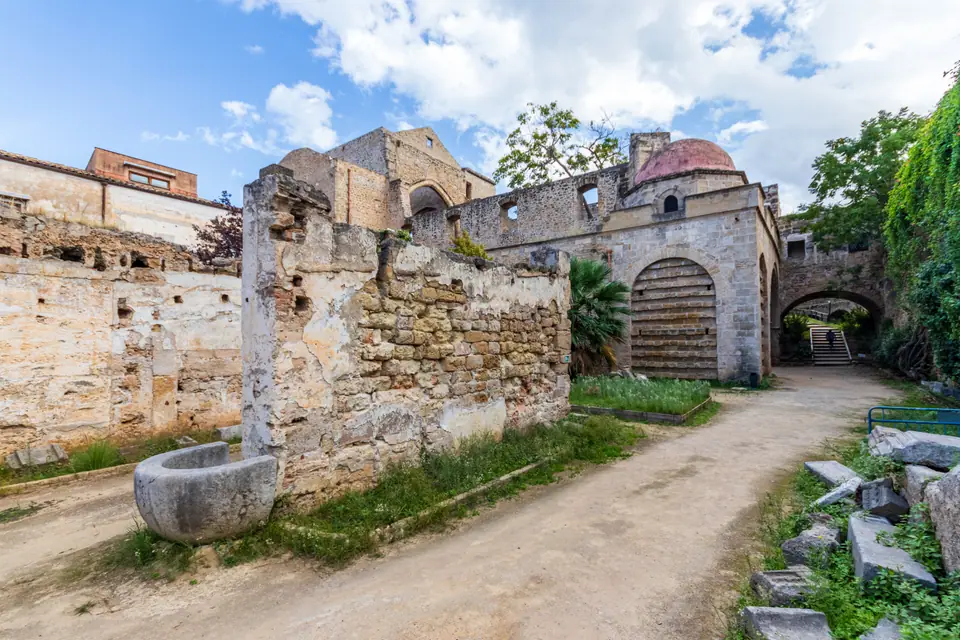
South-eastern La Kalsa blends weathered stone monuments with wide seaside lawns. Santa Maria dello Spasimo opens its unfinished sixteenth-century Gothic nave directly to blue sky, turning an abandoned church shell into a peaceful tree-shaded gallery. Across Piazza Marina stands Palazzo Chiaramonte-Steri, where fourteenth-century painted wooden ceilings contrast soberingly with preserved Inquisition prison graffiti and Renato Guttuso's market painting La Vucciria.
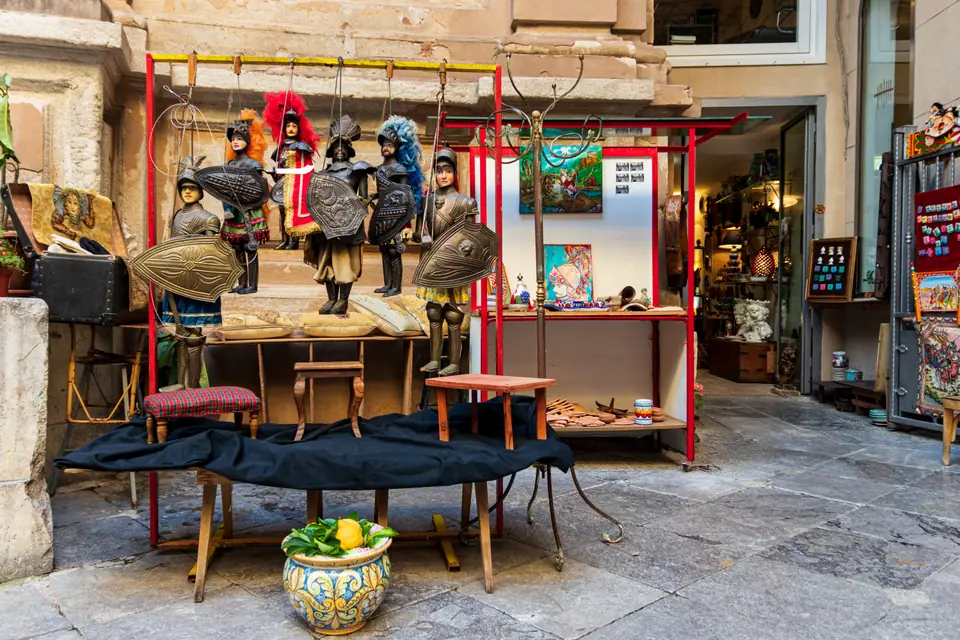
Cultural life spills outdoors around Piazza Marina's twisting banyan trees at Villa Garibaldi and family workshops preserving Opera dei Pupi (Sicilian marionette theatre). The Antonio Pasqualino International Puppet Museum curates historic carved wooden knights and hand-painted stage backdrops under UNESCO protection. Finishing afternoon walks along the palm paths of Villa Giulia and Foro Italico lawns connects smoothly back to Quattro Canti routes.
A single unbroken historic walk across central Palermo
Linking Palermo's contrasting artistic periods fits into one flat half-day walking loop without boarding a bus or tram. Keep sturdy walking shoes on, carry small coins for church entry boxes, and pause for coffee along shaded cloister benches whenever warm sun climbs overhead.
- Start at Piazza Pretoria and climb Santa Caterina Monastery's rooftop path looking out over Piazza Bellini.
- Follow Via Paternostro east to Oratorio di San Lorenzo, continuing to Palazzo Abatellis and Palazzo Chiaramonte-Steri around Piazza Marina.
- Walk south through quiet Kalsa alleys past Santa Maria dello Spasimo into the shaded avenues of Orto Botanico and Villa Giulia.
- Circle north along open Foro Italico grass beside La Cala harbour for sunset views over Monte Pellegrino.
Where it is
- 1Palermo
- Falcone–Borsellino Airport (PMO) · about 25 km from Palermo in a straight line
- Directions in Google Maps
Stations and taxi ranks: OpenStreetMap. Airports: OurAirports. Distances are in a straight line.
Traveller tips
Real advice from people who have been to Palermo. Every tip is read by our team before it goes live.
No tips yet. Been here? Yours could be the first.
Thank you! Your tip will appear here after a quick review.
More in Palermo
Continue exploring Palermo with related neighbourhood, food, and planning guides