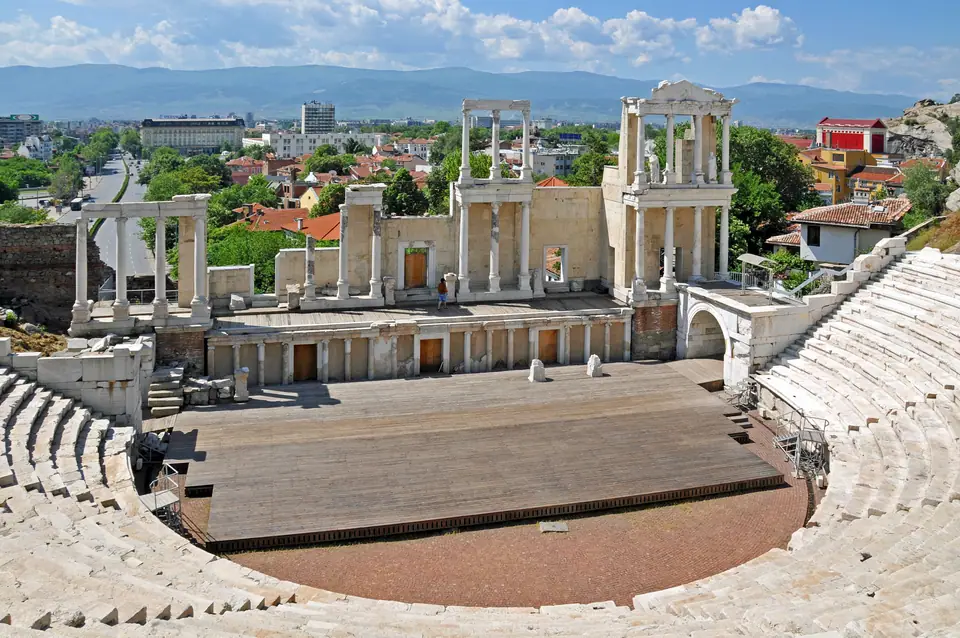
Photo: Dennis G. Jarvis · CC BY-SA 2.0
Ancient Roman Theatre of Plovdiv: History & Opera Nights
Detailed architecture and stage guide to the Ancient Theatre of Philippopolis, epigraphic dating, tribal seating blocks, and Opera Open.
Carved neatly into the southern natural rock saddle between 212-metre Dzhambaz Tepe and 195-metre Taksim Tepe, the Ancient Roman Theatre of Philippopolis ranks among the finest classical Roman theatres in Europe. Twenty-eight curved marble seating tiers drop southward toward twin-storey colonnades framing distant views straight across the Rhodope mountain foothills. Few surviving classical venues preserve full stage elevation, radial seating stairways, and civic bench inscriptions together on a living hillside.
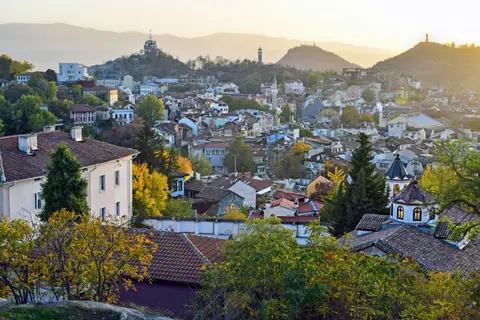
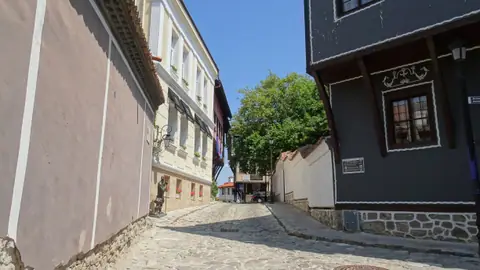
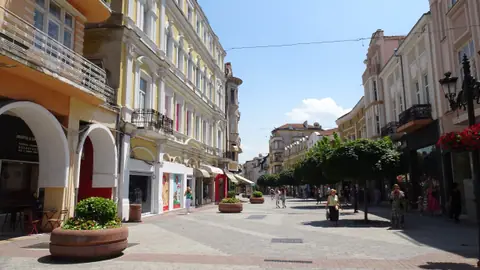
Stroll uphill from Dzhumaya Square or slip in off Tsar Ivaylo Street inside the Old Town to reach upper gates. Managed by Municipal Institute Ancient Plovdiv, the open-air complex welcomes daytime visitors daily including Mondays. By contrast, Plovdiv's smaller second-to-fifth-century Odeon down at Central Square seated just 350 citizens, while the vast Roman Stadium once accommodated up to 30,000 spectators.
Trajan Dedication or Domitian's AD 90s Pedestal
For decades after excavations cleared the ruins, site plaques credited the entire monument to Emperor Trajan around AD 108 to 114 or 116 to 117. Architectural friezes along the stage wall originally backed that Trajanic attribution cleanly. However, later epigraphic reassessment shifted historical dating after specialists inspected monumental statue pedestals reused inside the eastern vaulted entrance passage.
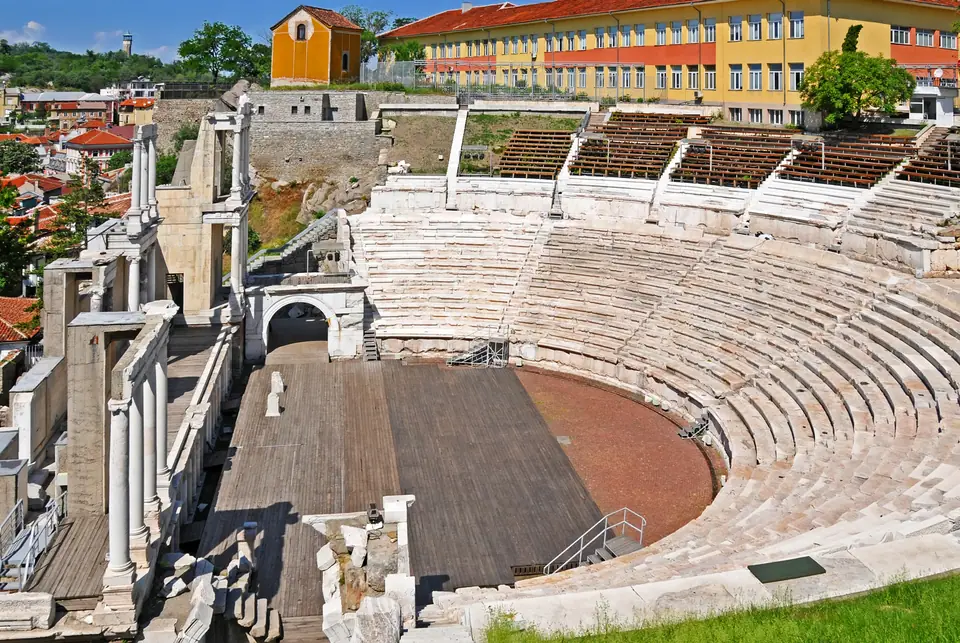
Greek inscriptions carved onto that pedestal link initial building firmly to the AD 90s under Emperor Domitian, roughly half a century after Claudius incorporated Thrace in AD 46. Funded by Titus Flavius Cotys, high priest of the Thracian province, engineers likely shaped early benches before Trajanic crews completed upper porticoes. Visiting historians now trace a multi-emperor civic investment spanning two industrious imperial reigns.
Standing beneath those eastern vaults reveals why provincial builders invested so heavily on a steep urban ridge. Rather than setting an isolated arena out on flat meadowland, Roman planners anchored an unmistakable symbol of imperial urban pride directly above the civic core visible across southern Thrace.
Twenty-Eight Marble Tiers Between Two Syenite Hills
Rather than raising costly free-standing masonry vaults everywhere on flat ground, Roman builders anchored the semicircular marble-and-brick cavea straight into solid syenite bedrock. Stretching eighty-two metres wide, the seating bowl wrapped smoothly around a 26.64-metre horseshoe orchestra left completely unroofed under open sky. White marble benches accommodated roughly 5,000 to 7,000 spectators across provincial festivals and dramatic contests.
Look closely at the horizontal stone walkway, called a diazoma, splitting twenty-eight concentric marble rows neatly into twin fourteen-tier rings. Steep radial staircases slice those curved rows into wedge sectors called kerkides, still wearing smooth foot polish from two millennia of sandals. Across the orchestra stands a 3.16-metre stage wall supporting a monumental three-storey scaenae frons backdrop pierced by three symmetrical doorways.
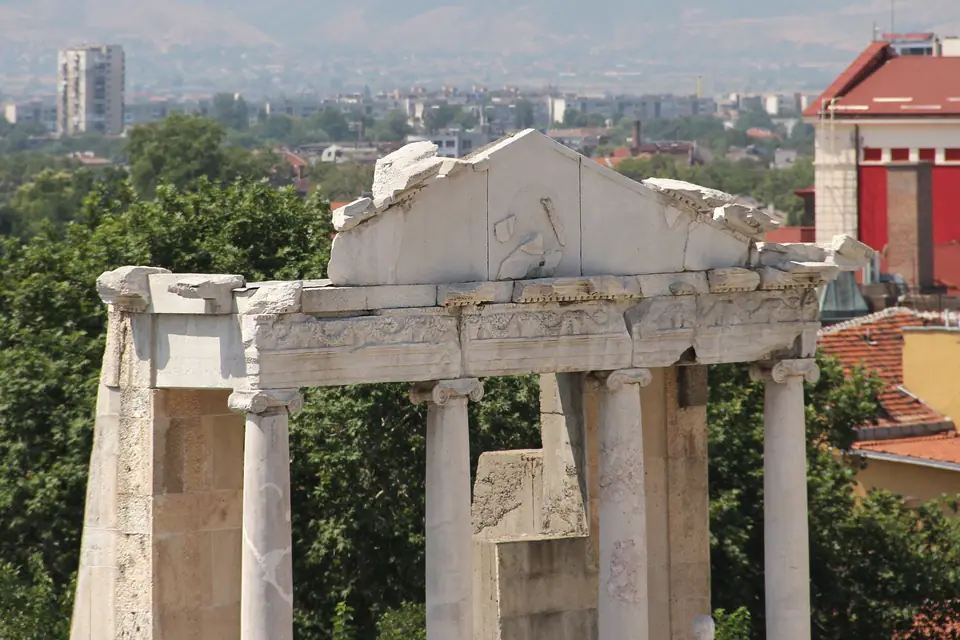
Between those stage doorways, carved friezes and tall Corinthian capitals frame architectural niches built originally for imperial statues and painted wooden backdrops. Even on quiet mornings with zero microphones rigged onstage, acoustic clarity surprises every visitor climbing up to top rows. Ordinary spoken tones tested inside the paved orchestra carry clearly right across twenty-eight tiers into pine-scented breezes. Flanking side walls screen city street hum without hiding distant mountain peaks along the southern skyline.
Tribal Seating Inscriptions, Caracalla and Destruction
Slow down beside the lower seating blocks near the orchestra pit to hunt crisp Greek lettering chiselled cleanly along stone seat risers. Civic inscriptions reserved specific wedges for urban municipal districts called phylai, city magistrates, imperial friends, and representatives of the provincial Thracian assembly known as the Koinon. Visitors spot honorary titles pressed directly into pale marble risers beside carved bench supports.
Following Emperor Caracalla's imperial visit in AD 214, city patrons installed protective stone barriers before the bottom seating tier. Heavy upright slabs shielded dignified front-row magistrates during wild beast hunts and bloody gladiatorial combats inside the flooded orchestra. Devastation finally struck late in the fourth century from fire or quake before fifth-century Hunnic raids under Attila shattered upper colonnades.
Centuries of hill runoff buried the broken monument beneath roughly 4.5 metres of earth as medieval builders salvaged fallen blocks nearby. Ottoman dwellings and modest terraced gardens eventually crept silently across the slope above, masking the lost classical theatre completely from public memory.
Excavation Under Four Metres of Earth and Opera Open
Roadway tunnel cuts and slope clearance triggered landslide exposure, sparking systematic Plovdiv Archaeological Museum excavations starting in 1968 and running through 1979. Careful anastylosis conservation completed through 1984 re-erected genuine tumbled Ionic and Corinthian stage columns atop distinct new support stone. That honest visual contrast separates original Roman marble from modern structural steel and mortar at every joint.
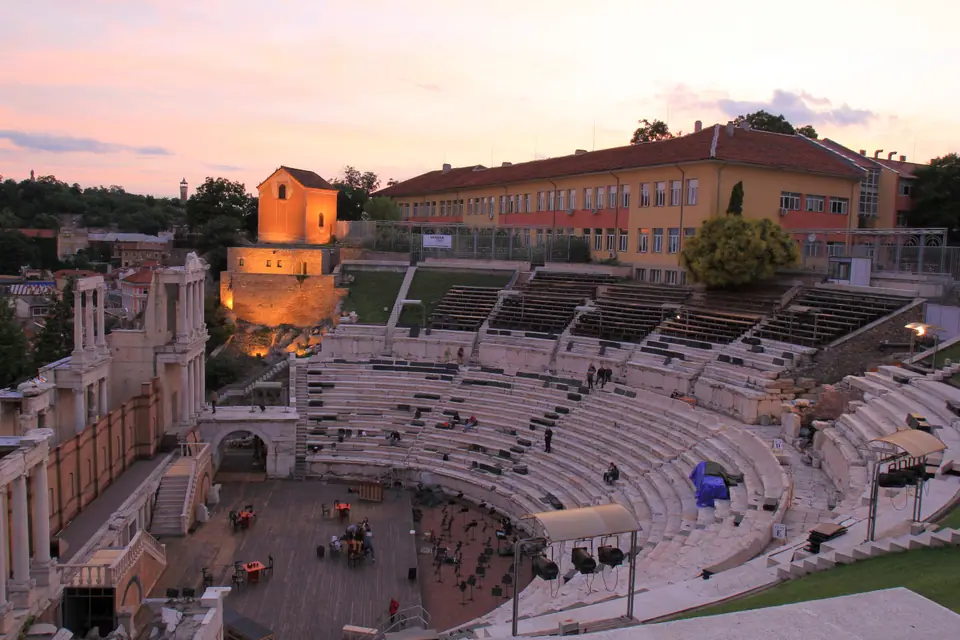
Daytime admission joins Ancient Plovdiv's five-site municipal combined ticket, opening carved inscriptions and orchestra stones freely before evening concerts begin. Every summer from June into September, Opera Open fills around 3,500 seated places with Verdi operas, ballet, and contemporary acts such as King Gizzard's three-night 2025 run. Modern timber staging protects the ancient marble podium while floodlights frame the twin colonnades cleanly at twilight.
Check our Plovdiv festival calendar ahead of warm-season stays and bring a light wool cardigan for breezy evening drafts. Rent or pack a thin foam cushion at upper turnstiles because second-century Roman marble cools swiftly before final encores conclude.
Morning visitors entering via Tsar Ivaylo Street share sunny upper tiers mostly with photographers before afternoon tour coaches climb from Dzhumaya Square. Sitting silently along upper marble wedges lets you hear church bells chime across the Old Town rooftops below.
Where it is
- 1Ancient Roman Theatre of Plovdiv
- Sofia Airport (SOF) · about 125 km from here in a straight line
- Directions in Google Maps
Stations and taxi ranks: OpenStreetMap. Airports: OurAirports. Distances are in a straight line.
Traveller tips
Real advice from people who have been to Plovdiv. Every tip is read by our team before it goes live.
No tips yet. Been here? Yours could be the first.
Thank you! Your tip will appear here after a quick review.
More in Plovdiv
Continue exploring Plovdiv with related neighbourhood, food, and planning guides