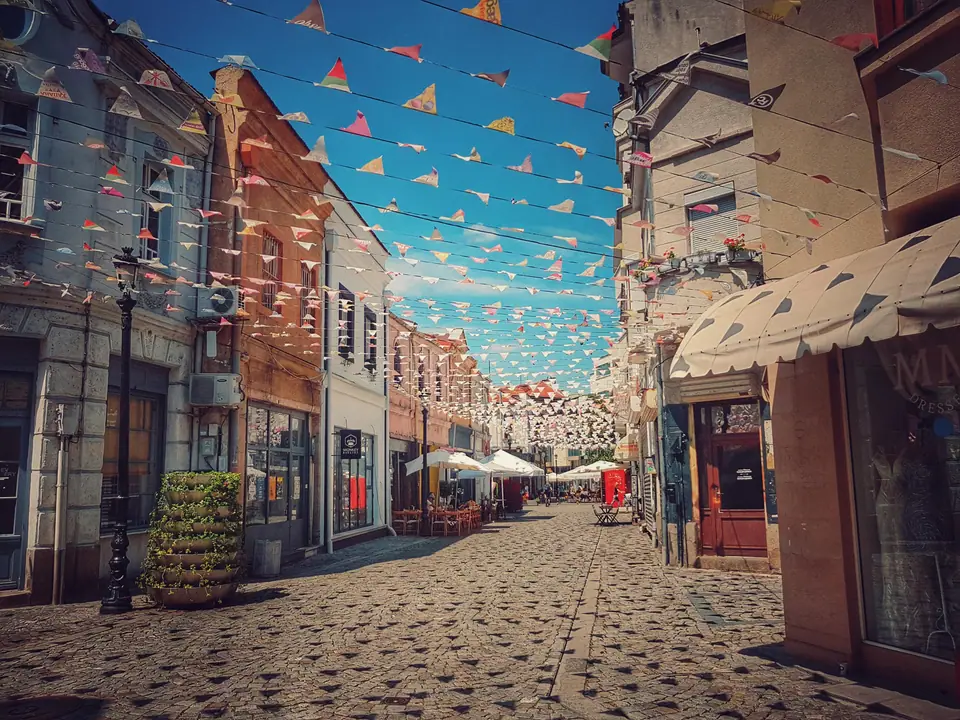
Photo: Община Пловдив · CC BY-SA 4.0
Kapana Creative Quarter: Guild Lanes, Cafes & Nightlife
Historic transformation and walking guide to Kapana creative quarter north of Dzhumaya Square, covering guild origins, Plovdiv 2019, and Green Zone rules.
Walk straight behind Dzhumaya Mosque in central postcode 4000 and wide commercial shopping streets shatter abruptly into an interlocking knot of cobblestone alleys. Locals name this compact 5.5-hectare quarter Kapana, Bulgarian for The Trap, where tiny studios, craft roasteries, record shops, and lively bistros fill ground floors. Within twenty-three tight lanes, visitors easily lose all sense of cardinal direction between espresso stops.
Sunlight warms pastel plasterwork quietly each morning as watchmakers, ceramicists, and bakers roll up wooden shutters before midday chatter gathers strength. By dusk from May right into October, outdoor tables claim every brick corner until guitars and laughter linger past midnight.
Fifteenth-Century Ottoman Guilds Around Un Kapan
Rather than an engineered modern arts district, Kapana evolved directly out of Ottoman Filibe's dense artisanal and commercial charshiya during the fifteenth century. The very quarter name traces directly back to Un Kapan, the municipal flour-weighing yard anchored north of Dzhumaya Mosque near Buyuk Kapan. Grain carts unloaded sacks here under strict guild wardens controlling trade weights across the Upper Thracian Plain.
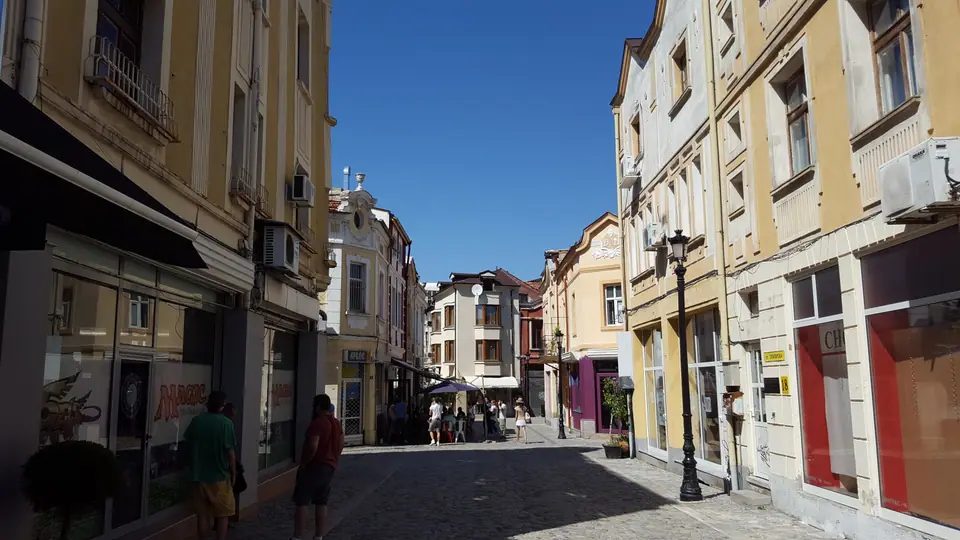
Tradesmen grouped tightly inside specialized curved alleys whose names still signal bygone craft workshops five centuries later. Stroll Zlatarska Street for historic goldsmiths, Zhelezarska for ironsmiths, Kozhuharska for leatherworkers and furriers, and Abadzhiyska where rough woollen tailors fitted cloaks. Their overlapping timber awnings locked buyers into tight dead-end mazes that trapped both daylight footfall and merchant wealth.
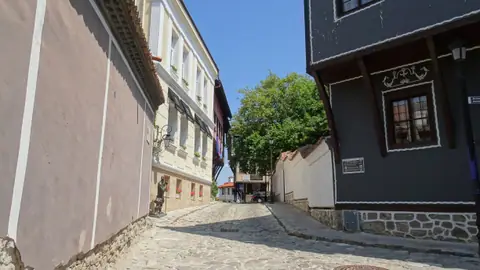
Every junction scales sharply smaller than the grand neoclassical boulevards framing Centralen apartment avenues nearby. Two-storey storefronts hug curved grey kerbs tightly, explaining why acoustic music reverberates cleanly across stone thresholds after dark.
The June 1906 Fire and Interwar Brick Streets
On the night of 13 June 1906, fierce flames tore through Kapana's packed wooden stalls and destroyed the monumental Kurshum Khan caravanserai. Municipal planners quickly drafted straightened fire-safe corner plots while cleverly preserving the quarter's dense medieval street mesh. Reconstruction throughout the 1920s and 1930s raised the sturdy two- and three-storey brick townhouses flanking these alleys today.
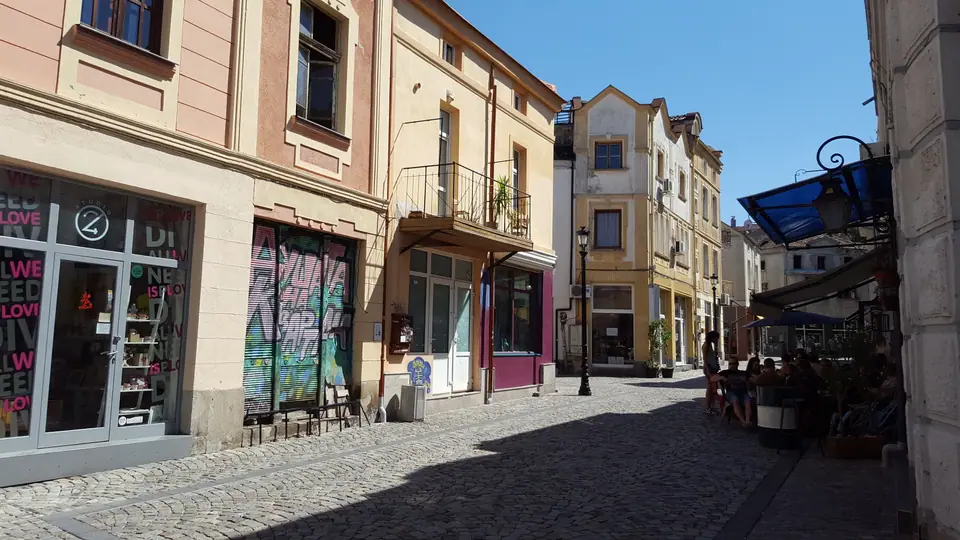
Look carefully above modern glass shop windows to spot neoclassical stucco wreaths, art deco reliefs, and cast-iron balcony rails cast across the interwar decades. During late twentieth-century retail shifts west toward Knyaz Alexander I Street, Kapana slipped steadily into print depots, storage sheds, and congested daytime kerb parking. Forgotten facades stood grey and soot-stained until urban curators selected the district for cultural renewal.
Plovdiv 2019 Regeneration and 606 Mapped Spaces
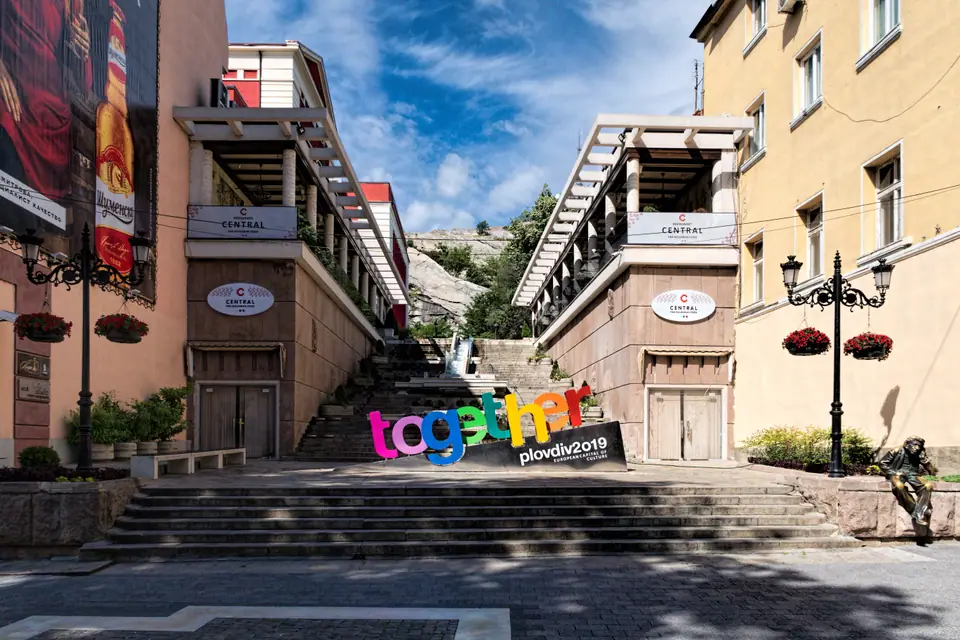
Momentum surged after Plovdiv secured Bulgaria's inaugural 2019 European Capital of Culture title, championing Kapana as its flagship urban regeneration project. Five municipal grant rounds run between 2014 and 2019 backed over sixty creative projects and more than three hundred cultural events across repaved lanes. Those efforts earned the Bulgarian Architects Heritage Guardian prize in July 2019 plus UNESCO and EU Cultural Heritage in Action recognition in November 2020.
A thorough 2021 spatial census mapped 334 buildings across fifty-five decares, counting 175 mixed-use structures, 142 public or commercial buildings, and just seventeen purely residential homes. That same audit counted 606 active spaces inside Kapana: 179 creative firms, twenty-four galleries, eleven music clubs, forty-five restaurants, sixty-four bars and cafés, and 315 retail outlets. Combined dining and drinking spots total 109 addresses inside twenty-three compact lanes. Unlike sterile heritage blocks scrubbed clean for coaches in Sarajevo or Vienna, old watchmakers and tailors still trade cleanly beside neon taprooms.
Wander Hristo Dyukmedzhiev Street and Bratya Pulievi Street by afternoon to spot colourful gables, print workshops, and small bookshops hidden behind potted plants. Artisan doors usually unlock from late morning through early evening before night trade takes over. Small corner galleries rotate ceramic tableware, hand-printed tote bags, and bright contemporary graphic prints painted by young Plovdiv studio graduates.
By dusk, charcoal aromas from neighbouring skara kitchens and wine bars pull diners onto wooden benches under twinkling overhead string cables. Local craft breweries pour crisp pale ales beside Thracian Valley wine bars offering single glasses outdoors.
Navigating Car-Free Lanes, Green Zone Clamps and Kapana Fest
Municipal traffic rules seal off twelve core streets completely to private vehicles while retaining seven shared lanes and four outer vehicle edges. Overall, eighty-three percent of Kapana's street grid enforces pedestrian or calmed rules. Hidden cameras and rising hydraulic bollards defend strict resident-only Green Zone restrictions around perimeter lanes day and night. Stray hire cars creeping past entry signs without permits face swift municipal wheel clamps and prompt tow trucks.
Visitors should approach strictly on foot along flat avenues from Centralen, Marasha, or nearby Tixi urban bus stops lining Tsar Boris III Obedinitel Boulevard. Drivers arriving with luggage ought to park in metered outer Blue Zone bays or book northern Karshiyaka garages across the Maritsa.
Twice annually during spring and autumn, Kapana Fest fills open intersections with vinyl record crates, craft jewellers, and open brass stages. Outdoor chairs claim sunlit corners fast during mild May and September weekends. Arrive slightly before dusk to browse independent leather studios, sample craft beers beside Kurshum Khan's vanished guild site, and hear live bands fill quiet cobblestone junctions.
Early daytime visits remain just as rewarding for slow espresso cups before evening crowds transform narrow lanes. Morning light illuminates carved pastel gables and restored stucco frames cleanly before bar umbrellas unfold across Zlatarska and Abadzhiyska streets.
Where it is
- 1Kapana Creative Quarter
- Sofia Airport (SOF) · about 125 km from here in a straight line
- Directions in Google Maps
Stations and taxi ranks: OpenStreetMap. Airports: OurAirports. Distances are in a straight line.
Traveller tips
Real advice from people who have been to Plovdiv. Every tip is read by our team before it goes live.
No tips yet. Been here? Yours could be the first.
Thank you! Your tip will appear here after a quick review.
More in Plovdiv
Continue exploring Plovdiv with related neighbourhood, food, and planning guides