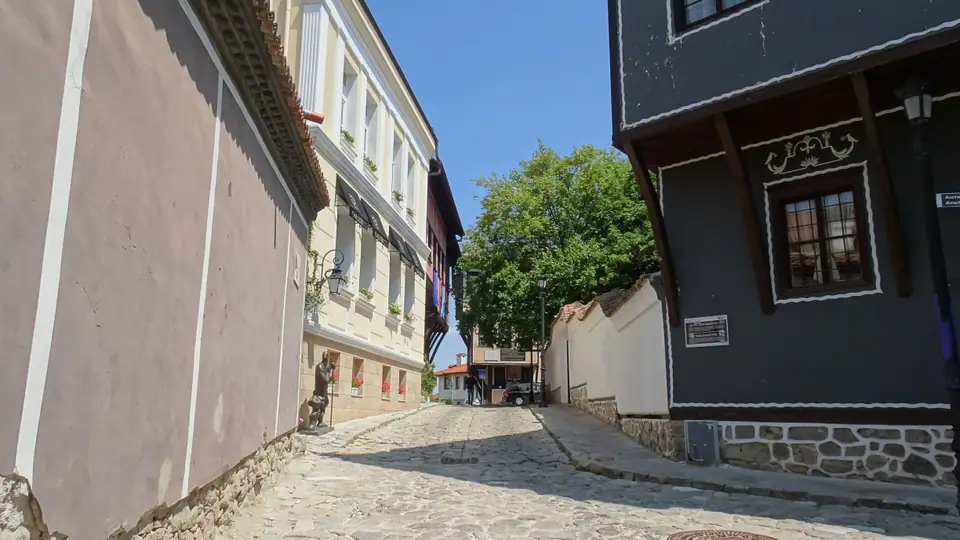
Photo: Νικόλαος Κυριακάκης · CC BY-SA 4.0
Things to Do in Plovdiv: Roman Stones, Basilicas & Hills
Prioritised sightseeing route across Plovdiv Roman monuments, fourth-century basilica mosaics, hill viewpoints, and Monday museum closures.
Plovdiv compacts two kilometres of classical monuments, Christian basilica floors, Ottoman stonework, and mountain viewpoints into a single walkable arc. You descend steps off a busy espresso terrace straight onto Roman marble seats. Minutes later you step across an avenue into fourth-century floor mosaics or climb granite paths above terracotta rooftops.
Sequencing sights around elevation changes and weekly maintenance closures makes every day effortless. Pair our Plovdiv city guide with the priorities below so locked doors never waste an uphill climb.
Roman Stadium, Dzhumaya Mosque and the Knyaz Alexander Spine
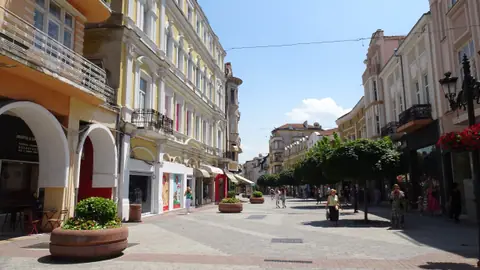
Stretching 1.75 kilometres from Central Square north toward the Maritsa river, Knyaz Alexander I Street anchors daily civic life. Beneath those granite flagstones lies Emperor Hadrian's second-century stadium, carved 240 metres long for athletic Pythian games. Roughly 30,000 citizens once cheered from marble benches running right beneath modern shopfronts and nineteenth-century facades.
At Dzhumaya Square, stairs drop cleanly down into thirteen exposed marble seat tiers of the northern stadium curve beneath the lead domes of Dzhumaya Mosque. Built under Sultan Murad II between 1421 and 1451, its patterned brick-and-stone exterior anchors the lively plaza. Cross the pavement north after viewing the stadium and you immediately enter Kapana, where twenty-three narrow streets mix craft studios with pavement tables.
Bishop's Basilica Mosaics, the Forum and Odeon
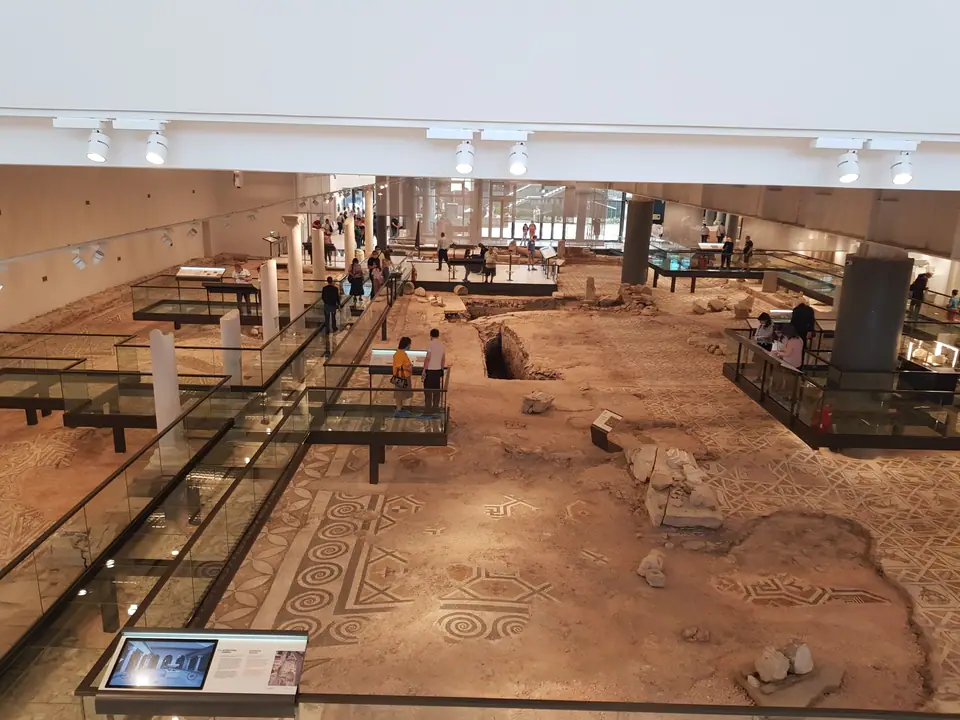
A short walk east of Central Square opens onto the Bishop's Basilica of Philippopolis, housing over two thousand square metres of restored mosaics. Raised glass-railed walkways loop above geometric stone carpets and more than one hundred detailed bird medallions inside an airy climate-controlled hall. Added to Bulgaria's UNESCO Tentative List on 20 January 2018, this fourth-to-sixth-century church stands as the country's largest early Christian basilica.
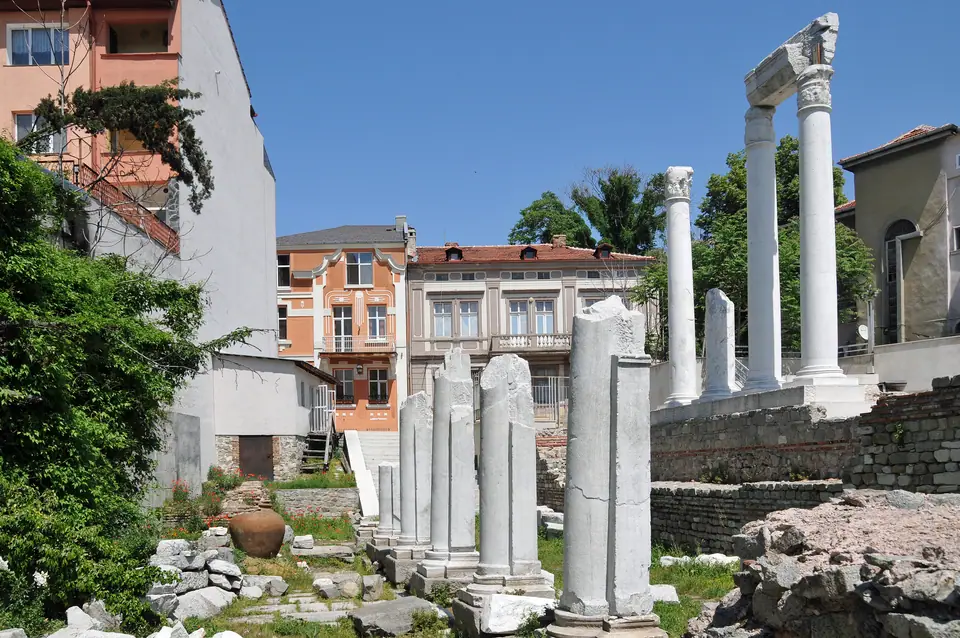
Two blocks west beside the post office, the excavated eleven-hectare Roman Forum sits adjacent to the restored white-marble Roman Odeon. Restored in 2004, the 350-seat Odeon displays tall Corinthian columns where Philippopolis city councillors once debated civic law. East down Maria Luiza Boulevard, the third-to-fourth-century Building Eirene and the fifth-century Small Basilica mosaic baptistery complete a trio of vivid mosaic stops.
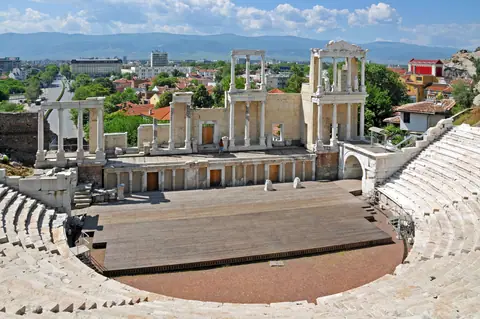
- Ancient Theatre of Philippopolis: Twenty-eight marble seating rows tucked between Dzhambaz Tepe and Taksim Tepe open daily for views and summer concerts.
- Regional Archaeological Museum: Facing Saedinenie Square number 1, this gallery displays Thracian silver, coins, and 6-kilogram Panagyurishte gold replicas, shutting Mondays and winter Sundays.
- Regional Ethnographic Museum: Housed inside the 1847 Kuyumdzhioglu House, this 12-room collection showcases Rhodope textiles and folk silver except Mondays.
- Balabanov and Hindliyan Houses: Restored merchant interiors across the Old Town close every Monday for cleaning and conservation work.
- Pharmacy Hippocrates and Zlatyu Boyadzhiev Gallery: Quiet cobbled lanes hold nineteenth-century apothecary jars and modernist paintings, closed Mondays under municipal rules.
Reopened Nebet Tepe Fortifications and the Eastern Gate
Following European-funded municipal conservation, both Nebet Tepe and the Eastern Gate of Philippopolis reopened in March 2025 with upgraded lighting and safe timber walkways. Nebet Tepe rises 207 metres on the northern cliff of Trimontium where Thracian walls meet Roman and Justinianic stone cisterns. Because no perimeter turnstiles guard the upper crag, walkers visit freely daily from dawn into twilight.
From Nebet Tepe, stone stairs drop northeast to the ceremonial Eastern Gate built near the imperial road toward the Dardanelles and Istanbul. Visitors stroll across broad Roman paving slabs flanked by marble portico columns installed during Marcus Aurelius's reign. Morning sunlight warms weathered sandstone joints long before midday tour coaches arrive near Saborna Street.
Bunardzhika Hill, Sahat Tepe and Tsar Simeon Garden
Escape Old Town summer crowds by climbing 227-metre Sahat Tepe west of Knyaz Alexander I Street to inspect the 1812 stone clock tower. Pine shade covers winding stone steps leading onward toward views over the Roman Theatre ridge. Continue farther west onto 265-metre Bunardzhika Hill to reach the granite base of the 1957 Alyosha soldier statue.
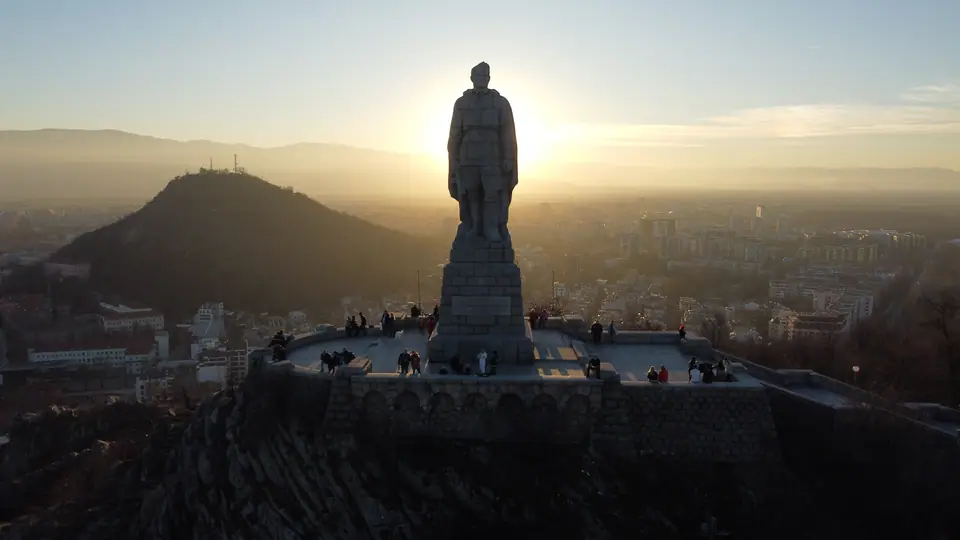
Despite lingering political debates over Cold War memorials, locals fill Bunardzhika trails nightly for sunset runs above the valley haze. Back down on level pavement near Central Station, Lucien Chevallaz's 1892 Tsar Simeon Garden offers shaded lake paths and evening Singing Fountains. Families gather along quiet stone benches far from traffic noise on warm afternoons.
Old Plovdiv Passes and the Monday Closure Trap
Municipal Institute Ancient Plovdiv offers a five-site combined pass covering Revival mansions such as Balabanov, Hindliyan, Nedkovich, Pharmacy Hippocrates, Zlatyu Boyadzhiev, and the Ancient Theatre. However, neither the Bishop's Basilica halls nor the independent Regional Ethnographic and Archaeological Museums join that five-site municipal pass. Ask specifically for the separate Basilica Combined Ticket when touring all three early Christian mosaic halls together, and remember students and seniors enter municipal houses free on the first Thursday monthly.
Checking days of the week spares wasted climbs up steep hillside cobbles. On Mondays, indoor Revival houses, municipal galleries, and state museums lock their timber gates, while the Archaeological Museum adds Sunday closures from November through April. Spend Mondays exploring the Bishop's Basilica mosaics, Nebet Tepe, Eastern Gate, Dzhumaya Stadium, Ancient Theatre, and Kapana alleys, saving Tuesday to Sunday for museum salons.
Walking shoes with firm rubber treads count just as much as Monday awareness once you climb Saborna Street toward steep granite gates. Carry refillable water bottles between sunny terraces, book lunch tables inside central mehana kitchens or Kapana bistros, check opening days ahead on official municipal portals, and cross north into Karshiyaka river walks before dusk.
Where it is
- 1Plovdiv
- Sofia Airport (SOF) · about 125 km from Plovdiv in a straight line
- Directions in Google Maps
Stations and taxi ranks: OpenStreetMap. Airports: OurAirports. Distances are in a straight line.
Traveller tips
Real advice from people who have been to Plovdiv. Every tip is read by our team before it goes live.
No tips yet. Been here? Yours could be the first.
Thank you! Your tip will appear here after a quick review.
More in Plovdiv
Continue exploring Plovdiv with related neighbourhood, food, and planning guides