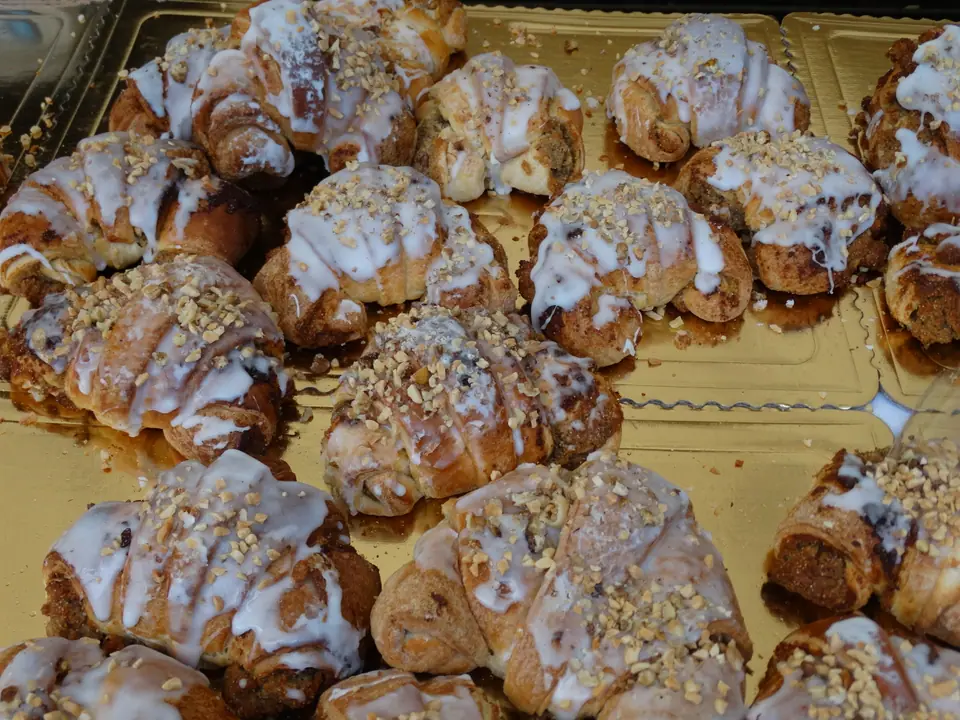
Photo: Rzuwig · CC BY-SA 3.0
White Poppy Croissants, Pyry and Greater Poland Plates
EU-protected Rogal Świętomarciński croissants, potato-and-curd pyry z gzikiem, roast duck with pyzy, szare kluski, czernina and Poznań markets.
Greater Poland cooking relies on honest potato fields, autumn orchard apples, slow-roasted poultry and one tightly regulated pastry guarded by European law. Locals call potatoes pyry in regional speech (gwara poznańska), giving Poznań residents their warm national nickname Pyry. Passing up laminated tourist boards on Stary Rynek for certified bakers, morning produce squares and cooperative milk bars leads straight to authentic local plates.
Rogal Świętomarciński: White Poppy Seeds and the 2008 PGI Standard
Poznań's signature pastry, the Rogal Świętomarciński (ROH-gahl shvyen-toh-mahr-CHEEN-skee), differs sharply from airy French butter croissants. Under European Commission Regulation (EC) No 1070/2008 adopted on 30 October 2008, authentic pastries hold Protected Geographical Indication (PGI) status. Certified bakeries inside Poznań and designated Wielkopolska counties hold the exclusive legal right to sell pastries under this protected name. Each folded crescent must weigh strictly between 150 and 250 grams.
Inside, bakers fold laminated yeast dough around a dense paste of sweet white poppy seeds (biały mak), sugar, crushed nuts and raisins. They blend in candied citrus peel, biscuit crumbs and butter or margarine before shaping the crescent. Once baked golden, every pastry receives glossy white sugar icing and chopped nuts on top. Look for the green-and-gold PGI certificate framed near the cash register before buying, as uncertified lookalikes substitute dark poppy filling or light glaze.
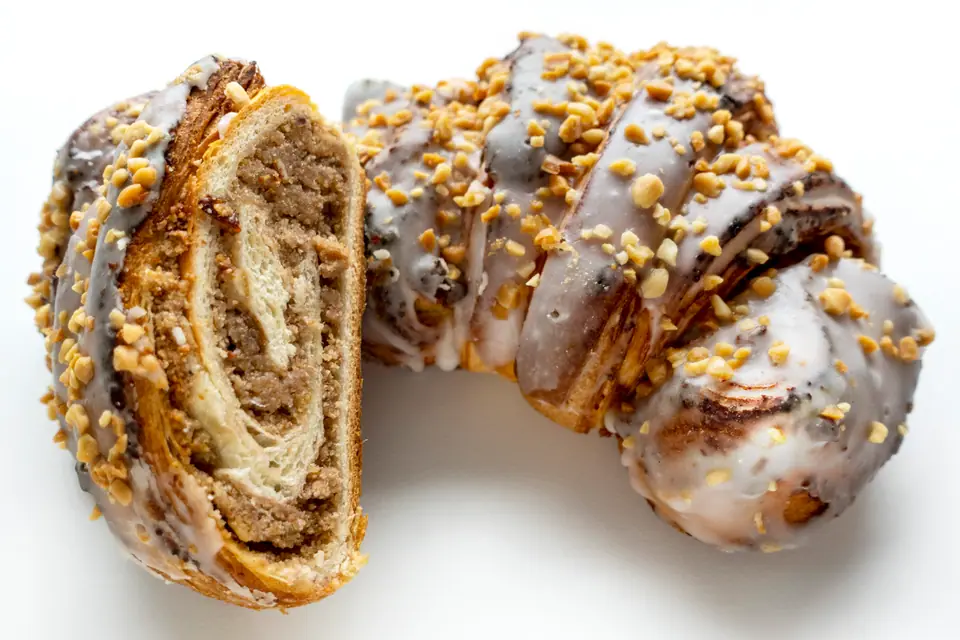
Written records show the earliest known newspaper notice in Dziennik Poznański in 1860. That notice came 31 years before the November 1891 St Martin's parish charity appeal by priest Jan Lewicki and confectioner Józef Melzer. Poznań's confectioners' guild from 1901, along with master bakers Franciszek Rączyński and Zygmunt Wasiński, preserved the formula across wartime shortages. Today Rogalowe Muzeum Poznania at Stary Rynek 41 runs year-round baking shows, while certified shops supply fresh batches daily beyond 11 November.
Pyry z Gzikiem, Roast Duck with Pyzy and Sour Szare Kluski
Beyond pastry cases, Greater Poland lunch tables pair crisp roasted meats and tart pickles with three classic potato and dough staples.
- Pyry z gzikiem (PIH-rih z GZHEE-kyem): Hot jacket or peeled boiled potatoes served beside gzik, fresh white curd cheese (twaróg) whipped smooth with sour cream, diced onion, chives, salt and radishes.
- Kaczka po poznańsku: Traditional roast duck seasoned with tart apples and dried marjoram, plated with light steamed yeast dumplings (pyzy drożdżowe / kluski na parze) and sweet-sour braised red cabbage (modra kapusta).
- Szare kluski (SHAH-reh KLOO-skee): Irregular rustic grey dumplings pressed from freshly grated raw potatoes that darken naturally during mixing, finished with crisp pork cracklings (skwarki), fried onions and tangy sauerkraut.
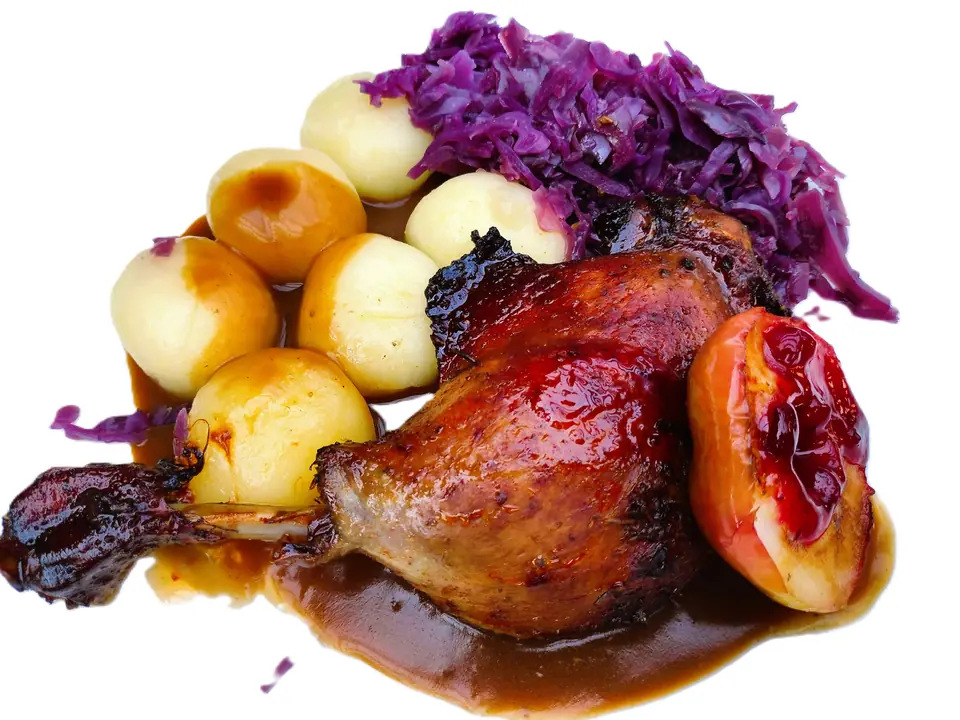
Order pyry z gzikiem as a light midday meal or share it beside roast pork cutlets. The cool herb-and-radish curd contrast cuts cleanly through rich pan sauces and crisp skin. With kaczka po poznańsku, locals pull the steamed pyzy apart with a fork rather than slicing them flat. Torn edges expose airy steamed crumb that soaks up spiced duck gravy. Both classics anchor bistro menus in Jeżyce and traditional Old Town dining rooms.
Czernina, Sour Rye Żurek and Poznań Milk Bars
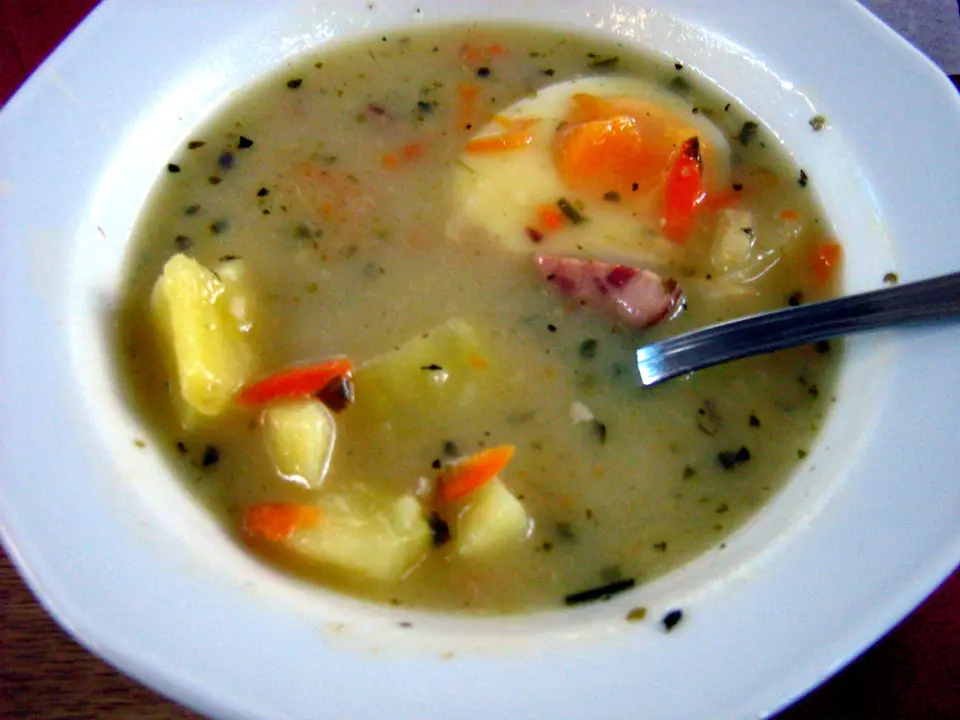
Greater Poland soup cauldrons reflect generations of resourceful farm kitchens where every ingredient mattered. Historic family restaurants still ladle czernina (cher-NEE-nah), a deep sweet-sour duck blood broth built from poultry stock and vinegar. Cooks balance the dark soup with dried prunes, orchard pears and warm spices over homemade pasta ribbons. Easier to find on daily lunch boards sits creamy fermented sour rye żurek (ZHOO-rek). Kitchens thicken the tart sourdough starter (zakwas) soup with garlic and marjoram before adding white sausage (biała kiełbasa) and boiled egg halves.
Students, office workers and retirees still queue inside Poznań's surviving Społem cooperative milk bars (bar mleczny) for fast tray lunches. Note that older downtown counters such as Apetyt and Przysmak have closed. Dependable active milk bars include Bar Pod Arkadami (Plac Cyryla Ratajskiego 10), Bar Santos (ul. Koronna 1a), Bar Kalina (ul. Jaworowa 58) and Bar Rzepicha (os. Piastowskie 78). Read the posted daily board above the counter, pay the cashier, then hand your paper receipt to the kitchen hatch for steaming plates.
Milk-bar dining follows practical Polish self-service customs. Arrive ahead of late-afternoon closing times while hot trays remain full, clear your own dishes afterward, and bring small banknotes or contactless cards for fast counter billing. Everyday bowls of pickled cucumber soup, buckwheat groats and fried pork cutlets sit right beside seasonal pyry z gzikiem and hot dumplings without tourist markups.
Produce Markets, Stary Browar Counters and Certified Bakeries
Shopping around local opening hours brings fresher snacks and prevents wasted Sunday trips across town. Morning buyers gather around open-air wooden tables at Rynek Jeżycki and Plac Wielkopolski north of Stary Rynek from Monday through Saturday. Seasonal crates brim with summer strawberries, forest mushrooms, farmhouse curd cheese and crusty rye loaves. Local shoppers also stock picnic bags with crisp white rolls, seasonal apples and sliced farm sausages for riverside walks.
On rainy afternoons, red-brick dining halls inside Stary Browar on ulica Półwiejska group regional kitchens, bakeries and espresso bars under one glass roof. Studio ADS opened this restored nineteenth-century brewery site in November 2003, turning former malting towers into calm indoor seating. Those dining halls and neighbourhood convenience shops stay busy even when Polish Sunday retail rules close major supermarkets outside designated niedziele handlowe calendar dates.
Where it is
- 1Poznań
- Poznań-Ławica Airport (POZ) · about 8 km from Poznań in a straight line
- Directions in Google Maps
Stations and taxi ranks: OpenStreetMap. Airports: OurAirports. Distances are in a straight line.
Traveller tips
Real advice from people who have been to Poznań. Every tip is read by our team before it goes live.
No tips yet. Been here? Yours could be the first.
Thank you! Your tip will appear here after a quick review.
More in Poznań
Continue exploring Poznań with related neighbourhood, food, and planning guides