Photo: Lesiex · CC BY-SA 4.0
Two Rivers and Three Eras: Reading Poznań
How Ostrów Tumski, the 1253 Old Market grid, Prussian bastions and the 1956 workers' revolt fit together across Poznań.
Step out of central rail platforms in Poznań (POZ-nahn) and the city lays out a thousand years of shifting rule along one west-to-east walking line. Most Polish cities grew along one main river embankment, yet Wielkopolska's capital sits across two distinct water channels. The broad River Warta runs northward through downtown while its smaller eastern tributary, the Cybina, loops behind historic Cathedral Island.
Covering 261.91 square kilometres, Poznań holds roughly 533,000 to 536,151 permanent inhabitants within a metropolitan belt above one million residents. Terrain rises gradually from roughly 60 metres beside Warta floodplains up to Morasko hill at 154 to 157 metres in the north. That northern ridge preserves the Morasko Meteorite Nature Reserve. Three clear urban rings explain every streetcar ride across town. Those rings span the medieval island stronghold, the 1253 market grid, and nineteenth-century Prussian avenues.
Piast Ostrów Tumski and the 1253 Left-Bank Grid
Polish statehood took visible form on Ostrów Tumski (OS-troof TOOM-skee), a gravel island wedged where the Cybina rejoins the Warta. Tenth-century Piast rulers fortified the island with timber-and-earth box ramparts before Duke Mieszko I's 966 baptism. Two years later, Bishop Jordan founded Poland's earliest episcopal diocese here in 968. Masonry footings preserved underground beneath the Gothic cathedral still mark that tenth-century church.
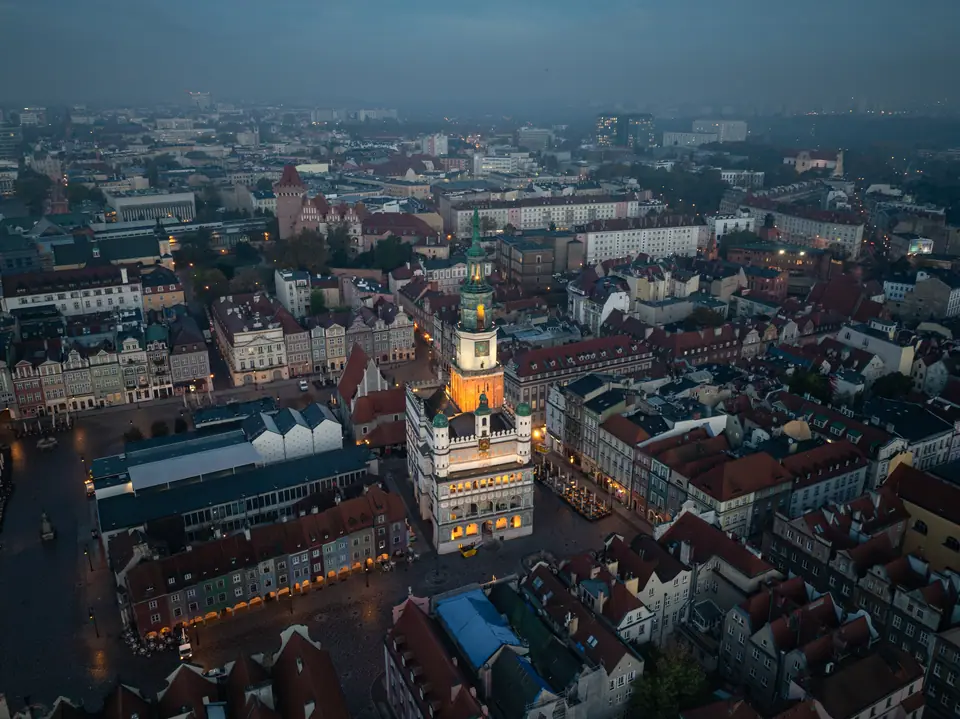
Seasonal floodwater gradually cramped island settlement, so Duke Przemysł I moved commercial life across to higher western ground in 1253 under Magdeburg law. Surveyors laid out a square market plaza roughly 140 metres across, flanked by 64 original townhouse lots. Above the north-western edge rose the Royal Castle atop Góra Przemysła, the walled town's upper elevation. That 1253 street lattice still defines central Stary Rynek today.
Prussian Fortifications to the 1918 Uprising at Hotel Bazar
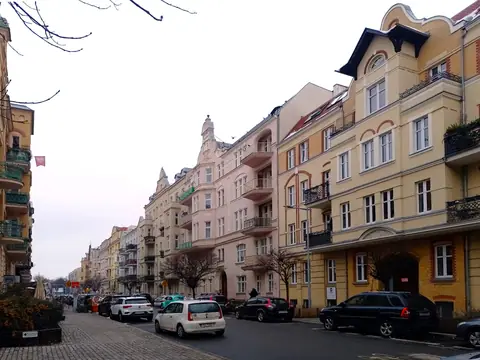
Prussia annexed Poznań in 1793 during the Second Partition of Poland and ringed the town inside Festung Posen. Military engineers anchored the northern ridge with brick Fort Winiary starting in 1829. When crews tore down inner brick walls around 1900, broad ring avenues opened along Święty Marcin and Aleje Marcinkowskiego. Imperial German planners filled those cleared bastions with stone ministries, lecture halls and Franz Schwechten's Imperial Castle between 1905 and 1910.
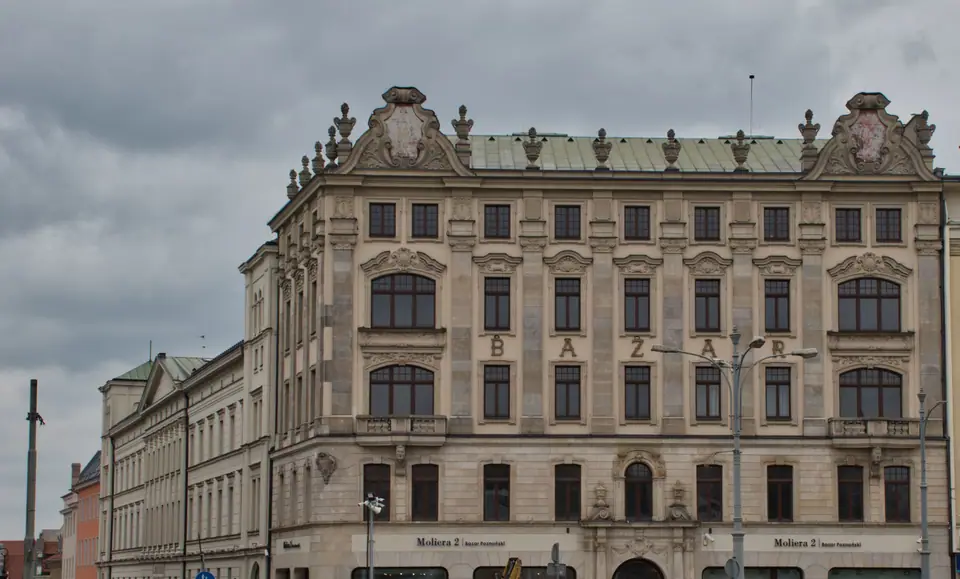
German rule cracked suddenly inside the elegant streets linking the Imperial Quarter to Old Town. On 26 December 1918, acclaimed pianist and Polish statesman Ignacy Jan Paderewski arrived at Hotel Bazar off Plac Wolności and addressed cheering crowds from a hotel window. Fighting erupted outside on 27 December 1918, sparking the Greater Poland Uprising. That campaign became one of Poland's rare triumphant insurrections, returning the province to reborn Poland. Interwar planners quickly launched the Poznań International Fair (MTP) during the 1920s, turning western Łazarz into a busy commercial junction.
The 1945 Citadel Siege and June 1956 Workers' Revolt
War returned fiercely in early 1945 when Nazi German forces turned Poznań into a front-line fortress against Red Army troops. Weeks of heavy street shelling gutted half the historic core before Fort Winiary surrendered on 23 February 1945. Post-war masons rebuilt Renaissance gables and Gothic vaults over the following decades. On 28 November 2008, Poland designated the historic core a national Historic Monument.
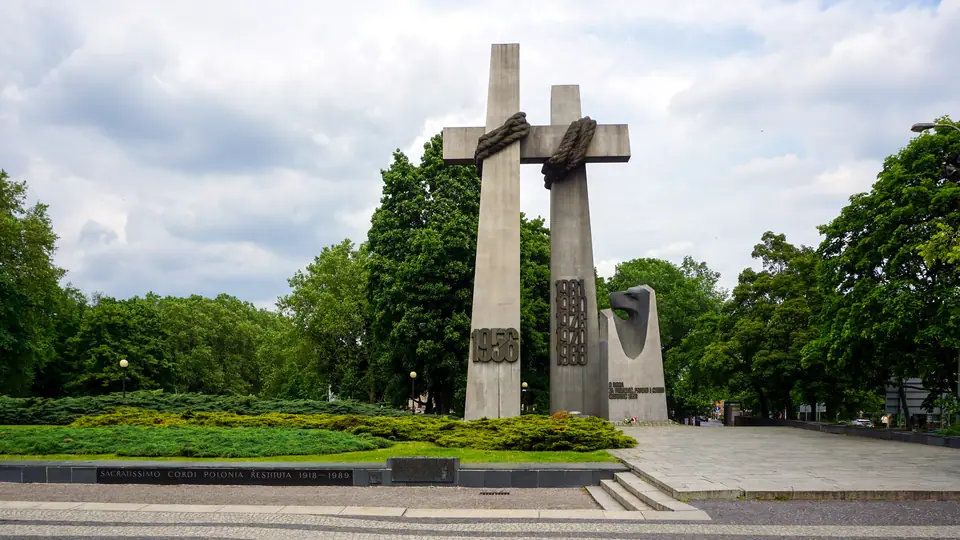
Eleven years after wartime ruins settled, Poznań led Poland's first mass workers' revolt against communist authority. On 28 June 1956, factory workers from the Hipolit Cegielski locomotive plant marched downtown demanding bread and freedom. Security forces opened fire, leaving 67 dead under official counts. Twenty-five years later, on 28 June 1981, striking Cegielski workers raised twin 21-metre steel crosses at Plac Adama Mickiewicza. Engraved years including 1981 later honoured successive Polish protest movements.
Reading Poznań Between the Warta and Cybina Valleys
Understanding these river and defensive borders makes daily sightseeing smooth without taxis. Walking east from Plac Wolności drops down into the historic 1253 grid before crossing the Warta and Cybina. Over the bridges lie quiet church lanes on Ostrów Tumski and residential Śródka. Continuing east along the dammed Cybina basin leads directly out to 1952 Lake Malta and wooded Biała Góra.
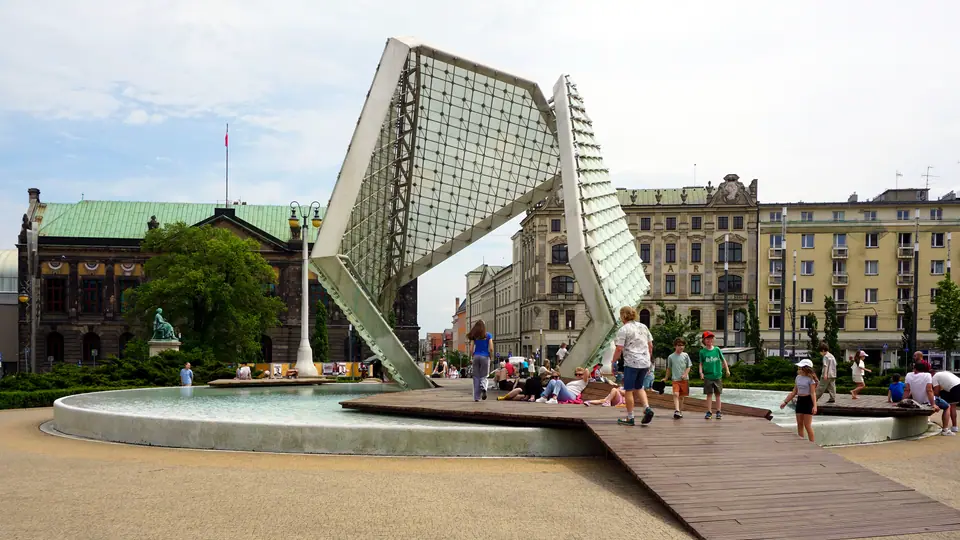
Heading north instead climbs gently away from medieval alleys toward the grassy earthworks of Park Cytadela. Public universities led by Adam Mickiewicz University keep coffee roasters, trams and evening kitchens busy throughout the academic year. Trade conventions at the historic fairgrounds established in the 1920s also draw brisk weekday crowds into western districts. Arriving by train from Berlin or Wrocław drops travellers right beside the old Prussian ring avenues.
National Currency, Sunday Trading and Schengen Entry Rules
Daily logistics follow clear national rules across Wielkopolska. Poland uses its own national currency rather than the euro. Contactless Visa and Mastercard cards plus phone wallets work smoothly from bakery counters to museums. Municipal tap water meets European drinking standards. Wall sockets follow European Type E at 230 volts and 50 hertz, fitting two-pin Europlugs directly while needing adapters for British or North American plugs.
Polish Sunday trading laws close major supermarkets and shopping centres on most Sundays except scheduled niedziele handlowe dates. Smaller corner convenience shops, bakeries and station kiosks stay open for essentials and pastries. Non-EU visitors under Schengen rules may stay up to 90 days in any 180-day period. Passports must be issued less than 10 years before arrival and stay valid at least 3 months beyond departure. British-Polish dual nationals must enter and leave Poland on Polish documents.
Where it is
- 1Poznań
- Poznań-Ławica Airport (POZ) · about 8 km from Poznań in a straight line
- Directions in Google Maps
Stations and taxi ranks: OpenStreetMap. Airports: OurAirports. Distances are in a straight line.
Traveller tips
Real advice from people who have been to Poznań. Every tip is read by our team before it goes live.
No tips yet. Been here? Yours could be the first.
Thank you! Your tip will appear here after a quick review.
More in Poznań
Continue exploring Poznań with related neighbourhood, food, and planning guides