


























Catherine Palace, the Amber Room and Pavlovsk Day Trip Guide
Visit the blue-and-white Catherine Palace and reconstructed Amber Room in Tsarskoye Selo (Pushkin), plus the neoclassical estate of Pavlovsk.
Twenty-four kilometres south of central Saint Petersburg lies the town of Pushkin, known throughout the imperial era as Tsarskoye Selo (the Tsar's Village) and renamed in 1937 to mark the centenary of the death of poet Alexander Pushkin, who studied at the Imperial Lyceum adjoining the palace from 1811 to 1817. Paired with the neighbouring estate of Pavlovsk four kilometres further south-east, these two suburban residences showcase the transition from the extravagant Elizabethan Baroque of Bartolomeo Rastrelli to the refined Scottish-Russian Neoclassicism of Charles Cameron.
The Catherine Palace and the Great Hall
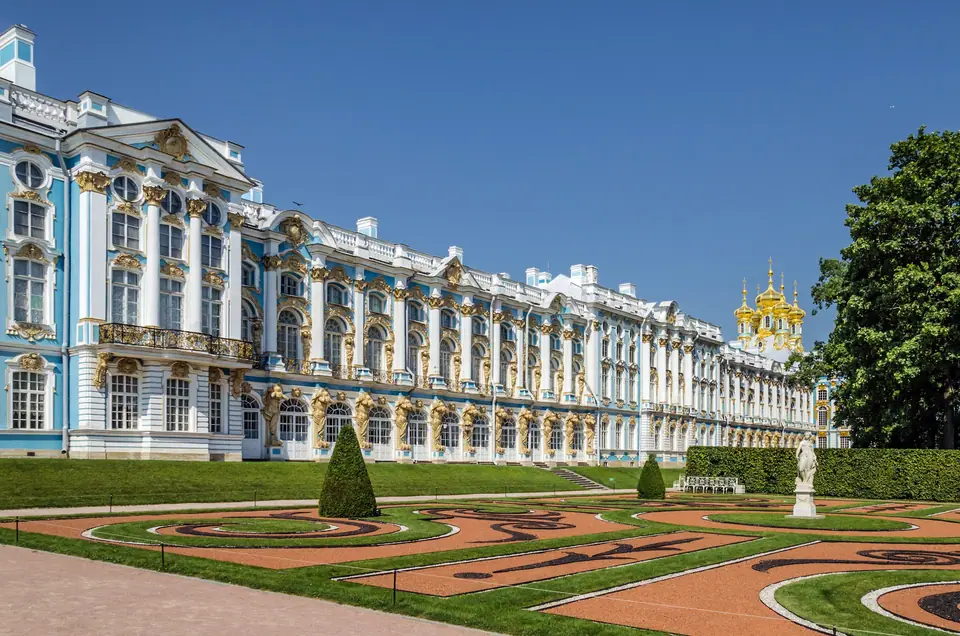
What began in 1717 as a modest stone manor house for Peter the Great's wife, Empress Catherine I, was transformed between 1752 and 1756 when their daughter Empress Elizabeth Petrovna ordered Bartolomeo Rastrelli to rebuild the palace on a monumental scale. Stretching more than 300 metres in length, its sky-blue stucco facade is articulated by white columns, gilded caryatids, and five golden onion domes crowning the palace chapel. Inside, Rastrelli's Golden Enfilade opens with the Great Hall (Light Gallery), a ballroom of more than 800 square metres lit by tall arched windows on both sides and covered by a ceiling fresco, The Triumph of Russia, above intricate gilded woodcarvings.
History and Reconstruction of the Amber Room
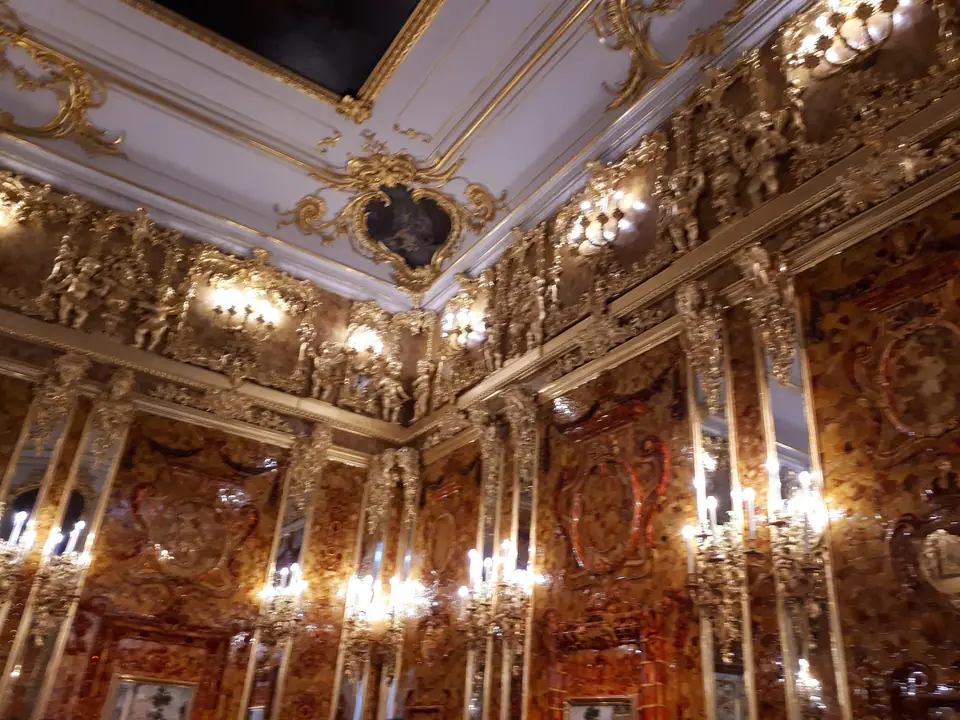
A few doors down the Golden Enfilade lies the Amber Room, originally commissioned in 1701 by King Frederick I of Prussia for Charlottenburg Palace from baroque sculptor Andreas Schlüter and Danish amber master Gottfried Wolfram. In 1716, Prussia's King Frederick William I presented the amber panels to Peter the Great to seal a diplomatic alliance against Sweden. Installed at Tsarskoye Selo in 1755 by Rastrelli and expanded with Florentine stone mosaics and gilded rococo carvings to cover a ten-by-ten-metre chamber, the room was dismantled by German Wehrmacht troops in autumn 1941 and shipped to Königsberg Castle, where it disappeared before the end of World War II. Beginning in 1979, Russian craftsmen at the Tsarskoye Selo Amber Workshop spent twenty-four years carving more than six tonnes of Kaliningrad Baltic amber to reconstruct the chamber, which reopened in May 2003 for Saint Petersburg's 300th anniversary.
Catherine Park and the Cameron Gallery
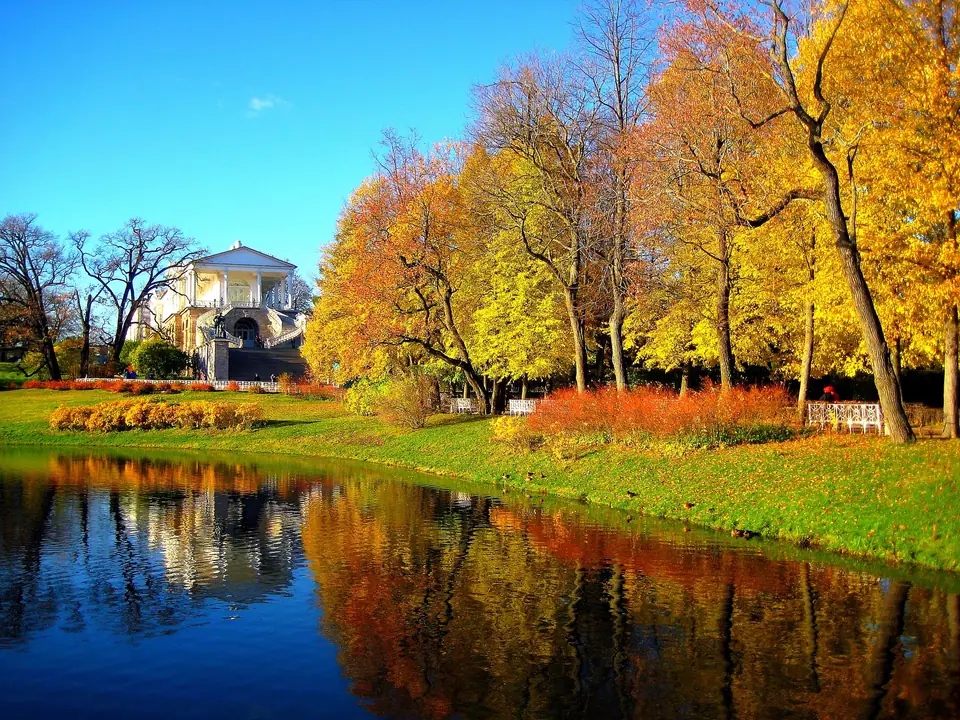
Disliking the ornate Baroque taste of her predecessor Elizabeth, Empress Catherine the Great hired Scottish architect Charles Cameron in 1779 to add neoclassical apartments and garden pavilions around the Tsarskoye Selo Lake. Built between 1784 and 1787 beside the main palace, the Cameron Gallery rises on a rusticated stone ground floor topped by an open promenade of white Ionic columns housing bronze busts of classical philosophers and generals. Paths wind down a gentle ramp into Catherine Park past the Blue-and-White Pavilion Hermitage (1749), the Chesma Column rising directly out of the lake to commemorate the 1770 naval victory, the Marble Bridge carved from Siberian marble, and the Gothic Admiralty on the water's edge.
Pavlovsk Palace and the Slavyanka Valley
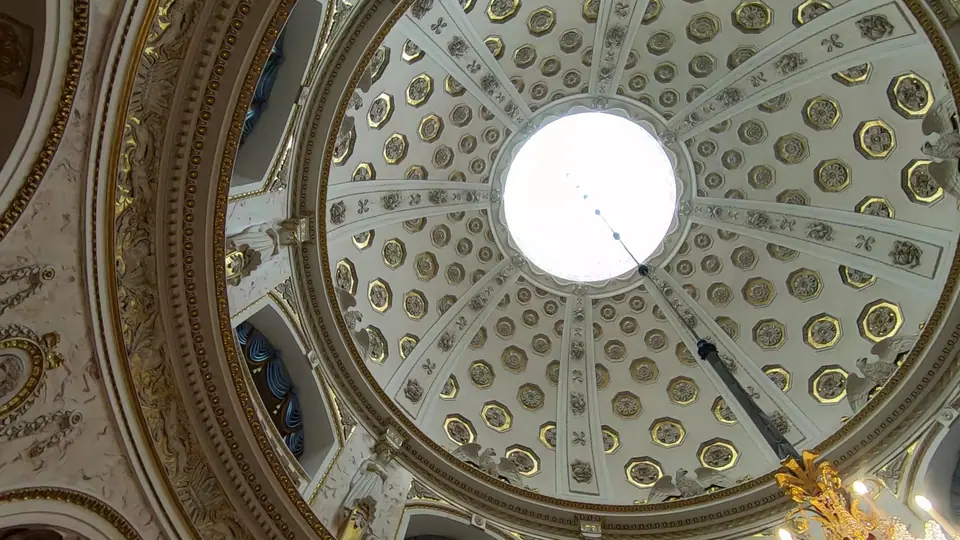
Four kilometres south-east of Pushkin, Catherine the Great gifted forested hunting grounds along the Slavyanka River in 1777 to her son Grand Duke Paul Petrovich (later Emperor Paul I) and his wife Maria Feodorovna. Between 1782 and 1786, Charles Cameron erected the yellow-and-white Palladian central block of Pavlovsk Palace, crowned by a flat dome supported by 64 white columns and flanked by curved colonnaded wings later expanded by Vincenzo Brenna, Andrey Voronikhin, and Carlo Rossi. Its state rooms display Sèvres porcelain, Gobelin tapestries, and antique Roman marbles acquired during the couple's 1781 to 1782 European tour, while the surrounding 600-hectare Pavlovsk Park is one of Europe's largest English landscape gardens. Suburban trains from Vitebsky Railway Station in central Saint Petersburg reach Tsarskoye Selo Station (Pushkin) directly from the city centre, making it easy to combine both estates or alternate with Peterhof on a multi-day visit.
Traveller tips
Real advice from people who have been to Catherine Palace, the Amber Room and Pavlovsk Day Trip. Every tip is read by our team before it goes live.
No tips yet. Been here? Yours could be the first.
Thank you! Your tip will appear here after a quick review.
More in Saint Petersburg
Continue exploring Saint Petersburg with related neighbourhood, food, and planning guides
Mariinsky Theatre, New Holland Island and Vasilyevsky Island Guide
Saint Petersburg, Russia
What to Eat in Saint Petersburg: Beef Stroganoff, Blini and Pyshki
Saint Petersburg, Russia
How to Get to Saint Petersburg: Pulkovo Airport, Trains and Metro
Saint Petersburg, Russia
Where to Stay in Saint Petersburg: Best Districts and Canal Quarters
Saint Petersburg, Russia
