


























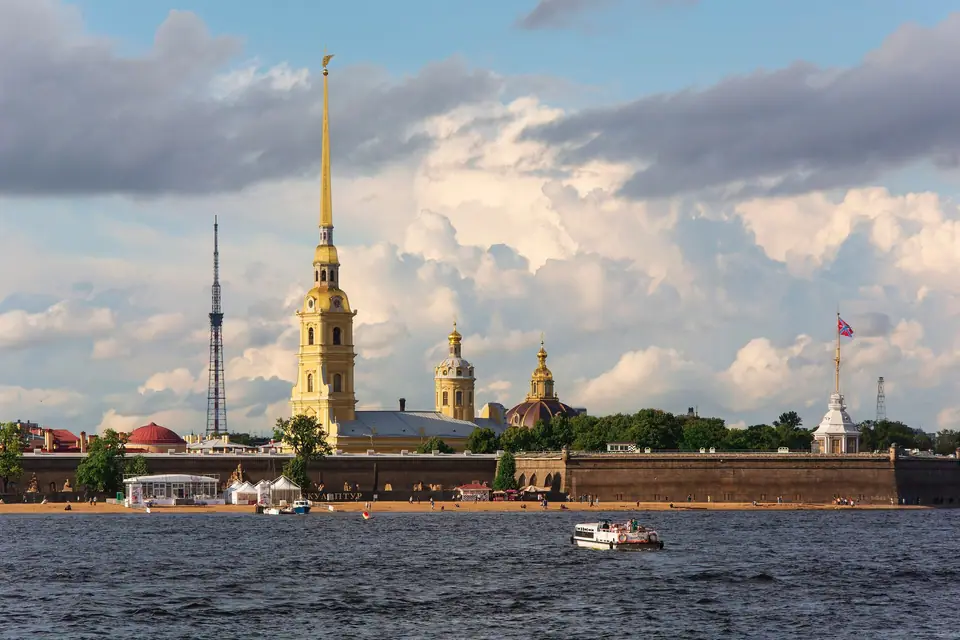
Peter and Paul Fortress, Cruiser Aurora and Petrogradsky Island
Visit the 1703 birthplace of Saint Petersburg on Hare Island, the imperial tombs of Peter and Paul Cathedral, the Mosque, and the Cruiser Aurora.
Across the widest stretch of the Neva River from the Winter Palace lies Hare Island (Zayachy Ostrov), the low sandy islet where Tsar Peter the Great laid the foundation of the Peter and Paul Fortress on 27 May 1703 during the Great Northern War against Sweden. Although the citadel's six bastions never fired a shot against a foreign fleet, the fortress became the symbolic birthplace of Saint Petersburg, the burial place of the Romanov emperors, and the Tsarist empire's high-security political prison.
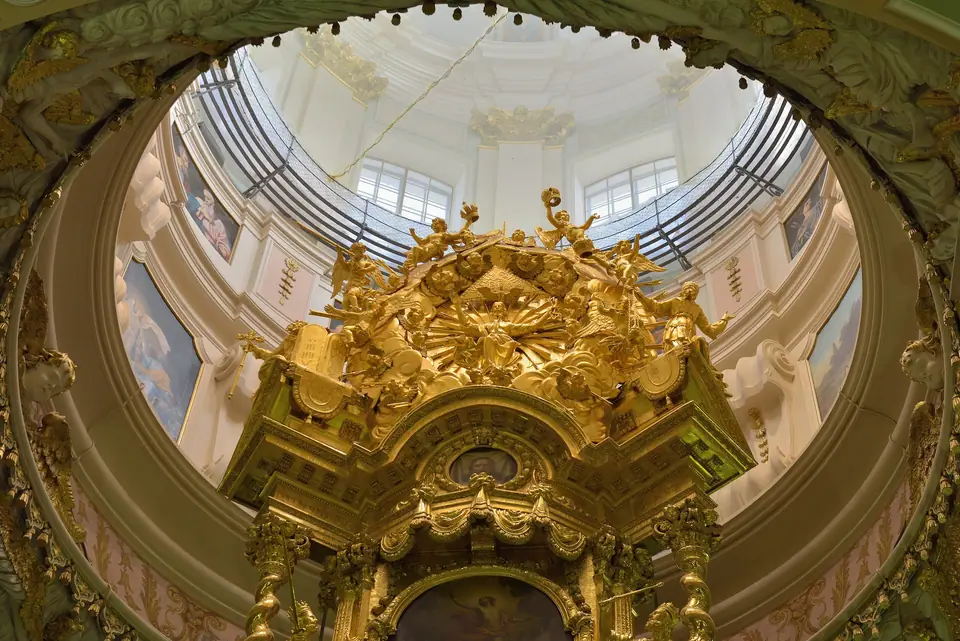
Hare Island and Saints Peter and Paul Cathedral
Entered from Petrogradsky Island across the wooden Ioannovsky Bridge and through Domenico Trezzini's 1718 Petrovsky Triumphal Gate, the fortress walls were rebuilt in brick and faced with granite along the Neva between 1706 and 1740. At the centre of the cobbled square rises Saints Peter and Paul Cathedral, built by Domenico Trezzini between 1712 and 1733 in early Petrine Baroque style. Unlike traditional five-domed Russian churches, its rectangular hall is crowned by a slender gilded bell-tower spire rising 122.5 metres into the sky and topped by a 3.2-metre golden angel holding a cross. Inside, beneath crystal chandeliers and a gilded carved wooden iconostasis made in Moscow between 1722 and 1726, white Carrara marble sarcophagi hold the remains of almost every Russian emperor and empress from Peter the Great (who died in 1725) to Alexander III, with green jasper and dark rhodonite tombs marking Alexander II and Empress Maria Alexandrovna. In 1998, the remains of Emperor Nicholas II, Empress Alexandra, and their household were interred in the adjacent St Catherine Chapel.
Trubetskoy Bastion and the Fortress Midday Cannon
Within the western Trubetskoy Bastion, rebuilt in 1872 as an investigation prison, solitary confinement cells once held political prisoners including Maxim Gorky, Leon Trotsky, and Lenin's elder brother Alexander Ulyanov, while the writer Fyodor Dostoevsky had been held earlier in the fortress's Alekseyevsky Ravelin. Every day at noon, an artillery gun fires a blank salute from the Naryshkin Bastion overlooking the Neva River, a daily tradition since 1873, interrupted only between 1934 and 1957. Outside the southern wall, locals gather along the sandy beach facing the Winter Palace.
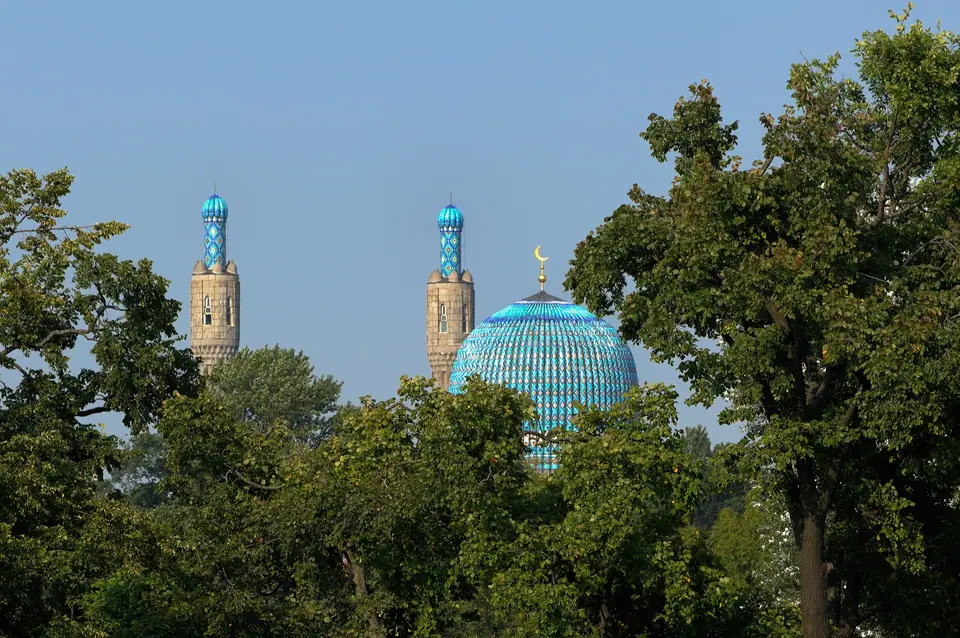
Petrogradsky Island and the Saint Petersburg Mosque
Crossing the Kronverksky Strait north of Hare Island brings visitors onto Petrogradsky Island, where Peter the Great's original 1703 Wooden Cabin (preserved inside a protective brick pavilion on Petrovskaya Embankment) stands minutes from two striking early twentieth-century landmarks. Just east of Gorkovskaya Metro Station rises the Saint Petersburg Mosque, designed by architects Nikolay Vasilyev, Alexander von Hohen, and Tatar engineer Stepan Krichinsky under the patronage of the Emir of Bukhara. Opened for worship in 1913 to mark the tercentenary of the Romanov dynasty and completed in 1920, its grey granite Nordic Modern walls contrast with a 39-metre turquoise-majolica dome and twin 48-metre minarets modelled on the fifteenth-century Gur-e-Amir mausoleum in Samarkand.
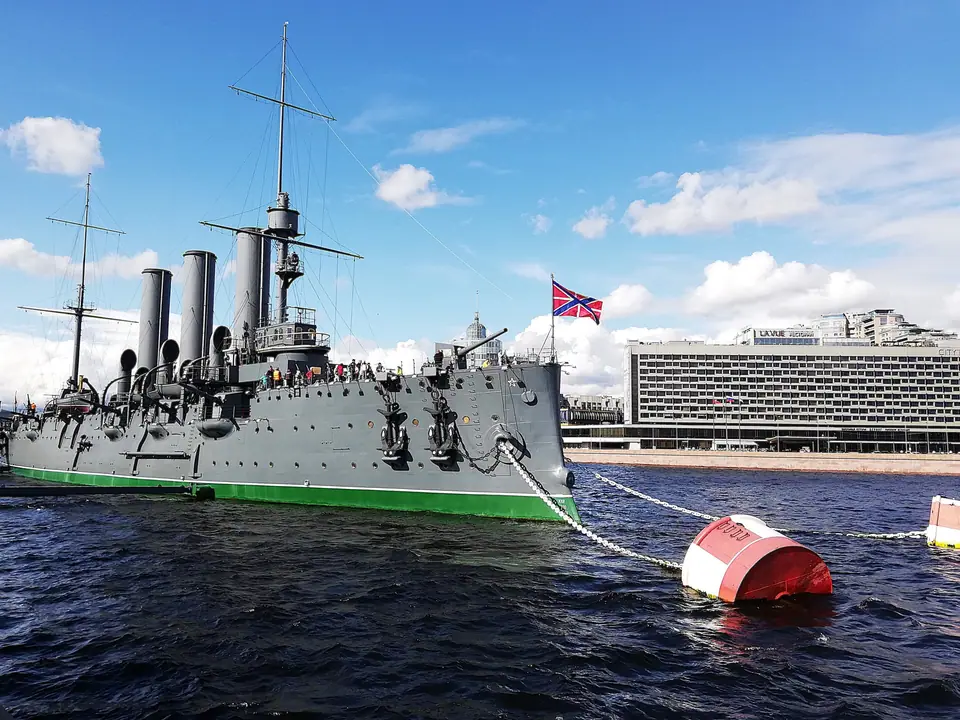
The Cruiser Aurora on the Bolshaya Nevka
Further east, moored on the Petrogradskaya Embankment of the Bolshaya Nevka, sits the protected cruiser Aurora, launched at the New Admiralty Shipyard in May 1900. After surviving the 1905 Battle of Tsushima in the Russo-Japanese War, the ship's forward six-inch gun fired the blank signal shot on the night of 25 October (7 November New Style) 1917 that initiated the Bolshevik assault on the Winter Palace. Today the vessel operates as a branch of the Central Naval Museum; pair a morning on Hare Island and Petrogradsky Island with an afternoon visit to Vasilyevsky Island or Senate Square.
Traveller tips
Real advice from people who have been to Peter and Paul Fortress, Cruiser Aurora and Petrogradsky Island. Every tip is read by our team before it goes live.
No tips yet. Been here? Yours could be the first.
Thank you! Your tip will appear here after a quick review.
More in Saint Petersburg
Continue exploring Saint Petersburg with related neighbourhood, food, and planning guides
Best Time to Visit Saint Petersburg: White Nights, Weather and Seasons
Saint Petersburg, Russia
Saint Petersburg 3-Day Itinerary: Palaces, Islands and Imperial Estates
Saint Petersburg, Russia
Saint Petersburg: Layout, Islands and Planning
Saint Petersburg, Russia
Things to Do in Saint Petersburg: Top Palaces, Cathedrals and Canals
Saint Petersburg, Russia
