


























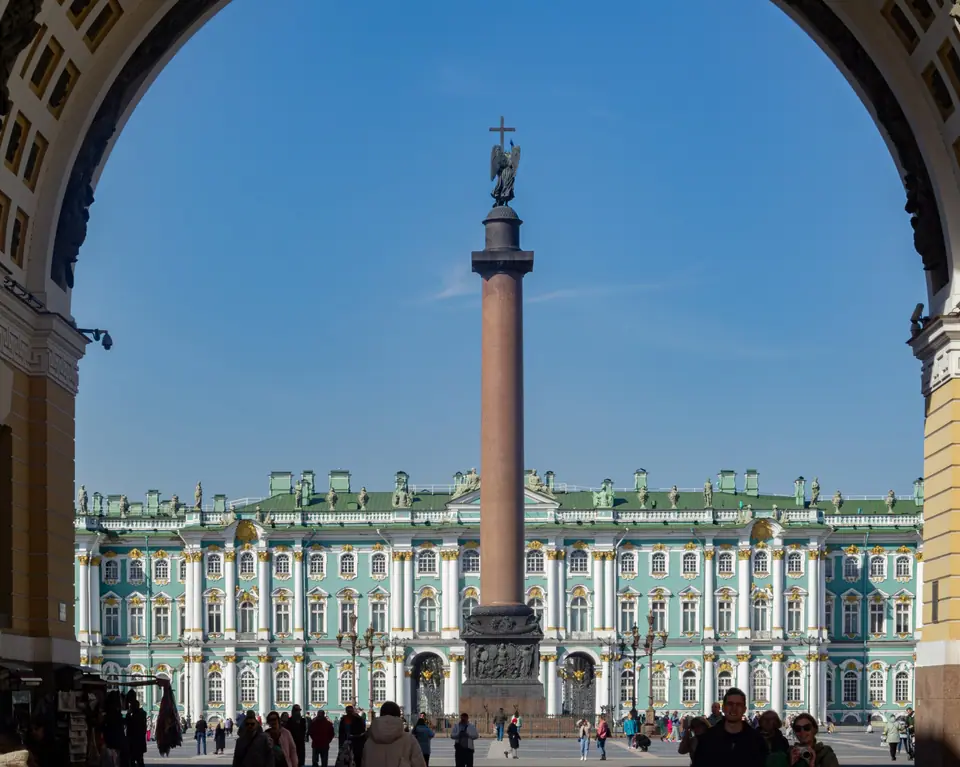
State Hermitage Museum and Palace Square: Buildings and Collections
Navigate the five riverside buildings of the State Hermitage Museum, the Winter Palace state rooms, and the General Staff Building on Palace Square.
Founded in 1764 when Empress Catherine the Great purchased a collection of more than 225 European paintings assembled by Berlin merchant Johann Ernst Gotzkowsky, the State Hermitage Museum has grown into one of the largest art and cultural museums in the world. Spanning over three million catalogued items across six interconnected buildings along the Palace Embankment and Palace Square, the museum requires a focused route to appreciate without exhaustion.
The Five Embankment Buildings Explained
Visitors entering through the main courtyard of the Winter Palace pass through four linked riverfront structures built for the Russian emperors between 1754 and 1852, joined further east by Giacomo Quarenghi's 1787 Hermitage Theatre:
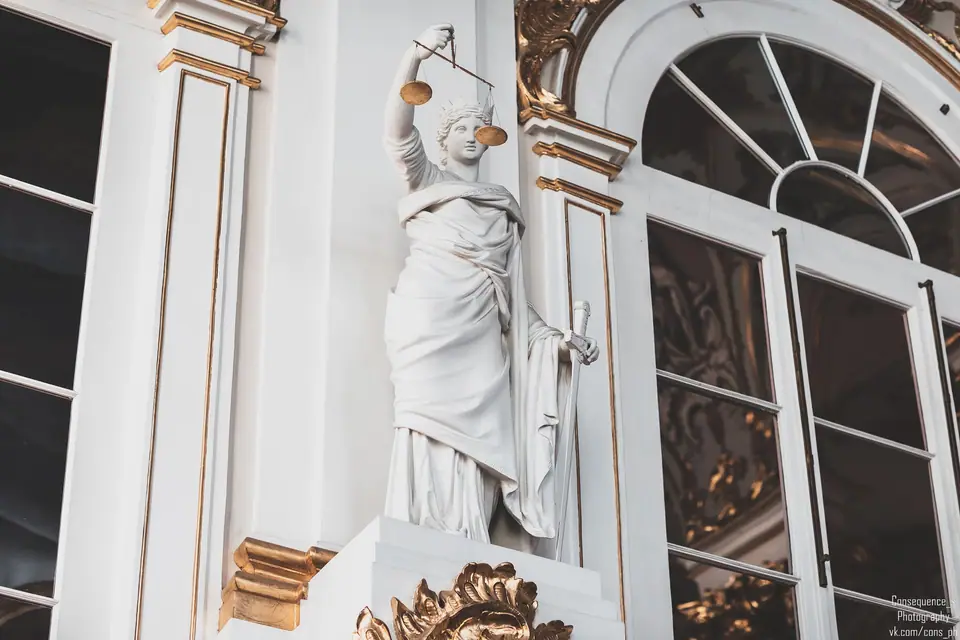
- The Winter Palace (1754 to 1762): Designed by Francesco Bartolomeo Rastrelli in Elizabethan Baroque style for Empress Elizabeth Petrovna and reconstructed after a devastating three-day fire in December 1837, the palace contains the grand imperial reception halls and the white marble Jordan Staircase.
- The Small Hermitage (1764 to 1775): Designed by Jean-Baptiste Vallin de la Mothe and Yury Felten as Catherine the Great's private retreat, it houses the Pavilion Hall and the famous eighteenth-century golden Peacock Clock made by London jeweller James Cox.
- The Old (Great) Hermitage (1771 to 1787): Built by Yury Felten along the Neva embankment to hold the rapidly expanding imperial painting collection, its rooms display Italian Renaissance masterpieces including Leonardo da Vinci's Benois Madonna and Litta Madonna.
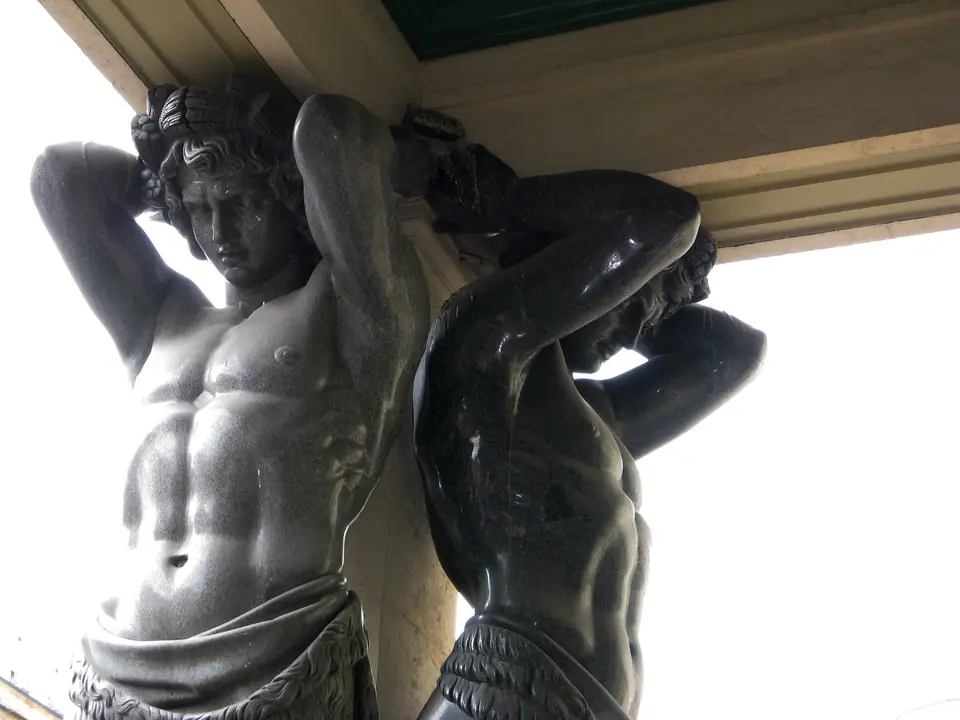
- The New Hermitage (1842 to 1851): Designed by Bavarian architect Leo von Klenze for Emperor Nicholas I as a purpose-built public museum for the imperial art collections (opened on 5 February 1852), its Millionnaya Street portico is supported by ten giant grey granite Atlantes carved by Alexander Terebenev.
State Rooms and Old Master Galleries
Begin on the second floor of the Winter Palace by climbing the Jordan Staircase, where ambassadors once processed on Epiphany when the Neva ice was blessed. Continue through the Field Marshals' Hall to the Peter the Great Throne Room (Small Throne Room), lined with crimson velvet and silver eagles, the Military Gallery of 1812 containing 332 portraits of Russian generals painted by George Dawe, and Saint George's Hall (Great Throne Room). Adjacent galleries in the Old and New Hermitage present Raphael's Loggias, two paintings by Leonardo da Vinci, Titian's late canvases, an entire gallery of twenty-four works by Rembrandt including The Return of the Prodigal Son and Danaë, and large collections of works by Peter Paul Rubens and Anthony van Dyck.
The General Staff Building and Impressionists
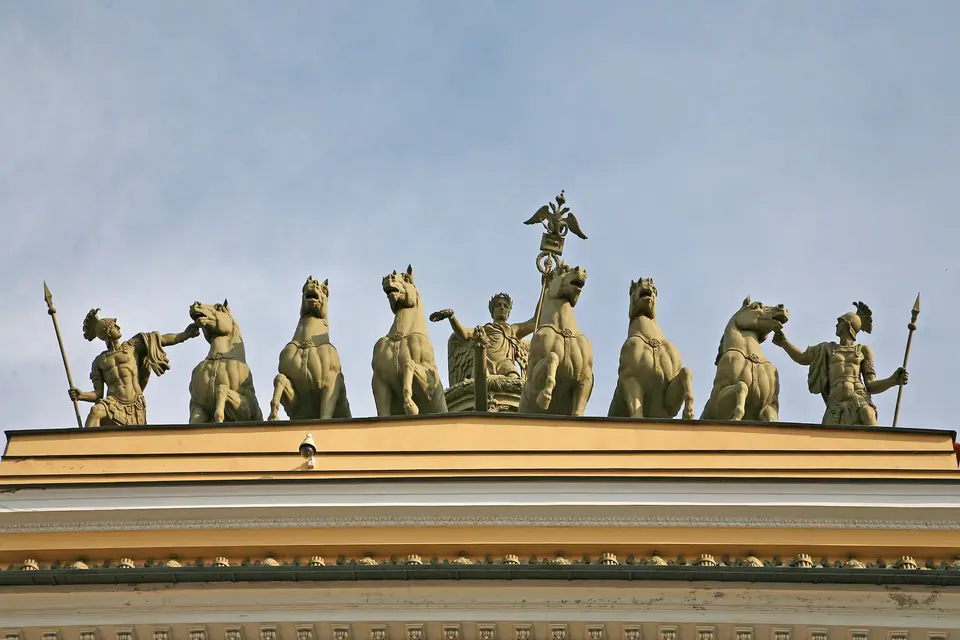
Across Palace Square from the Winter Palace stands Carlo Rossi's neoclassical General Staff Building, completed in 1829 with a 580-metre curved facade pierced by a double triumphal arch commemorating Russia's victory over Napoleon in 1812. Since 2014, the Eastern Wing of the General Staff Building has housed the Hermitage's nineteenth- and twentieth-century European collections, featuring the former Sergei Shchukin and Ivan Morozov holdings of Claude Monet, Paul Cézanne, Vincent van Gogh, Paul Gauguin, Henri Matisse's Dance and Music, and early Cubist paintings by Pablo Picasso.
Practical Visiting Strategy
Book timed entry online on the official State Hermitage website and decide in advance whether to dedicate your ticket to the Main Museum Complex (Winter Palace and linked Hermitage buildings) or the General Staff Building, or split them across two days on a 3-day Saint Petersburg itinerary. Pair your morning museum visit with an afternoon walk to nearby Saint Isaac's Cathedral and Kazan Cathedral.
Traveller tips
Real advice from people who have been to State Hermitage Museum and Palace Square: Buildings and Collections. Every tip is read by our team before it goes live.
No tips yet. Been here? Yours could be the first.
Thank you! Your tip will appear here after a quick review.
More in Saint Petersburg
Continue exploring Saint Petersburg with related neighbourhood, food, and planning guides
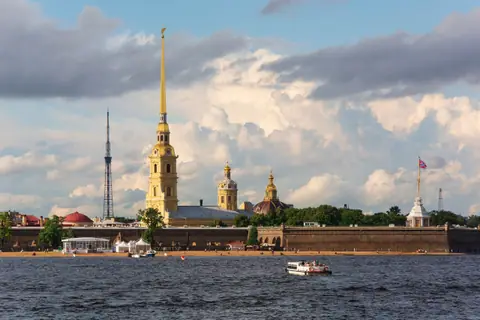
Peter and Paul Fortress, Cruiser Aurora and Petrogradsky Island
Saint Petersburg, Russia
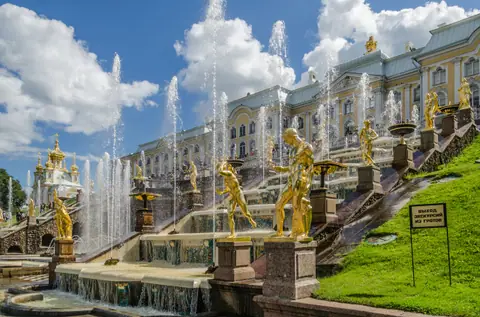
Peterhof Palace and Fountains: Grand Cascade and Lower Gardens
Saint Petersburg, Russia
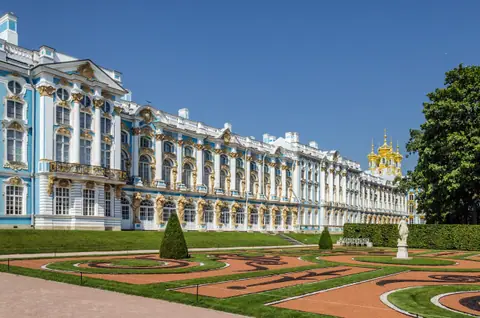
Catherine Palace, the Amber Room and Pavlovsk Day Trip Guide
Saint Petersburg, Russia
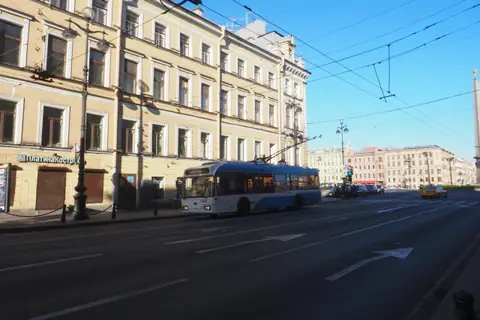
Nevsky Prospekt and the Canals: Singer House, Bridges and Palaces
Saint Petersburg, Russia
