


























Mariinsky Theatre, New Holland Island and Vasilyevsky Island Guide
Explore western Saint Petersburg: ballet at the Mariinsky Theatre, red-brick New Holland Island, the Strelka, Kunstkamera, and Menshikov Palace.
West of Saint Isaac's Cathedral and across the Palace and Blagoveshchensky bridges over the Bolshaya Neva, western Saint Petersburg combines the imperial capital's premier opera and ballet stage, an eighteenth-century naval shipyard island transformed into a public park, and the historic scientific institutions of Vasilyevsky Island.
The Mariinsky Theatre Complex on Theatre Square
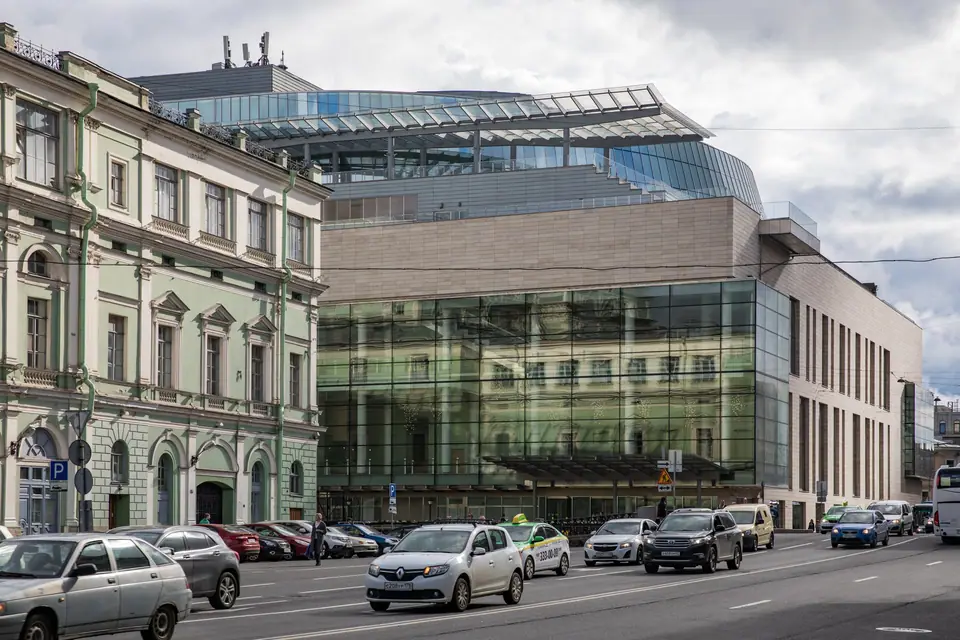
Opened on 2 October 1860 with a performance of Mikhail Glinka's opera A Life for the Tsar, the Imperial Mariinsky Theatre on Theatre Square (Teatralnaya Ploshchad) was designed by architect Alberto Cavos and named in honour of Empress Maria Alexandrovna, consort of Emperor Alexander II. Inside its sea-green facade, a five-tier horseshoe auditorium upholstered in royal blue velvet and gilded stucco saw the world premieres of Modest Mussorgsky's Boris Godunov (1874) and Pyotr Ilyich Tchaikovsky's ballets The Sleeping Beauty (1890) and The Nutcracker (1892) under choreographer Marius Petipa, as well as the early careers of Anna Pavlova, Vaslav Nijinsky, and Rudolf Nureyev. Known during the Soviet era as the Kirov Theatre, it is now joined across the Kryukov Canal by the modern limestone-and-glass Mariinsky II opera house (opened in May 2013) and the Mariinsky Concert Hall (2006). A short walk south along the Kryukov Canal leads to the blue-and-white two-storey Baroque Saint Nicholas Naval Cathedral (1753 to 1762), built by Savva Chevakinsky with a detached four-tier bell tower.
New Holland Island and the 1765 Vallin de la Mothe Arch
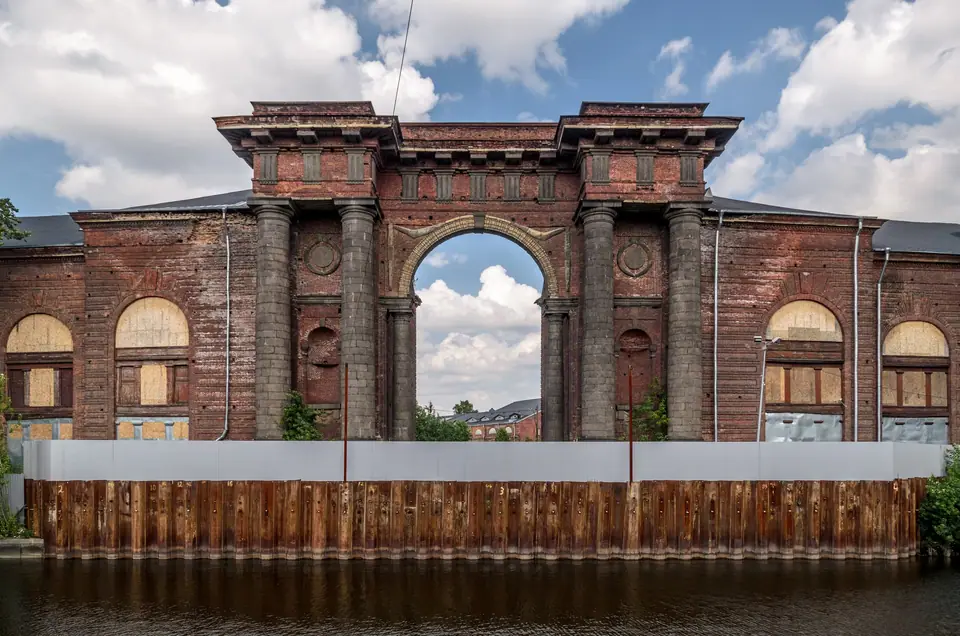
Just north of Theatre Square between the Moika River and the Kryukov and Admiralty canals lies New Holland Island (Novaya Gollandiya), a triangular artificial island created in 1719 when Peter the Great dug two canals to store and season oak timber for the Admiralty shipyards. Between 1765 and 1780, architect Jean-Baptiste Vallin de la Mothe replaced the wooden sheds with monumental red-brick warehouses and a 23-metre classical brick-and-granite arch spanning the inner canal basin. In 1829, military architect Alexander Staubert added the circular three-storey naval prison known as the Bottle House (Dom-Butylka). Opened to the public as a landscaped cultural park in 2016, the island's brick pavilions and central lawn host open-air concerts, restaurants, and winter ice skating.
Vasilyevsky Island and the Strelka Rostral Columns
Crossing the Palace Bridge from the Winter Palace brings visitors to the Strelka, the eastern cape of Vasilyevsky Island where the Neva splits into the Bolshaya Neva and Malaya Neva. Designed between 1805 and 1810 by French architect Jean-François Thomas de Thomon, the ensemble centres on the temple-like Old Saint Petersburg Stock Exchange (Birzha), encircled by 44 Doric columns and flanked by two 32-metre red Rostral Columns studded with bronze ship prows. Seated stone figures at the base of the columns personify Russia's four major waterways: the Volga, the Dnieper, the Neva, and the Volkhov.
The Kunstkamera and the Menshikov Palace
Walking west from the Strelka along Universitetskaya Embankment reveals the oldest surviving masonry buildings on Vasilyevsky Island:
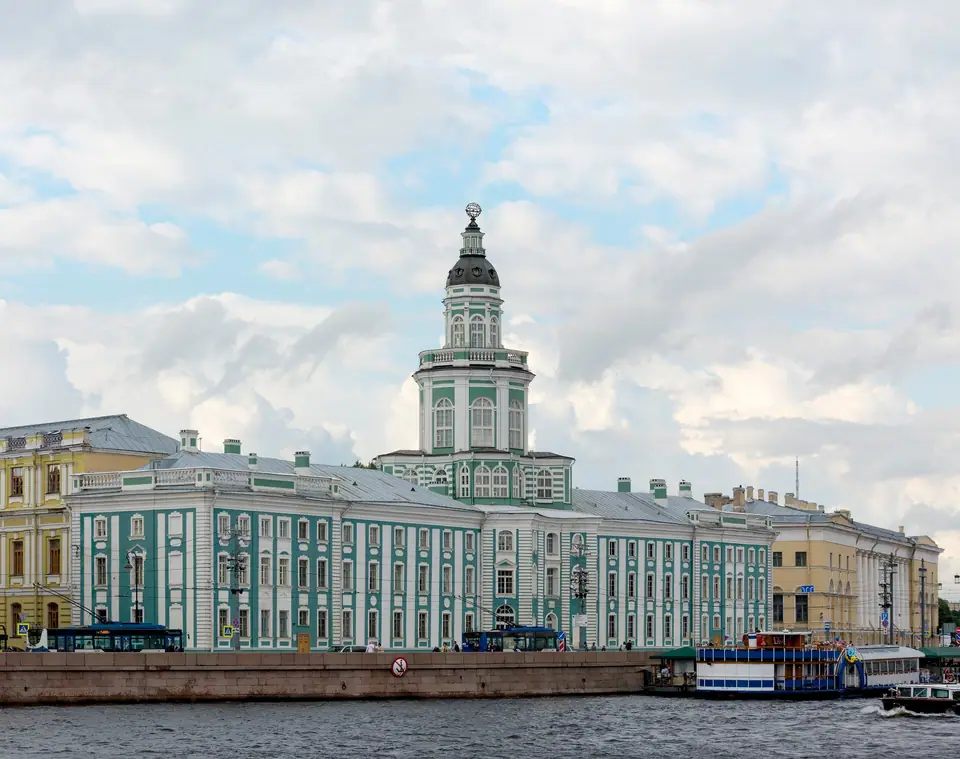
- The Kunstkamera (1718 to 1727): Built to a Petrine Baroque design by Georg Johann Mattarnovi with a stepped central observatory tower crowned by an armillary sphere, Russia's first public museum houses the Peter the Great Museum of Anthropology and Ethnography, alongside the 1783 neoclassical Russian Academy of Sciences next door.
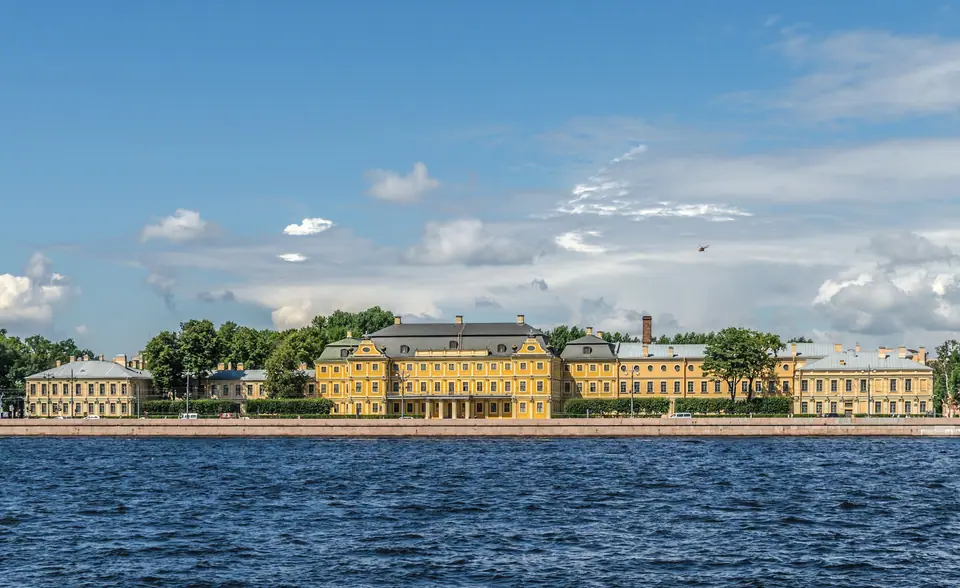
- The Menshikov Palace (founded 1710): Built by architects Giovanni Maria Fontana and Gottfried Johann Schädel for Peter the Great's close companion and Saint Petersburg's first governor general, Prince Alexander Menshikov, this yellow-and-white residence was the first large stone palace in the city. Operating today as a branch of the State Hermitage Museum, its interiors preserve Dutch Delft blue-and-white ceramic tile rooms and the Walnut Study; connect easily to the rest of the city via Vasileostrovskaya or Sportivnaya stations on the Saint Petersburg Metro.
Traveller tips
Real advice from people who have been to Mariinsky Theatre, New Holland Island and Vasilyevsky Island. Every tip is read by our team before it goes live.
No tips yet. Been here? Yours could be the first.
Thank you! Your tip will appear here after a quick review.
More in Saint Petersburg
Continue exploring Saint Petersburg with related neighbourhood, food, and planning guides
State Hermitage Museum and Palace Square: Buildings and Collections
Saint Petersburg, Russia
Savior on Spilled Blood, Saint Isaac's and Kazan Cathedral Guide
Saint Petersburg, Russia
Peter and Paul Fortress, Cruiser Aurora and Petrogradsky Island
Saint Petersburg, Russia
Peterhof Palace and Fountains: Grand Cascade and Lower Gardens
Saint Petersburg, Russia
