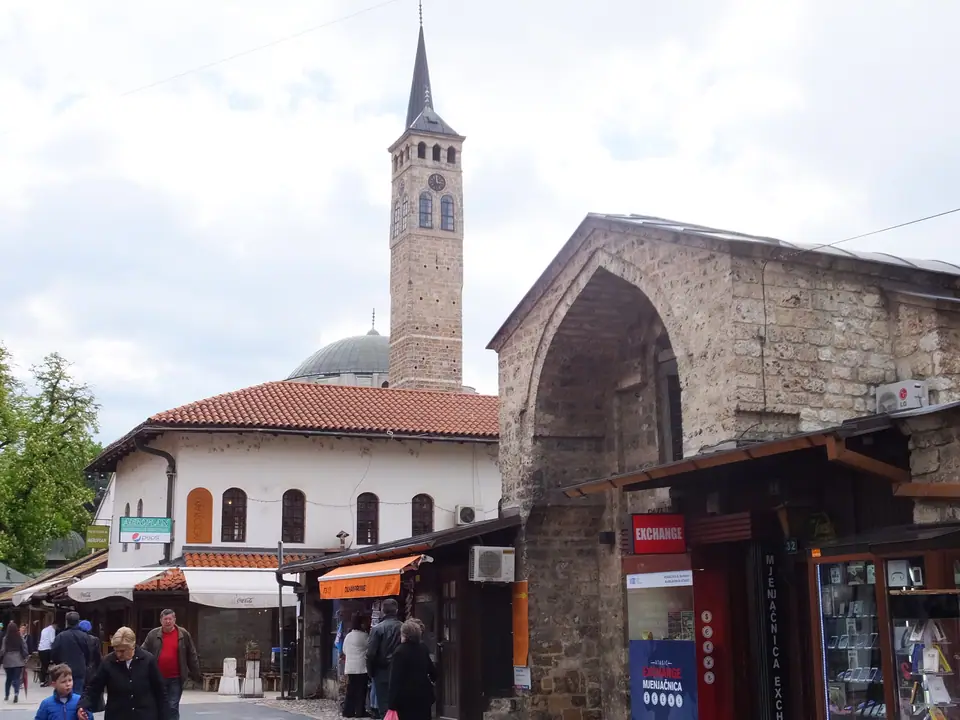
Photo: lienyuan lee · CC BY 3.0
Baščaršija and the Gazi Husrev-beg Mosque
Walking the Ottoman craft square from Sebilj fountain through Kazandziluk, Morica Han, Brusa Bezistan and the 1531 mosque courtyard.
Centuries before 1878 Habsburg avenues stretched westward, civic and commercial trade across Sarajevo revolved inside Bascarsija. Rooted around an earlier medieval clearing when Ottoman governor Isa-Beg Ishakovic founded the town in 1461 and built a merchant inn in 1462, the bazaar expanded around charitable vakuf endowments. Those trusts permanently funded stone markets, inns, schools, bathhouses and mosques inside one tight pedestrian core.
Disasters tested the bazaar repeatedly over 57 turbulent years in the seventeenth century. An earthquake damaged structures in 1640, severe fires swept timber rows in 1644 and 1656, and Austrian troops led by Prince Eugene of Savoy burned most of Sarajevo in 1697. Each time, local guilds raised low timber shopfronts along identical plots, preserving an Ottoman street footprint still busy with working trades today.
Walking the bazaar guilds from Sebilj outward
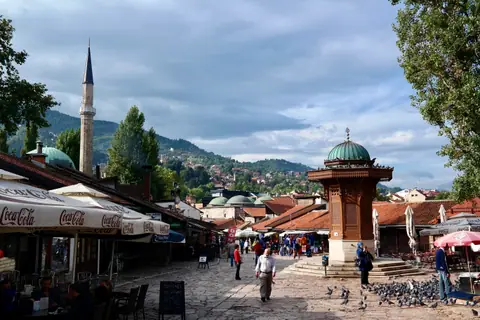
- Sebilj Square: Start beside the octagonal wooden fountain rebuilt in 1891 by Alexander Wittek. It replaced Mehmed Pasha Kukavica's 1753 pavilion lost in an 1852 fire.
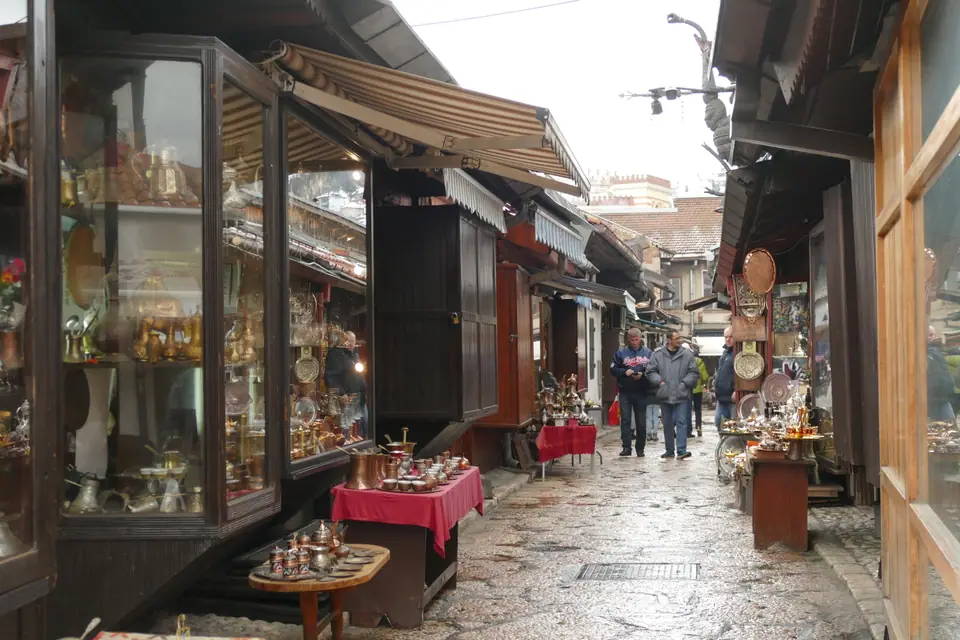
- Kazandziluk (Coppersmith Street): Step one alley south into Sarajevo's rhythmic metalworking street. Masters still hammer tin-lined copper dzezvas, serving trays and pierced lamps over iron stakes.
- Brusa Bezistan and Gazi Husrev-beg Bezistan: Cross west to compare two surviving Ottoman stone trade halls. Six-domed Brusa Bezistan was ordered in 1551 by Grand Vizier Rustem Pasha for Bursa silk and now hosts Museum of Sarajevo displays behind thick walls.
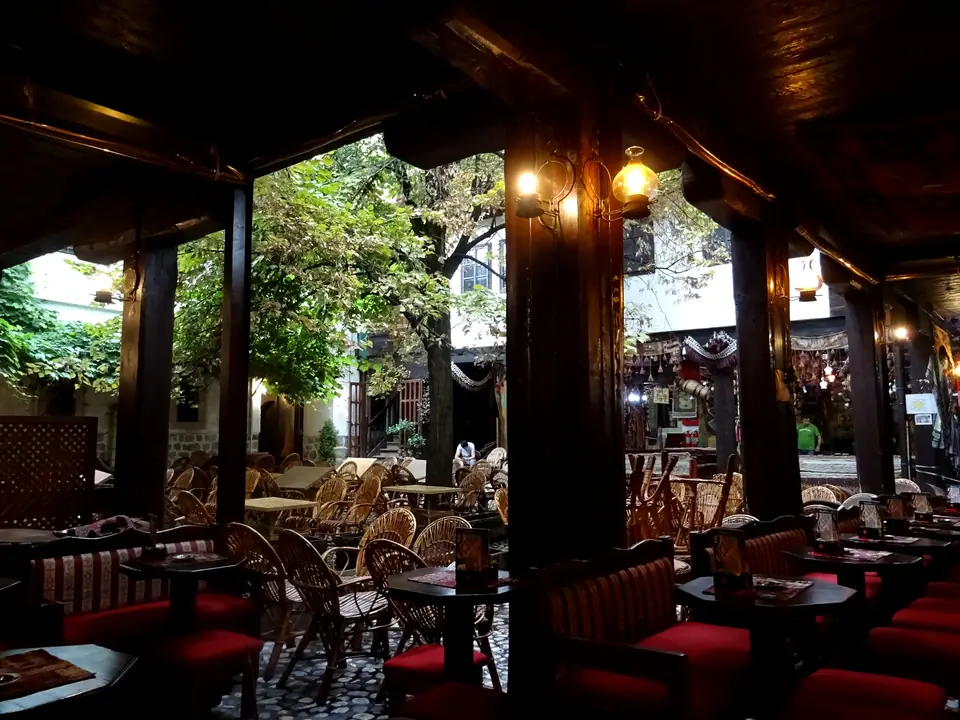
- Morica Han: Enter deep arched stonework off Saraci street into Sarajevo's sole surviving traditional Ottoman merchant caravanserai. Built in 1551 under Husrev-beg's endowment and rebuilt after 1697, its wooden upper galleries overlook rug shops and shaded café tables.
- Gazi Husrev-beg Mosque and Sahat-kula: Finish inside the broad stone courtyard holding Bosnia's foremost Ottoman mosque, its 16th-century lunar clock tower (Sahat-kula) and octagonal stone mausoleums.
Inside Gazi Husrev-beg Mosque and its enduring vakuf
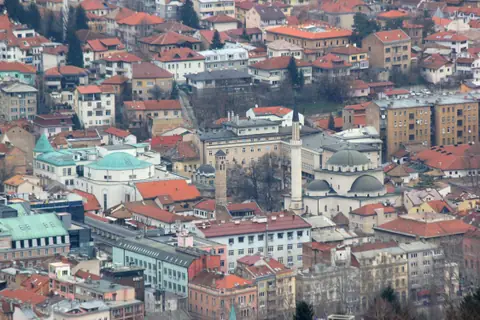
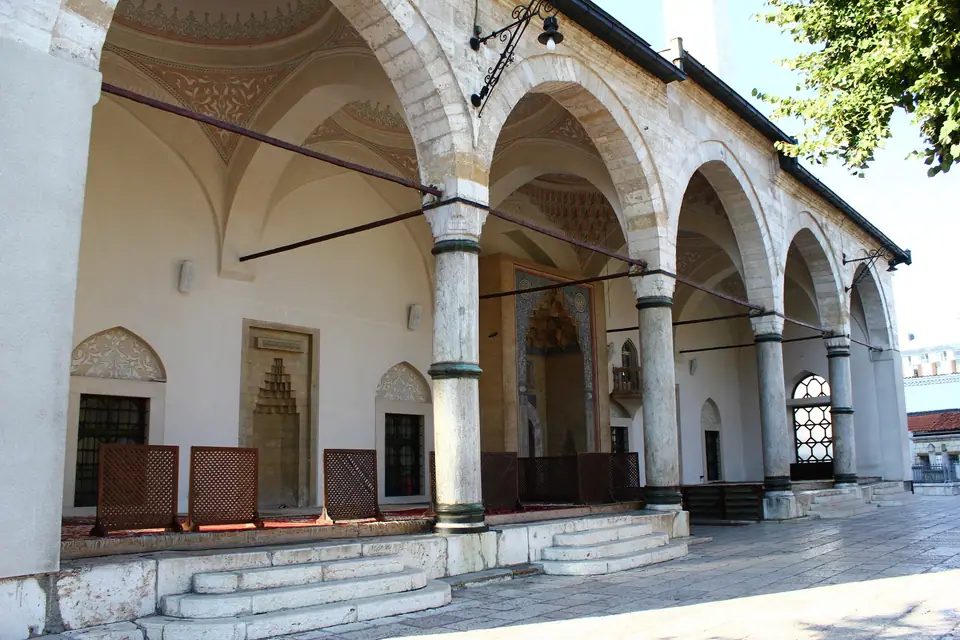
Commissioned by Sarajevo's defining sixteenth-century governor Gazi Husrev-beg, the mosque reached completion in 1530 to 1531 under Ottoman-Persian chief architect Acem Esir Ali of Tabriz. Nine lead-covered domes roof the soaring central sanctuary and porticoes. The central outer dome spans 13 metres wide and rises 26 metres overhead beside a slender 47-metre stone minaret. At full prayer gatherings, roughly 1,500 worshippers fill the complex, divided between around 1,000 indoors and 500 across the stone courtyard (sahn) wrapping the marble sadirvan ablution pavilion.
Beside the southern garden stand two domed octagonal türbe tombs housing Gazi Husrev-beg and his freedman-successor Murat-beg, opposite the multi-domed Kursumlija madrasah across the lane. Struck hard by shelling during the 1992-1996 siege, the mosque underwent careful structural restoration from 1996 onward. Master calligrapher Hazim Numanagic completed the present interior inscriptions and painted arabesques around 2001 to 2002. Today the quiet library wing and courtyard fountain remain a living social anchor for local residents rather than an empty museum courtyard.
Craft alleys, museums and neighbouring shrines
Lanes fanning off Saraci toward classic ascinicas and coffee trays preserve medieval guild names for leatherworkers, saddlers, bakers and slipper-makers. When buying copperware along Kazandziluk, look inside pots for uneven hand-planished hammer marks rather than uniform pressed metal. Genuine artisanal copper pots stay heavy in the palm and show hand-soldered brass handles riveted cleanly to the body.
Step inside Brusa Bezistan during rainy afternoons to trace Ottoman and Habsburg Sarajevo artefacts cleanly arranged beneath cool masonry domes. Outside the bazaar's quiet northern and eastern edges stand historic churches and synagogues within minutes on foot. Walk two streets east to find the stone-walled Old Orthodox Church, or head two minutes south to reach the Latin Bridge and Vijecnica. Every lane remains flat and compact, letting walkers explore both trade halls and shrines effortlessly inside a single morning.
Mosque visiting etiquette and quiet hours
Respect active worship schedules when touring mosque courtyards and porticoes, checking posted daily admission windows on the stone entrance arch.
- Prayer closures: Public entry pauses briefly around the five daily prayer windows and Friday midday sermons; confirm posted hours at the courtyard gate.
- Dress and footwear: Cover shoulders and knees before entering prayer rooms, and leave shoes on vestibule racks outside carpeted floors.
- Calm inside the sanctuary: Keep voices quiet, mute phones and avoid pointing cameras at worshippers in prayer.
Seeing Bascarsija after sunset
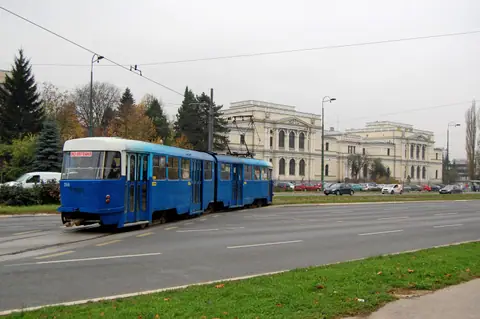
Walk back from Ferhadija or Bistrik after dinner when brass shop shutters roll down for night. Quiet evenings frame lead-clad mosque domes and lantern-lit cobbles without daytime tour groups, leaving time to see how tightly guild yards and stone wells connect. Pause beneath the wooden eaves of Sebilj Square once late trams thin out across the riverfront.
Return next morning with small KM notes and coins ready in your pocket for wider city walks. Small family bakeries, copper studios and sweet counters rarely accept bank cards for coffee or pastry orders. Morning light enters open craft doors before midday groups fill Kazandziluk, keeping early hours calm for asking coppersmiths about hand-hammered trays and coffee sets. Step off the main lane into neighbouring stone courtyards, where quiet fountains cool the air away from street chatter.
Where it is
- 1Baščaršija and the Gazi Husrev-beg Mosque
- Sarajevo International Airport (SJJ) · about 9 km from here in a straight line
- Directions in Google Maps
Stations and taxi ranks: OpenStreetMap. Airports: OurAirports. Distances are in a straight line.
Traveller tips
Real advice from people who have been to Sarajevo. Every tip is read by our team before it goes live.
No tips yet. Been here? Yours could be the first.
Thank you! Your tip will appear here after a quick review.
More in Sarajevo
Continue exploring Sarajevo with related neighbourhood, food, and planning guides