Photo: Julian Nyča · CC BY-SA 3.0
Best Time to Visit Sarajevo
Monthly WMO weather patterns, when August festival crowds peak, winter ski windows and why cold-weather inversions trap smog.
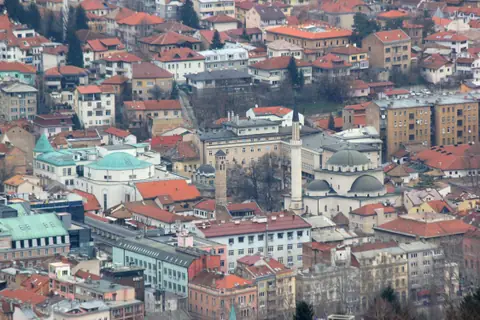
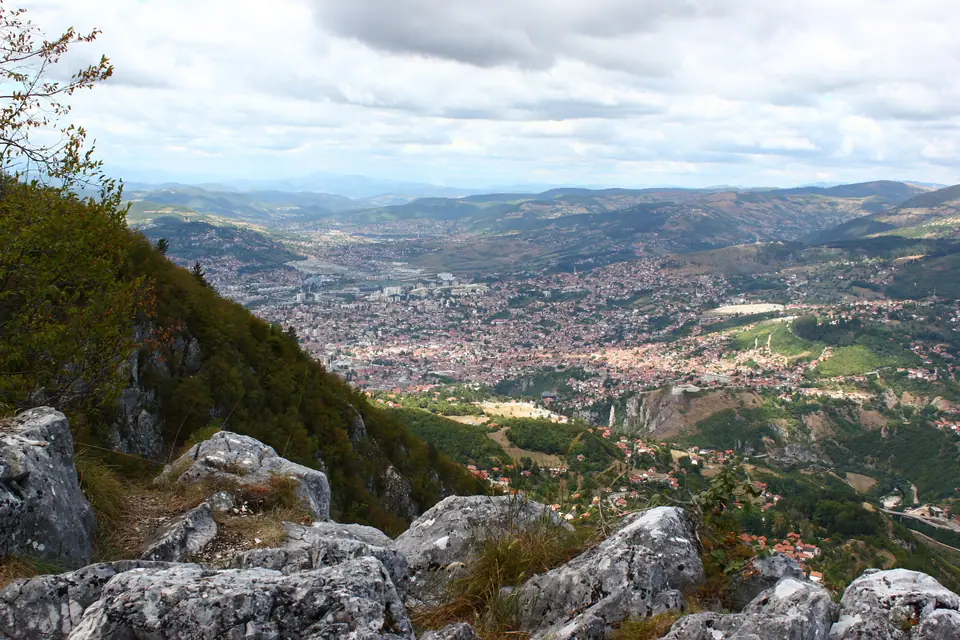
Sarajevo behaves like two contrasting destinations divided sharply by altitude and winter wind flow. Under official World Meteorological Organization and Federal Hydrometeorological Institute (FHMZ) 1991-2020 normals, annual temperatures average a mild 11.1 °C. Mean lows sit at 5.4 °C while daytime highs reach 16.4 °C. Steep Dinaric ridges wrapping tightly around the Miljacka bowl sharpen seasonal swings. Damp fog settles low on riverbeds in winter, while clear summer nights cool sharply by roughly 14 degrees.
Which months balance mild walks with long daylight?
May, June and September give travellers Sarajevo's cleanest balance of outdoor café comfort, pleasant walking temperatures and bright mountain ridges. Daytime highs reach 21.4 °C in May, 25.4 °C in June and 22.5 °C in September while evening lows settle between 9.0 and 12.6 °C. Pack a light packable rain shell during spring sightseeing. May logs an average of 11.1 rainy days (the year's highest number of wet days, bringing 88.7 millimetres), while September drops 89.3 millimetres over 8.8 rainy days.
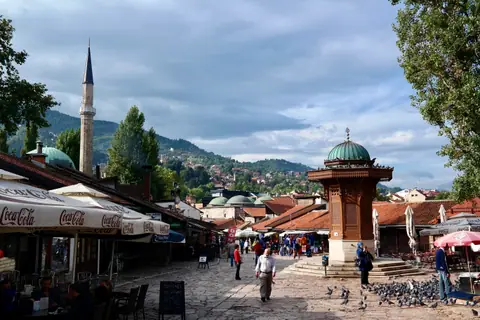
Chestnut trees stay lush along Velika Aleja in May and June without mid-summer glare. September brings golden foliage along the Miljacka, easy museum entry without festival queues and gentler hotel demand across central quarters.
How hot do July and August get inside the valley?
Peak summer floods downtown streets with bright sky. July logs 255.7 sun hours, while August reaches 239.9 hours with the year's lowest monthly rain (62.9 millimetres over 7.4 wet days). Afternoon highs climb to 27.8 °C in July and 28.3 °C in August, though dry mountain air drops overnight temperatures nicely down to 14.2 or 14.3 °C. Schedule steep Old Town and Yellow Bastion walks early before noon. Move indoor museums into peak afternoon sun and confirm room cooling across summer stays.
Carry a light cardigan after dusk if dining outdoors by the river or riding down from Trebevic, as shaded valley breezes turn noticeably cool once daylight drops behind western hills.
Why does winter fog cling to the valley floor?
Winter settles firmly into the basin from November into March, averaging around 22 snow days yearly. Mean highs dip to 4.1 °C in January and 4.3 °C in December, with January nights averaging -2.9 °C. During calm high-pressure cold snaps in December and January, warmer air aloft caps cold stagnant air inside the bowl-shaped trough. Domestic coal and wood stove smoke plus traffic emissions stay trapped along the Miljacka corridor instead of blowing clear.
As UK Foreign Office advisories and FHMZ stations document, December and January regularly record lingering fog downtown. Elevated PM2.5 and PM10 smog accompanies calm cold snaps, cutting December sunshine down to 62.1 hours. Sensitive lungs should plan winter walks thoughtfully, watching local air readings before taking long valley strolls along low avenues.
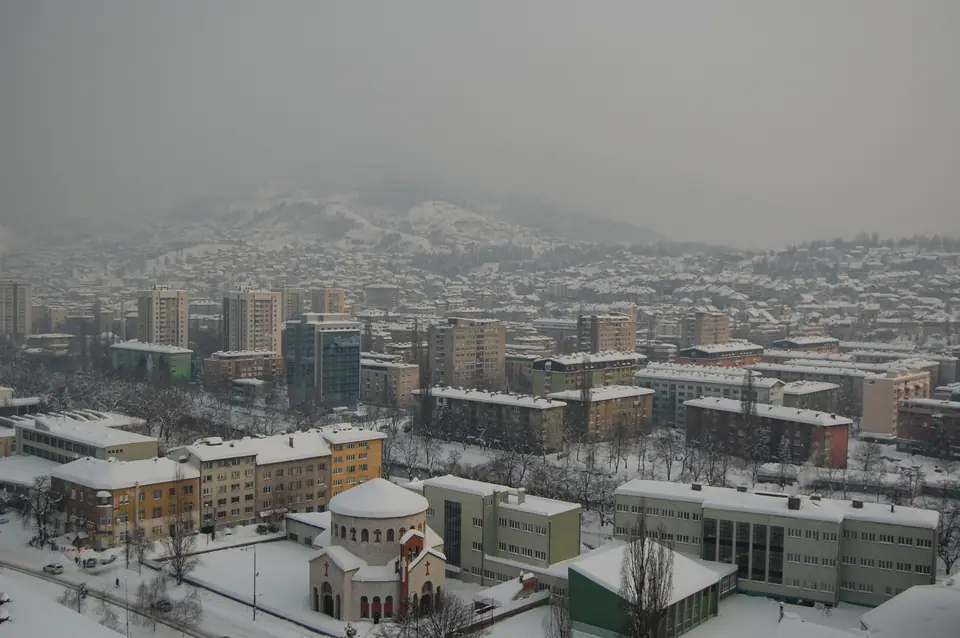
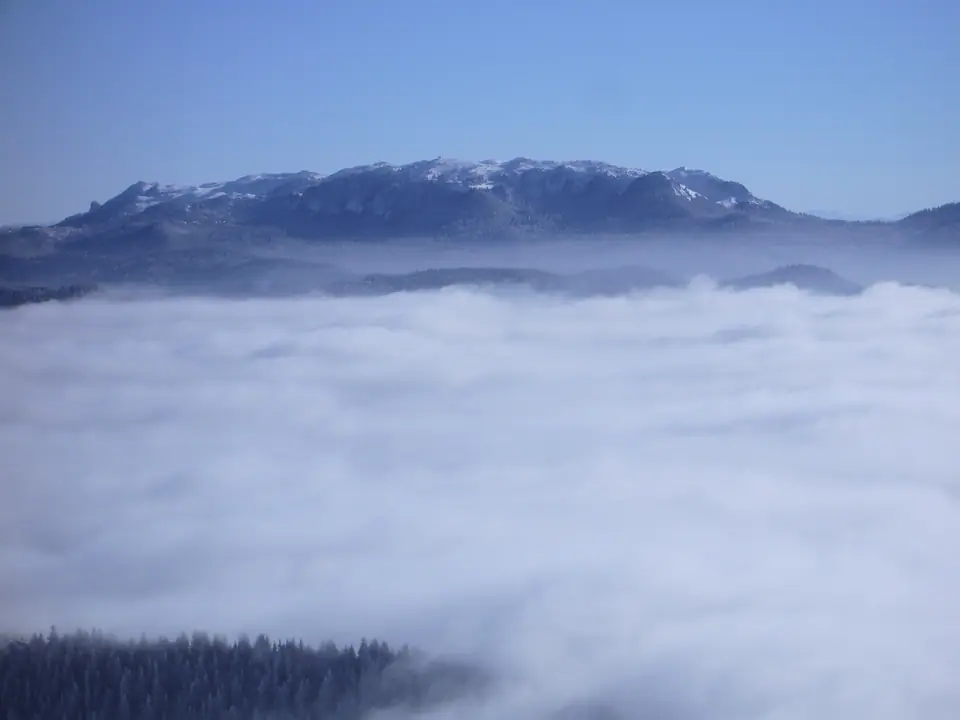
Even on grey foggy valley mornings, crisp winter sunlight regularly illuminates higher ground just above the inversion ceiling. Check live ridge webcams over breakfast, then ride the Trebevic Cable Car from Bistrik or head up to ski plateaus to stand above the cloud layer in blue mountain sun.
What happens during August festival week?
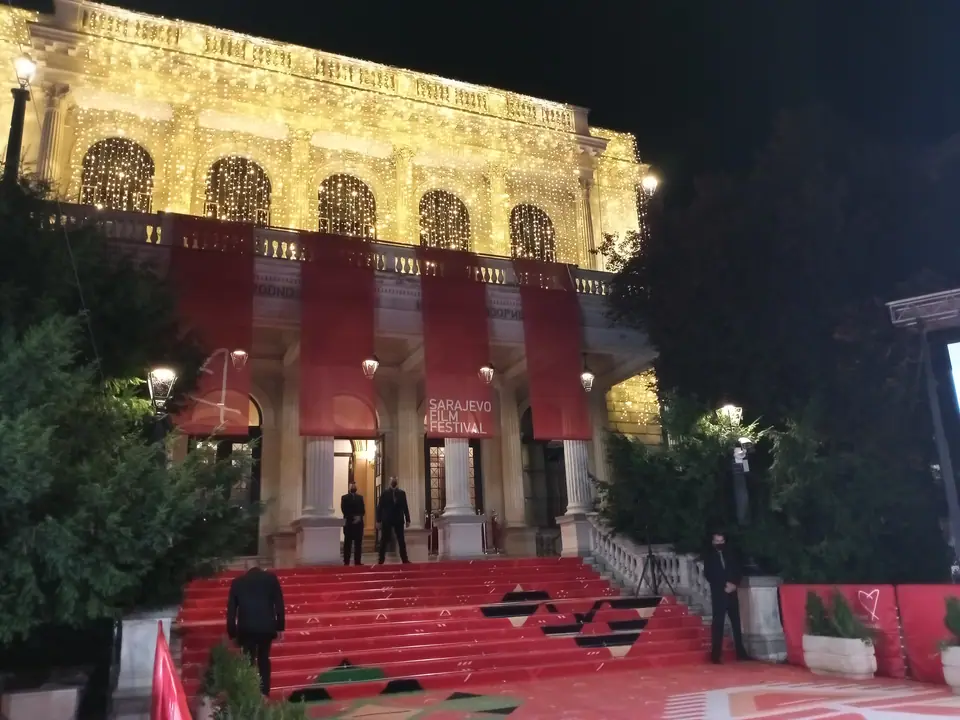
Every mid-August, Sarajevo shifts into high gear for the Sarajevo Film Festival, filling the National Theatre, open-air cinemas and café terraces for eight nights. The 31st edition took place from 15 to 22 August 2025, followed by the 32nd edition slated for 14 to 21 August 2026. Reserve hotel rooms months ahead if visiting during festival dates. Central Ferhadija and Skenderija properties fill quickly, and evening tables buzz late into night.
How do the months stack up across the calendar?
| Months | Mean hi / lo °C | Rain pattern | Valley and hill notes |
|---|---|---|---|
| April and May | 16.5-21.4 / 5.1-9.0 | 10.8-11.1 wet days | Fresh valley springs with passing rain showers. |
| June and July | 25.4-27.8 / 12.6-14.2 | 8.7-10.3 wet days | Long bright days suited to cable car views. |
| August | 28.3 / 14.3 | 62.9 mm, 7.4 wet days | Driest summer heat plus Film Festival week. |
| September and October | 17.3-22.5 / 6.5-10.4 | 89.3-91.4 mm total | Calm golden foliage; October logs peak rainfall. |
| November to March | 4.1-11.5 / -2.9-2.8 | Around 22 snow days | Ski season aloft, winter fog and smog in valley. |
When do Olympic ski pistes open?
Winter sports run reliably from mid-December through late March or early April across Bjelasnica (2,067 metres) and Jahorina (1,916 metres), supported by modern lifts and snow-making. Annual rainfall averages 949.5 millimetres across 113.5 wet days with 1,895.4 hours of sunshine. Mean humidity sits at 70.1 percent, shifting from 63.8 percent in April to 82.2 percent in foggy January. Even October (wettest statistically at 91.4 millimetres over 8.7 days) mixes crisp sunlit afternoons along Wilson's Promenade between brisk autumn rainstorms. Bring grippy waterproof boots from November to March, since wet Old Town flagstones and shaded side lanes turn slippery quickly.
Layering matters more than bulk across Sarajevo's seasons because sheltered riverbanks stay mild while mountain breezes cut sharply after sundown. Spring walkers should pack a light rain shell with sturdy walking shoes for sudden afternoon showers across hilly districts. During sunny midsummer weeks, carry a refillable bottle for cold stone drinking fountains dotted through Bascarsija courtyards and rest indoors during midday heat. Between December and February, check hillside webcams and Trebevic summit visibility before heading up. Thick grey valley fog often clears into bright alpine sunshine minutes after riding above the basin.
Where it is
- 1Sarajevo
- Sarajevo International Airport (SJJ) · about 7 km from Sarajevo in a straight line
- Directions in Google Maps
Stations and taxi ranks: OpenStreetMap. Airports: OurAirports. Distances are in a straight line.
Traveller tips
Real advice from people who have been to Sarajevo. Every tip is read by our team before it goes live.
No tips yet. Been here? Yours could be the first.
Thank you! Your tip will appear here after a quick review.
More in Sarajevo
Continue exploring Sarajevo with related neighbourhood, food, and planning guides