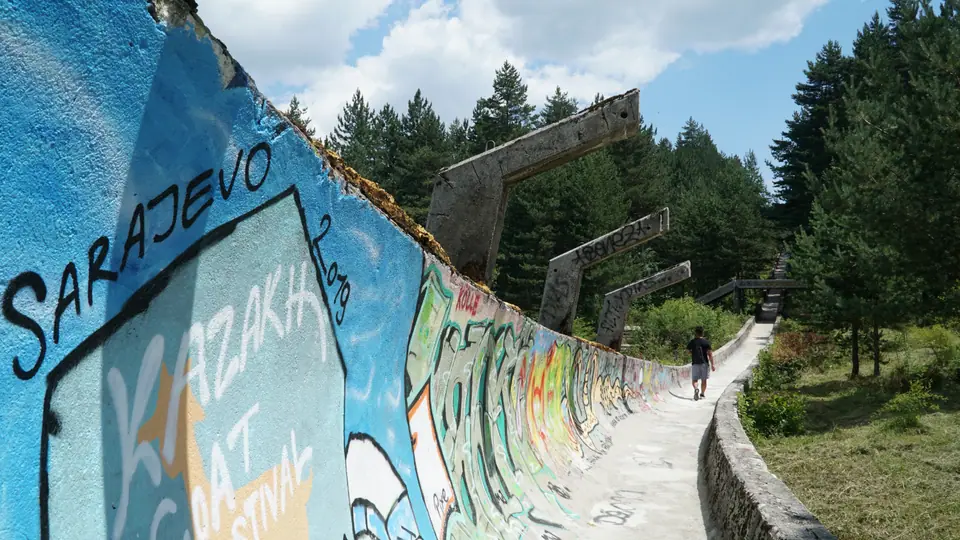
Photo: Adam Harangozó · CC BY-SA 4.0
The Siege, the Tunnel and the Olympic Hills
Understanding the 1,425-day blockade, Sarajevo Roses, the Tunnel of Hope beneath the airport and Trebevic's demined Olympic trails.
Just eight years after winter athletes swept down snow-packed slopes in February 1984, those exact wooded hills became artillery lines ringing Sarajevo below. Grasping modern Sarajevo rests on visiting three connected zones: central memorial pavements downtown, the hand-dug tunnel under Butmir airport and forested Olympic chutes winding down Mount Trebevic.
Timeline and toll of the 1,425-day siege
Running 1,425 days from 5 April 1992 until 29 February 1996, the Siege of Sarajevo remains the longest siege of a capital city in modern warfare. Encirclement ended formally after the Dayton Peace Agreement was initialled on 21 November 1995 and signed in Paris on 14 December 1995. Roughly 13,000 besieging troops manned at least 200 surrounding ridge positions, firing an estimated 500,000 artillery shells into the valley basin. Impacts averaged around 329 hits daily and surged to 3,777 shells on 22 July 1993.
Sarajevo Canton's official memorial records cite 11,541 people killed inside the city. Wider Research and Documentation Centre studies record 13,952 siege-zone fatalities with around 56,000 wounded residents. Walking downtown streets quietly makes that history tangible at eye level without needing grand speeches.
Downtown siege markers: Roses, Markale and Kovaci
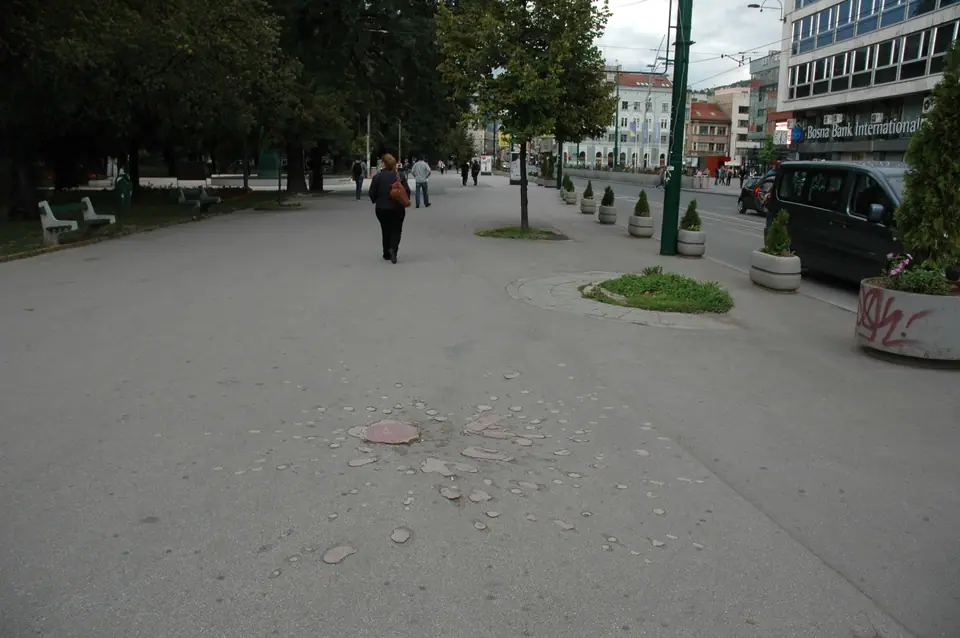
Memorials sit embedded straight inside everyday sidewalks around Ferhadija rather than sealed inside gated parks. Scan stone paving near Sacred Heart Cathedral and side alleys for Sarajevo Roses (Sarajevske ruze), roughly 200 fatal mortar craters filled flush with red resin.
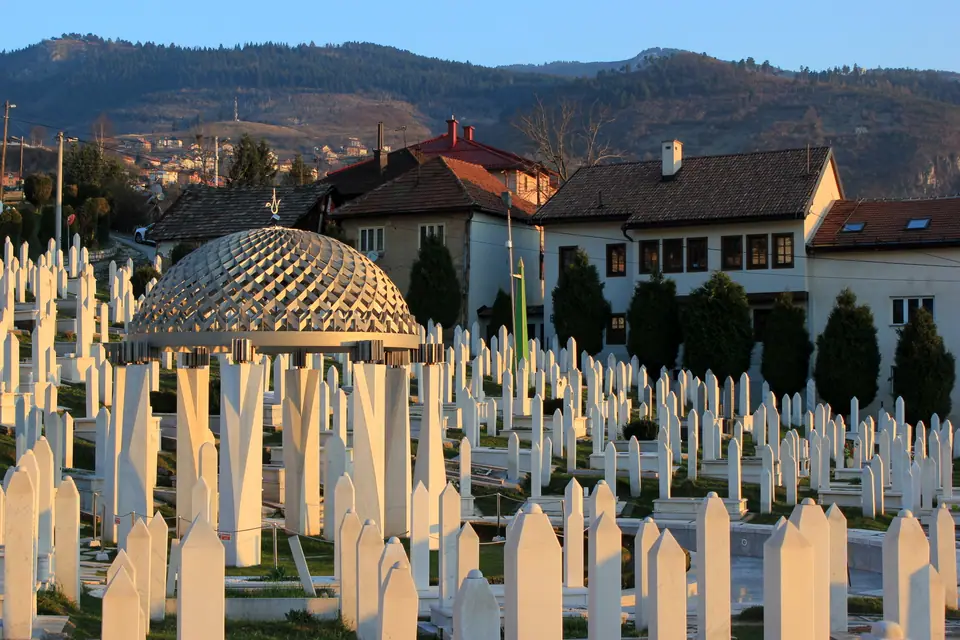
Two streets north off Ferhadija, Markale open-air produce market remembers two devastating mortar strikes. Shells killed 68 people and wounded 144 to 200 on 5 February 1994. Another blast on 28 August 1995 killed 43 and wounded 73 after an earlier 30 August 1992 strike nearby. Walk uphill east of Bascarsija to Kovaci Martyrs' Memorial Cemetery (Sehidsko spomen mezarje Kovaci), where white marble pillars climb sunny turf beneath Yellow Bastion.
From 29 June 1992 under UN Security Council Resolution 757, United Nations humanitarian airlifts flew over 13,000 missions into UN-held Sarajevo Airport. Planes carried over 160,000 tonnes of food and medicine, yet surrounded neighbourhoods still depended on a secret underground lifeline.
Tunnel of Hope under Butmir runway
Excavated by hand from both ends starting 1 March 1993, crews met beneath the UN-held airport runway on 30 June 1993. Object D-B (Tunel spasa) opened on 1 July 1993, linking besieged Dobrinja inside Sarajevo with free Butmir outside. Measuring 800 to 840 metres overall (roughly 340 metres directly under tarmac), the timber-framed gallery ran up to 5 metres underground. Inside, the narrow shaft stood barely 1 metre wide and 1.6 to 1.8 metres high. Between 3,000 and 4,000 people plus roughly 30 tonnes of rations, fuel and medicine passed through daily across 2 to 3 million wartime crossings.
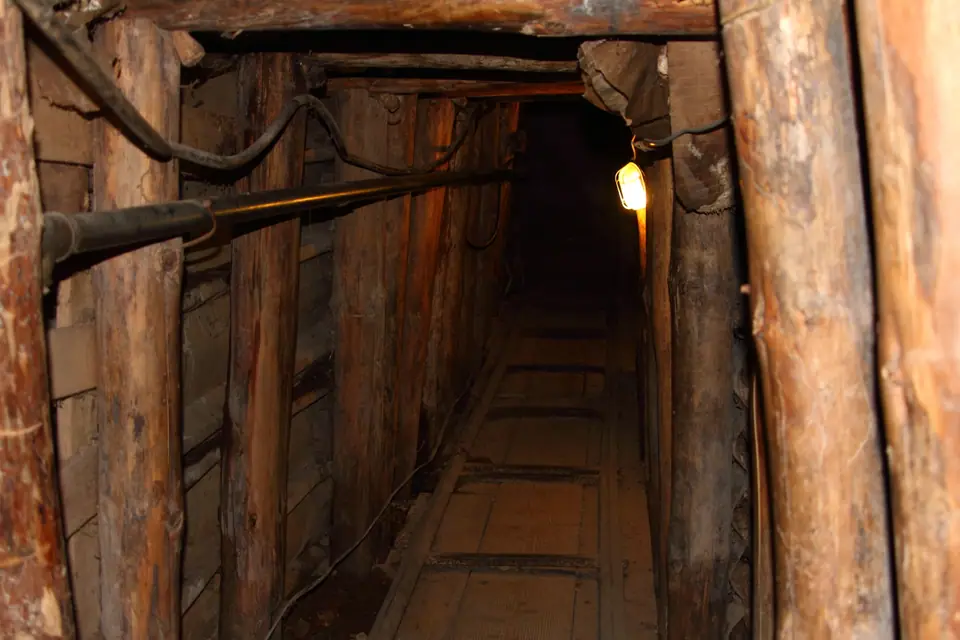
Managed now by the Sarajevo Memorial Center in Butmir, the museum protects the shell-pocked Kolar house courtyard. Visitors walk a preserved 20-to-25-metre authentic wooden passage fitted with supply rail carts and an extended 100-metre exhibition tunnel. Reach Butmir cleanly via Dobrinja trolleybuses or metered airport-side cabs, checking official visiting hours beforehand.
Downtown memory museums worth pairing thoughtfully
Because wartime exhibitions carry intense emotional weight, space museum stops calmly across separate afternoons rather than stacking every memorial into one morning. Gallery 11/07/95 near Cathedral Square anchors documentary photography on the 1995 Srebrenica genocide. Blocks away, the War Childhood Museum preserves diaries, toys and oral histories donated by young Bosnian war survivors. Over in Marijin Dvor, the History Museum traces improvised stoves, lamps and water carts used across daily siege households. Stepping outdoors into quiet green parks between galleries gives space to absorb personal testimonies without exhaustion.
1984 Winter Olympics and Trebevic Cable Car
From 8 to 19 February 1984 (12 days, with ice hockey starting 7 February), Sarajevo hosted 49 National Olympic Committees under wolf mascot Vucko. Athletes numbering 1,272 competed across 39 events in six winter sports. Downtown, shelled Mandic Villa reopened as the restored Olympic Museum on 8 October 2020. South across the Miljacka in Bistrik boards the Sarajevska zicara cable car, originally opened on 3 May 1959 and wrecked in 1992 after closing in November 1989.
Reopened cleanly on 6 April 2018, its 33 ten-seat cabins carry up to 1,200 guests hourly along a 2,100-to-2,200-metre span. Gondolas climb 577 vertical metres from Bistrik (583 metres) to Ramo Biber station (1,160 metres) in seven to nine minutes. Follow marked pine trails south-west from the summit deck to reach the 1984 Olympic bobsleigh and luge track. That mural-covered concrete chute winds 1,266 to 1,300 metres through pines with 13 banked turns dropping 126 metres.
Mandatory demined-trail rules on Mount Trebevic
- Stay on cleared tarmac and concrete: Cable-car summit decks, signposted asphalt trails and the concrete bobsleigh chute itself sit inside demined corridors cleared for visitors.
- Never enter unmarked brush: Keep completely clear of overgrown scrub, side footpaths off the asphalt and war-ruined outbuildings where legacy landmine hazards persist.
- Pack sturdy footwear and extra water: Shaded pine trails feel cooler than downtown pavements, and walking down from Ramo Biber toward Bistrik demands grippy soles on uneven cobbles.
- Watch valley visibility: Check winter fog and inversion conditions before boarding in Bistrik, and browse higher Olympic ski slopes for full-day ridge hikes.
Where it is
- 1The Siege, the Tunnel and the Olympic Hills
- Sarajevo International Airport (SJJ) · about 1 km from here in a straight line
- Directions in Google Maps
Stations and taxi ranks: OpenStreetMap. Airports: OurAirports. Distances are in a straight line.
Traveller tips
Real advice from people who have been to Sarajevo. Every tip is read by our team before it goes live.
No tips yet. Been here? Yours could be the first.
Thank you! Your tip will appear here after a quick review.
More in Sarajevo
Continue exploring Sarajevo with related neighbourhood, food, and planning guides