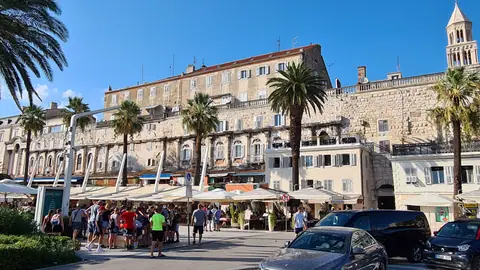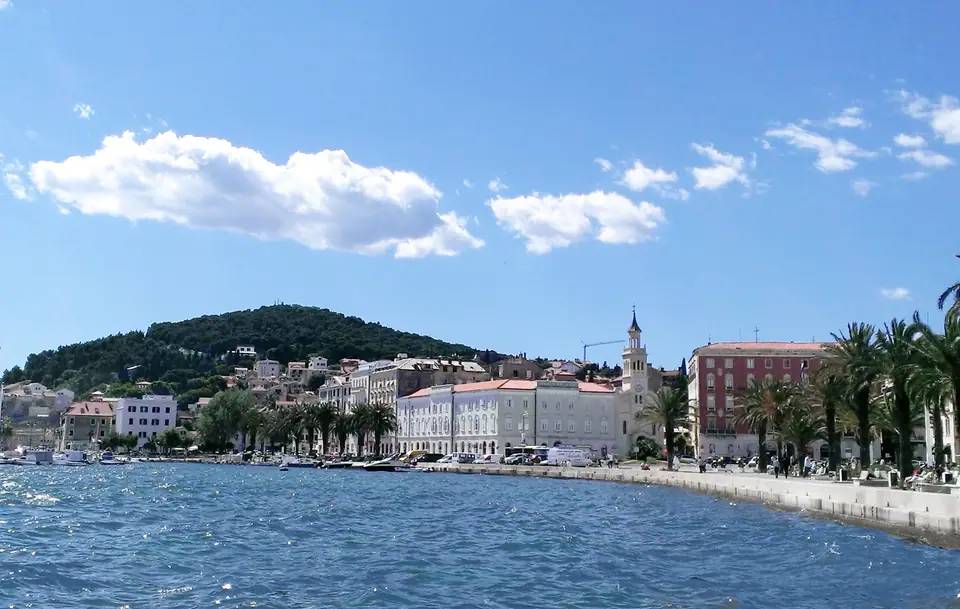
Photo: DIREKTOR · CC BY-SA 3.0
Best Time to Visit Split
Monthly temperatures, sea warmth, winds and festivals, so you can match the season to the trip.
Split has a Mediterranean climate with hot, dry summers and mild, wetter winters. The best time to visit depends on what you want: warm sea water, quiet lanes, long daylight or low prices. This page uses published climate figures and event information to help you choose.
For help planning what to do in each season, pair it with the things to do guide.
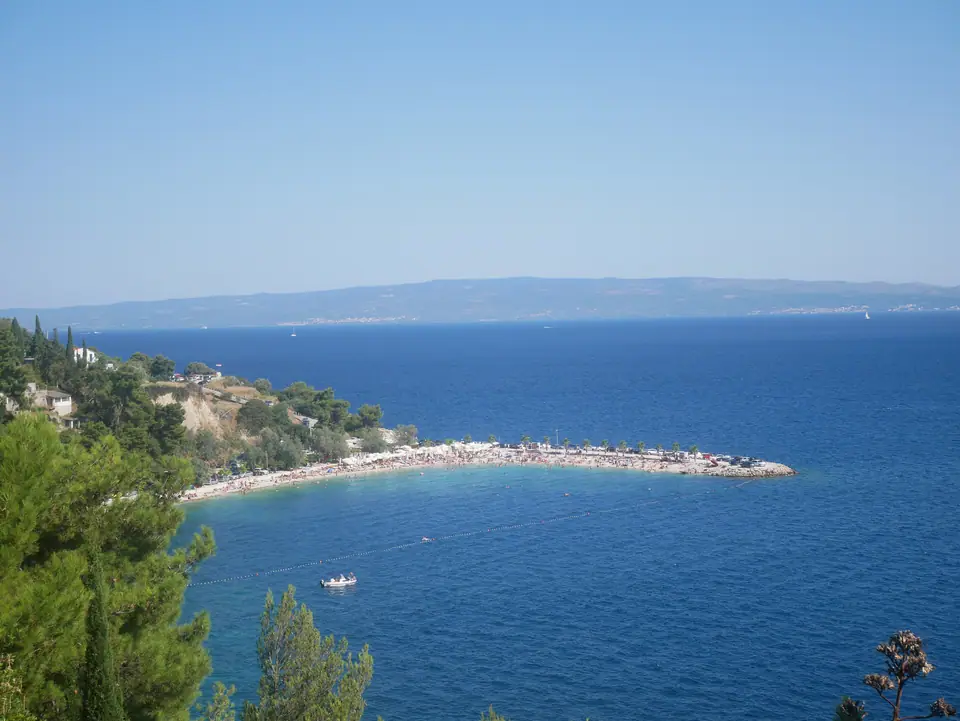
Split's Mediterranean sun hours and mild coastal winters
Split's climate is classed as Köppen Csa, bordering on Cfa. The table shows the mean daily minimum and maximum temperatures from the city's published climate data.
| Month | Mean daily min (°C) | Mean daily max (°C) |
|---|---|---|
| January | 5.9 | 10.7 |
| February | 6.0 | 11.5 |
| March | 8.5 | 14.5 |
| April | 11.8 | 18.4 |
| May | 16.1 | 23.4 |
| June | 20.2 | 28.1 |
| July | 22.8 | 31.0 |
| August | 22.9 | 30.9 |
| September | 18.4 | 25.4 |
| October | 14.7 | 20.5 |
| November | 10.8 | 15.6 |
| December | 7.2 | 11.8 |
Annual rainfall is about 800 millimetres. November is the wettest month, with about 120 millimetres, and July is the driest, with about 25 millimetres. The city records about 2,698 hours of sunshine a year. The sea is coldest in February, at about 11.5 °C, and warmest in August, at about 23.6 °C. These are long-term averages, so single days can differ widely.
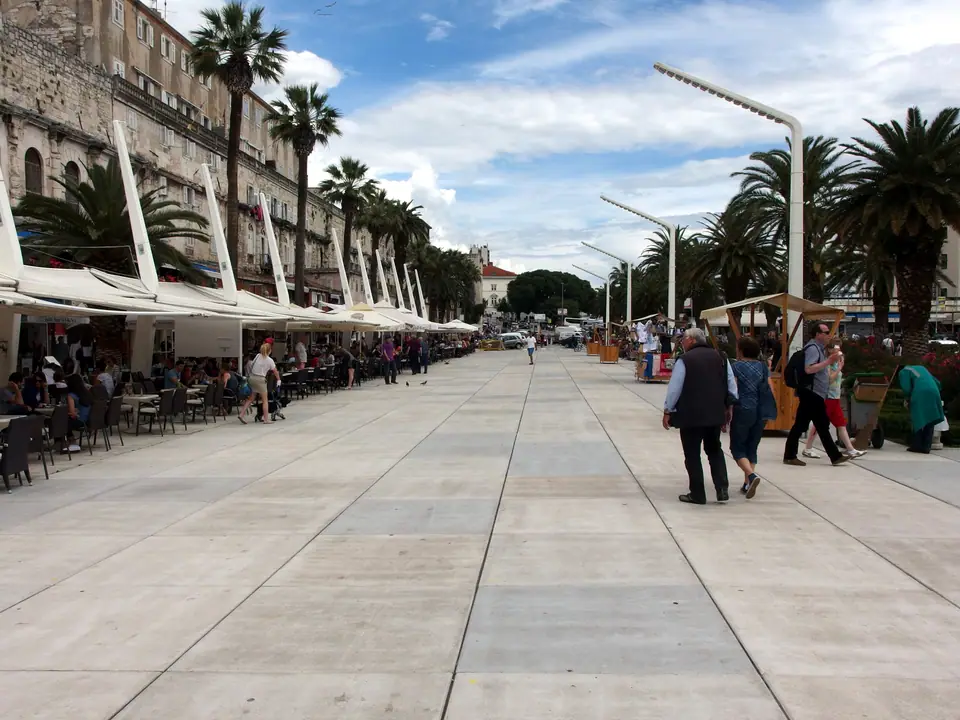
July and August beach heat, crowds and festival queues
July and August are hot, with mean highs near 31 °C, and record highs have passed 40 °C. The sea is warm and the days are long, so this is the season for swimming and island trips described in our island guide. It is also the most crowded and the most expensive. Visit the palace early in the morning or after sunset, and use the middle of the day for the beach or a long lunch in the shade.
Events add to the activity. The Split Summer Festival offers theatre, opera and concerts, often in the Peristyle, and the Ultra Europe music festival began in 2013 and has been held in July. Check whether it runs in your travel year if you want to join the crowd or avoid it.
April-to-June ferry comfort and hillside wildflowers
May and June bring mean highs of 23.4 °C and 28.1 °C, with warm days and fewer visitors than in midsummer. The sea is still cool, and many travellers swim only in late May or June. These months are good for walking Marjan and for day trips to Trogir, Salona or Krka, which are all more comfortable than in peak heat. See our day trips page for details.
Warm September seas and quieter October dining
September combines a warm sea with lower crowds. Mean highs are 25.4 °C, and the water remains close to its yearly peak. October is cooler at 20.5 °C, and rain becomes more likely as the month goes on. Some seasonal ferries and island services thin out, so check the timetable before you plan an island day.
Quiet stone streets and sudden winter squalls
Winter is mild by northern European standards, with mean highs between about 10.7 °C and 14.5 °C from December to March, but it is wetter and quieter. Record snowfall was 25 centimetres in February 2012, an unusual event. The Old Town is peaceful, and you can walk the palace without crowds. Many seasonal restaurants and boat services close, and ferry timetables are reduced, so island trips are harder.
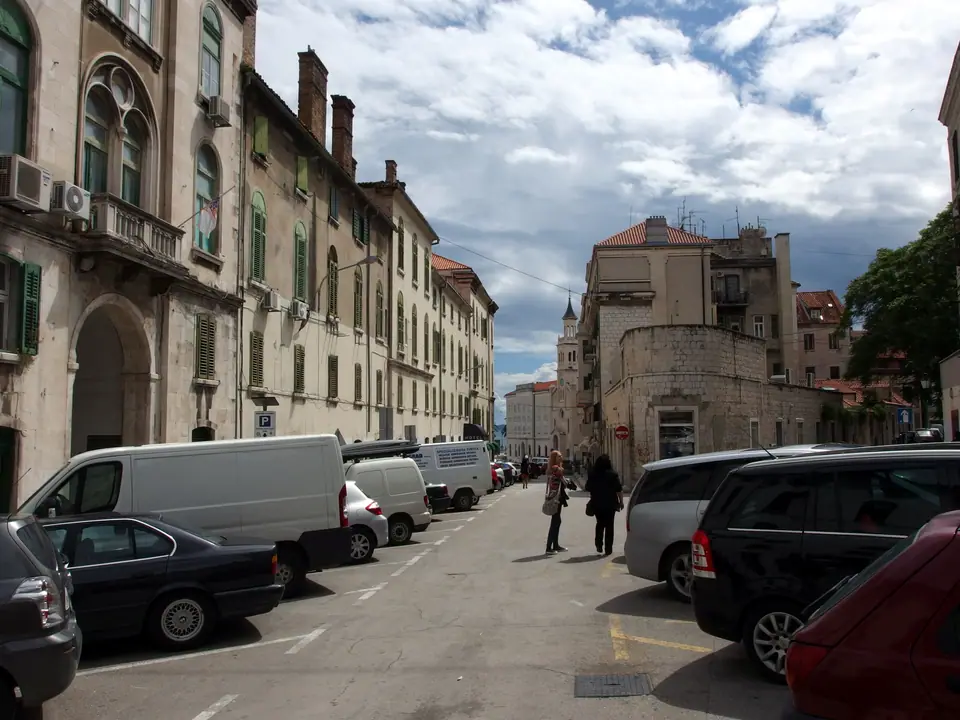
How cold bura and humid jugo winds shift ferry plans
Around Split the bura is a cold, dry wind from the northeast that can disrupt ferries to Brač, Hvar and Vis, while the jugo is a humid south-easterly wind that brings cloud and rain. Both can change a day's plans, so keep some flexibility in your itinerary and check the Jadrolinija announcements on the morning of travel.
Sea temperature follows the air with a lag. The annual mean is about 17.1 °C, the coldest month is February at about 11.5 °C, and the warmest is August at about 23.6 °C. That means June water, with air highs of 28.1 °C, is still noticeably cooler than September water, even though the two months look similar on the air chart.
Split Summer Festival, Ultra Europe and May's Sudamja
The Split Summer Festival fills the warm months with theatre, opera and concerts, and the Feast of Saint Domnius honours the patron saint of the city. The Croatia Boat Show has been held annually since 1998. On New Year's Day, players gather at Bačvice for picigin, which gives winter visitors a local ritual to watch even when the beaches are otherwise quiet.
Pinpointing peak swimming weeks versus sightseeing months
- Best overall: Late May, June and September give warm days and manageable crowds.
- Best for swimming: July to September, when the sea is warmest.
- Best for sightseeing: April, May and October, with lower heat and fewer queues.
- Best for low prices and quiet: November to March, accepting reduced services.
In warmer months, plan outdoor walking for the morning, and keep the afternoon for the water or a museum. For where to base yourself, see our where to stay guide.
Where it is
- 1Split
- Split Saint Jerome Airport (SPU) · about 12 km from Split in a straight line
- Directions in Google Maps
Stations and taxi ranks: OpenStreetMap. Airports: OurAirports. Distances are in a straight line.
Traveller tips
Real advice from people who have been to Split. Every tip is read by our team before it goes live.
No tips yet. Been here? Yours could be the first.
Thank you! Your tip will appear here after a quick review.
More in Split
Continue exploring Split with related neighbourhood, food, and planning guides