Photo: JakobHosp · CC BY-SA 4.0
Marjan Hill and Bačvice
Stairs, viewpoints, chapels and coves on Marjan, plus picigin and swimming at Bačvice.
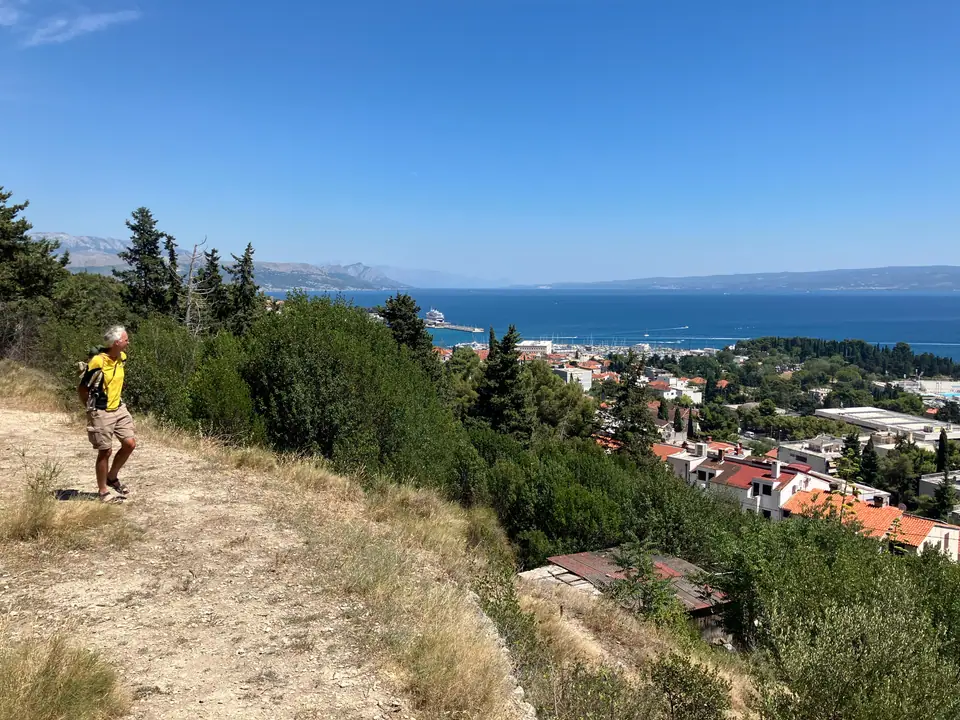
Marjan is Split's green lung and the best answer to a hot afternoon. The forested hill rises to 178 metres, with trails, lookouts, small churches and coves along its base. A short walk from the Old Town, it feels like a different world. This guide explains what to see on the hill and how to pair it with a swim at Bačvice.
It works best after you have seen the palace, because the view from the top ties the whole city together.
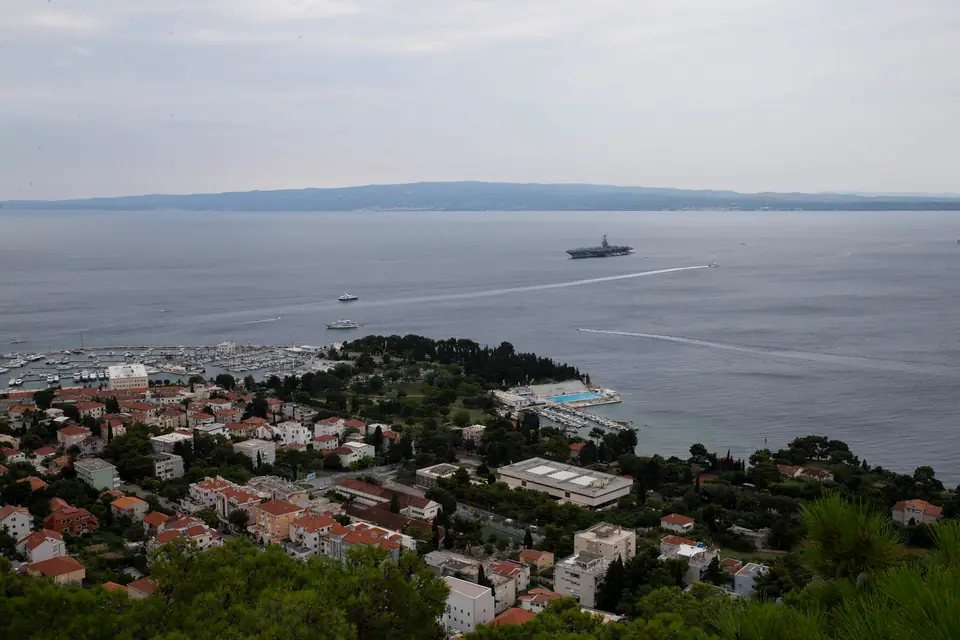
Pine trails across Marjan Peninsula above the western port
Marjan has a long conservation history. A 14th-century city statute banned cutting trees, and in 1964 the hill was declared a special protected nature area. A public institution was established in 2004 to manage the Marjan Forest Park. The first modern afforestation, in 1852, used Aleppo pine at the Jewish cemetery. Palms were planted along the Račić pathway in 1921, and today the forest is dense Mediterranean pine.
Climbing Veli Varoš steps to Vidilica and Telegrin
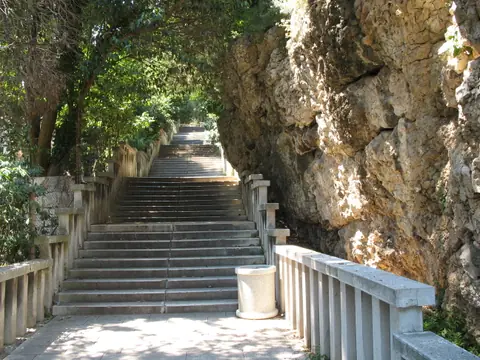
The classic way up begins in Veli Varoš. In 1903 the Marjan Association built a road from Veli Varoš to the first peak, and in 1924 they added 378 white stone steps. Two lookouts, known as vidilice, were built as rest stops along a long stairway. Climb in the morning or late afternoon, bring water, and wear shoes with grip, since the stone can be slippery.
| Place | What it is | Why go |
|---|---|---|
| Veli Varoš stairs | 378 stone steps built in 1924 | Direct route to the first peak |
| Church of St Nicholas | Small early 13th-century church, restored in 1990 | A quiet stop tied to fishing traditions |
| Church of St Jerome | 15th-century church with an altar by Andrija Aleši | Next to Renaissance hermitage caves |
| Jewish cemetery | Established in 1573, over 700 graves, closed in 1945 | A protected historic monument on the eastern slope |
| Meštrović Gallery | Sculptor's former villa on the south side | Statues, bronzes and wooden reliefs |
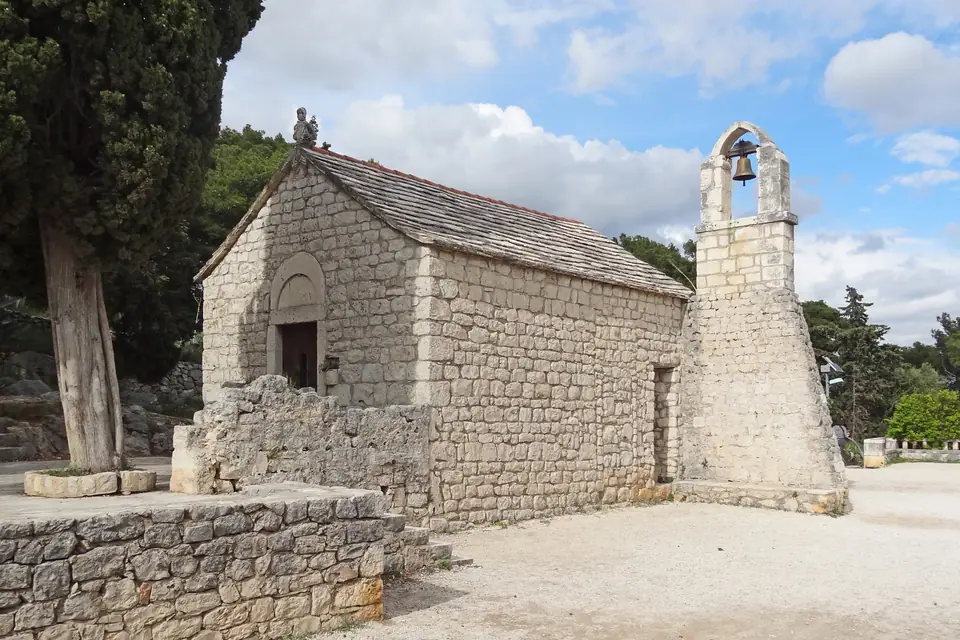
Stone hermitages and hillside chapels tucked under Marjan cliffs
Scattered across the hill are small chapels that tell the story of its past as a place of retreat. The Church of St Nicholas dates from the early 13th century and was dedicated to a saint popular with fishermen. The Church of St Jerome from the 15th century sits near hermitage caves first used in the Renaissance. Visit them at a slow pace, and respect any services. If a gate is closed, do not climb over it.
North promenade loop versus Marjan's southern cove ridge
Marjan is a peninsula hill about 3.5 kilometres long and 1.5 kilometres wide, with a park area of about 347 hectares. By 1918 the forest already covered more than 75 hectares, and the planting that followed turned a bare limestone slope into the dense pine woodland you walk through today. The Jewish cemetery on the eastern slopes dates from 1573, holds over 700 graves and was closed in 1945, when it was protected as a monument. Stone stairs from the coast to the cemetery were built in 1922.
Kašjuni and Bene pebble swimming coves under pine shade
At the foot of Marjan lie several beaches, including Bene, Obojena and Kašjuni. They are pebble coves with clear water, and are popular on summer weekends. Bring water shoes, since stones can be sharp, and take your own shade. Check whether facilities such as showers and cafés are open in your travel month, because many operate only in summer.
Ivan Meštrović's white limestone villa and bronze garden
The gallery stands on the south side of the hill in the villa of Ivan Meštrović, a sculptor born in 1883 and regarded as the most prominent modern Croatian sculptor. After his major donation in 1950, the collection came to hold 86 statues, 17 drawings, eight bronzes in the garden and 28 wooden reliefs in the Kaštelet. The 1952 donation contract added the Kaštelet-Crikvine complex, a reconstructed Renaissance fortified mansion, to the gallery. Check current opening hours before you go.
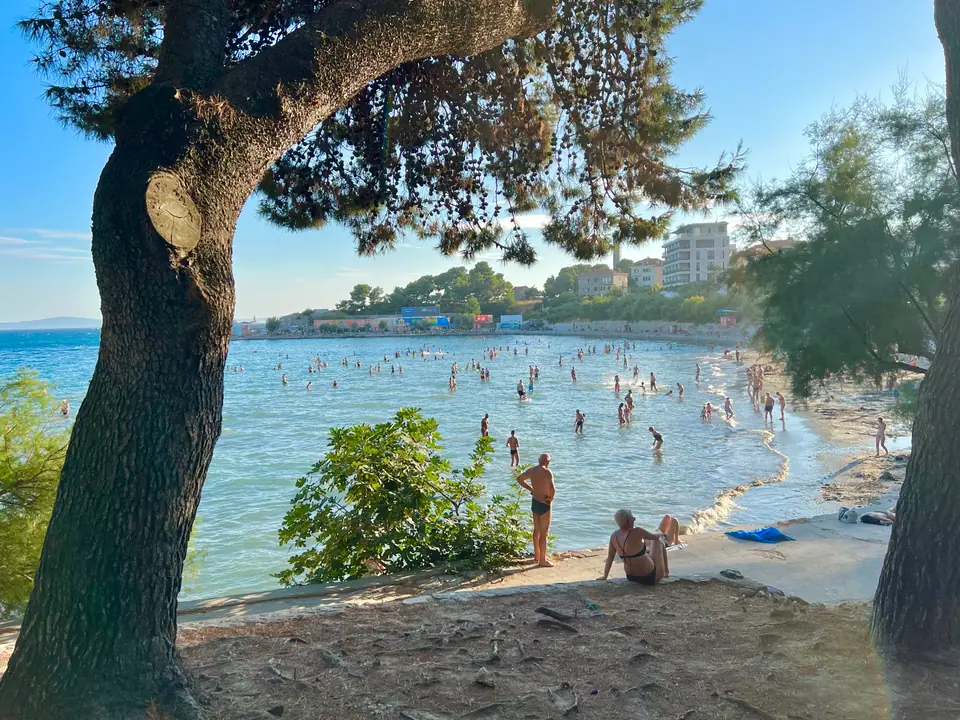
Shallow sandy Bačvice bay and morning picigin games
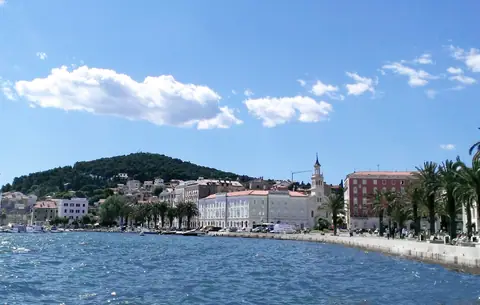
On the other side of the peninsula, Bačvice is the city's sandy beach. It is the birthplace of picigin, a ball game first played in 1908 by students returning from Prague, who found water polo hard to play in shallow water. Five players is the custom, with two anchors called sidruni and three runners called trkači, and the ball is a tennis ball with the felt removed and the surface polished smooth. The aim is to keep it in the air without catching it. A world championship has been held at Bačvice every year since 2005, and Croatia recognised picigin as an intangible cultural good in 2008, confirming it in 2013. Players also gather on New Year's Day, when the sea is rarely above 15 °C. The shallow water suits children, and the seafront has places to eat and drink. It can be crowded in July and August, so go in the morning or late afternoon.
Half-day trail from Veli Varoš terraces down to southern coves
- Morning: Climb the stairs from Veli Varoš and visit a viewpoint.
- Midday: Descend to a cove for a swim and a picnic.
- Afternoon: Visit the gallery if it is open.
- Evening: Walk back along the seafront and eat at the Riva.
Use the hill to recover from the stone and crowds of the Old Town. For a longer outing, see our day trips guide, or pair this half day with the museum visits in things to do.
Sun protection, stone stair grip and pine forest rules
Fires are a real risk in a Mediterranean pine forest in summer, so never smoke or light a flame on the hill. Carry water, wear a hat and avoid the hottest hours. Keep to marked paths and take your litter with you.
Where it is
- 1Marjan Hill and Bačvice
- Split Saint Jerome Airport (SPU) · about 10 km from here in a straight line
- Directions in Google Maps
Stations and taxi ranks: OpenStreetMap. Airports: OurAirports. Distances are in a straight line.
Traveller tips
Real advice from people who have been to Split. Every tip is read by our team before it goes live.
No tips yet. Been here? Yours could be the first.
Thank you! Your tip will appear here after a quick review.
More in Split
Continue exploring Split with related neighbourhood, food, and planning guides