Photo: TimeTravelRome · CC BY 2.0
Split Orientation: Diocletian's Palace, Marjan & Ferry Hub
Diocletian's Palace, Marjan hill and island ferries explained, with a plan for how many days Split deserves.
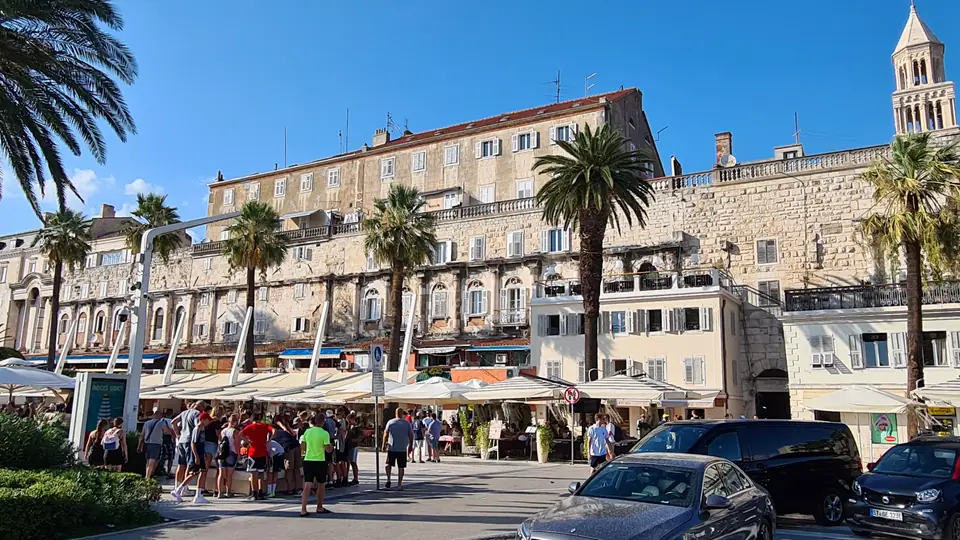
Split is Croatia's second-largest city, with 160,577 residents at the 2021 census, and it sits on a peninsula between the Gulf of Kaštela and the Split Channel. Most visitors arrive for the Roman palace that Emperor Diocletian had built for his retirement, but the city is also a working port, a football town and the main gateway to the central Dalmatian islands. Treat it as a base with three layers: the ancient core, the green hill of Marjan, and the ferries that fan out across the Adriatic.
This guide explains how those layers fit together so you can decide how long to stay and where to spend your time. It links to the detailed pages on the palace and Old Town, day trips and island trips.
Diocletian's Roman walls reborn as Split's lived-in core
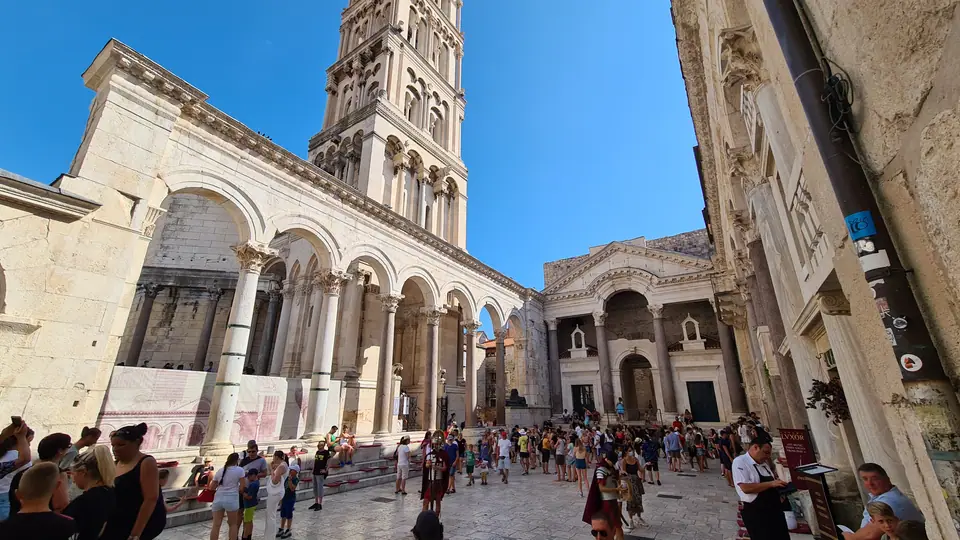
Diocletian began building his residence around 295 and abdicated on 1 May 305, when the complex was still unfinished. He died on 3 December 312. The palace was not abandoned. Local accounts and the historical record place refugees from the nearby Roman city of Salona inside its walls around 650, after the Avars sacked Salona in 639. Over the following centuries the empty halls filled with houses, churches and shops built into the Roman fabric.
That history explains what you see today. The palace covers roughly half of the Old Town, and people still live and work inside it, so the site feels less like a ruin and more like a neighbourhood with a very old frame. UNESCO recognised that quality in 1979, when it listed the palace together with the medieval city. The palace guide gives the plan, the gates and the interiors.
| Period | What happened | What you can still see |
|---|---|---|
| c. 295 to 305 | Diocletian builds his retirement palace | Walls, four gates, Peristyle, cellars |
| c. 650 | Refugees from Salona settle inside the walls | Houses built into the Roman structure |
| 1420 to 1797 | Venetian rule | Gothic and Renaissance palaces, loggias |
| 1815 onward | Austrian rule after the Napoleonic period | Squares and civic buildings around the Old Town |
Three layers spanning the palace, Marjan and island ferries
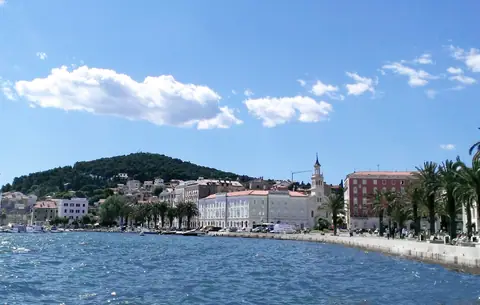
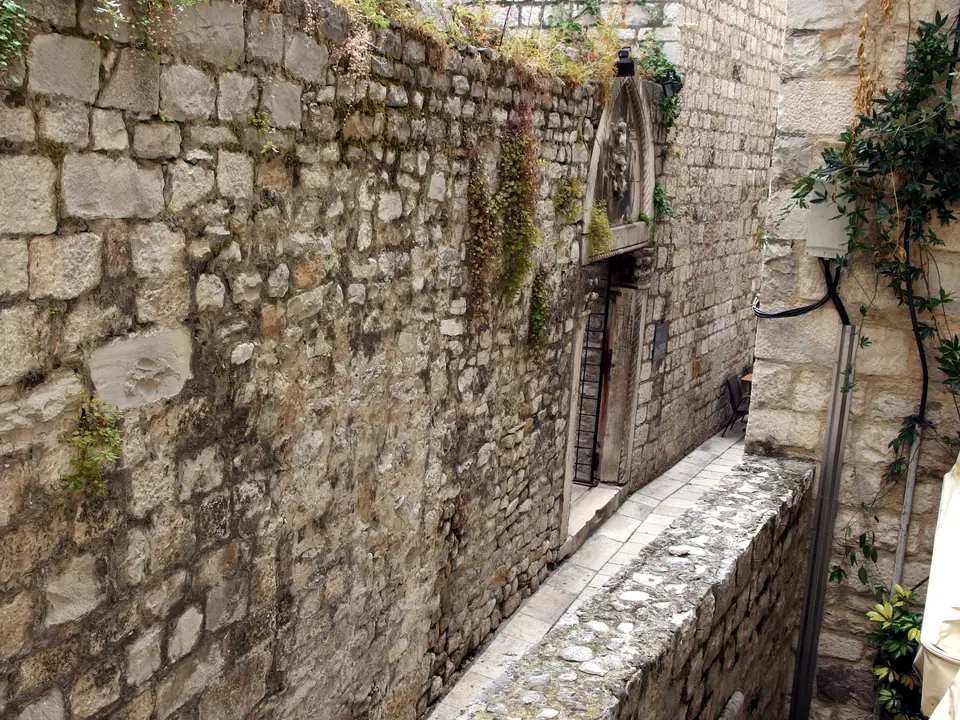
The first layer is the Old Town. Allow a full morning for the Peristyle, the cathedral, the cellars and the gates. Nothing here is far apart, and the whole core can be crossed on foot in a few minutes, which is why the experience depends on slowing down rather than covering ground.
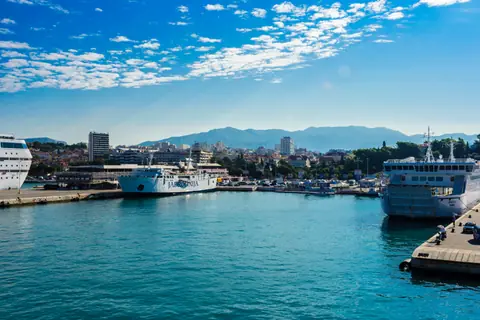
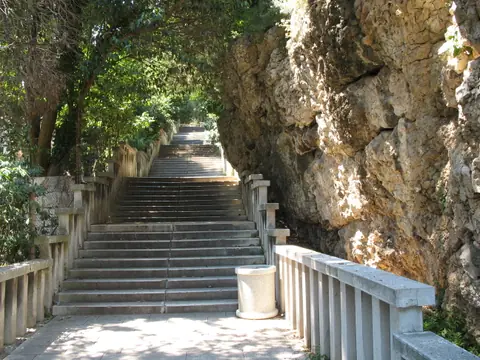
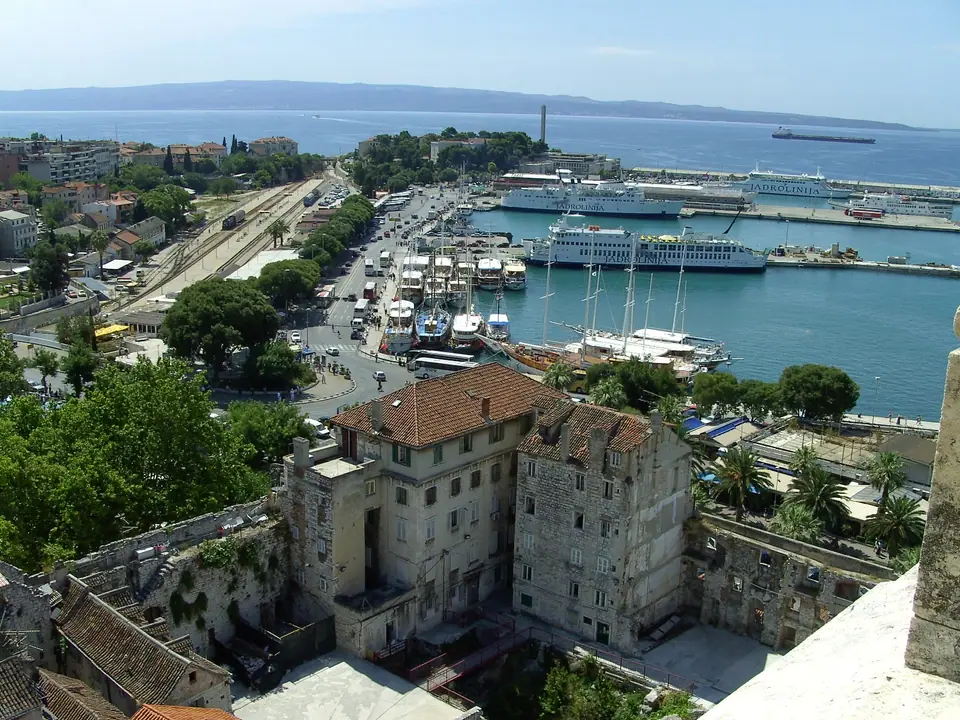
The second layer is Marjan, the pine-covered hill on the western side of the peninsula, with trails, small churches and coves described in our Marjan and Bačvice guide. The third layer is the water. Ferries serve Brač, Hvar, Šolta, Vis, Korčula, Mljet and Lastovo, with routes also to Rijeka, Dubrovnik and Ancona, and the island guide explains how to choose between them.
Scoping one to five nights across coast and islands
Two full days cover the Old Town, Marjan and an evening on the Riva waterfront at an easy pace. Three days add a day trip to Trogir or Salona. Five days let you add an island and one longer excursion such as the Krka waterfalls. The things to do page sets out a three-day order that works in any season.
- One night: Walk the palace at first light before day-trip groups arrive, then catch a late ferry. This is rushed, but it works if Split is a stopover.
- Three nights: Best suited to a first trip if you want the city, Marjan and one excursion.
- Five nights or more: Best suited when you plan to use Split as the base for several islands.
Euro, Schengen borders and hilly streets without trams
Croatia joined the Schengen Area and adopted the euro on 1 January 2023, so you pay in euros and border formalities depend on your passport and the rules in force at the time of travel. Check the official entry requirements for your nationality before you book, because rules for non-EU visitors have been changing.
Split has no tram network because of the hilly terrain, and the central sights are walkable. The A1 motorway to Zagreb has been fully open since July 2005. Limited-stop trains also run to Zagreb, and the airport sits about 20 kilometres from the centre. Our getting there guide compares the options.
Hajduk matchdays, klapa harmony and Bačvice picigin
Split's football club, HNK Hajduk, was founded on 13 February 1911, and the idea for it came to its founders while they were studying in Prague. Its supporters' group Torcida dates from 28 October 1950, and match days shape the mood of the whole city. The things to do page covers the stadium. Klapa, the traditional multi-voice a cappella singing of Dalmatia, was inscribed on UNESCO's Intangible Cultural Heritage list in 2012, and you will often hear it in the Old Town on summer evenings.
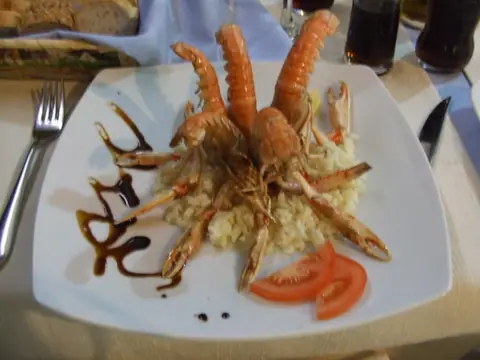
The city also has a game of its own, picigin, played in the shallows at Bačvice and explained in the Marjan and Bačvice guide. Pair a morning there with a meal from our Dalmatian food guide.
Linking Split towards Dubrovnik, Zagreb and Ancona
Many travellers combine Split with the rest of the Dalmatian coast by ferry or bus, continuing south towards Dubrovnik. Others arrive overland from Zagreb or by overnight ferry from Italian ports across the Adriatic. Decide early whether Split is your base or just a short stop, because the answer changes where you sleep. The where to stay guide compares the Old Town, the Riva area and the quieter districts around Marjan.
Where it is
- 1Split
- Split Saint Jerome Airport (SPU) · about 12 km from Split in a straight line
- Directions in Google Maps
Stations and taxi ranks: OpenStreetMap. Airports: OurAirports. Distances are in a straight line.
Traveller tips
Real advice from people who have been to Split. Every tip is read by our team before it goes live.
No tips yet. Been here? Yours could be the first.
Thank you! Your tip will appear here after a quick review.
More in Split
Continue exploring Split with related neighbourhood, food, and planning guides