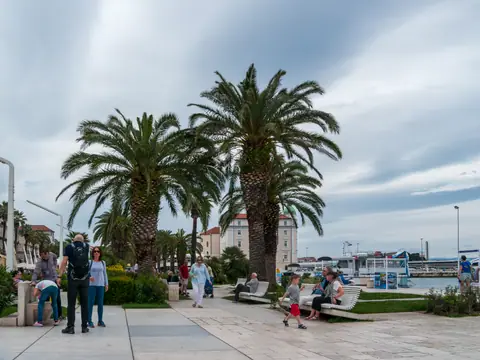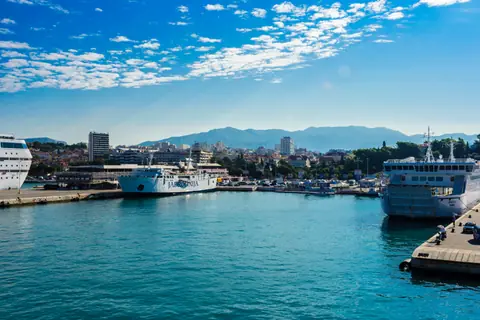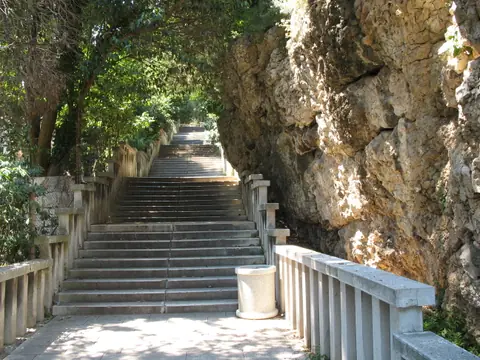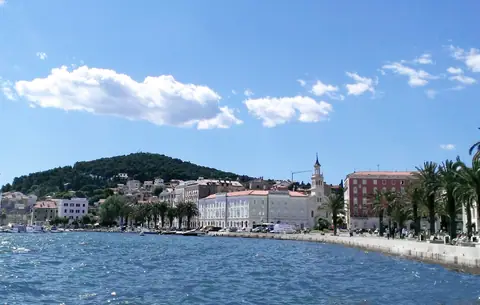
Photo: JoJan · CC BY 3.0
Diocletian's Palace and Old Town
Gates, Peristyle, cathedral, cellars and a walking order through the Roman palace that became a city.
Diocletian's Palace is the reason most people come to Split, and it is unlike any other Roman monument because it is still lived in. The emperor began building his retirement residence around 295 and gave up power on 1 May 305, when the work was still unfinished. He died on 3 December 312. Over the centuries, people moved into the structure, and today about 3,000 residents share it with shops, cafés and restaurants.
This guide explains the layout, the gates and the main interiors so you can see them in a sensible order. For context on the city as a whole, start with our Split travel guide.
Cardo and Decumanus streets inside the fortress quadrangle
The complex is an irregular rectangle with sides of about 215 metres on the east, 175 on the north and 182 on the south, adjusted to the terrain. Sixteen towers project from the west, north and east walls, with four at the corners. An east-west road links the eastern and western gates and divides the palace into two halves. The imperial apartments lay in the southern part, above the cellars.
| Gate | Direction | Notes |
|---|---|---|
| Golden Gate (Porta Aurea) | North | Main gate on the road to Salona; St Martin's Church sits above it |
| Silver Gate | East | Originally a secondary gate; a church was built above it around the 6th century |
| Iron Gate | West | Originally a military entrance; the only gate in continuous use |
| Bronze Gate | South | Smaller sea gate, perhaps a private or supply entrance |
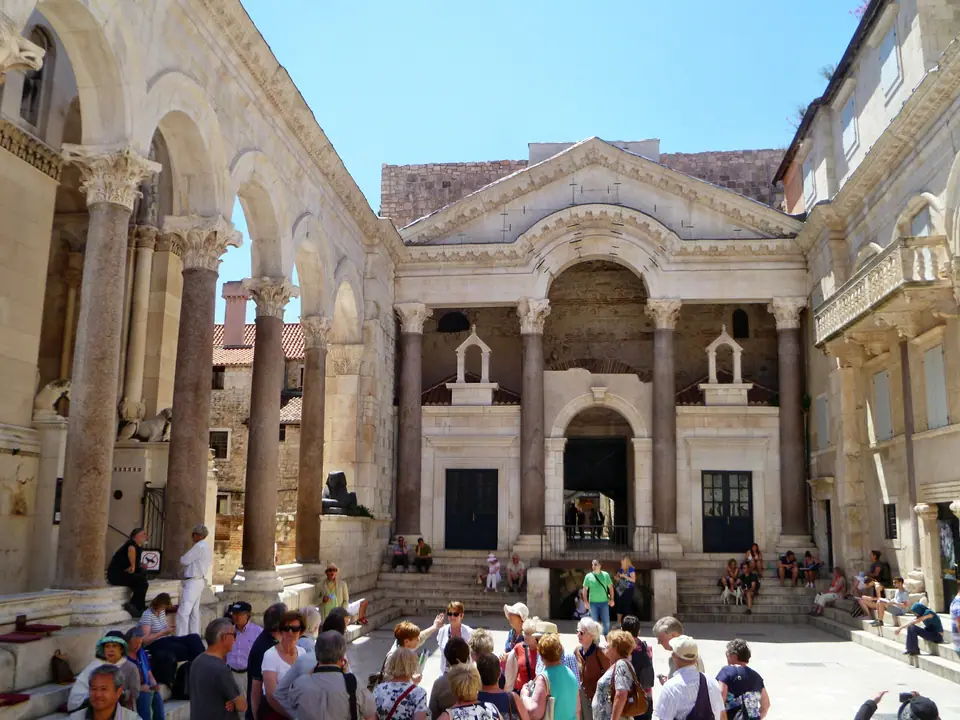
Corinthian columns of the Peristyle and open Vestibule
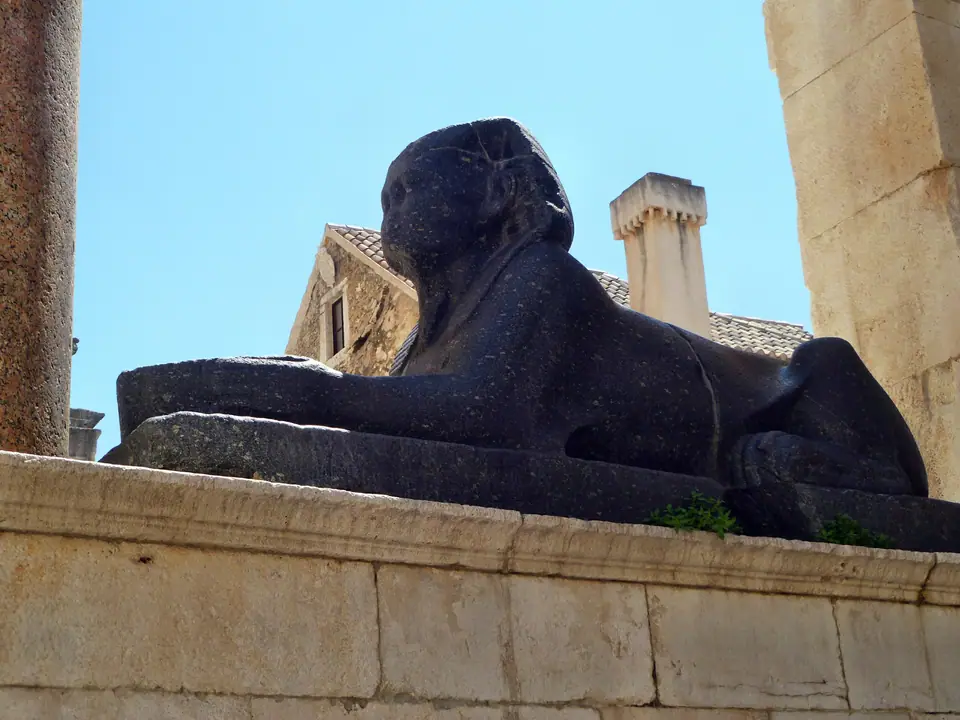
The Peristyle is the monumental court that formed the northern approach to the imperial apartments. It gave access to the mausoleum on the east and to three temples on the west. Beyond it lies the Vestibule, the formal entrance into the apartments. One of the sphinxes associated with the palace stands on the Peristyle itself. Three sphinxes survive in Split: one on the Peristyle, one without a head in front of the Temple of Jupiter, and one in the city museum. Their supposed Egyptian origin is still debated.
St Domnius octagonal mausoleum and rooftop bell tower
The Cathedral of St Domnius began as Diocletian's mausoleum around AD 305. The octagonal exterior was once ringed by a roofed colonnade of 24 marble columns, and the circular interior sits under a dome with eight red granite Corinthian columns. Saint Domnius, a bishop of Salona, was beheaded in 304 during Diocletian's persecutions, and the cathedral later took his name. The walnut doors, carved by Andrija Buvina in 1214, have 28 scenes from the life of Christ. The treasury, on the first floor of the sacristy, holds relics of Saint Domnius.
The bell tower is 57 metres tall. Building began in the 13th century and went on until the middle of the 16th century, though some sources give earlier dates. Visitors can climb the stairs for a view over the Old Town and the sea. Go early or late in the day if you dislike queues on narrow stairs.
Coffered stone vaults inside the Temple of Jupiter baptistery
The temple stands near the Peristyle and was built between 295 and 305. Work stopped when Diocletian abdicated, so parts remained unfinished. In the 6th century it became a baptistery, probably dedicated to St John the Baptist, and it has a crypt dedicated to St Thomas.
Barrel-vaulted subterranean cellars beneath imperial quarters
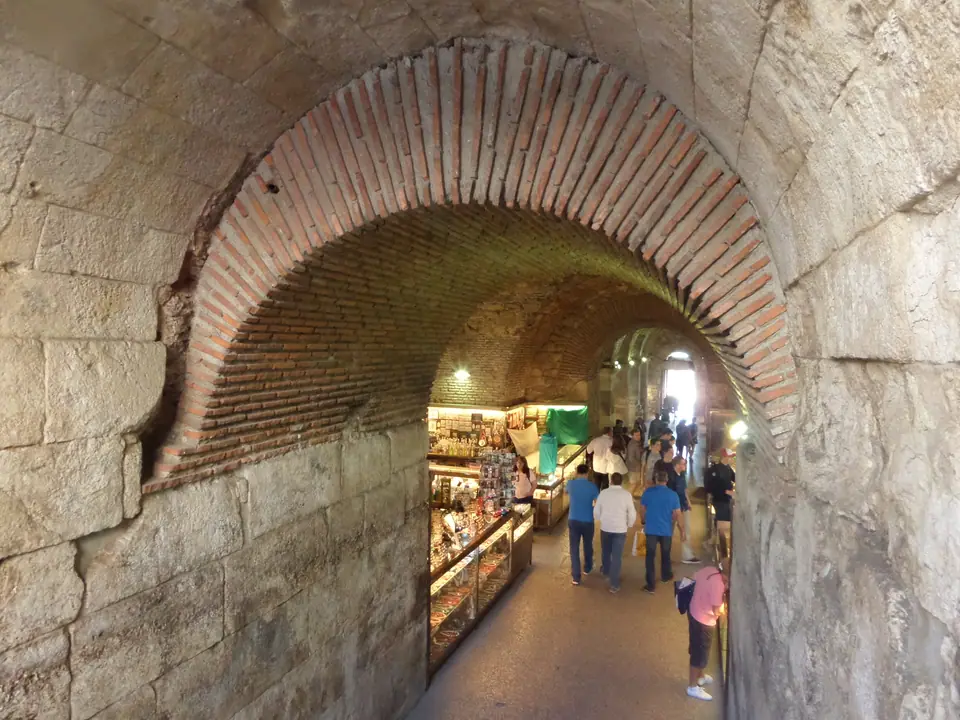
The substructures at the southern end lie beneath the imperial apartments. They are considered among the best-preserved ancient complexes of their kind, with barrel-vaulted stonework. You reach them from the Vestibule. The cellars give a sense of the original plan, which the buildings above have hidden. Entry rules and ticket details change, so check the official city or museum site before you go.
Medieval squares outside the Golden, Silver and Iron Gates
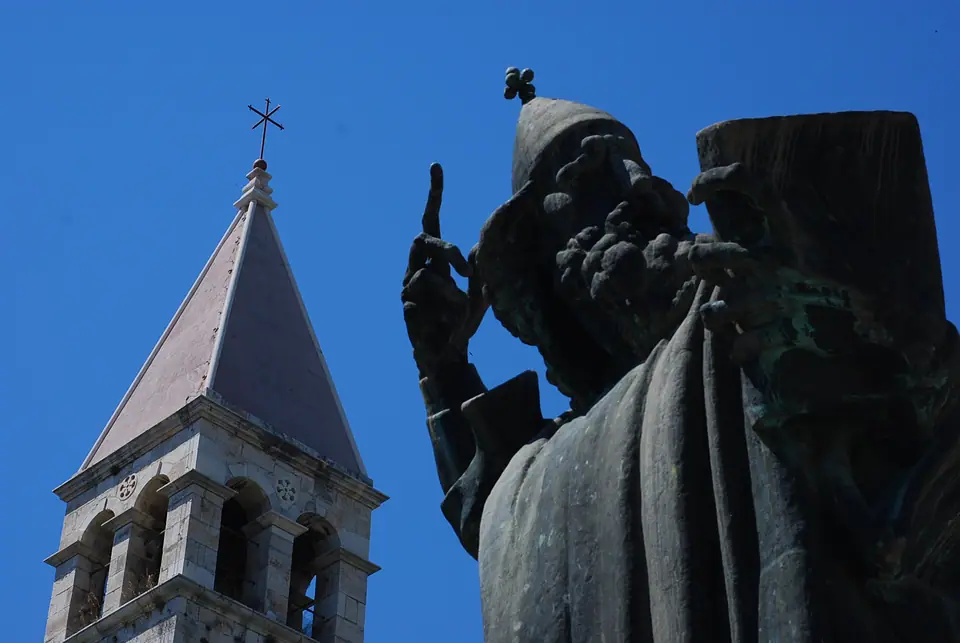
The statue of Gregory of Nin, a bishop who championed the use of the Croatian language in worship, stands outside the Golden Gate. Ivan Meštrović created it in 1929. Many visitors rub the statue's toe for luck, which is a popular local custom.
Dawn-to-noon palace walking sequence without tour crowds
- Begin at the Golden Gate on the north side and walk south along the main street.
- Enter the Peristyle and visit the Vestibule.
- Visit the cathedral and decide whether to climb the bell tower.
- Go down into the cellars and exit towards the Bronze Gate and the Riva.
This order follows the palace's own logic, from the main northern gate towards the sea. Allow about half a day. For what to see after, read our Marjan and Bačvice guide.
How Salona refugees converted Roman masonry into medieval houses
Salona, the nearby Roman city, was sacked by the Avars in 639, and refugees settled inside the palace around 650. Their houses grew into the Roman structure. Later periods added Romanesque, Gothic and Renaissance buildings. Split was under Venetian rule from 1420 to 1797 and then under Austrian rule from 1815. This layered history is why the palace reads as a living town rather than a ruin. See our day trips guide for the ruins of Salona itself.
Where it is
- 1Diocletian's Palace and Old Town
- Split Saint Jerome Airport (SPU) · about 12 km from here in a straight line
- Directions in Google Maps
Stations and taxi ranks: OpenStreetMap. Airports: OurAirports. Distances are in a straight line.
Traveller tips
Real advice from people who have been to Split. Every tip is read by our team before it goes live.
No tips yet. Been here? Yours could be the first.
Thank you! Your tip will appear here after a quick review.
More in Split
Continue exploring Split with related neighbourhood, food, and planning guides