


























Tarabuco Sunday Yampara Market, Textiles & Pujllay Festival Day-Trip Guide
Plan a Sunday day trip from Sucre to Tarabuco (65 km east): explore the traditional Yampara indigenous market, learn to recognise authentic weavings, and discover the March Pujllay festival.
Located 65 kilometres (1 hour 15 minutes by paved highway) east of Sucre at an altitude of 3,290 metres in the Chuquisaca highlands, the rural town of Tarabuco is the heartland of the Quechua-speaking Yampara nation. Every Sunday morning, villagers from dozens of surrounding Andean communities (such as Candelaria, Pisili, and Paredón) converge on Tarabuco's cobbled streets and plazas for one of the most authentic indigenous markets and weaving gatherings in South America.
1. What Makes the Tarabuco Sunday Market Special
Unlike urban souvenir bazaars, Tarabuco's Sunday fair functions simultaneously as a traditional highland agricultural barter market (trueque) and a living showcase of Yampara dress:
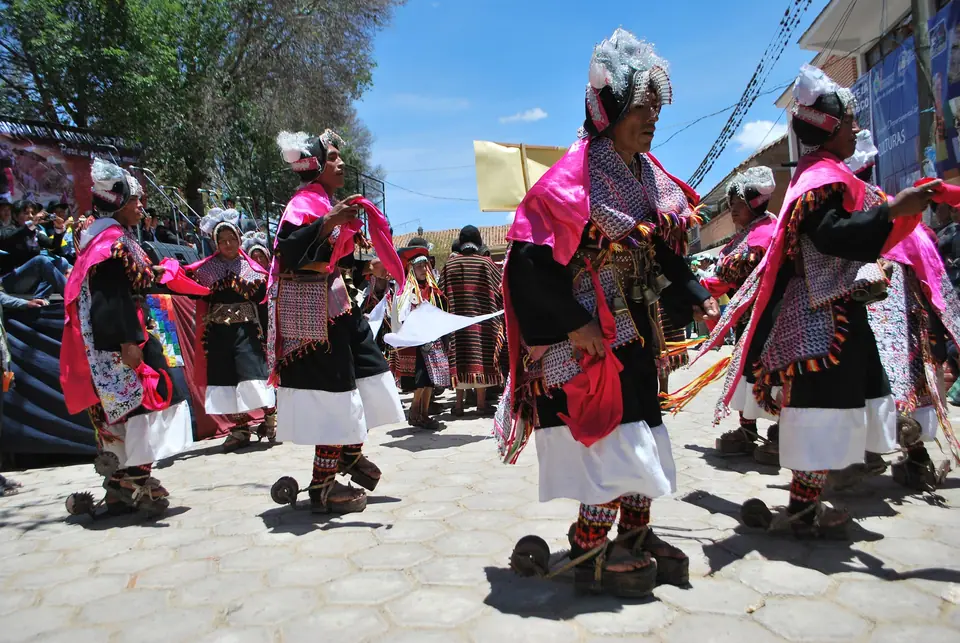
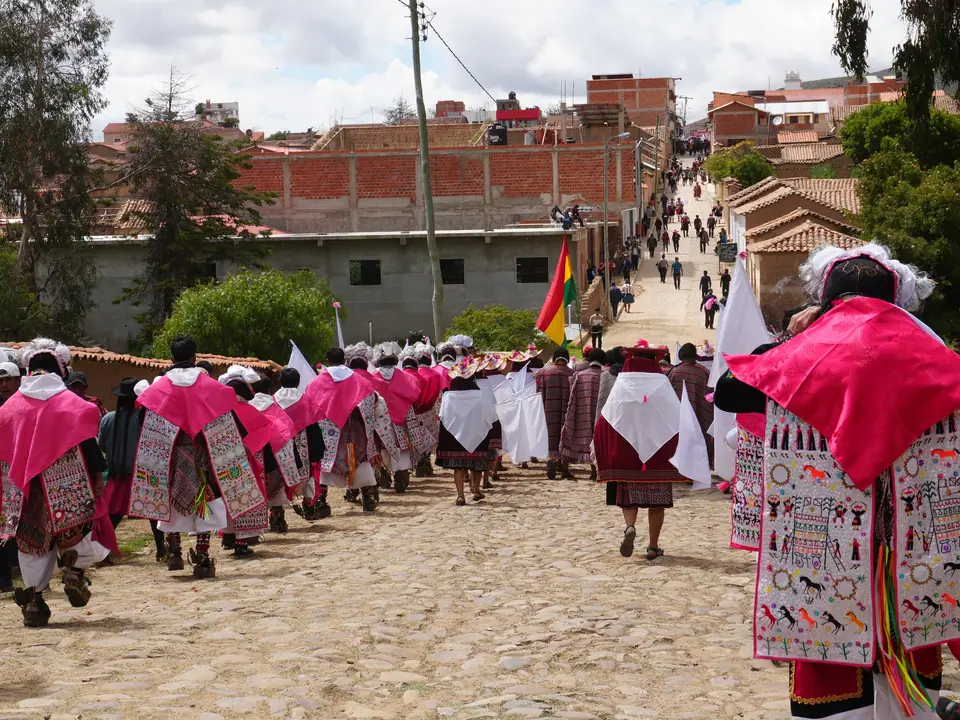
- The Iconic Montera Helmet Hat & Yampara Dress: Look for elders and community authorities wearing the unmistakable montera tarabuqueña, a stiff pressed-leather helmet modelled after sixteenth-century Spanish conquistadors' morion helmets (commemorating the 12 March 1816 Battle of Jumbate, when Yampara fighters defeated a crack royalist battalion and seized their armour), decorated with metallic threads, sequins, and brightly striped woven bands. Alongside the montera, men wear short striped ponchos, white flared breeches, and woven coca bags (chuspas), while women wear finely pleated skirts and hand-woven axsu overskirts.
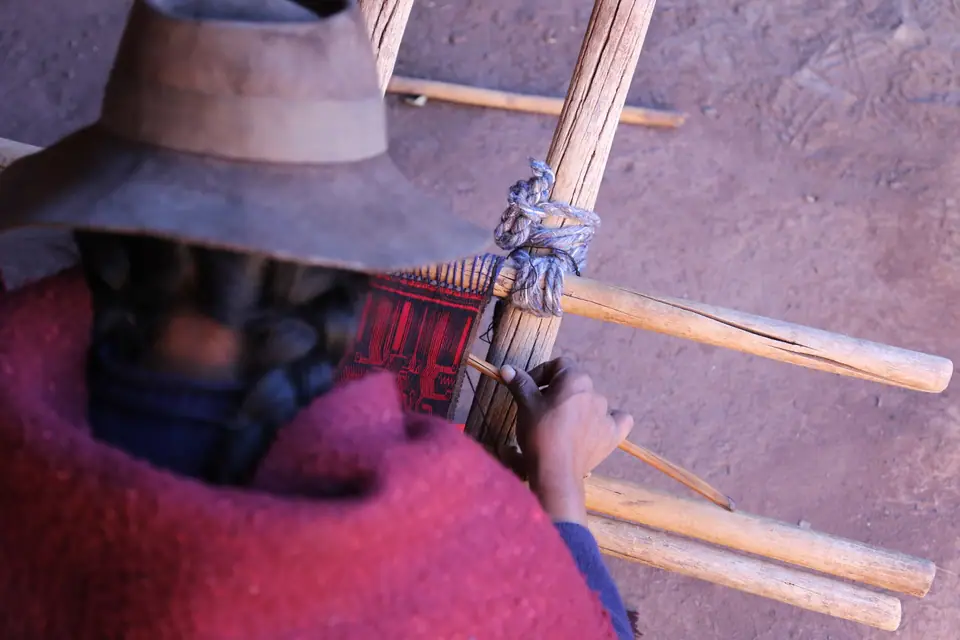
- Hand-Woven Textiles & How to Spot Museum Quality: Around the main square (dominated by a statue of a Yampara warrior tearing the heart from a Spanish soldier at Jumbate) and side streets, weavers lay out ponchos, table runners, belts (chumpis), and wall hangings depicting horses, birds, condors, and dancing figures. Visiting the Museo ASUR at La Recoleta in Sucre the day before helps you distinguish tight, double-sided hand-spun sheep-wool weavings (which take three to six months on an upright loom) from simpler commercial pieces.
- The Barter Produce Market: Walk three blocks away from the main square to the peasant produce plaza, where highland farmers trade sacks of native potatoes, oca tubers, dried broad beans, and salt for valley maize, chillies, and fruit without cash changing hands.
2. The UNESCO-Inscribed Pujllay Festival (Third Sunday of March)
If you visit Sucre in March, Tarabuco stages the Pujllay (inscribed by UNESCO on the Representative List of the Intangible Cultural Heritage of Humanity in 2014), celebrating both the end of the rainy-season harvest and the 1816 victory of Jumbate. Hundreds of dancers strapped with heavy wooden platform sandals weighted with iron spurs (espuelas) march rhythmically around a towering fifteen-metre ladder altar (the Pukara) hung with bread, chicha, fruits, and vegetables.
3. Getting to Tarabuco from Sucre
Shared minibuses and trufis depart Sucre from the Parada a Tarabuco (at the end of Avenida Las Américas / Barrio Petrolero) starting at 06:30 and 07:00 on Sunday mornings, or you can board a round-trip Sunday morning shuttle bus from Plaza 25 de Mayo; aim to arrive in Tarabuco by 08:30 before the afternoon return to Sucre.
Traveller tips
Real advice from people who have been to Tarabuco Sunday Yampara Market, Textiles & Pujllay Festival Day-Trip. Every tip is read by our team before it goes live.
No tips yet. Been here? Yours could be the first.
Thank you! Your tip will appear here after a quick review.
More in Sucre
Continue exploring Sucre with related neighbourhood, food, and planning guides
Sucre: Bolivia's UNESCO White City, Altitude & Layout
Sucre, Bolivia
12 Best Things to Do in Sucre: Casa de la Libertad, Rooftops & Dinosaur Tracks
Sucre, Bolivia
How to Get to Sucre: Alcantarí Airport (SRE), Potosí & Uyuni Highway Routes
Sucre, Bolivia
Best Time to Visit Sucre: Eternal Spring Climate, Dry Season & Pujllay Festival
Sucre, Bolivia
