Photo: Gunnar Klack · CC BY-SA 4.0
Lingotto, the Valentino and Modern Turin
Modern engineering and parks in southern Turin: Lingotto factory renewal, Pinacoteca Agnelli, Pista 500 garden, Eataly, MAUTO, OGR and Valentino Park.
Ride Metro Line 1 six stops south from Porta Nuova. Within minutes Turin trades royal limestone for twentieth-century concrete, steel trusses and rooftop greenery. Between industrial Lingotto and the riverbanks of Parco del Valentino, historic workshops and distilleries now house art galleries, elevated gardens and design museums.
Vertical assembly inside Giacomo Mattè-Trucco factory
Fiat commissioned engineer Giacomo Mattè-Trucco to build a modern car plant at Lingotto between 1916 and 1923. Urban space limits pushed vehicle assembly vertically across five storeys. Reinforced concrete frames stretched 500 metres long and linked every level internally through twin sweeping spiral ramps. Raw steel entered at ground level and climbed steadily upward through workshops floor by floor. Vehicles ascended by one spiral ramp before descending the opposite end once mechanics checked engines upstairs.
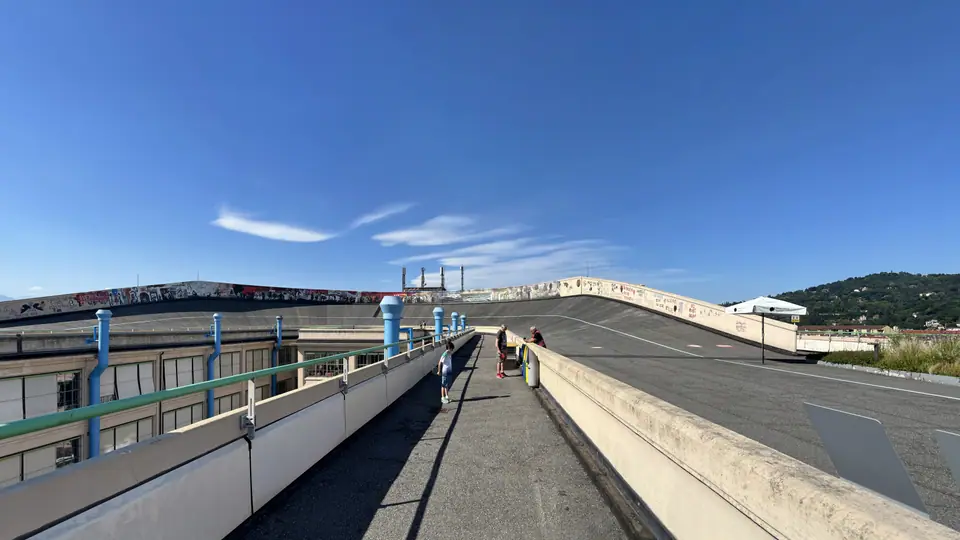
Completed cars rolled straight out onto banked rooftop curves 28 metres high for road testing above city roofs. Manufacturing ended here in 1982. That closure left Turin with a massive concrete landmark awaiting fresh urban life without demolition.
Renzo Piano renewal and the Scrigno art vault
Rather than flattening Lingotto, architect Renzo Piano led an ambitious multi-year conversion of the half-kilometre shell. Preserved helical concrete ramps still anchor both ends of a complex now holding offices, a hotel, Lingotto Fiere exhibition halls and a concert auditorium. Visitors can step past lower shopping walkways up into modern exhibition spaces overlooking central Turin. In 2002, Piano suspended the Pinacoteca Agnelli atop the eastern roof inside a cantilevered steel-and-glass casket named the Scrigno.
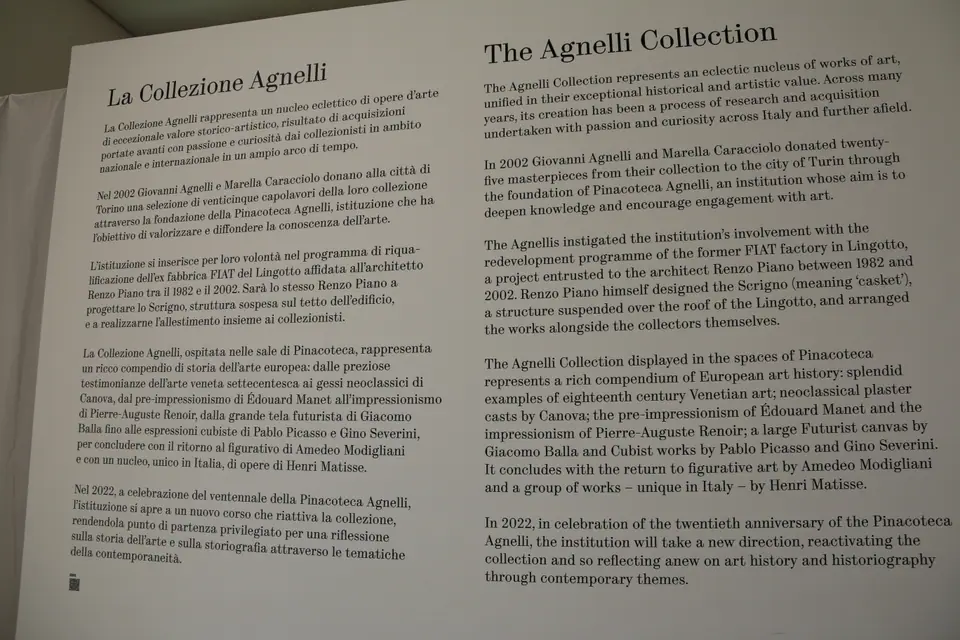
Filtered daylight illuminates Giovanni and Marella Agnelli's permanent collection inside the glass vault. Galleries feature Canaletto Venetian views, Tiepolo canvases, Matisse paintings, Modigliani portraits and Picasso works. Rotating contemporary art shows fill extra gallery rooms immediately below the rooftop deck.
Walking the Pista 500 elevated botanical circuit
Stepping outside the Pinacoteca opens directly onto Pista 500, turning Fiat's banked test circuit into Europe's largest hanging garden. Roughly 40,000 native plants spanning over 300 species flourish along the 1.2-kilometre elevated track beside contemporary outdoor art installations. Sculptures placed right inside seasonal flowerbeds let visitors alternate modern art displays with open mountain views. Clear sightlines stretch cleanly across terracotta apartment roofs towards Superga ridge and the Western Alps.
Walk the full perimeter oval slowly and climb onto both banked north and south curves. Original concrete test surfacing remains exposed right beneath mountain views. Combined Pinacoteca tickets grant straightforward rooftop track access directly from gallery lifts. Early morning or golden late-afternoon light brings calmest walking temperatures across the exposed 28-metre track deck.
Carpano walls repurposed for regional gastronomy
Step out Lingotto's southern exit onto Via Ermanno Fenoglietti where beverage heritage shapes daily dining. Stone halls here once held the nineteenth-century Carpano vermouth distillery where Turin fortified wine expanded globally. Inside those restored buildings, Eataly Torino Lingotto opened its original flagship food hall in 2007.
Pairing morning Pinacoteca galleries with lunch inside Eataly gives travellers an effortless midday pause right outside Lingotto Metro doors. Fresh pasta workshops, wood-fired ovens, cheese ageing counters and Piedmont wine cellars covered in our Turin food guide sit together under one brick roof.
Streamlined chassis inside Museo Nazionale dell Automobile
Ten minutes south on foot down tree-lined Corso Unità d'Italia stands MAUTO, Italy's National Automobile Museum. Its historic collection roots trace back to pioneering assemblies gathered between 1932 and 1960. Architect Cino Zucchi rebuilt the exhibition complex in sinuous glass curves for its dramatic 2011 reopening.
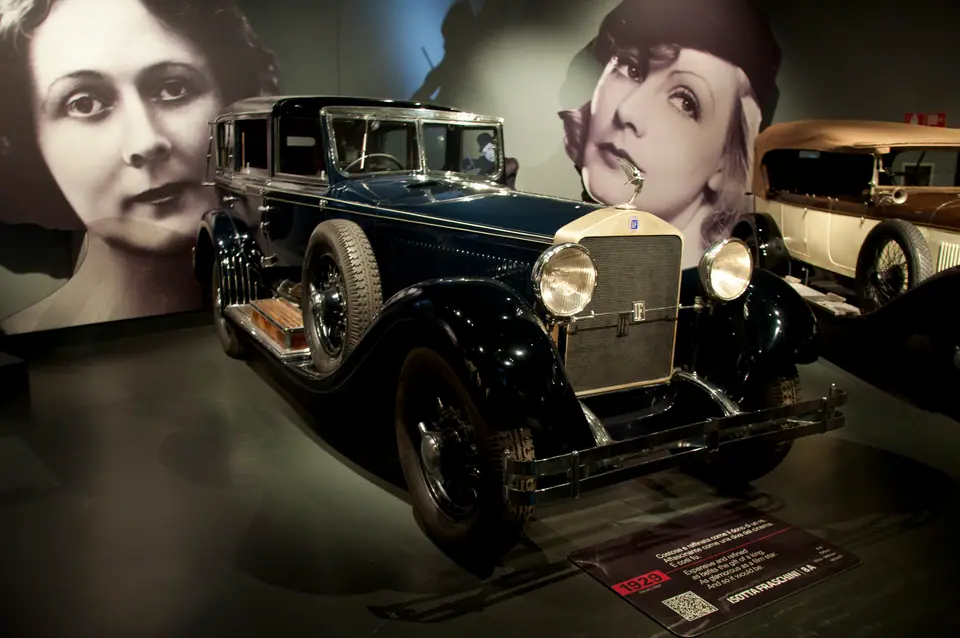
Theatrical dark-lit halls exhibit more than 200 historic automobiles across clear storytelling rooms rather than crowded lines. Steam carriages, early Fiats, aerodynamic wind-tunnel prototypes, rally champions and Formula 1 racers stand next to rare design sketches. Dedicated design rooms trace how Turin coachbuilders Pininfarina, Bertone and Giugiaro shaped international automotive lines. Walking back north reaches Lingotto Metro station cleanly in ten minutes.
Locomotive workshops reborn at OGR Torino
Turin's adaptive architecture extends north-west near Porta Susa railway station at OGR on Corso Castelfidardo. Raised between 1885 and 1895 across 35,000 square metres to overhaul railway locomotives, these twin cathedral-tall brick sheds reopened in 2017 after structural restoration. Independent visitors walk straight inside from Porta Susa rail exits to browse daytime galleries beneath original steel trusses. Today OGR pairs digital art installations and concert halls with relaxed dining bays detailed in our things-to-do guide.
Castello del Valentino and Po riverside paths
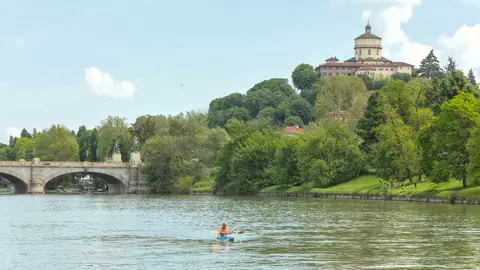
Ride Metro Line 1 back to San Salvario at Marconi or Dante, then stroll east into Parco del Valentino beside calm bends of the River Po. Shaded plane-tree lanes guide cyclists and rowers past the theatrical 1898 Fontana dei Dodici Mesi toward Castello del Valentino.
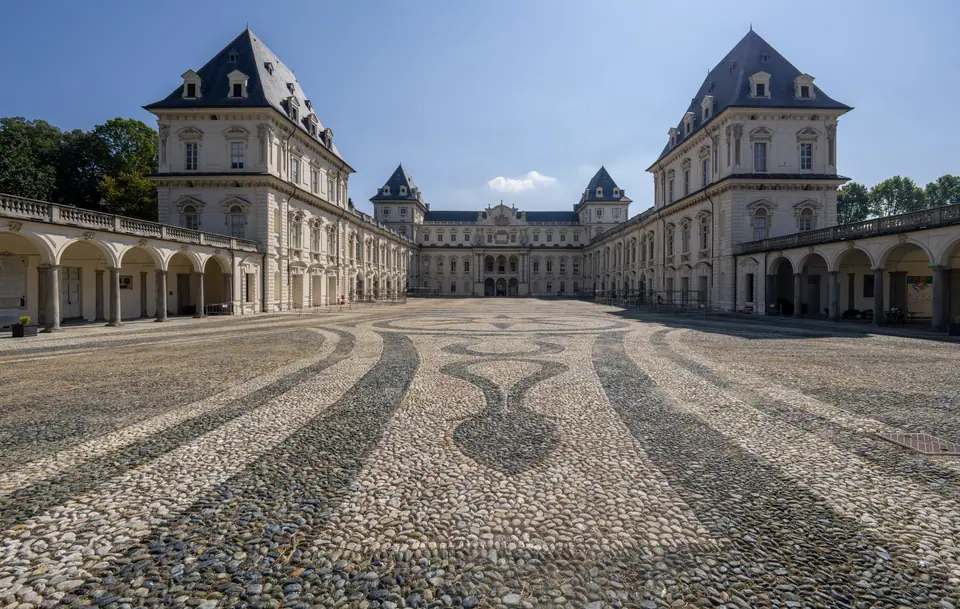
Inscribed within Turin's UNESCO Savoy royal group, this seventeenth-century riverside residence showcases steeply pitched French pavilion roofs built for Christina of France. Restored palace wings today shelter the Architecture Faculty of the Politecnico di Torino. Outer courtyards and broad riverside steps stay easy to photograph on foot along the park trail.
Checking restoration hoardings around the Borgo Medievale
Immediately south of the castle meadows stands the 1884 Borgo Medievale, originally constructed as an exhibition composite of Piedmontese castles and craft lanes. Outer riverbank lanes and paved cycle tracks remain open daily along the water. Before planning interior courtyard walks, check Comune di Torino and Turismo Torino bulletins, since PNRR structural conservation fences keep the walled Borgo closed while surrounding meadows welcome afternoon picnics.
Where it is
- 1Lingotto, the Valentino and Modern Turin
- Turin Airport (TRN) · about 19 km from here in a straight line
- Directions in Google Maps
Stations and taxi ranks: OpenStreetMap. Airports: OurAirports. Distances are in a straight line.
Traveller tips
Real advice from people who have been to Turin. Every tip is read by our team before it goes live.
No tips yet. Been here? Yours could be the first.
Thank you! Your tip will appear here after a quick review.
More in Turin
Continue exploring Turin with related neighbourhood, food, and planning guides