Photo: Jorge Franganillo · CC BY 2.0
What to Eat in Turin
Piedmontese dining in Turin: agnolotti del plin, tajarin, bagna cauda, Porta Palazzo market, Mercato Centrale, historic cafes, bicerin and vermouth.
Turin cooks with royal-kitchen discipline and hearty mountain appetite. Piedmont's capital sits where Alpine dairy pastures meet Vercelli rice plains and Langhe vineyards. That crossroads shaped a cuisine anchored by yolk-rich handmade pasta, slow Nebbiolo braises, roasted hazelnuts and coffee houses preserving eighteenth-century woodwork.
Hand-pinched pasta and cold-weather Piedmont tables
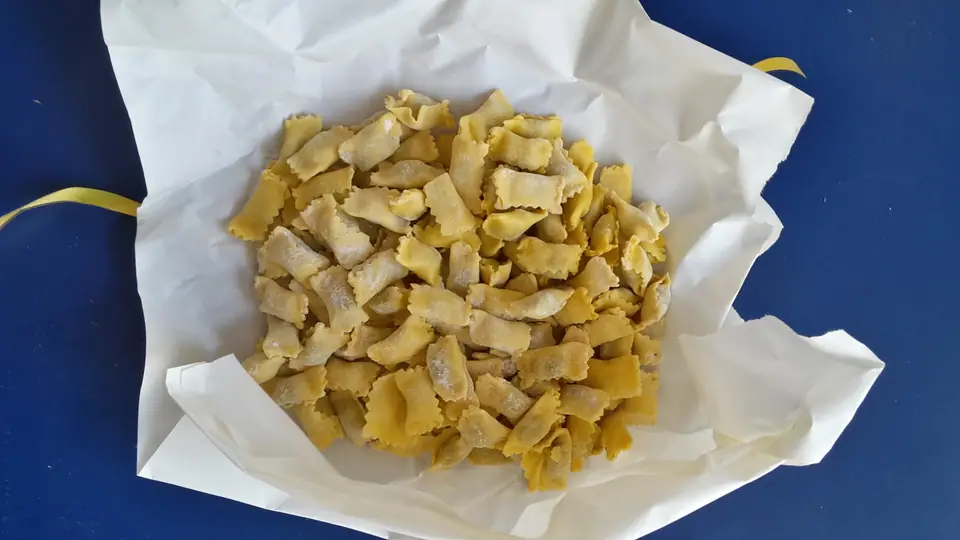
Open a traditional osteria menu in Quadrilatero Romano or Vanchiglia and two regional pastas set the standard. Agnolotti del plin take their Piedmontese dialect name from the finger pinch sealing tiny egg-dough parcels around finely chopped roast meats and herbs. Kitchens serve them either with rich roast pan juices or with melted butter and sage.
Sitting beside them are tajarin, slender golden ribbons enriched with generous egg yolks. Tajarin arrive lightly dressed in melted butter, slow meat ragù or seasonal shaved white truffles during autumn harvests.
Cooler months shift evening tables towards warming shared pots. Bagna càuda, literally warm bath, arrives inside a candle-heated terracotta bowl called a fujòt filled with emulsified garlic, olive oil and salted anchovies. Diners dip crisp raw cardoons, peppers and cooked winter roots directly into the warm bath. Hearty main courses favour brasato al Barolo beef slow-braised in Piedmont red wine. Dessert often lands on bonet, a silky baked cocoa-and-amaretti caramel custard.
Veal, anchovies, breadsticks and classic starters
Before hot courses leave the kitchen, Turin lunches open with cold antipasti rooted in Savoy court traditions. Vitello tonnato layers paper-thin slices of tender poached veal beneath a whipped emulsion of tuna, capers and anchovies. Chilled plates balance salty richness cleanly even in summer.
Waiters automatically place tall tins of thin hand-stretched grissini torinesi on every tablecloth. Invented in Turin in 1679 by court baker Antonio Brunero for delicate digestion in young Duke Victor Amadeus II, local breadsticks are rolled light and crisp rather than biscuit-dense.
Porta Palazzo stalls and the glass Mercato Centrale
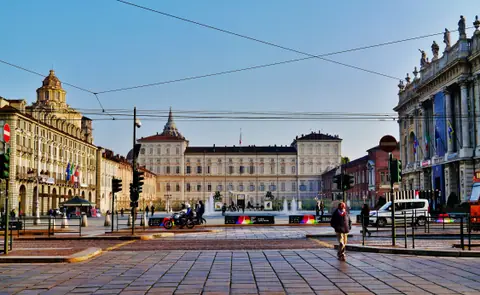
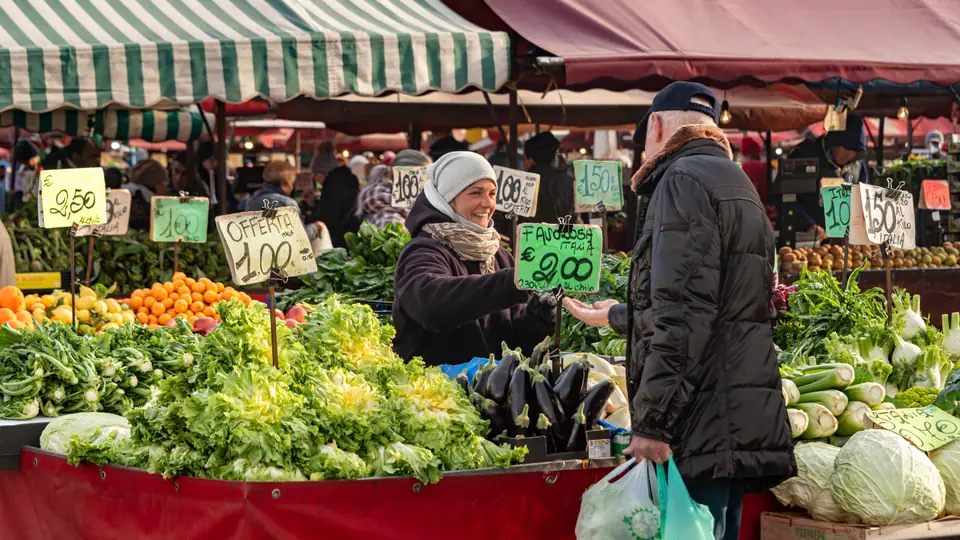
Morning culinary walks gravitate straight to Piazza della Repubblica just north of the Duomo and Piazza Castello. Spanning roughly 51,300 square metres since its 1835 designation as Turin's central hub, Porta Palazzo operates six days weekly as Europe's largest open-air market. Arrive mid-morning when farmers lay out mountain toma cheeses, fresh winter cardoons, cured meats and North African spice stalls under brisk multilingual trade. Shopping outside before lunch preserves wide choice while regional counters stay freshly stocked.
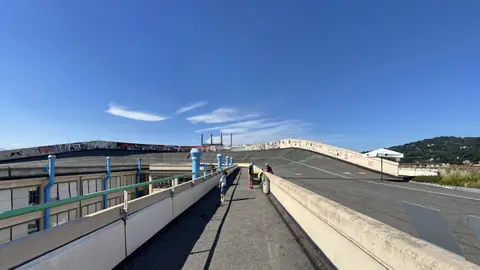
At the square's north-western corner, Massimiliano Fuksas's glass-and-concrete Centro Palatino reopened in 2019 as Mercato Centrale Torino. Sourdough bakers, pasta artisans, fish counters and casual dining kitchens trade beneath one high roof whenever weather shifts during rainy spring or crisp winter mornings. Grab a counter stool inside to sample fresh handmade tajarin or warm sourdough loaves straight after browsing outdoor vegetable stalls.
Three centuries inside Turin historic coffee houses
Few European centres guard so many intact chandeliers and walnut counters shaped by political and literary life. Opened in 1780 on Via Po, Caffè Fiorio hosted conservative aristocrats and Risorgimento statesmen over hot chocolate and gianduja gelato. Around Piazza San Carlo, gilded 1822 Caffè San Carlo and 1903 Caffè Torino preserve marble bars and tall gilt mirrors beneath stone arcades.
Inside the iron-and-glass Galleria Subalpina off Piazza Castello, royal confectioner Baratti & Milano dates back to 1858 with marbled tea salons and layered cremini squares. Steps away under Piazza Castello porticoes, wood-and-bronze Caffè Mulassano opened in 1907 across 31 square metres. Owner Angela Demichelis Nebiolo created Italy's crustless triangular tramezzino sandwich here in 1926, christened by poet Gabriele D'Annunzio. Taking espresso standing at the counter follows quick local routine, whereas seated mirror-room service carries formal table tariffs.
Bicerin cups and Piazza della Consolata mornings
Turin's signature morning pause awaits ten minutes north-west of Via Garibaldi on Piazza della Consolata. Opposite the baroque sanctuary stands Caffè al Bicerin, operating since 1763 at compact marble tables where waiters pour the city's namesake drink into clear stemmed glasses.
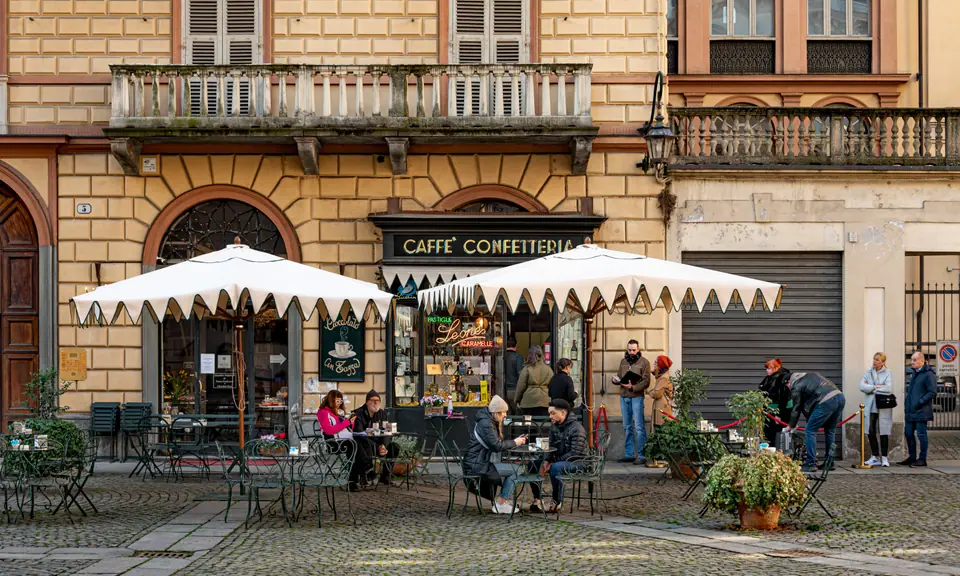
Leave any spoon resting on the saucer rather than stirring the glass. Traditional bicerin stacks three unmixed layers of hot espresso, dense drinking chocolate and cool whipped cream so bitter warmth meets cool sweetness cleanly on every sip.
Hazelnut gianduiotto from workshop to tin box
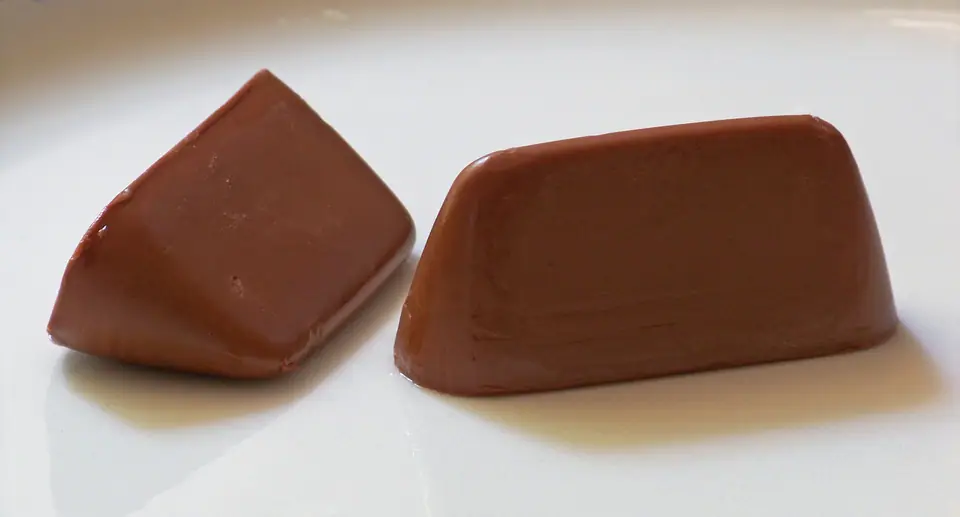
Early nineteenth-century cocoa shortages pushed Turin chocolatiers to stretch scarce beans with finely roasted Langhe hazelnuts. In 1865, Turin house Caffarel launched the boat-shaped, foil-wrapped gianduiotto modelled after the upturned hat of carnival mask Gianduja. Artisan counters across Centro and Quadrilatero Romano still slice creamy hazelnut cremini blocks by weight next to boxed gianduiotti.
Vermouth di Torino and the evening aperitivo hour
Late afternoon turns covered pavement terraces from coffee service to fortified botanical wine. Building on early Piedmont distillers including Cinzano from 1757, Antonio Benedetto Carpano commercialised modern Vermouth di Torino near Piazza Castello in 1786. His recipe infused white wine with wormwood, gentian, bitter citrus peel and Alpine herbs, followed later by Martini & Rossi in 1863.
Ordering Rosso, Bianco or Dry vermouth over ice with lemon zest launches Turin's traditional aperitivo ritual. Cafes pair glasses generously with trays of olives, warm focaccia wedges and savoury tarts ahead of late dinner bookings.
Piedmont wine cellars and seasonal truffle dishes
Table wine lists celebrate Piedmont vineyards sitting under an hour south across Alba, Asti and Monferrato. Structured Barolo and Barbaresco anchor rich winter braises, ruby Barbera and light Dolcetto suit weekday trattorias, and floral Roero Arneis pairs cleanly with chilled antipasti. One final stroll through Lingotto's Eataly halls inside the former Carpano factory gathers regional wines, alpine cheeses and heritage flours under one roof before leaving town.
Where it is
- 1Turin
- Turin Airport (TRN) · about 15 km from Turin in a straight line
- Directions in Google Maps
Stations and taxi ranks: OpenStreetMap. Airports: OurAirports. Distances are in a straight line.
Traveller tips
Real advice from people who have been to Turin. Every tip is read by our team before it goes live.
No tips yet. Been here? Yours could be the first.
Thank you! Your tip will appear here after a quick review.
More in Turin
Continue exploring Turin with related neighbourhood, food, and planning guides