



























Best Time to Visit Yekaterinburg: Ural Weather, Seasons & What to Pack
Check 1991-2020 climate normals for Yekaterinburg, compare warm summer days on the City Pond with snowy Ural winters, and plan what to pack.
Sitting at an elevation of 237 to 270 metres on the eastern slope of the Middle Urals, Yekaterinburg has a continental climate (Köppen Dfb) shaped by its position along the low mountain barrier between Atlantic air masses from Europe and arctic or continental air from Western Siberia and Kazakhstan. According to 1991 to 2020 climate normals from the Yekaterinburg weather station (WMO 28440), the annual mean temperature is 3.5 °C and total annual precipitation is 534 mm.

Summer (June to August): Peak Walking & Day-Trip Season
Late May through August is the warmest and liveliest window to explore Yekaterinburg on foot. Daytime highs average 22.6 °C in June, peak at 24.3 °C in July (with overnight lows of 14.4 °C), and reach 21.4 °C in August. Long northern evenings turn the embankments of Plotinka and the City Pond into outdoor gathering places, and late June hosts the city-wide Ural Music Night festival across dozens of open-air stages.
Summer is also the wettest quarter of the year: July receives an average of 93 mm of rain (72 mm in June and 75 mm in August), usually falling as brief afternoon showers or thunderstorms, so pack a compact umbrella and breathable cotton or linen layers alongside walking trainers for the granite tors of the Shartash Stone Tents.

Spring (April to May) and Golden Autumn (September)
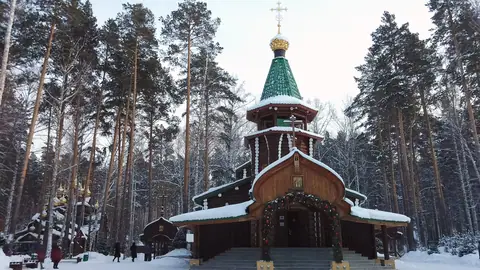
Snow cover typically melts in April (average daytime high 10.1 °C, overnight low 0.3 °C), and by May temperatures climb to a pleasant 18.3 °C with 47 mm of rainfall as the linden alleys of Kharitonov Garden leaf out. Early autumn brings crisp, photogenic days in September (average high 15.0 °C, low 6.8 °C, 45 mm of rain) when golden birch trees frame the wooden churches of Ganina Yama, before October cools sharply to a daytime high of 6.9 °C.
Winter (November to March): Deep Snow & Ice Towns
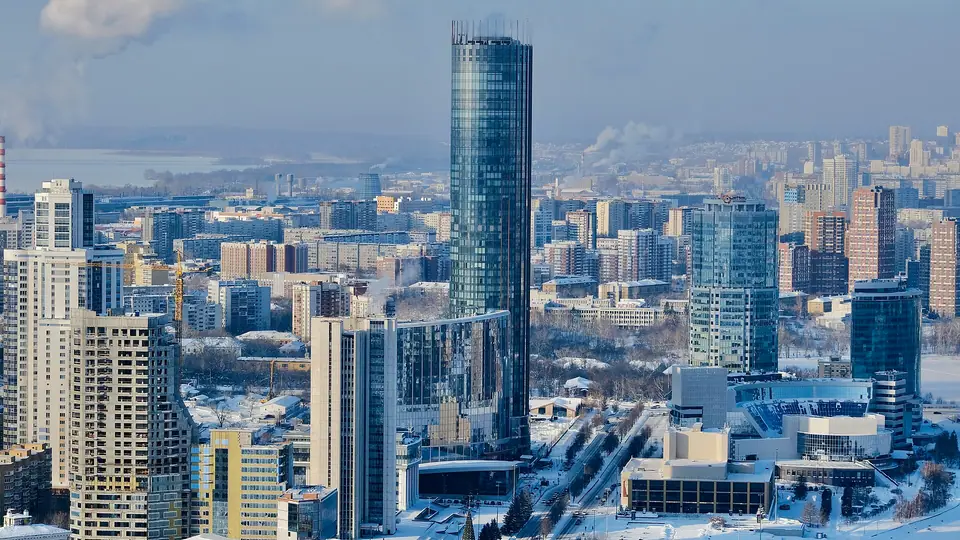
Permanent snow cover settles in November (average high -2.6 °C, low -7.8 °C) and lasts for roughly five months. January is the coldest month, with an average daytime high of -9.3 °C and an average low of -15.5 °C (followed by February at -6.6 °C / -14.1 °C and December at -7.8 °C / -13.3 °C), while winter precipitation is light and dry (19 to 28 mm per month). From late December through January, an illuminated Ice Town is built on 1905 Square; bring a down parka, thermal base layers, wool hat, mittens, and insulated boots with non-slip soles.
Traveller tips
Real advice from people who have been to Best Time to Visit Yekaterinburg: Ural Weather, Seasons & What to Pack. Every tip is read by our team before it goes live.
No tips yet. Been here? Yours could be the first.
Thank you! Your tip will appear here after a quick review.
More in Yekaterinburg
Continue exploring Yekaterinburg with related neighbourhood, food, and planning guides

Sevastyanov's House, Lenin Avenue & Vaynera Street in Yekaterinburg
Yekaterinburg, Russia

Vysotsky Skyscraper, Yeltsin Center & Iset Tower in Yekaterinburg
Yekaterinburg, Russia

Constructivist Architecture in Yekaterinburg: White Tower & Chekist Town
Yekaterinburg, Russia
Ganina Yama Monastery & the Europe-Asia Border Near Yekaterinburg
Yekaterinburg, Russia
