Yekaterinburg
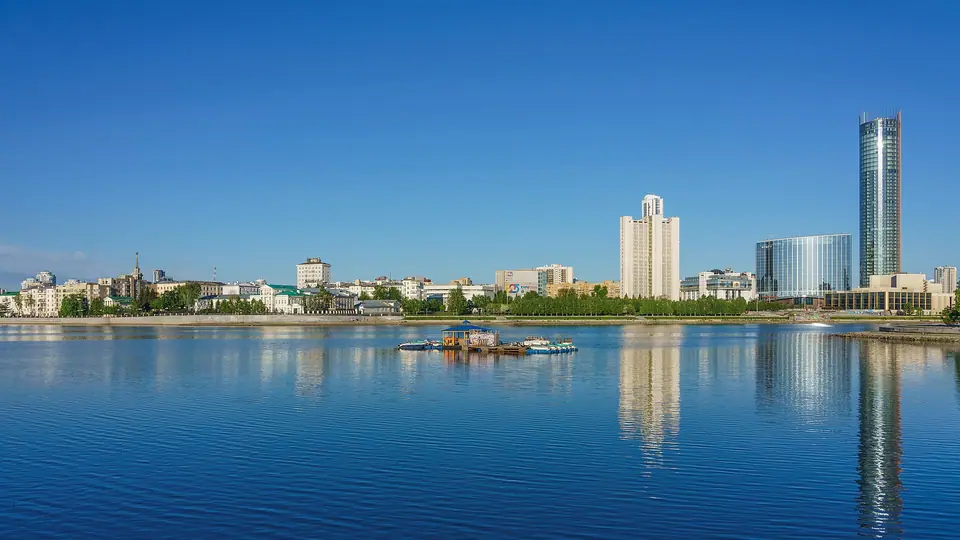
Founded in 1723 on the Iset River along the eastern slopes of the Middle Urals, Yekaterinburg pairs nineteenth-century merchant mansions and 1930s Constructivist landmarks with a modern glass skyline.
Quick decisions
How many days?
Three days cover Plotinka and the Iset embankment, the Church on the Blood, Sevastyanov's House, the Yeltsin Center and Vysotsky viewing deck, Constructivist landmarks, and a half-day trip to Ganina Yama or the Europe-Asia border.
Where should I stay?
Stay near Lenin Avenue and the City Pond for walkable access to Plotinka and museums, around Voznesenskaya Hill near Kharitonov Garden, or along pedestrian Vaynera Street near 1905 Square.
Do I need a car?
No. The historic centre along Lenin Avenue and the Iset River is compact and walkable, the 9-station Metro and 23-route tram network cross the city, and suburban trains reach Nevyansk.
Best for
1920s and 1930s Soviet Constructivist architecture, Imperial Romanov history, Ural gem and stone-carving museums, glass skyscrapers above the City Pond, and crossing the Europe-Asia watershed.
Before you go
Winters on the eastern slope of the Urals are long and freezing (January averages -12.6 °C), while July afternoons average 24.3 °C; check our seasonal weather guide before packing.
Getting around
Walk the riverside paths around the City Pond, ride the north-south Yekaterinburg Metro between the railway station and Ploshchad 1905 Goda, and use trams with the Ekarta transport card (foreign Visa and Mastercard cards do not work in Russia).
Continue your trip
Connect west by rail or air to Kazan, Nizhny Novgorod, and Moscow along the main Trans-Siberian corridor.
Overview
Founded on 7 (18) November 1723 by Vasily Tatishchev and Georg Wilhelm de Gennin as a water-powered metallurgical fortress-plant on the Iset River, Yekaterinburg was named after Empress Catherine I, wife of Peter the Great. Sitting on the eastern slope of the Middle Urals along the continental divide between Europe and Asia, the settlement gained town status under Catherine II in 1781 along the Siberian Route and was known from 14 October 1924 to 23 September 1991 as Sverdlovsk.
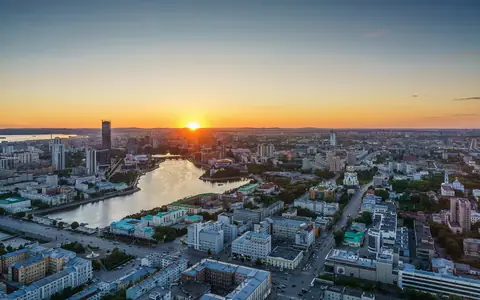
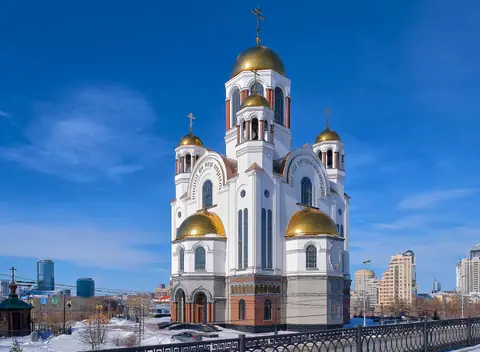
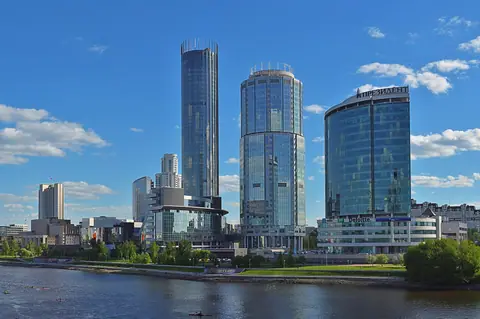
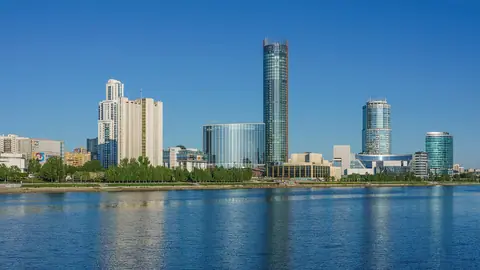
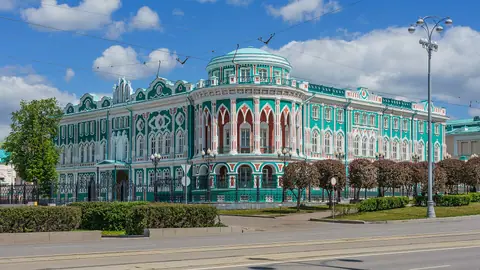
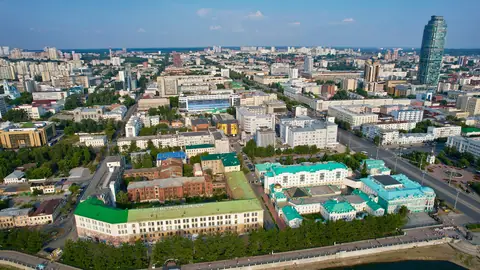
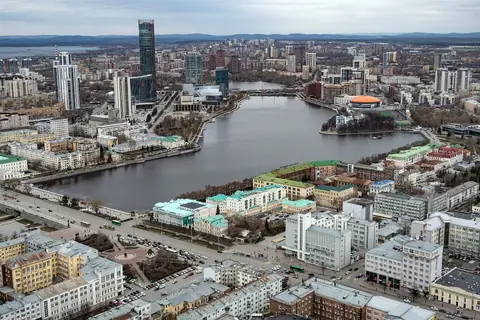
At the heart of the city, the 1723 larch-and-granite dam known as Plotinka impounds the City Pond along Lenin Avenue. Around the water rise the green-and-white 1866 facade of Sevastyanov's House, the five-domed Church on the Blood on Voznesenskaya Hill, the 188.3-metre Vysotsky skyscraper and Boris Yeltsin Presidential Center, and a remarkable ensemble of 1920s and 1930s Constructivist architecture.
Getting there
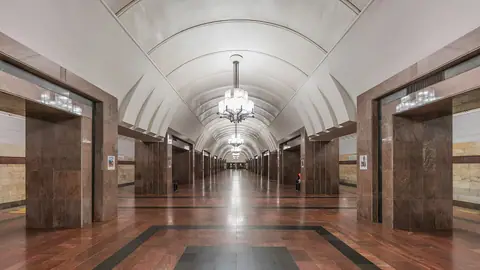
Koltsovo International Airport (SVX) lies 16 kilometres southeast of the city centre, linked to town by express buses and commuter trains, while long-distance services on the Trans-Siberian Railway stop at Yekaterinburg-Passazhirsky Railway Station (1,667 kilometres east of Moscow). Within the city, a single 12.7-kilometre Metro line with 9 stations and a 23-route tram network opened on 7 November 1929 connect the central squares and outer districts.
Where to stay
Visitors typically base themselves around Plotinka and the City Pond along Lenin Avenue for immediate access to museums and riverfront walks, on Voznesenskaya Hill near the Church on the Blood and Kharitonov Garden, or near 1905 Square and pedestrian Vaynera Street.
Things to do
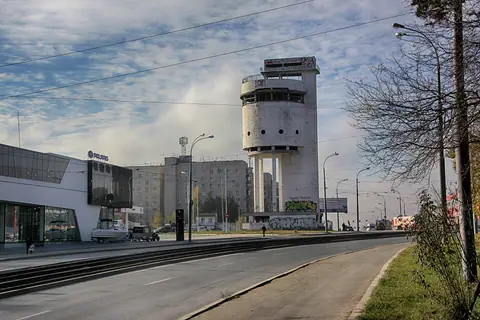
Stroll across the 1723 Plotinka dam and Historic Square, visit the Church on the Blood and Rastorguyev-Kharitonov Palace, and admire the 1866 corner rotunda of Sevastyanov's House on Lenin Avenue. Ride up to the 52nd-floor observation deck of the Vysotsky skyscraper and tour the nine halls of the Boris Yeltsin Museum, trace 1930s avant-garde blocks from Gorodok Chekistov to the White Tower in Uralmash, and head out to Ganina Yama or the 57.5-metre Leaning Tower of Nevyansk.
Food and drink
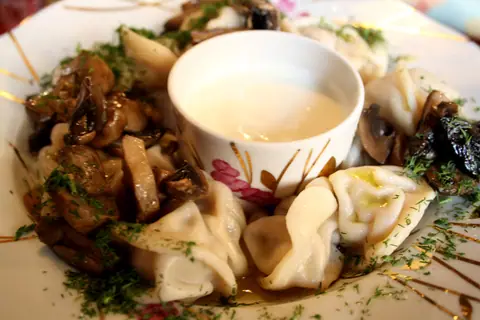
Traditional Ural cuisine in Yekaterinburg centres on hand-folded Ural pelmeni dumplings stuffed with a three-meat blend of beef, mutton, and pork or woodland mushrooms, round open-faced shangi yeast pastries brushed with sour cream or mashed potato, and hot bowls of beet borscht served with thick smetana.
Culture
Known as the capital of the Urals, Yekaterinburg combines three centuries of ironworking, gold mining, and malachite stone-carving heritage with a lively stage scene led by the 1912 Opera and Ballet Theatre on Lenin Avenue, the 1980 lattice-domed Yekaterinburg Circus on the Iset bank, and the nineteenth-century Literary Quarter.
Weather by month
Yekaterinburg is warmest in July, with average highs around 24°C, and coldest in January, when nights drop to about -15°C. January is the wettest month, with rain on about 4 days. For mild weather with fewer rainy days, aim for May, June and July.
| Month | Low | Range | High | Rain | Rainy days |
|---|---|---|---|---|---|
| Jan | -15°C | -9°C | 26 mm | 4 d | |
| Feb | -14°C | -7°C | 22 mm | 4 d | |
| Mar | -7°C | 1°C | 19 mm | 3 d | |
| Apr | 0°C | 10°C | 17 mm | 3 d | |
| May | 7°C | 18°C | 20 mm | 3 d | |
| Jun | 12°C | 23°C | 20 mm | 3 d | |
| Jul | 14°C | 24°C | 19 mm | 3 d | |
| Aug | 12°C | 21°C | 23 mm | 4 d | |
| Sep | 7°C | 15°C | 21 mm | 4 d | |
| Oct | 1°C | 7°C | 23 mm | 4 d | |
| Nov | -8°C | -3°C | 24 mm | 4 d | |
| Dec | -13°C | -8°C | 25 mm | 4 d |
Averages of daily values from 2015 to 2024. Rainy days are days with at least 1 mm of rain. Source: Open-Meteo · Compare destinations by month.
Yekaterinburg on the map
Every place we cover in Yekaterinburg. Tap a category or pin to explore.
In-depth Yekaterinburg guides
Browse the guides grouped by topic: sights, neighbourhoods, food, transport, day trips and trip planning.
Sights, Landmarks & Parks
Key monuments, viewpoints, museums and nature trails.
- Best Things to Do in Yekaterinburg: Landmarks, Museums & ViewsExplore Yekaterinburg's top sights, from Plotinka and the Church on the Blood to the Yeltsin Center, Vysotsky observation deck, and Constructivist icons.
- Plotinka, Historic Square & the Iset Embankment in YekaterinburgWalk across the 1723 Plotinka dam where Yekaterinburg was founded, explore the museums and Ural Mineral Garden of Historic Square, and follow the Iset.
- Church on the Blood & Kharitonov Palace: Voznesenskaya Hill GuideVisit Yekaterinburg's Church on the Blood on the site of the Ipatiev House and explore the neoclassical Rastorguyev-Kharitonov Palace and its 1826 park.
- Vysotsky Skyscraper, Yeltsin Center & Iset Tower in YekaterinburgTake in 360-degree Ural views from the 52nd floor of the Vysotsky skyscraper and explore the Boris Yeltsin Presidential Center and 209-metre Iset Tower.
- Constructivist Architecture in Yekaterinburg: White Tower & Chekist TownTrace Yekaterinburg's 1920s and 1930s Soviet avant-garde heritage, from the reinforced-concrete White Tower in Uralmash to Gorodok Chekistov on Lenin Avenue.
Neighbourhoods & Where to Stay
Districts, historic quarters and the best bases for your stay.
- Yekaterinburg: Everything You Need to KnowPlan your visit to Yekaterinburg with key history along the Iset River, central districts around Plotinka and the City Pond, and transport links.
- Sevastyanov's House, Lenin Avenue & Vaynera Street in YekaterinburgAdmire the 1866 Neo-Gothic facade of Sevastyanov's House on Lenin Avenue, pass the 1912 Opera Theatre, and stroll pedestrian Vaynera Street.
- Where to Stay in Yekaterinburg: Best Central Areas & NeighbourhoodsCompare the best areas to stay in Yekaterinburg, from the City Pond and Lenin Avenue to Voznesenskaya Hill, Vaynera Street, and the Railway Station quarter.
- Best Time to Visit Yekaterinburg: Ural Weather, Seasons & What to PackCheck 1991-2020 climate normals for Yekaterinburg, compare warm summer days on the City Pond with snowy Ural winters, and plan what to pack.
- 3 Days in Yekaterinburg: Plotinka, Constructivism & Ural Day TripsFollow a well-paced 3-day Yekaterinburg itinerary covering Plotinka, the Church on the Blood, Sevastyanov's House, the Yeltsin Center, and Nevyansk.
Food & Drink
Local dishes, markets, cafés and dining districts.
Getting Around & Arrival
Airport transfers, public transit, passes and driving rules.
- How to Get to Yekaterinburg: Koltsovo Airport (SVX) & Trans-Siberian TrainsPlan your arrival in Yekaterinburg via Koltsovo International Airport (SVX) or along the Trans-Siberian Railway into Yekaterinburg-Passazhirsky Station.
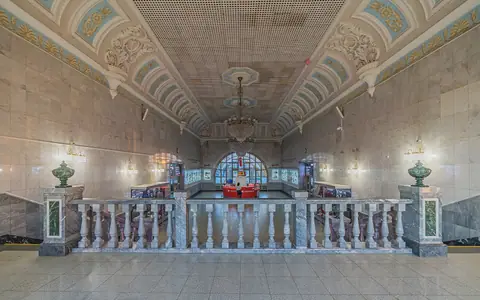
- Getting Around Yekaterinburg: Metro, Trams & Walking RoutesNavigate Yekaterinburg with ease using the 9-station stone-clad Metro line, the 23-route tram network, and the Red Line pedestrian trail.
Day Trips & Excursions
Easy half-day and full-day trips from the city.
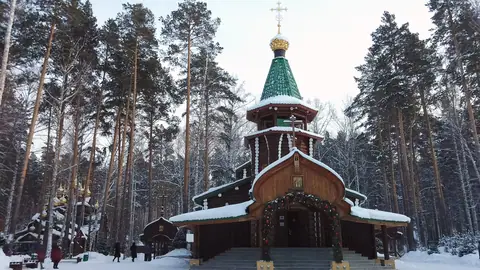
- Ganina Yama Monastery & the Europe-Asia Border Near YekaterinburgVisit the seven wooden churches of Ganina Yama Monastery in the birch forest north of Yekaterinburg and stand astride the Europe-Asia watershed.
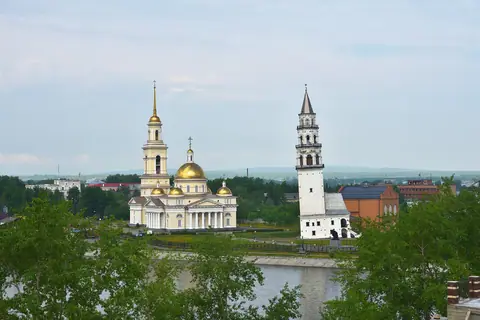
- Shartash Stone Tents & Nevyansk Leaning Tower: Day Trips from YekaterinburgExplore the 300-million-year-old granite tors of the Shartash Stone Tents inside eastern Yekaterinburg and ride north to the 57.5-metre Leaning Tower of Nevyansk.
Need your embassy or consulate in Russia? See embassies and consulates in Russia.
Reviews
Log in to write a review.
No reviews yet.