


























Plotinka, Historic Square & the Iset Embankment in Yekaterinburg
Walk across the 1723 Plotinka dam where Yekaterinburg was founded, explore the museums and Ural Mineral Garden of Historic Square, and follow the Iset.
Every walk through Yekaterinburg begins at Plotinka (affectionately meaning "Little Dam"), the eighteenth-century water barrier on the Iset River around which the original 1723 ironworks fortress was built. Carrying Lenin Avenue between the broad waters of the City Pond to the north and the 8-hectare park of Historic Square (Istorichesky Skver) to the south, this river corridor forms the pedestrian spine of the city.
The 1723 Dam and Its Engineering
Construction of the dam started in the spring of 1723 under Nevyansk dam master Leonty Zlobin and finished on 11 September 1723, two months before the ironworks officially launched on 7 (18) November 1723. Built around a framework of rot-resistant Ural larch logs packed with rubble stone and clay, the original structure measured 209 metres long, 42 metres wide, and 6.5 metres high, with a central working spillway and two side floodgates that drove the waterwheels of the state metallurgical plant.
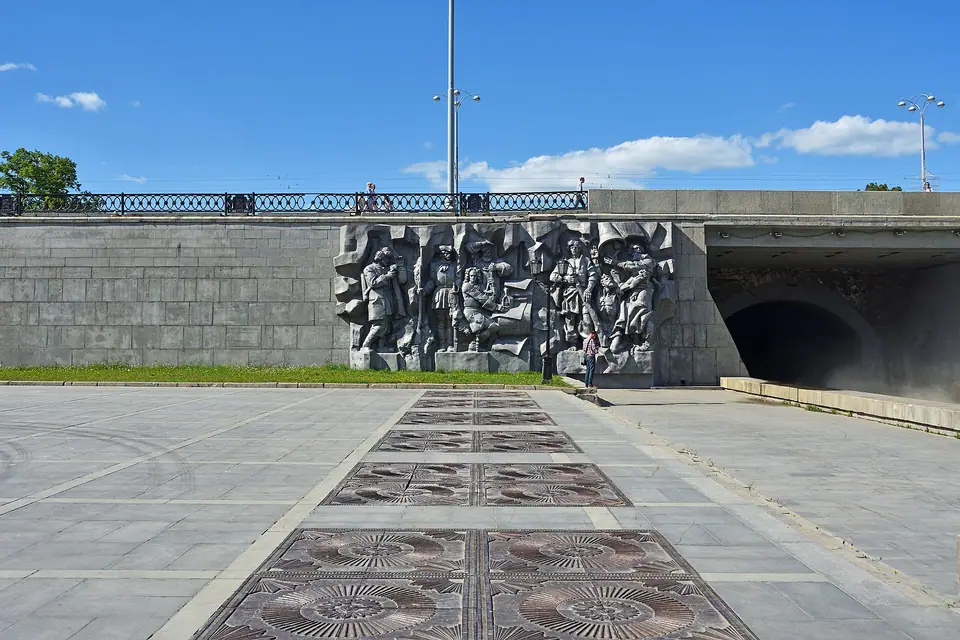
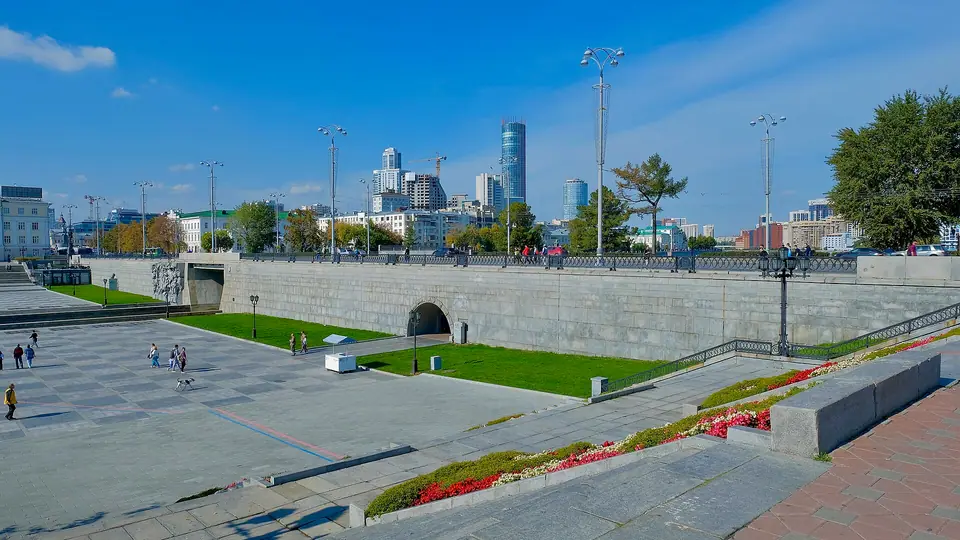
In the 1830s the dam was widened to a design by classical architect Mikhail Malakhov, and in 1972 to 1973 it was reinforced with concrete and clad in grey Ural granite for the city's 250th anniversary, when aluminium bas-reliefs celebrating Ural metalworkers were mounted along the retaining walls. On 11 March 1958 a bronze bust of Ural folklorist Pavel Bazhov was unveiled on the western terrace, followed on 5 November 1987 by a bust of writer Dmitry Mamin-Sibiryak, and in 1998 a pedestrian underpass beneath Lenin Avenue opened for the 275th anniversary, lined with murals known to locals as the Viktor Tsoi passage.
Historic Square, the Water Tower, and the Mineral Garden
After the old Yekaterinburg Mint and mechanical plant closed, the industrial yard south of Plotinka was transformed in 1973 into 8-hectare Historic Square. Key stops along the lower river channel include:
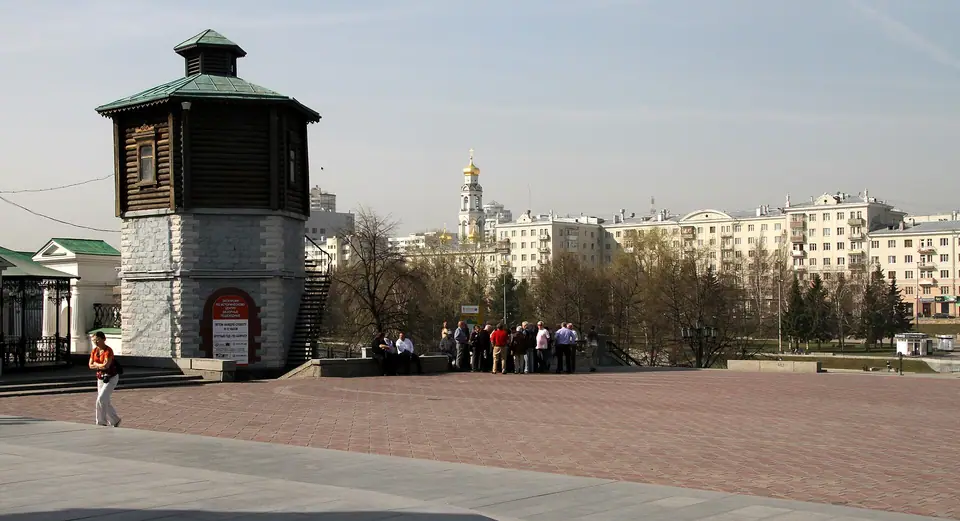
- The Water Tower (Vodonapornaya Bashnya): Built in the late 1890s for the railway workshops with a cylindrical granite base and a hexagonal wooden upper tier housing a 39-cubic-metre iron tank; converted into a museum shop and lookout in 1973.
- Ural Mineral Garden: An open-air geological display beside the river paths featuring unpolished multi-tonne boulders of rose rhodonite, banded jasper, smoky quartz, and serpentinite quarried across the Middle and Southern Urals.
- Factory Museums: The surviving nineteenth-century stone workshops house the Museum of Architecture and Design of the Ural State University of Architecture and Art, the Museum of Nature, and the Yekaterinburg Museum of Fine Arts (home to the cast-iron Kasli Pavilion crafted for the 1900 Paris World's Fair).
Walking the City Pond Embankments
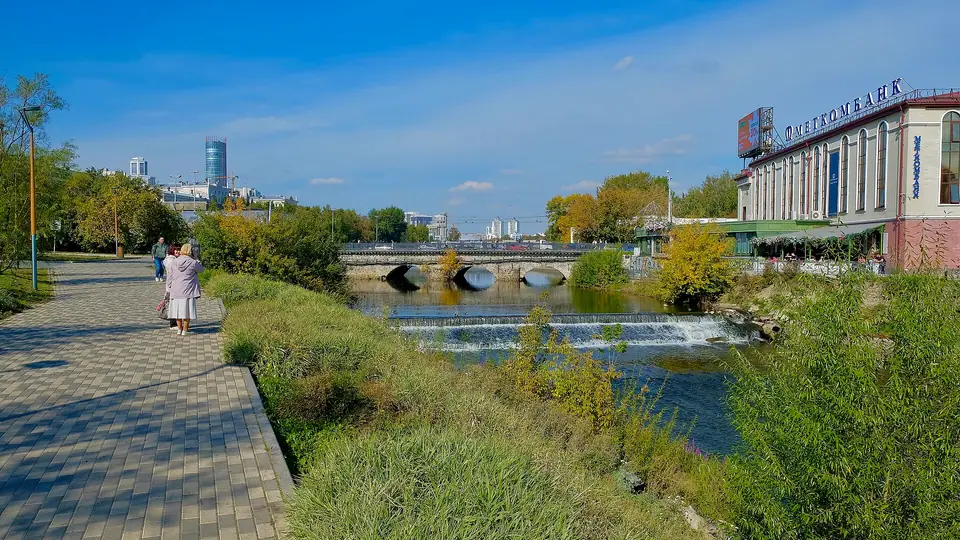
North of Plotinka, paved promenades follow the Naberezhnaya Rabochey Molodyozhi along the western bank past the 1790s Merchant Chief's Mansion (Dom Glavnogo Nachalnika) toward the Yeltsin Center, while the eastern bank leads past Sevastyanov's House to the Dinamo sports complex.
Traveller tips
Real advice from people who have been to Plotinka, Historic Square & the Iset Embankment in Yekaterinburg. Every tip is read by our team before it goes live.
No tips yet. Been here? Yours could be the first.
Thank you! Your tip will appear here after a quick review.
More in Yekaterinburg
Continue exploring Yekaterinburg with related neighbourhood, food, and planning guides
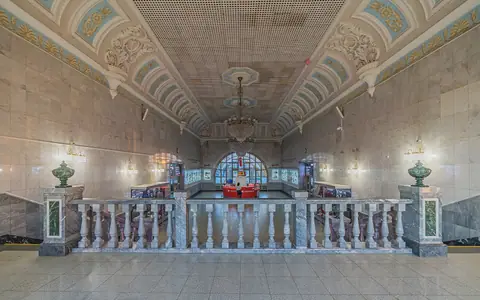
How to Get to Yekaterinburg: Koltsovo Airport (SVX) & Trans-Siberian Trains
Yekaterinburg, Russia
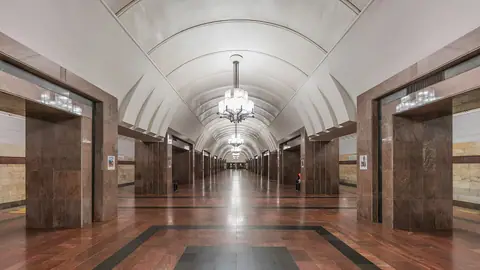
Getting Around Yekaterinburg: Metro, Trams & Walking Routes
Yekaterinburg, Russia
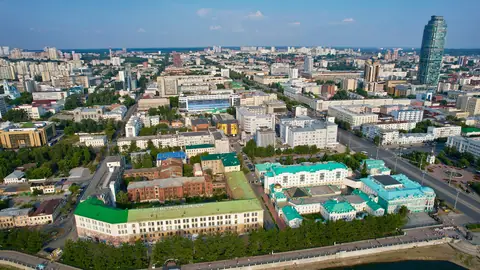
Where to Stay in Yekaterinburg: Best Central Areas & Neighbourhoods
Yekaterinburg, Russia
Best Time to Visit Yekaterinburg: Ural Weather, Seasons & What to Pack
Yekaterinburg, Russia
