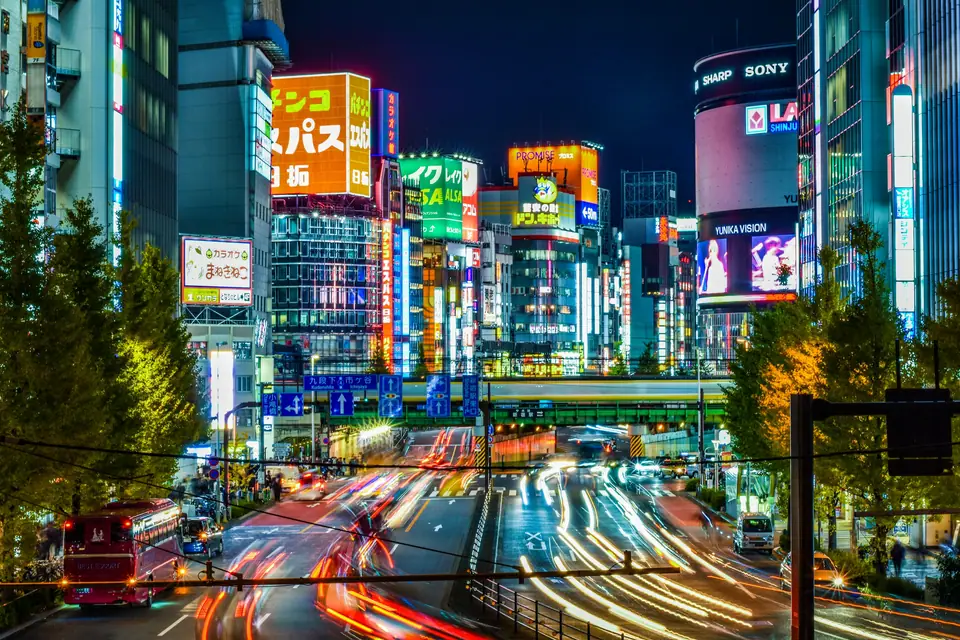
Photo by Jean Vella on Unsplash
Where to Stay in Tokyo: Best Wards, Areas & Hotel Tips
A ward-by-ward comparison of Tokyo's best hotel bases by rail access, atmosphere, room square footage, and budget.
In a metropolis without a single central square, the golden rule of Tokyo accommodation is simple. Always book within a five- to seven-minute walk of a station on the JR Yamanote Line loop or the Tokyo Metro Ginza Line. Walking fifteen minutes to a suburban transfer line at the start and end of a 20,000-step day quickly wears you down. Using seven-digit Japanese postal codes and ward boundaries, we compare the four best bases for a first visit below. Cross-check your arrival airport train in our Tokyo transport guide before locking in your hotel.
Comparing Tokyo's four main accommodation hubs
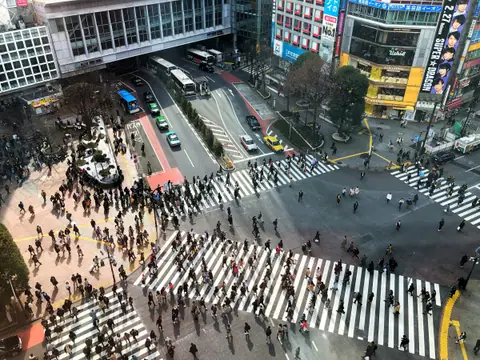
- Shinjuku (Postcode 160-0021 to 160-0023) / Shibuya (Postcode 150-0002): Both anchor the western arc of the JR Yamanote loop with direct Narita Express trains. Shinjuku offers the widest choice of hotel rooms in Japan. It pairs quiet high-rise four- and five-star towers in West Shinjuku (160-0023) with 24-hour dining and direct day-trip trains to Hakone and Mount Fuji. Shibuya sits three stops south with sleek modern tower hotels around the Scramble Crossing and easy walking access to Harajuku, Meiji Jingu, and Omotesando. Note that Shibuya room availability is tighter and nightly rates run higher.
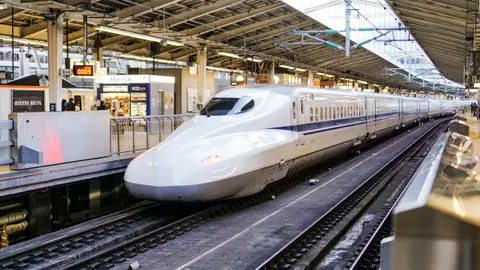
- Tokyo Station & Ginza (100-0005 & 104-0061) / Asakusa & Ueno (110-0005 & 111-0032): Choose Tokyo Station and Ginza for wide pavements, basement food halls, and rapid Shinkansen access. Choose Asakusa and Ueno in northeastern Taito Ward for historic shitamachi street life around Sensō-ji and Ueno Park. Both eastern hubs enjoy 36-to-41-minute Keisei Skyliner access from Narita Airport and lower nightly rates for mid-range hotels.
Street-by-street breakdown of each neighbourhood
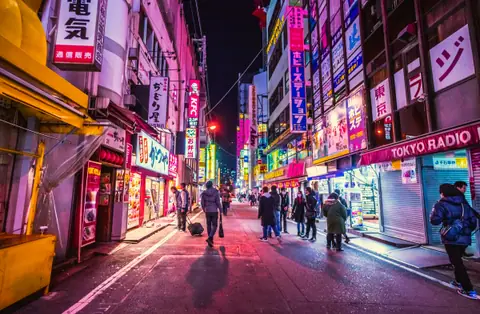
- Shinjuku: West Exit vs South Exit vs East Exit. Shinjuku's character changes dramatically across the railway tracks. For calm nights, wide pavements, and large rooms overlooking Shinjuku Central Park, book in Nishi-Shinjuku (West Shinjuku, 160-0023) or near the Southern Terrace (151-0053). If you want to step straight out into neon alleys, book in Higashi-Shinjuku or Kabukicho (160-0021) on the east side. Keep in mind that street noise there continues until dawn; see our Shibuya and Shinjuku guide.
- Shibuya and Ebisu (150-0002 to 150-0022). Staying right beside Shibuya Station puts the Ginza, Hanzomon, and Fukutoshin subway lines plus the JR Yamanote loop at your feet. Travellers who want west-side rail access with calmer adult bistros and tree-lined streets can look one stop south on the Yamanote Line at Ebisu or along the Meguro River in Nakameguro.
- Tokyo Station (Marunouchi / Nihombashi) and Ginza (100-0005 to 104-0061). Staying between the Marunouchi red-brick facade of Tokyo Station, Nihombashi, and Ginza 1-chome through 8-chome means you can walk to the Imperial Palace East Gardens and Tsukiji Outer Market. You can also ride the Ginza Line straight to Asakusa or Shibuya without a transfer. Many families prefer Marunouchi and Kyobashi because the wide, flat pavements are effortless with strollers and rolling suitcases.
- Asakusa and Ueno (110-0005 and 111-0032). In Asakusa, look between Kaminarimon-dori, the Sumida River, and the Tsukuba Express station for boutique hotels with rooftop views of Sensō-ji and the Tokyo Skytree. In Ueno, stay on the park side or between Keisei-Ueno and Okachimachi (near the Ameyoko market arcade) rather than remote residential blocks north of the tracks. Riding across town from Asakusa to Shibuya takes roughly 32 minutes on the Ginza Line.
- Roppongi, Akasaka, and Toranomon (Minato Ward; 106-0032 to 107-0052). Centrally positioned inside the Yamanote loop, Akasaka (around Akasaka-mitsuke and Tameike-Sanno stations) is a favourite for mid-range travellers. Five subway lines intersect within two blocks. Korean and Japanese restaurants stay open late, and nightly rates often beat Ginza and Shibuya. Nearby Roppongi and Toranomon suit visitors focusing on contemporary art museums and skyline views of Tokyo Tower.
Understanding Japanese hotel categories and room square metres
Never book a Tokyo hotel room without checking the exact floor area in square metres (m²) on the booking page:
- Japanese Business Hotels (11 to 16 m²) / Full-Service Western Hotels (28 to 45+ m²): Domestic chains like Dormy Inn, Tokyu Stay, Mitsui Garden, and Daiwa Roynet sit right beside stations. Dormy Inn offers rooftop baths and free late-night yonaki soba noodles, while Tokyu Stay provides in-room washer-dryers. However, a standard "Semi-Double" room (semi-daburu, a single 120-to-140-centimetre bed for two people) measures only 11 to 14 square metres. That leaves minimal floor space for open suitcases. Families or couples carrying large luggage should book a Twin Room (typically 20 to 26 m²) or store heavy bags under the raised bed frame. Note that Japanese hotels price rooms strictly per person rather than per room, so booking for two adults when travelling with a child can cause check-in issues unless every guest is listed on the reservation.
- Traditional Ryokan & Minpaku (Licensed Rentals): For tatami mats, futon bedding, and wooden cypress tubs, look for urban ryokan in Asakusa or Yanaka. Modern apartment-hotels such as Mimaru and MONday Apart also provide bunk beds, dining tables, and kitchenettes tailored to families of four to six. If booking a short-term apartment under Japan's Private Lodging Business Act (Minpaku), verify that the listing displays its mandatory 10-digit government notification number starting with the letter M.
Tokyo accommodation tax and luggage forwarding (Takkyubin)
Tokyo charges a municipal accommodation tax per person per night on rooms above a set threshold (transitioning in April 2027 from a flat tier to a 3 percent rate), normally collected at check-in. Check-in at Japanese hotels is strictly enforced in the mid-afternoon, though every reception desk will gladly hold your bags free of charge if you arrive earlier. Note that virtually all Tokyo hotel rooms are strictly non-smoking, with dedicated ventilated smoking booths located in the lobby. If you are continuing from Tokyo to Kyoto or Osaka with large suitcases, ask your hotel reception desk to send your heavy bags ahead overnight via Takkyubin (tahk-KYOO-been, such as Yamato Transport's Black Cat service). That way you can board the Shinkansen hands-free with just a small overnight backpack; see our best time to visit Tokyo guide for peak booking months.
Where it is
- 1Tokyo
- Tokyo Haneda International Airport (HND) · about 19 km from Tokyo in a straight line
- Directions in Google Maps
Stations and taxi ranks: OpenStreetMap. Airports: OurAirports. Distances are in a straight line.
Traveller tips
Real advice from people who have been to Tokyo. Every tip is read by our team before it goes live.
No tips yet. Been here? Yours could be the first.
Thank you! Your tip will appear here after a quick review.
More in Tokyo
Continue exploring Tokyo with related neighbourhood, food, and planning guides