Shibuya and Shinjuku Guide
These are the two districts that look most like the Tokyo of films: giant screens, crowds, neon. They sit three stops apart on the Yamanote line, with Harajuku between them, so you can walk or ride from one to the other in an afternoon. Here's what people usually ask.
What's the deal with Shibuya Crossing?
It's an intersection where traffic stops in every direction at once and pedestrians flood across diagonally, up to a few thousand at a time at peak. Cross it a couple of times, then watch from above. Shibuya Sky, the open-air rooftop of Shibuya Scramble Square, has the full view down onto the crossing and across the city. Sunset slots sell out, so book online in advance. The Hachiko statue, the loyal dog who waited for his dead master at the station for nearly ten years, is by the station exit of the same name.
What else is there in Shibuya?
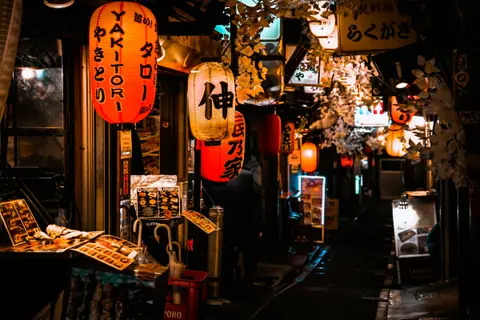
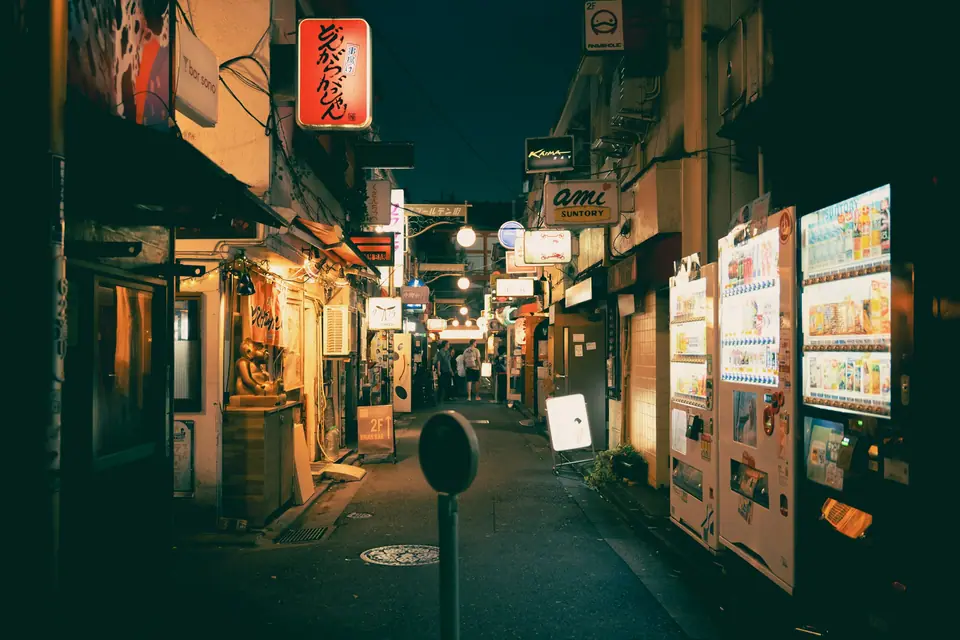
Shopping, mainly. Shibuya Parco has Nintendo Tokyo and the Pokémon Center. Miyashita Park is a long rooftop park over a shopping mall. For drinks, Nonbei Yokocho ("drunkard's alley") by the tracks has tiny bars of six seats each.
Can I drink in the street?
Not around Shibuya station. Since 2024 the ward has banned drinking on the streets from 6pm to 5am all year round, in an area that covers the crossing, Center Gai and Miyashita Park. Around Halloween it's strictly enforced, and the ward asks visitors not to come for street parties at all.
Is Harajuku worth the stop?
Yes, for two reasons that couldn't be more different. Takeshita Street is a narrow lane of crêpe stands, candy-coloured fashion and teenagers. Five minutes away, Meiji Jingu is a shrine in a deep forest, quiet enough to hear crows. Omotesando, the avenue of designer flagship stores, links Harajuku to Aoyama.
Where do I go in Shinjuku at night?
Start at Omoide Yokocho, "Memory Lane", a strip of tiny yakitori counters under the railway by the west exit, full of smoke and salarymen. Then cross to Golden Gai, around 200 bars packed into six narrow alleys, most with room for eight people. Many charge a cover fee, and some are for regulars only, so look for a sign in English at the door. Kabukicho, the red-light and nightlife district with a giant Godzilla head on top of a hotel, is safe to walk through. Ignore the touts.
Is there a free view?
Yes. The Tokyo Metropolitan Government Building in west Shinjuku has two free observation floors on the 45th floor, and its façade shows a projection-mapping show in the evenings. It isn't as dramatic as Shibuya Sky, but it costs nothing.
Any daytime escape?
Shinjuku Gyoen, a national garden with French, English and Japanese sections, is one of the best cherry blossom spots in the city. It has an entry ticket, and alcohol isn't allowed inside. Find your exit before you arrive, because Shinjuku station is the busiest in the world. Both areas are also popular bases, compared in our where to stay guide.