Morocco Travel Guide: Regions, Routes and Practical Tips
How to plan a first trip to Morocco: which regions to combine, how long the desert really takes, how to handle the medinas, and the rules visitors most often get wrong.
Morocco lies 14 km from Spain across the Strait of Gibraltar and feels much further. In a single country you get medina lanes too narrow for two donkeys to pass, a 2,260 m pass over the High Atlas and mud-brick kasbahs at the edge of the desert. Distances are bigger than the map suggests, and the medinas run on their own rules.
Morocco in brief
Short answer: for a first trip, base yourself in Marrakech, add Fes by train, and give the Sahara at least three days or leave it for another visit. End in Essaouira, on the coast, for a few quiet days before the flight home.
Morocco suits people who like markets, food, architecture and big empty landscapes. It is harder on anyone who wants to wander unnoticed: in the medinas you will be approached, especially on the first day. A firm "la, shukran" (no, thank you), said without stopping, usually ends the conversation.
The regions at a glance
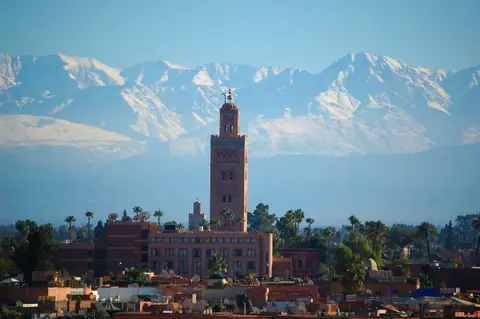
- Marrakech and the High Atlas. The red city of the souks and the evening food stalls of Jemaa el-Fna, and the easiest place to start; see our Marrakech travel guide. The mountains start an hour south, and a day in the Atlas is the easiest escape from the heat and noise.
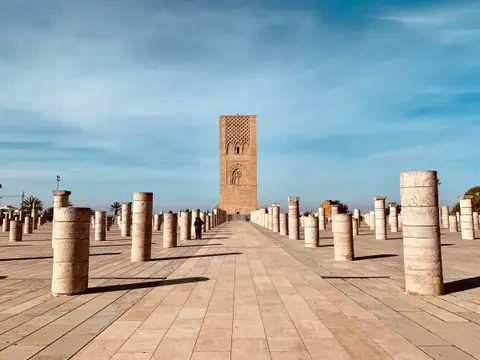
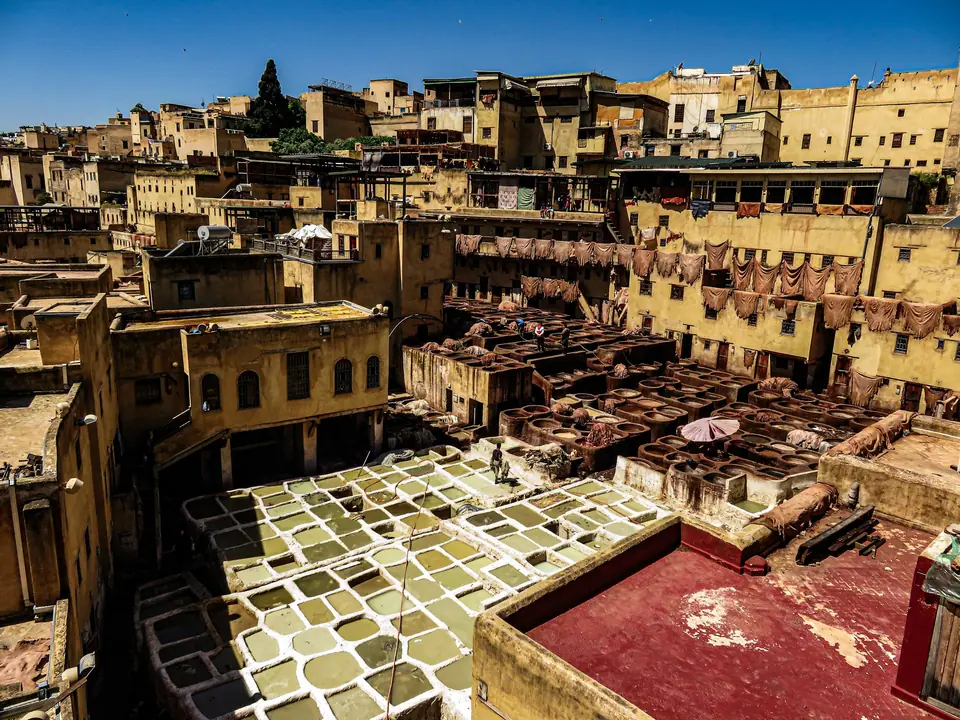
- Fes, Meknes and the imperial north. Fes el-Bali is the old medina, a vast car-free maze of workshops, madrasas and the Chouara tannery. Meknes and the Roman ruins of Volubilis make an easy day trip.
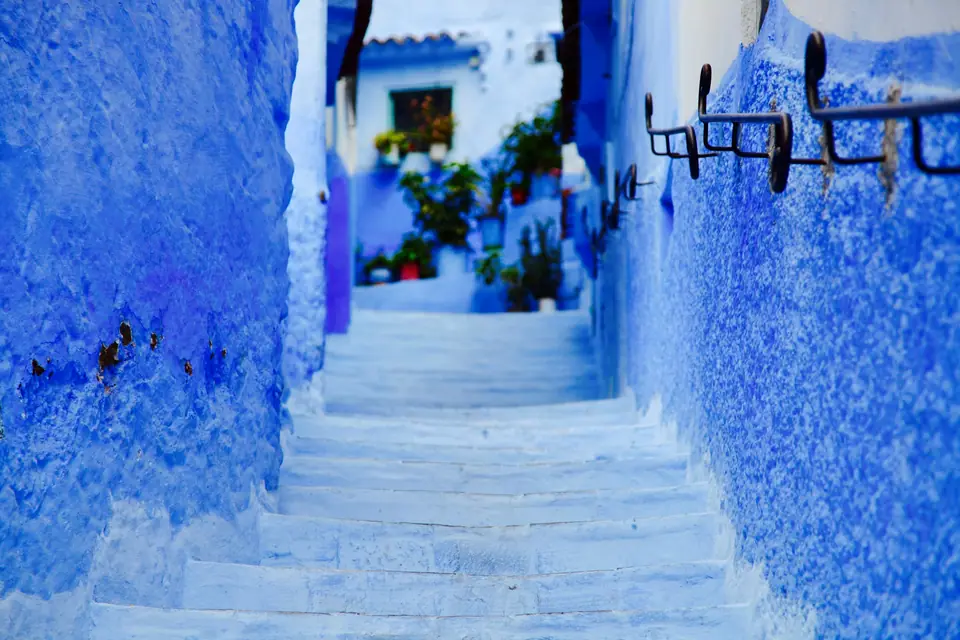
- Chefchaouen and the Rif. The blue-washed town in the Rif mountains, about four hours from Fes by road, busy with day-trippers until mid-afternoon.
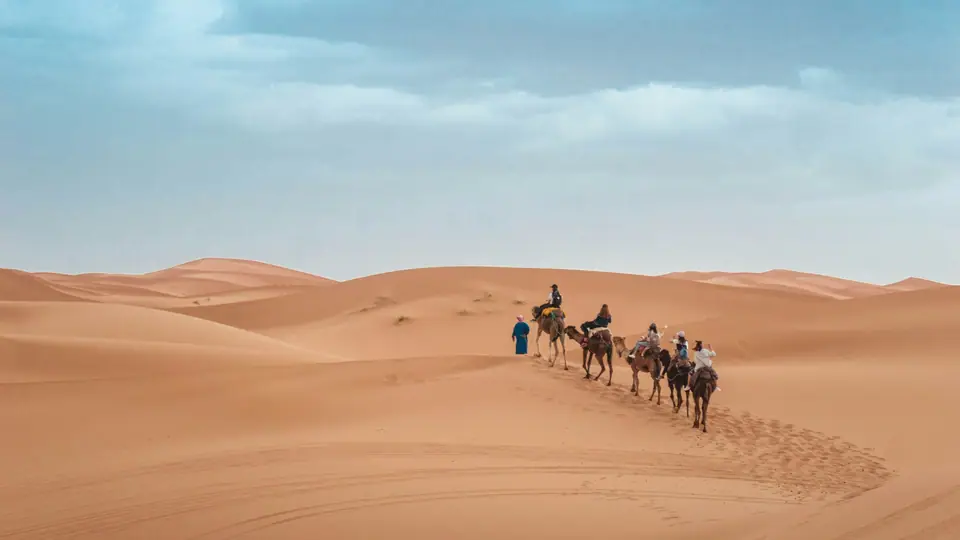
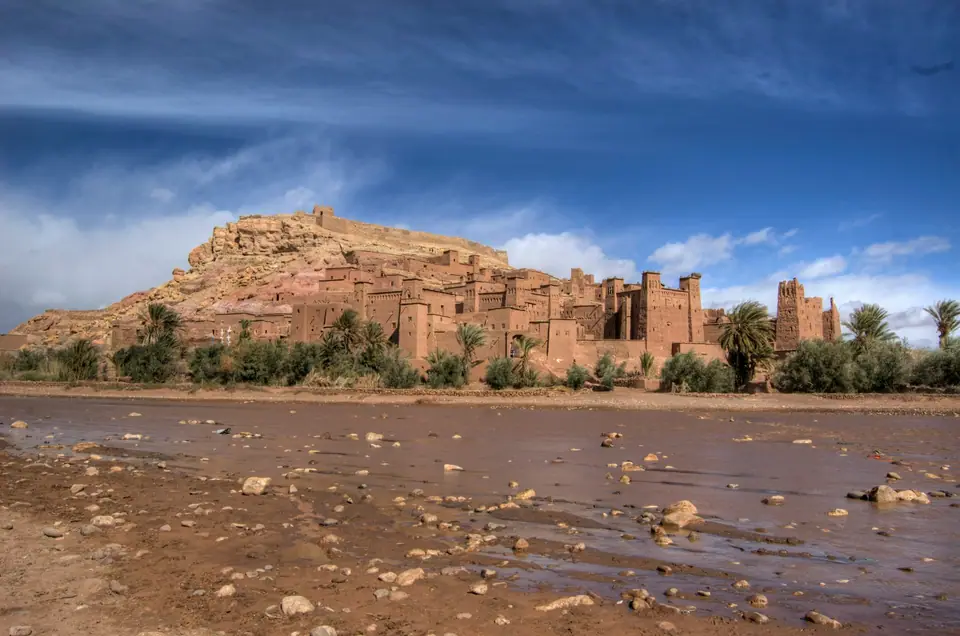
- The south and the Sahara. Over the Tizi n'Tichka pass lie Aït Benhaddou, the Dadès valley, the Todra gorge and, at the end of the road, the dunes of Erg Chebbi at Merzouga, up to 150 m high.
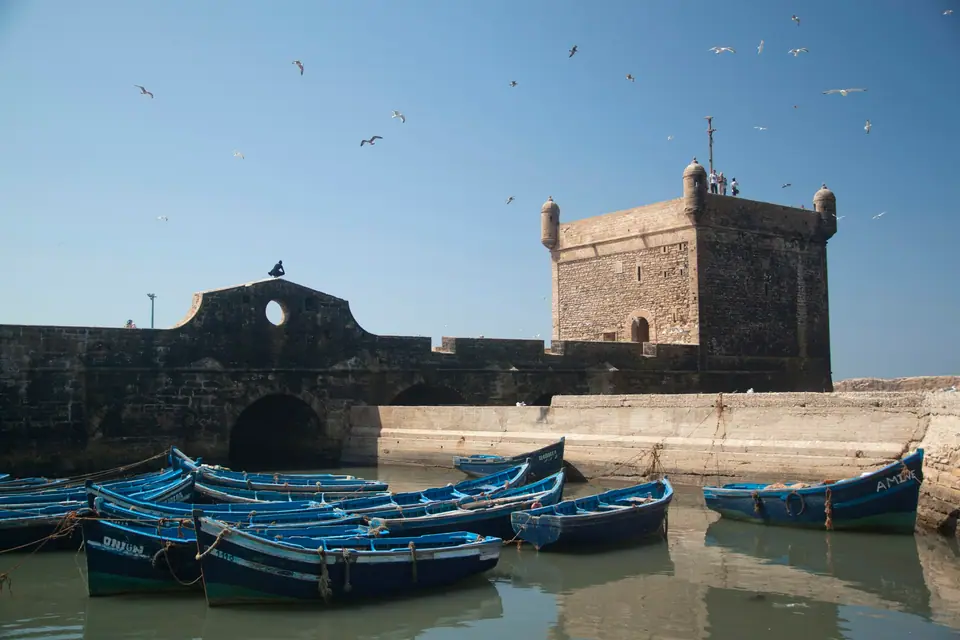
- The Atlantic coast. Essaouira is walled, windy and painted blue and white, about three hours from Marrakech. In Casablanca, the Hassan II Mosque is open to non-Muslims on guided tours.
Three routes: 7, 10 and 14 days
Fly into Marrakech and out of Fes, or the reverse, to save a day of backtracking.
7 days: Marrakech and the Atlas
- Marrakech, 4 nights. Our 3-day Marrakech itinerary fills the first three days, and a cooking class or an evening camel ride in the Agafay desert fits the fourth.
- A guesthouse in Imlil, 1 night, for walking in the High Atlas.
- Essaouira, 2 nights. Fly home from Marrakech.
10 days: Marrakech, the desert and Fes
- Marrakech, 3 nights.
- Three days on the road to the Sahara: the Dadès or Todra valley the first night, a desert camp at Merzouga the second.
- From Merzouga, drive north through the Middle Atlas to Fes, a long day of about eight hours.
- Fes, 3 nights. Fly home from Fes.
Agafay, 40 minutes from Marrakech, is a stony desert, not a sand sea. For real dunes, go to Merzouga or Erg Chigaga.
14 days: the full loop
- Fes, 3 nights, with a day trip to Volubilis and Meknes.
- Chefchaouen, 2 nights. Getting back to Fes and on to Marrakech by train takes a full day.
- Marrakech, 3 nights.
- The desert loop via Aït Benhaddou and Merzouga, 3 nights.
- Essaouira, 2 nights. Fly home from Marrakech or Essaouira.
Getting around
ONCF trains link Marrakech, Casablanca, Rabat, Meknes, Fes and Tangier. They are cheap and reasonably punctual. Al Boraq, Africa's first high-speed train, runs Tangier to Casablanca in about two hours ten. Casablanca to Marrakech takes just under three hours, Fes to Marrakech about seven. A high-speed line from Kenitra to Marrakech has been under construction since 2025 and is due to open by 2029.
Where the rails stop (Essaouira, Chefchaouen, Agadir), take the comfortable Supratours or CTM buses. In towns, take a petit taxi and ask for the meter ("compteur") before you set off.
For the desert, choose between a group tour (cheap, long days in a minibus), a private driver (the best value for two to four people) or a rental car. The Tizi n'Tichka is a mountain road with lorries on the bends, and snow can close it in winter. Avoid driving at night in the south.
When to go
March to May and late September to November are the best months across most of the country. Summer is punishing inland, where Marrakech and Fes regularly pass 40°C. The coast stays cooler all year thanks to the Atlantic wind. Winter days in Marrakech are sunny and mild, but riads get chilly at night and desert nights drop below freezing.
Ramadan 2027 is expected to start around 8 or 9 February and run into early March, depending on the moon sighting. Travelling then is fine: tourist restaurants stay open and the evenings are the liveliest of the year, but many local cafés close by day, and it is polite not to eat or drink openly in the street.
Medina manners and money
- Bargaining is expected in the souks, not in shops with fixed prices. Decide your price before you ask, and walk away politely if it doesn't work. Knowing which souk sells what saves a lot of wandering.
- Unofficial guides offer directions or tell you a street is "closed", then expect payment or steer you into a shop. Keep walking, and ask your riad if you want an official guide.
- Photographs: ask before photographing people. Performers in Jemaa el-Fna expect to be paid if you film them. We'd skip the chained monkeys and snake charmers entirely.
- Dress: covering shoulders and knees is respectful everywhere, especially outside Marrakech.
- Most mosques are closed to non-Muslims. Many shops close around the Friday midday prayer.
- Money: the dirham is a closed currency, so you get it on arrival, from cash machines or exchange offices, and should spend or change it back before you leave. Souks, taxis and small restaurants take cash only; cards work in hotels and larger restaurants. Hotels and riads add a small tourist tax per night.
- Alcohol is sold in licensed hotels, bars and some restaurants, but not in most medina cafés. Don't drink in public.
Practical questions
Do we need a visa?
Citizens of the EU, the UK, the US, Canada, Australia, Türkiye and many other countries can stay up to 90 days without a visa; others can often apply for an e-visa. Overstaying can mean a court appearance, so check your dates.
Can we bring a drone?
Not without prior authorisation from the Moroccan authorities, which tourists rarely get. Drones found at customs without it are confiscated. Also avoid photographing royal palaces, police and government buildings.
Can we climb Toubkal on our own?
No. At 4,167 m, Jebel Toubkal is the highest peak in North Africa, and since 2019 local rules require hikers to go with a licensed guide; passports are checked at Aroumd, above Imlil. Most people take two days, sleeping at the refuge.
Is Morocco safe?
For most visitors, yes. The usual problems are pickpockets in crowded souks, touts and the odd overcharge. The US and some other governments advise increased caution over terrorism; check your own government's advice. Women travelling alone often get unwanted comments in the medinas; walking on without replying is the usual answer. In an emergency, call 19 for the police and 15 for an ambulance.
Where would we start?
With a riad inside the Marrakech medina for three nights. Ask it to meet you at the edge of the old city, since taxis can't reach most lanes. Walk the souks in the morning, when shopkeepers are calmer, and save Jemaa el-Fna for the evening. Then take the train to Fes or head over the mountains to the dunes, and plan no more than one long transfer every two or three days.