









Jemaa el-Fna Guide: The Square From Morning to Night
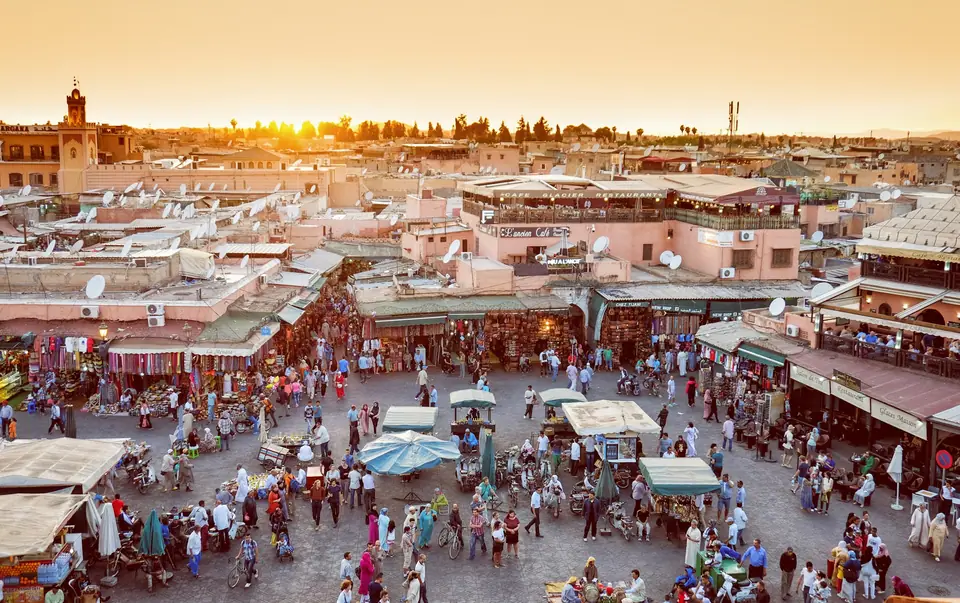
Jemaa el-Fna isn't a beautiful square. It's a large, irregular open space of paving with plain buildings around the edge. What makes it extraordinary is what happens on it, and in 2001 UNESCO recognised the square's storytellers, musicians and performers as part of the world's intangible heritage, one of the first places ever given that status. Come more than once, at different times of day. It changes completely.
Morning and midday
The square is quiet and half empty. Orange-juice carts line up along one side, and dried-fruit stalls sell dates and almonds. This is also when you'll see the snake charmers and men with Barbary macaques on chains. We'd walk past: the monkeys are an endangered species taken from the wild, and a photo, even an accidental one, comes with a demand for money. Henna artists may grab your hand and start drawing before you've agreed. Say no firmly and keep your hands to yourself.
Late afternoon
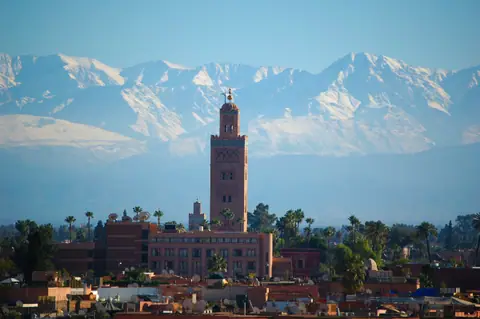
Around 5pm the food stalls are wheeled in and assembled, and circles, called halqa, start forming around storytellers, acrobats and musicians. Gnawa musicians, descendants of West African communities, play the three-stringed guembri and heavy iron castanets called qraqeb. This is the hour to find a rooftop café on the edge of the square, order a mint tea, and watch the smoke rise as the sun sets behind the Koutoubia.
Evening
After dark the square is at its fullest. The numbered food stalls serve grilled meat, fried fish, merguez sausages and bowls of harira. Stall owners will try hard to seat you, and all of them claim to be number one. Pick a busy stall with local families, check prices on the board before ordering, and refuse any plate you didn't ask for. For something unusual, try the snail soup from the steaming carts, a peppery broth locals drink for their digestion. Nearby, in the lane known as Mechoui Alley, whole lambs are slow-roasted in underground pits and sold by weight from late morning.
If you stop to watch a performer, put a few dirhams in the hat. That's the deal, and the performers are why the square is famous. Photographing someone means paying them, so ask first or put the phone away.
Keep your phone and wallet in a front pocket. The crowds are a pickpocket's dream, although serious crime here is rare. Our medina guide starts right from the north side of the square, and the where to stay guide explains which riads are close enough to walk home.